 (+91) 8853765397
 NEWSLETTER



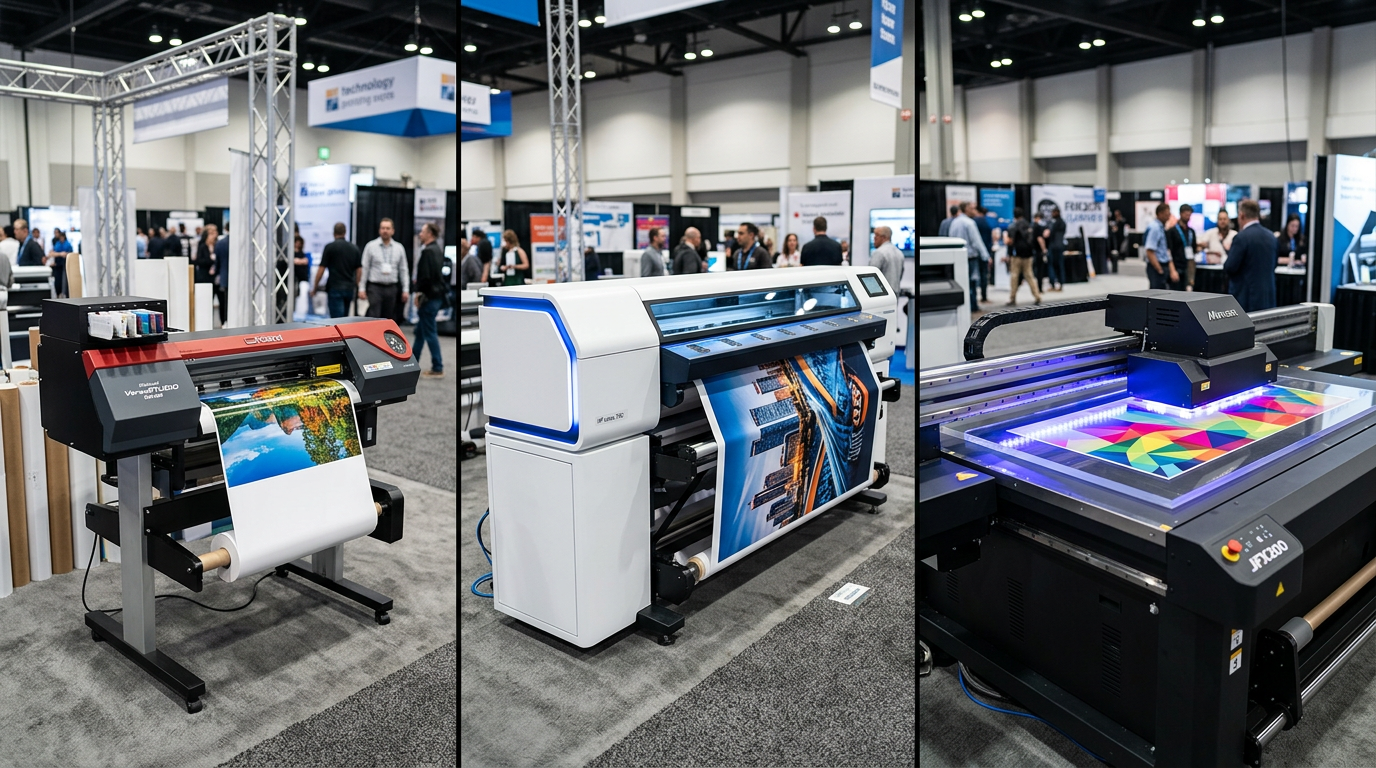
Quick Answer: For Indian print businesses in 2026, eco solvent wins on economics (machines from ₹1.65 lakh, total cost ₹10–16/sq ft), latex wins on eco-credentials and instant finishing (odorless water-based prints, machines ₹7–15 lakh), and UV wins on versatility and premium durability (prints on almost anything, 3–5 year outdoor life, machines ₹14–28 lakh). For a new small business, eco solvent remains the correct first machine; latex suits corporate-eco-sensitive markets with deeper pockets; UV is the premium add-on once cash flow matures. Full data comparison below.
Wander the aisles of any Indian print expo and three salespeople will each tell you their technology is the future: the eco solvent dealer with his ₹2-lakh marvel, the HP latex rep with his eco-certified gleaming towers, and the UV importer pointing at prints on ceramic tiles and leather. All three are right about their machine’s strengths. All three will quietly omit the weaknesses. This guide is the comparison none of them will give you — equal-footing data on price, quality, durability, running costs, environment demands, and which type of Indian business each technology genuinely fits.
The Three Technologies in Plain Language
Eco Solvent — The Volume Craftsman
Mild solvent carriers jet pigment through precision Epson piezo heads (DX5 historically, i3200 today) onto coated media. The ink anchors into media coatings, cures via platen heaters, and delivers photographic quality at commodity prices. The entire ₹25–60/sq ft Indian vinyl economy — stickers, wraps, backlit, canvas — runs on this technology.
Latex — The Corporate Clean Machine
HP’s latex technology suspends pigment in water-based polymer “latex” ink, curing it instantly with high-temperature heaters. Water-based means genuinely odorless output, same-day lamination (no outgassing wait), unmatched environmental paperwork (GREENGUARD Gold etc.), and output that’s immediately scratch-resistant. The machine class runs from ₹7 lakh to well past ₹20 lakh, concentrated (big surprise) in the hands of corporate-service print houses.
UV — The Premium Shape-Shifter
UV-curable inks polymerize instantly under UV-LED lamps, sitting atop the media rather than bonding into it — which is why UV prints on everything: acrylic, glass, wood, ACP, leather, ceramic, uncoated stock, metal. Add white ink and varnish channels, and the product catalogue becomes other technologies’ fantasy list. Entry machines begin around ₹14 lakh; serious hybrids run to ₹30 lakh and beyond.
The Master Comparison Table
| Parameter | Eco Solvent | Latex | UV |
|---|---|---|---|
| Entry machine price | ₹1.65–2.75 lakh | ₹7–15 lakh | ₹14–28 lakh |
| Print quality | ★★★★★ (photo-grade, 3.5pl) | ★★★★ (photo-class, slightly flatter gamut) | ★★★★★ (photo + texture effects) |
| Ink cost basis | ₹800–1,200/litre | ₹3,000–4,500/litre (OEM-locked) | ₹1,800–3,500/litre |
| Ink cost/sq ft | ₹2.5–4.5 | ₹5–8 | ₹3.5–6 |
| Full production cost/sq ft | ₹10–16 | ₹14–22 | ₹15–25 |
| Outdoor durability (laminated) | 2–3 years | 3–5 years | 3–5 years |
| Durability without laminate | 6–12 months | 2–4 years | 3–5 years |
| Finishing wait (outgassing) | 6–24 hrs recommended | None — laminate immediately | None — instantly cured |
| Media flexibility | Coated media only | Wide incl. uncoated + textiles | Widest — any rigid or roll media |
| Odor / premises | Low odor; basic ventilation | Odorless; offices/retail-friendly | Low odor; careful with uncured ink |
| Power draw | 1.2–2 kW | 4–6 kW (heat-hungry) | 2.5–4 kW |
| Maintenance complexity | Low–moderate | Low daily; proprietary consumables pricey | High — white-ink agitation, lamp care, climate control |
| Typical selling rates | ₹25–60/sq ft | ₹35–75/sq ft | ₹50–120/sq ft |
| India service ecosystem | Deepest (every dealer) | Metro-centric, OEM-bound | Growing; importer-dependent |
Print Quality Face-Off (What Clients Actually See)
- Retail wall wraps/close indoor viewing: eco solvent and UV tie at photographic smoothness; latex runs genuinely close but its color gamut reads slightly flatter on saturated brand colors — a gap designers notice at close range on some builds.
- Backlit film: eco solvent’s dense laydown historically dominates glow-sign work; UV is superb with double-strike white-back builds; latex requires careful profiles to avoid washed illumination.
- Vehicle wraps: all three produce wrap-grade prints; durability ranking on roads runs cast-vinyl print ≈ equal — better judged on laminate quality than print technology.
- Texture/effects: UV alone offers raised-print textures, spot gloss varnish, and white-ink-on-dark-media effects — a product category, not a feature.
- Textiles/soft signage: latex (and dye-sub) lead; eco solvent prints coated banner fabric only; UV roll machines handle select textiles well.
The 5-Year Cost of Ownership
| Cost Head | Eco Solvent (dual-head) | Latex (64″) | UV (3.2m hybrid) |
|---|---|---|---|
| Machine + infrastructure | ₹4.5L | ₹11L | ₹22L |
| Laminator | ₹0.6L | ₹0.6L | ₹0.6L |
| Heads/printheads over 5 years | ₹3.0L (4× i3200) | ₹2.2L (~6 × 35k OEM thermal heads) | ₹4.4L (Ricoh-class heads) |
| Ink (volume-matched) | ₹6.8L | ₹12L | ₹9.5L |
| Maintenance parts/consumables | ₹1.2L | ₹2.5L (maintenance cartridges, OEM service kits) | ₹2.0L |
| Power delta over 5 years | baseline | +₹1.5–2L | +₹0.8–1.2L |
| 5-year total | ₹16.1L | ₹28.8L | ₹38.3L |
The structure is decisive: latex’s OEM-locked ink/consumable economics raise its floor; UV’s capital height raises its floor; eco solvent’s open-consumables market keeps its floor lowest. Latex and UV recover their altitude only where their unique abilities command rate premiums the market actually pays.
Which Technology for Which Indian Business?
Choose Eco Solvent if…
- You’re starting or growing a small/medium print business on sane capital (₹4–8 lakh all-in)
- Your catalogue is stickers, boards, wraps, canvas, backlit, wallpaper for local/retail clients
- You value the deepest parts-and-service ecosystem in Indian printing — every dealer stocks these consumables, every technician knows these heads
- Your premises are normal shops/studios (low odor, modest power, no drama)
Choose Latex if…
- Your clientele is dominated by corporates, malls, hospitals, schools, and food brands whose procurement departments demand odorless, instantly-finished, eco-certified output
- You operate in metro markets where ₹55/sq ft corporate rates and closed bidding exist and matter
- Same-day print-to-install workflow is structurally important to your service promise (no outgassing waiting)
- Your capital plan tolerates OEM ink pricing as the permanent tax on those advantages
Choose UV if…
- Established base business already funds the ₹14L+ capital and the environment (climate, dust discipline) it demands
- Your clients ask for what other printers cannot produce: rigid-media décor, personalized gifts, industrial marking, textured premium graphics
- Your market demonstrates ₹50–120/sq ft rate tolerance — premium retail/design, gifting contracts, exhibition-grade work
- You can staff white-ink discipline and lamp maintenance rituals (or you’re buying them through operator training)
The Sequencing Playbook (What Winners Actually Do)
| Stage | Technology Move | Trigger |
|---|---|---|
| Launch | Eco solvent single/dual i3200 | Start: capital-efficient market proof |
| Growth | Eco solvent capacity scale-out (second machine) | Queue saturation at peak days |
| Premium expansion | Add UV roll-to-roll/hybrid | Premium client demand is written, not imagined |
| Corporate capture (optional path) | Add latex (or choose it earlier on metro corporate-only model) | Corporate contracts specifying eco-certified production |
Notice what the table never recommends: starting with your most expensive aspiration instead of your market’s proven demand. The order matters more than the items.
Five Myths That Distort This Decision
Myth 1: “Latex is always greener-friendlier.” Regulated, certified greener — yes, and corporate-procurement genuinely pays for those certificates. But nvreality includes heater-hungry energy draw (4–6 kW) that partially offsets the story, and modern eco solvent inks are far milder than old full-solvent chemistry. Be precise about which eco-claim your client actually pays for.
Myth 2: “UV replaces everything.” UV prints on everything except your break-even if the market won’t feed premium rates. Commodity banner/coated-vinyl work remains economically solvent-territory — UV ink physics makes it structurally costlier per square foot there forever.
Myth 3: “Eco solvent can’t be used indoors.” Modern low-odor eco solvent prints without issue for indoor retail graphics; the “only water-based indoors” story is sales positioning, not building code. Thousands of Indian mall kiosks run eco solvent output daily.
Myth 4: “Resale value is equal across technologies.” Eco solvent machines enjoy the deepest used market in Indian print (40–55% recovery). Latex machines move slower (narrower buyer pool), UV slower still (capability buyers are few, inspect harder). Exit optionality is a real, if invisible, component of purchase price.
Myth 5: “Clients don’t care which technology.” Half-true: local retail clients buy results. Corporate clients increasingly specify technology certifications (GREENGUARD, odorless) in tenders — procurement teams have checklists, and checklists know technology names. Choose partly by which procurement checklists your target market runs on.
Media Ecosystems: What Each Technology Can Actually Print On
Technology choice is really media choice; the catalogue of products your shop can sell is the direct shadow of what your machine accepts:
| Product Media | Eco Solvent | Latex | UV |
|---|---|---|---|
| Self-adhesive vinyl (coated) | ✅✅ native | ✅✅ native | ✅ roll models |
| Backlit/films | ✅✅ industry standard | ✅ profiled | ✅✅ double-strike modes |
| Canvas & heavy art media | ✅✅ | ✅✅ | ✅ roll builds |
| Photo papers | ✅ coated only | ✅✅ wide latitude | ⚠️ possible, rarely sensible |
| Textiles/soft signage | 🔶 coated banner fabrics only | ✅✅ strong | ✅ select media |
| Uncoated stocks / papers | ❌ | ✅✅ good | ✅✅ excellent |
| Rigid: acrylic/ACP/wood/glass | ❌ | ❌ | ✅✅ exclusive territory |
| Textured varnish/raised effects | ❌ | ❌ | ✅ exclusive |
Reading the table as a business plan: eco solvent serves 90% of Indian print-shop revenue categories; latex marginally widens indoor/textile territory at a capital premium; UV uniquely unlocks rigid-media and effects categories that do not exist at all on the other two.
The Service Ecosystem Reality Check (India Edition)
Machine choices in India are secretly service-network choices, and the three ecosystems differ enormously:
- Eco solvent: the deepest ecosystem in Indian digital print — every town with a print trade has technicians fluent in i3200 platforms; parts sit on shelves from metros to district towns. Downtime is measured in days, not weeks.
- Latex: OEM-driven service through metro center points. Response is professional and plan-driven; outside metro coverage it gets sparser, and every consumable flows through the brand channel at brand prices forever.
- UV: importer-dependent ecology maturing fast. Strong importers maintain engineer teams and immediate spares; weak ones introduce you to the phrase “part is on the water.” Vet UV suppliers on installed-base references harder than machines themselves.
For businesses outside metro safety nets, the ecosystem argument alone frequently settles the matter in eco solvent’s favor — regardless of any spec advantage claimed at expo booths.
Three Business Cases, Side by Side: Year-One Economics
Same city, same ₹20 lakh-ish seriousness, three different technology bets — modeled P&L sketches:
| Year One | Eco Solvent Shop | Latex Corporate Unit | UV Premium Studio |
|---|---|---|---|
| All-in capex | ₹5.5L | ₹12L | ₹22L |
| Product lines live by month 6 | 8–10 | 6–8 (premium-tier rates) | 12+ (incl. rigid/gift SKUs) |
| Avg month-12 revenue | ₹3.5L | ₹3L | ₹3.8L |
| Gross margin | 58% | 54% | 62% |
| Year-one net outcome | ≈ +₹8–12L after costs — machine paid off | ≈ breakeven — relationships built, machine still owed | ≈ −₹4L to +₹6L — binary on premium pipeline materializing |
| Year-two shape | Stable compounding | Corporate contracts lock in, rates dominate | Ceiling-highest if clients exist; else expensive idle |
Eco solvent wins year one because its capital light-ness lets the same effort return faster; latex wins procurement-locked years; UV wins asymptotically where premium demand actually lives. None of this says any technology is “wrong” — it says the order you buy them in determines the cash-flow story you live inside.
Premises & Utilities: Engineering Basics by Technology
- Eco solvent: 10×12 room, 2–3 kVA clean power, normal ventilation, dust discipline, optional AC. Cheapest premises bill in printing.
- Latex: beefier electricals (4–6 kW draw = industrial socket planning), excellent extraction for heater exhaust, more working clearance for operator handling. Still retail-office compatible, which is the point — but budget the power build honestly.
- UV: UV-opaque covers ready, climate-controlled bay preferred, strict dust protocol. Light discipline on parked heads; curing lamps introduce their own consumable/maintenance cadence. Premises planning is part of total capital here, not a footnote.
Ink Chemistry 101: Why These Three Technologies Behave So Differently
Strip away the marketing names and you’re choosing between three ways of getting pigment to stick to media. Everything else — smell, drying time, outdoor life, media compatibility, ventilation rules, even which customers will accept your quotes — flows from this chemistry:
- Eco solvent: pigment suspended in mild glycol-ester carriers. The ink penetrates the media’s coating slightly, then the carrier evaporates (the heaters speed this). Result: scratch-resistant, flexible, outdoor-durable prints on coated media — with a mild odour during printing and a few hours of “outgassing” before lamination. The carrier chemistry is why eco solvent media needs that microporous coating — and why uncoated materials mostly won’t work.
- Latex: pigment in a water-based polymer emulsion. Heat cures the water off and fuses the polymer. Zero solvent means near-zero odour and instant readiness (prints emerge fully cured — laminate immediately). The trade-off: heavy heat (100–120°C platen zones) limits heat-sensitive thin media, power draw is 3–5× an eco solvent machine, and water-based ink sits more on the surface — edge-lifting on vehicle curves without care.
- UV (flatbed/roll): liquid monomer ink that doesn’t dry at all — LED/mercury lamps polymerize it into solid plastic instantly. Prints on practically anything rigid or flexible, no coated-media requirement, no outgassing. Trade-offs: the ink layer sits raised on the surface (visible texture on some prints), flexibility is poor for vehicle wraps unless you buy premium flexible UV inks, and CMYK-white-varnish workflows demand discipline.
One sentence each: eco solvent is the flexible all-rounder, latex is the speed-and-safety premium option, UV is the rigid-substrate king.
The Master Application Matrix: Which Tech Prints What
| Application | Eco Solvent | Latex | UV |
|---|---|---|---|
| Flex banners (frontlit/backlit) | ✅ Excellent — the default | ✅ Very good | ⚠️ Possible (roll-UV), brittle feel |
| Self-adhesive vinyl / stickers | ✅ Excellent | ✅ Excellent | ⚠️ Rigid ink film cracks on curves |
| Vehicle wraps (conformable) | ✅ Industry standard | ✅ Very good (with cast media) | ❌ Only specialized flexible UV |
| Wallpaper / wall graphics | ✅ Good | ✅ Excellent (odourless — wins interiors) | ⚠️ Texture issues on soft media |
| Canvas / art reproduction | ✅ Good | ✅ Excellent | ✅ Good (matte look) |
| Acrylic / sunboard / glass / wood / metal | ❌ | ❌ | ✅ Only option — flatbed UV |
| Phone cases / gifting / signage boards | ❌ | ❌ | ✅ |
| Phone-thin films & heat-sensitive media | ✅ (low-heat heaters) | ⚠️ High platen heat limits some | ✅ LED-UV runs cool |
| Outdoor life (unlaminated, Indian sun/monsoon) | 2–3 years | 3–5 years | 2–4 years |
| Lamination needed before install? | Wait 6–24h (outgassing) | Immediately — same-day delivery edge | Usually not needed |
The 5-Year TCO Worked Example (Small Indian Shop)
Spec-sheet comparisons hide costs. Here’s an honest 5-year total-cost-of-ownership sketch for a shop printing ~500 sq m/month on vinyl/flex mixtures (numbers in ₹, machine-class comparable 1.6–1.8m):
| Cost Head (5 Years) | Eco Solvent (dual i3200) | Latex (700/800 class) | UV Hybrid (1.8m roll+flat) |
|---|---|---|---|
| Machine, landed + installation | 3.5–5.5 lakh | 9–14 lakh | 8–15 lakh |
| Printheads over 5 years | ₹1.0–1.8 lakh | ₹1.5–2.5 lakh (thermal heads, more frequent) | ₹1.5–3 lakh (Ricoh/Toshiba class) |
| Ink @ ~30,000 sq m lifetime | ₹55–75/litre-effective share — ~₹33–40 lakh | ~15–25% dearer ink — ~₹40–48 lakh | UV ink dearest — ~₹45–60 lakh |
| Power (heaters/curing, 5 yrs) | ₹2.1–3.3 lakh | ₹5–7 lakh (latent heat load + AC bump) | ₹3–4.5 lakh (lamp + motion) |
| Media premium/discount | Coated eco media = base price | Coated, similar; some uncoated possible | Uncoated possible on flatbed = real savings on boards |
| 5-YEAR TCO | ~₹42–52 lakh | ~₹57–73 lakh | ~₹58–80 lakh |
The pattern: at Indian job-mix and volumes, eco solvent’s TCO advantage is structural — cheaper machine, cheapest dependable ink per square metre, lowest power. Latex and UV only erase that gap when their unique capabilities (odourless instant-cure interiors work / rigid-substrate products) let you sell work eco solvent cannot produce at all — at the premium such work commands.
Regulation & Location: Where Each Technology Gets You Accepted or Rejected
In India’s 2026 environment, the “where can this machine sit and which clients accept it” question increasingly decides purchases:
- Eco solvent: fine in industrial/commercial units with exhaust; increasingly questioned inside pure-retail malls, hospitals, schools, and food zones for production on-site (finished prints themselves are accepted everywhere once cured and outgassed). Fire-safety paperwork for solvent storage is light (eco solvent is not classified like true solvent), but keep MSDS sheets from your ink supplier — inspectors ask.
- Latex: the golden passport. Odourless, water-based, GREENGUARD-type certifications — accepted for production inside malls, corporate parks, hospitals-adjacent spaces. If your location options are constrained or your clients are premium interiors (hotels, hospital wall murals, kindergarten decor), latex’s admission ticket is worth its premium.
- UV: no solvent vapour, but uncured UV ink is a skin sensitizer and mercury-lamp variants raise their own questions; LED-UV in a ventilated room is clean. The trade: nobody rejects UV output, but operators need more protective discipline handling inks than either alternative.
The Hybrid Shop: When Two Technologies Beat One
The mature endgame for many Indian print houses isn’t choosing — it’s sequencing. Three proven escalation paths:
- Eco solvent first (years 0–2): build volume and cash flow on flex/vinyl/wraps at the lowest TCO. This machine never becomes useless — it remains your volume workhorse forever.
- Add UV flatbed when rigid orders recur (years 2–4): the moment you’re outsourcing sunboard/acrylic work monthly, that margin is funding a flatbed. Eco solvent + UV flatbed together cover ~95% of what Indian customers ask for.
- Latex slots in for premium interiors (year 4+): when hotel/hospital/retail-chain interior work appears with “odourless, instant-install” specs, latex earns its premium selectively — bought with profits, positioned at premium prices, never competing with your own eco solvent volume work.
The mistake to avoid: buying latex or UV first to chase premium work you haven’t yet won, while your bread-and-butter flex/vinyl orders bleed margin to a high-TCO machine. Technology follows proven demand. In Indian large-format, cash flow builds empires; spec sheets build regrets.
Where Each Technology Is Heading in India (2026–2030 Outlook)
Buy a machine today and it must still earn in 2030. Here’s the honest trajectory read for each:
- Eco solvent — stable workhorse, slowly commoditizing. Indian assembly maturity means machine prices will stay flat-to-lower, keeping entry cheap and margins pressured for plain flex/vinyl work. The winning eco solvent shops of 2030 will differentiate on finishing (lamination, routing, installation) and service speed rather than print availability, which will be everywhere. Expect incremental head improvements (denser i3200 successors) rather than disruption.
- Latex — premium niche, growing with interiors demand. India’s commercial interiors, healthcare, and hospitality build-out keeps expanding the pool of “must be odourless/certified” jobs. Latex machine prices remain the entry barrier — which is precisely why the niche stays profitable for those inside it. Watch for local refreshes and media ecosystems improving around it.
- UV — the fastest-growing capability, especially flatbed & hybrid. Gifting, signage on rigid boards, packaging mockups, industrial marking — UV’s substrate freedom keeps finding new Indian demand pockets. Hybrid roll-flat machines lower the “two machines” dilemma. Ink flexibility for wraps remains the frontier to watch; when flexible UV ink truly matures at eco-solvent prices, this comparison’s wrap row gets rewritten.
- The wildcard — resin/water-based pigment variants. Between latex’s premium and eco solvent’s chemistry, newer water-based resin inks promise latex-like cleanliness at closer-to-eco-solvent operating cost. Adoption in India is early but real; by 2028 expect this row in every comparison table.
The Decision Flowchart, in Plain Words
Skip every spec sheet and walk this sequence:
- Will more than a third of your revenue come from rigid boards, acrylic, glass, wood, metal, phone cases, or gifting? → You need UV flatbed/hybrid. Eco solvent and latex simply cannot print your core products. Decision made; this comparison was never really yours.
- Is your anchor demand premium interiors (hospital murals, hotel wallpapers, kindergarten decor, mall retail) where odourless, same-day installation is explicitly specified? → Latex earns its premium. The admission ticket costs 2–3× but the work behind that door pays like it.
- Everything else — flex, banners, vinyl, stickers, wraps, general job work at Indian price points → eco solvent is your machine. Lowest TCO, deepest service network, fastest payback. This is why 70–80% of Indian small-format shops run on it.
And the meta-rule that outranks all three: buy technology only against demand you can already see. The expensive failures in this industry are never machines that couldn’t print well — they’re latex machines bought for interior contracts that hadn’t been signed, and UV flatbeds bought for gifting markets the owner hadn’t researched. Let the order book choose the technology. It’s the only advisor in this decision with no commission at stake.
One Table to Send Anyone Who Asks “Which Machine Should I Buy?”
| Your Situation | Buy This |
|---|---|
| First machine, general job work, tight budget | 1.6m eco solvent, single i3200 |
| Print volume proven, deadline-heavy clients | 1.8m eco solvent, dual i3200 |
| Wraps/vehicle graphics as core business | Eco solvent dual + serious laminator + installer skill |
| Hospital/hotel/mall interiors contracts signed | Latex — the premium is the entry fee |
| Rigid boards/gifting/industrial printing demand visible | UV flatbed or hybrid |
| “I want one machine that prints everything” | Doesn’t exist — see the matrix; choose your lane first |
Frequently Asked Questions (FAQs)
Q1. Which is cheapest to run per sq ft — eco solvent, latex, or UV?
Eco solvent (₹10–16/sq ft full cost), thanks to open-market ink and cheap consumables. Latex costs more (₹14–22) due to OEM ink and consumables; UV spans ₹15–25 depending on product mix. At equal volumes, eco solvent keeps the cost floor lowest.
Q2. Is latex printing quality better than eco solvent?
Comparable, with different strengths: latex offers instant-scratch-proof finishing and excellent media latitude; eco solvent offers a slightly richer gamut on coated vinyl and dominates dense backlit work. Clients accept both as photo-class — the decision is operational, not aesthetic.
Q3. Why would anyone buy latex at 3× the machine price?
For what clients pay premiums on: odorless output safe for food/healthcare environments, eco-certifications that win corporate tenders, same-day print-to-laminate speed, and textile/uncoated media capability. It’s a corporate-market technology, priced accordingly.
Q4. Can UV printers do vehicle wraps and wall wraps?
Yes — UV roll-to-roll machines handle wrap vinyl and wall media credibly, with instant curing as a genuine workflow advantage and scratch-tough output. The tradeoff is higher ink cost/sq ft and white/texture features that wrap work rarely monetizes.
Q5. Which technology is easiest for beginners to maintain?
Eco solvent by a wide margin — simple consumables, the deepest technician familiarity in India, and YouTube-density of solutions for every fault class. Latex runs clean daily but locks you into proprietary consumables; UV demands the most process discipline (white ink, lamps, climate).
Q6. Is eco solvent being “phased out” as some latex dealers claim?
The sales claim has been recycled annually for a decade; meanwhile the i3200 platform has expanded eco solvent’s install base to its biggest ever. Regulation pressure exists in specific metros and export markets, but nothing on the Indian horizon removes eco solvent’s economic position this decade.
Q7. Can one shop run all three?
Established Indian print houses precisely do: eco solvent for vinyl volume, latex for corporate/odorless contracts, UV for premium rigid-media products. The successful universal order, homebuilt through years: earn the base, then ascend the premium.
Q8. Which prints fastest?
On production output: industrial latex and multi-head UV builds hold strong sustained-duty ceilings; entry-tier single/dual-head eco solvent holds the best speed-per-rupee ratio under ₹5 lakh. The comparison is class-sensitive; spec-sheet claims across technologies mislead more than they inform.
Q9. Does climate control matter equally for all three?
UV most (ink viscosity and cure stability), eco solvent moderate (dust/heat for head life), latex moderate-plus (its heaters fight ambient variance). All three outlast their reputations inside a boring, clean, 20–28°C room.
Q10. If you had to pick exactly one for a new small business?
Eco solvent, dual considerations driving: the lightest capital exposure with genuine photo quality, and the world’s friendliest exit ramp (deep used market, broad buyer pool) if your market thesis proves wrong. Buy your second technology with the first one’s cash flow.
Final Verdict
This three-way contest has no absolute winner because the competitors serve different layers of the market’s price pyramid:
- Eco solvent owns the profitable middle of Indian printing — quality-high, capital-low, ecosystem-deep. The correct first machine for nearly every entrepreneur reading this.
- Latex owns the certified-corporate lane — where procurement checklists, not rupees-per-square-foot, pick vendors. Buy it when contracts demand it, not before.
- UV owns the premium frontier — products others can’t print, rates others can’t charge, capital demands others can’t fund. Buy it from base-business cash flow, at the moment your client book’s ceiling justifies its floor.
The technology triangle resolves the same way across all three: match the machine to the demand you can see, and the machines you can then afford will take care of themselves.
Choosing a technology for your market? Explore our ranges of eco solvent printers, UV printers, and solvent machines — with honest comparison guidance from people who service all of them. Tell us your city, clients, and capital — the recommendation comes with math, not pitch.
