



Updated: October 2026
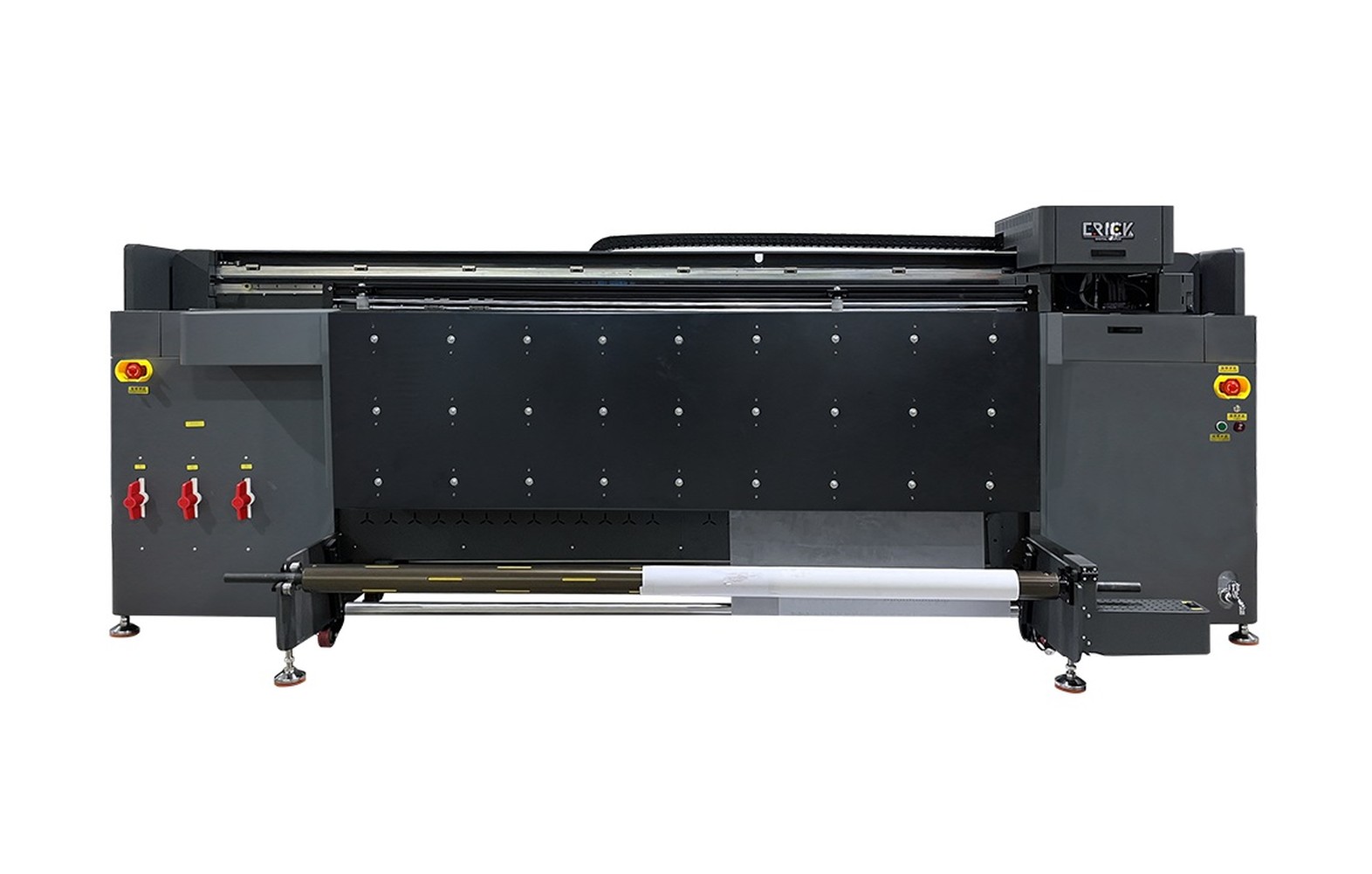
Ask ten print-shop owners which UV machine they would buy first and most now answer the same way: a hybrid. One machine prints wallpaper rolls in the morning and acrylic sheets after lunch, so no order walks away for want of the right printer. This guide lays out the full business picture – investment, product lines with real rates, a monthly profit model and honest break-even months. All figures are estimates (est.).
Total Investment to Open Shop (est.)
| Head | Amount Rs (est.) |
|---|---|
| 1.8m hybrid UV printer (i3200 class) | 14-20 lakh |
| First ink set plus starter spares | 1.0-1.5 lakh |
| UPS, stabilizer, room AC and dust control | 1.0-1.8 lakh |
| Media opening stock (rolls plus sheets) | 60,000-1,20,000 |
| Working capital cushion | 1-2 lakh |
| Total | 17.5-26.5 lakh |
The Two Product Lines One Machine Opens (est.)
Roll side: printed wallpaper sells at Rs 40-90 per sqft against Rs 18-35 cost, ceiling and soft film at Rs 120-250 per sqft – the current margin star – backlit film Rs 80-150, canvas Rs 60-120 and printed vinyl Rs 60-100. Rigid side: direct-printed sunboard at Rs 90-150 per sqft, acrylic photo and signage at Rs 200-500, ACP outdoor boards at Rs 150-350, plus nameplates, MDF photo panels and tile work. The rigid side carries the rates; the roll side fills the machine between them – that rhythm is the whole business model.
Monthly Profit Model, Honestly Counted (est.)
A settled shop runs 500-1,000 sqft of hybrid output per working day at a blended rate of Rs 100-140 per sqft – revenue of Rs 15-36 lakh a year across 26-day months. Direct costs (media, ink, power) take 45-55%, leaving a net operating margin of 25-35% after rent and staff: roughly Rs 4-11 lakh a year to the owner (est.). Shops that build a ceiling-film or interior-designer client base sit at the top of that band; general walk-in shops sit lower but still survive, because a hybrid never has an idle shift for want of matching media.
Break-Even, and Who Should NOT Buy
On the model above, an Rs 17.5-26.5 lakh outlay recovers in 24-40 months from business profit alone; financed shops pay EMIs earlier because rigid orders start immediately. Skip the hybrid if your city work is purely high-volume flex (buy a 16-foot machine instead) or pure wallpaper volume (a roll-to-roll outruns it). The hybrid wins when the market around you is mixed – exactly the Indian Tier-2 and Tier-3 reality.
See this mixed floor running in the Rs 28 lakh eco solvent plus UV hybrid signage plant case study (Kolkata) and the gifting-heavy model in the Rs 24 lakh signage and gifting unit case study (Nagpur).
Our Verdict
Buy the hybrid when your order book is genuinely mixed, stock both a wallpaper roll and a sunboard stack from day one, and chase interior designers before flex customers – they pay per design, not per rate card. Live machine options sit on our UV hybrid printers page with exact city-wise quotes on request.
FAQs – UV Hybrid Printing Business Guide 2026
How much investment is needed to start a UV hybrid printing business?
Rs 17.5-26.5 lakh all-in (est.): a 1.8m i3200-class hybrid at Rs 14-20 lakh, plus inks and spares, UPS and room conditioning, opening media stock and a working-capital cushion.
What products can a UV hybrid printing business sell?
Roll side: printed wallpaper, ceiling and soft film, backlit film, canvas and vinyl. Rigid side: direct-printed sunboard, acrylic photo and signage, ACP boards, nameplates, MDF photo panels and tiles – all from one machine.
What is the monthly profit of a hybrid UV printing shop?
A settled shop running 500-1,000 sqft daily at Rs 100-140 blended rates earns Rs 4-11 lakh a year net to the owner after media, ink, power, rent and staff (est.), with ceiling-film and designer clients at the top of the band.
How long does a hybrid UV machine take to break even?
Typically 24-40 months from business profit alone (est.). Financed shops often find the EMIs self-servicing sooner, because rigid-sheet orders – the highest-rate work – begin from the first week.
Who should buy a hybrid UV printer and who should not?
Buy it when your market mixes roll and rigid work – the Tier-2 and Tier-3 Indian reality. Skip it for pure high-volume flex (a 16-foot machine) or pure wallpaper volume (a dedicated roll-to-roll outruns hybrid loading).
More hybrid UV printing guides: UV Hybrid Printer Price Guide, Hybrid UV vs Flatbed vs Roll-to-Roll, Hybrid UV Printer Heads Compared, Hybrid UV Running Cost Guide, Hybrid UV Printer Media List, Stretch Ceiling Film Printing Business, Wallpaper Printing on Hybrid UV, 20 Products on One Hybrid UV Printer, Hybrid UV vs Eco Solvent, Second-Hand Hybrid UV Buying Checklist, 15 Common Hybrid UV Problems and Fixes, Hybrid UV Maintenance Schedule, Hybrid UV Lamp, Ink and Filter Costs, Hybrid UV Install Checklist.
Share your target products and buyers on the contact page – we reply with an exact machine quote, freight and installation plan for your city, with on-site training across India.
