



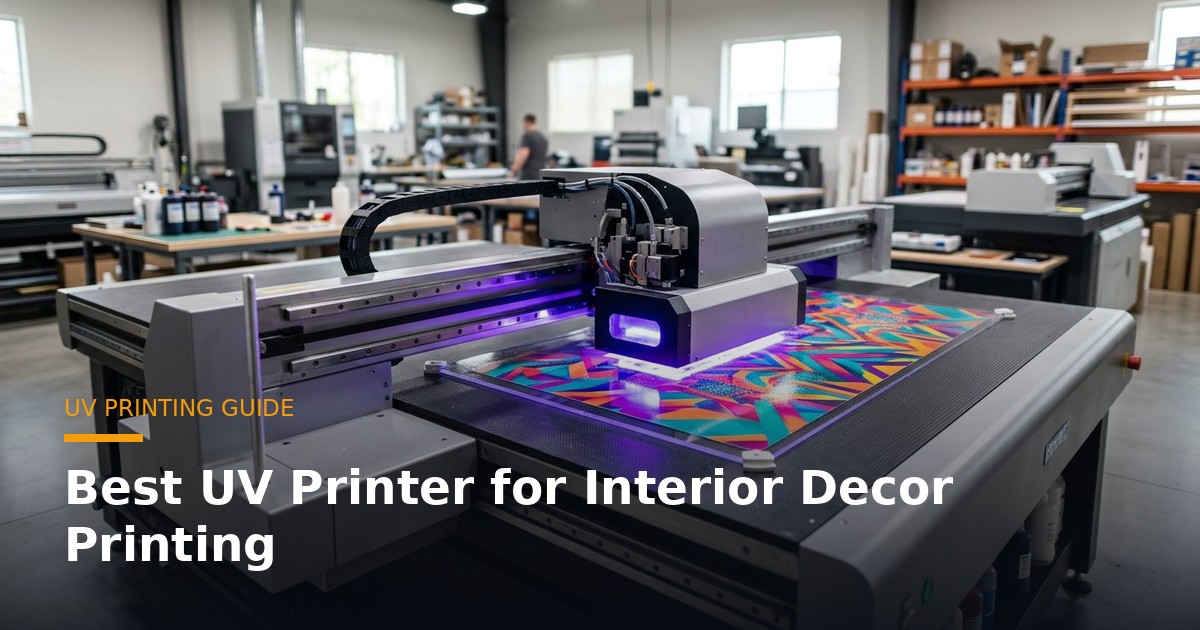
Interior décor is one of the most profitable niches in UV printing, because customers pay for beauty and finish, not square footage. But décor is also demanding: glass, wood, acrylic, tile and MDF each need the right machine, the right ink and the right preparation. This guide explains what interior-décor printing requires and which UV printer is best for it, so a décor studio or sign shop can choose a machine that opens the premium interior market rather than disappointing it.
What interior-décor printing actually demands
Décor work spans transparent and dark substrates (glass, acrylic, coloured metal) that need white ink; glossy surfaces that need a protective or tactile varnish; thick and rigid pieces (wood, MDF, tile) that need Z-clearance and a strong vacuum; and large panels that need a bed big enough to print whole. It also demands adhesion discipline, because a splashback or wall panel must survive cleaning and years of touch. The best décor machine is therefore one built around white, varnish, bed size and adhesion support — not just headline speed.
The flatbed is the core décor machine
Nearly all interior-décor products are rigid, so a UV flatbed printer is the core machine: glass splashbacks and feature panels, wood and MDF wall art and furniture panels, acrylic photo blocks and décor, tile murals and coasters, and door or wardrobe skins. The flatbed’s vacuum bed, height sensing and white/varnish channels are exactly what décor needs. A roll-to-roll only enters for flexible décor like wallpaper, which is a separate business covered in its own guide.
White ink: the décor differentiator
White ink is what makes décor premium. On glass it enables back-face printing and opaque feature panels; on dark acrylic and coloured metal it restores colour; on wood it can be laid selectively to let grain show or fully to paint it. A décor machine without reliable white is limited to light substrates and loses the most valuable work. Choose a flatbed whose white system has circulation and proven reliability, and plan the white-heavy workflows (back-face, sandwiches) into your production.
Varnish and texture: selling finish, not print
Décor customers buy finish. A varnish channel lets you add gloss, matte, soft-touch and even textured effects that raise perceived value and protect the surface. Textured varnish can mimic wood grain, stone or embossing — a signature of premium décor. The best décor machine treats varnish as a core feature, not an option, because the finish is the product. Ask for textured-varnish samples before buying; that capability alone can win designer work.
Bed size and Z-height for décor pieces
Décor pieces range from small (coasters, blocks) to large (splashbacks, wall panels). A 1.2×2.4 m bed handles most panels and standard sheets; larger beds serve big murals and doors. Z-height matters for thick wood, tile and objects. Buy the bed your largest common décor piece needs, with enough Z-clearance for your thickest material, so you print whole pieces without cutting and re-handling.
Printheads and quality for décor
Décor is viewed up close, so fine detail and smooth gradients matter. i3200-based flatbeds deliver the resolution and smoothness décor needs at moderate head cost, which is why they dominate the décor market. Industrial heads suit high-volume panel production but are overkill for a studio. Prioritise colour profiling on your actual décor substrates — glass, wood, acrylic — because décor colour must match a designer’s palette, and a good profile on the real material is worth more than headline dpi.
Adhesion discipline: the décor reputation
A décor piece that peels or scratches in a client’s kitchen is a reputation loss, so the best décor machine is backed by adhesion support: primers for glass and tile, promoter for metal, sealers for porous wood, and test data per substrate. Keep a preparation log and tape-test each batch. The machine plus the discipline together make décor reliable; neither alone does.
Best machine classes by décor business type
- Gift-and-small-décor studio: 60×90 cm white+varnish flatbed; low entry, strong margins.
- Décor and signage studio: 1.2×2.4 m i3200 with white+varnish and pin registration; the sweet spot.
- Interior-finish supplier: 4×8 or larger with textured varnish and strong vacuum; serves designers and fit-outs.
Support and the designer channel
Décor work often serves designers and architects who specify and reorder; consistency across a project matters. Choose a supplier with local support and colour-management help so repeat pieces match. The machine that delivers identical colour across a project keeps the designer channel, which is the décor business’s most valuable recurring source.
Common mistakes choosing a décor printer
- Buying for speed instead of white, varnish and finish quality.
- Skipping varnish/texture, then missing the premium finish market.
- Under-sizing the bed, forcing cutting of splashbacks and panels.
- Ignoring adhesion support, then eating failures on client sites.
- Not profiling on real décor substrates, then mismatching designer colours.
Frequently asked questions
Can one flatbed do all décor?
Most rigid décor, yes. Wallpaper and flexible décor need a roll-to-roll; if décor includes wallpaper, plan a second machine or a hybrid.
Is textured varnish worth it?
For premium décor, yes — it is the difference between a print and a finish, and designers pay for it.
Which substrates need primer?
Glass and tile usually; metal often; porous wood needs sealing. Keep a per-substrate preparation log.
A deeper look: décor product families and machine fit
Map your intended décor families to the machine: glass splashbacks and panels need white, varnish and primer discipline; wood and MDF art need sealing and grain-showing white control; acrylic blocks need white and edge quality; tile murals need registration and jigging; door skins need a large bed. The best décor machine is the one whose bed, white, varnish and registration cover the families you will actually sell. Choose families first, then the configuration that serves them, and every option you pay for opens revenue.
A deeper look: the sample wall and designer trade channel
Décor sells on sight, so a physical sample wall is the best marketing: a backlit glass panel, a textured wood piece, a tile mural corner, an acrylic block, each priced. Photograph it beautifully and take it to interior designers, architects and fit-out contractors as a spec sheet with finishes, lead times and per-piece pricing. Designers specify what they can see and trust; a sample wall plus consistent colour makes you the default décor printer for their projects, and that trade channel compounds far faster than consumer walk-ins.
Spotlight: glass splashbacks and feature panels
Glass is the flagship décor product: a printed, toughened splashback or backlit panel sells on sight and carries premium pricing. The workflow — prime, back-face print with a white sandwich, protect with varnish, handle by edges — is the discipline that makes it reliable. Master low-iron glass for true whites and keep a care card with every job. A single kitchen or retail feature wall can equal many square metres of signage revenue, which is why glass anchors a décor business.
Spotlight: wood, MDF and grain-showing art
Wood and MDF bring warmth and texture to décor: wall art, signage, furniture panels and wardrobes. The premium technique is selective white that lets grain show through a design, which reads as crafted rather than printed. Seal porous grain first, advise on indoor use and finish edges well. Wood décor attracts cafés, offices and homes, and pairs naturally with a rustic or vintage design library that speeds quoting and raises average order value.
Spotlight: tile murals and wet-zone décor
Tile murals turn a plain wall into a photographic feature and suit kitchens, baths and hospitality. Print on glazed tile with primer, register multi-tile grids with a jig, and advise on decorative (not floor) use. The mural is the high-ticket item; single personalised tiles and coasters are the volume and gift line. Because UV needs no kiln, one-off murals become economical — a market kiln-fired tile never served.
Spotlight: acrylic blocks, door and wardrobe skins
Acrylic photo blocks and printed door or wardrobe skins round out the décor range: blocks are gift-scale with strong margins, skins are large-format finishes that refresh furniture and interiors without replacement. Both use white and edge quality on acrylic and large-bed registration on skins. Offering them widens the décor catalogue so a client who comes for a splashback can also order the blocks and the wardrobe, raising the project value.
Stacking décor with signage across the year
Décor and signage peak at different times, so stacking them smooths utilisation: retail fit-outs and hospitality projects drive décor, while openings and seasons drive signage. A studio that offers both uses the same flatbed, inks and skills across two demand streams, and cross-sells naturally — a shop’s signage client becomes its interior décor client. Track contribution per family and give capacity to the earner each quarter; the platform approach is what makes a décor machine consistently profitable.
Pricing décor for value, not area
Décor must be priced on the finished outcome, because customers compare a splashback to a kitchen upgrade and a mural to a renovation, not to a banner. Price per piece or per project with clear tiers (media, finish, installation), and add premiums for textured varnish, backlit work and designer colour matching. Keep a per-piece cost record including prep and packing so the value price still protects margin. When the price reflects the transformation, décor becomes the most profitable family on the machine.
Marketing the décor studio
Décor marketing is visual and local: a sample wall in the studio, a photographed portfolio of installed pieces, and presence where designers look — trade shows, design communities and social channels. Offer a designer trade programme with spec sheets and lead times, and ask every satisfied client for photos and referrals. Because décor is emotional, beautiful imagery of real interiors does most of the selling; consistency and reliability then convert interest into projects.
Quality control and the care promise
Protect the décor reputation with a simple QC chain: adhesion tape-test per substrate batch, colour check against the approved proof, edge and finish inspection, and careful interleaved packing. Ship every piece with a care card stating cleaning and use, and stand behind genuine faults promptly. In décor, the care promise is part of the product; a studio known for pieces that last and for standing behind them earns the premium it charges.
The décor machine as a platform
Seen whole, the décor flatbed is a platform: glass, wood, acrylic, tile and skins are product families sharing one machine, one prep bench and one sample wall. Manage it as a portfolio — add a family when proven, price each on value, keep the preparation log current — and the machine compounds into a diversified interior business rather than a single product. That platform view, more than any single feature, is what makes a décor printer a lasting investment.
Choose the machine around the families you will sell, master the preparation, and let the sample wall and the designer channel compound the rest.
That discipline — families first, preparation always, finish as the product — is the whole of choosing and running the best décor printer.
Buy for the families, not the brochure, and the décor studio you build will out-earn the machine many times over.
In short: white, varnish, bed and discipline — choose those and the décor market opens.
Make the sample wall your showroom and the preparation log your guarantee, and décor becomes the margin engine of the studio.
Start with one family, master it, and let the portfolio grow on proof.
That is the best décor printer: the one your families already pay for, run with discipline.
Conclusion
The best UV printer for interior décor is a flatbed built around white ink, varnish (ideally textured), a bed sized to your largest panels, and strong adhesion support — typically a 4×8 ft i3200 machine with white+varnish for a décor studio, smaller for gifts, larger for interior finishes. Choose the product families first, then the configuration, and back it with a preparation log and a designer-facing sample wall. Explore our UV flatbed range or talk to us about a décor-ready configuration.
