


Updated: October 2026
Wood printing is where flatbed work stops looking like signage and starts looking like furniture – photo panels on MDF, printed wardrobe shutters, rustic wooden nameplates, wall art that sells as home decor. The media is forgiving, the rates are healthy and the buyer pool keeps growing. This guide covers what to print, how to prep porous surfaces, and the rates these products carry. All figures are estimates (est.).
Wood and MDF Products, and What They Earn (est.)
| Product | Media | Sell Rate (est.) |
|---|---|---|
| Photo panels and family portraits | Pre-lam MDF 8-12 mm | Rs 180-350 per sqft |
| Furniture and wardrobe shutters | Pre-lam MDF / plywood 12-18 mm | Rs 250-450 per sqft |
| Wall art and decor panels | Raw MDF / natural wood | Rs 200-400 per sqft |
| Nameplates and rustic signs | Natural wood / teak offcuts | Rs 300-600 per sqft |
| Printed jali and partition panels | MDF + CNC cut | Rs 250-500 per sqft |
| Coasters, trays, small gifting | MDF / bamboo in jigs | Rs 40-200 per piece |
Prepping Porous Surfaces: The One Difference From Acrylic
Raw wood and raw MDF drink ink like a sponge, killing color saturation and detail. The fix is one coat of sanding sealer or white primer on the print face, cured fully before printing – a Rs 300-600 liter (est.) seals dozens of panels. Pre-laminated boards skip this step entirely, which is why photo-panel production runs on pre-lam MDF as the default. Natural wood buyers often want grain visible under the design, so skip the white underbase there and let the wood show through – sell it as a feature, not a flaw.
Moisture: The Silent Print Killer
Boards stored in damp godowns carry moisture that pushes out under lamp heat and leaves cloudy patches in solid colors. Store boards in the dry side of the workshop for two to three days before printing, and reject visibly swollen or warped sheets at purchase. One humid-season complaint batch costs more than a year of dry storage discipline.
The Natural Pairing: Print Plus CNC
Printed wood becomes furniture when shapes enter: jali patterns, shaped nameplates, contour-cut decor panels. That is why wood-printing shops pair the flatbed with a CNC router – print first, cut second, and a Rs 500 panel becomes a Rs 2,500 product (est.). The decor economics show up in the Rs 24 lakh signage and gifting unit case study (Nagpur) and the Rs 38 lakh wallpaper printing unit case study (Mumbai) running adjacent markets.
Who Buys, and How to Reach Them
Furniture workshops buy printed shutters by the sheet once they see one sample panel. Interior designers buy wall art on project cycles. Photo studios resell portrait panels at double your rate. Ten sample pieces across these three counters beat any advertisement a printing shop can run.
Our Verdict
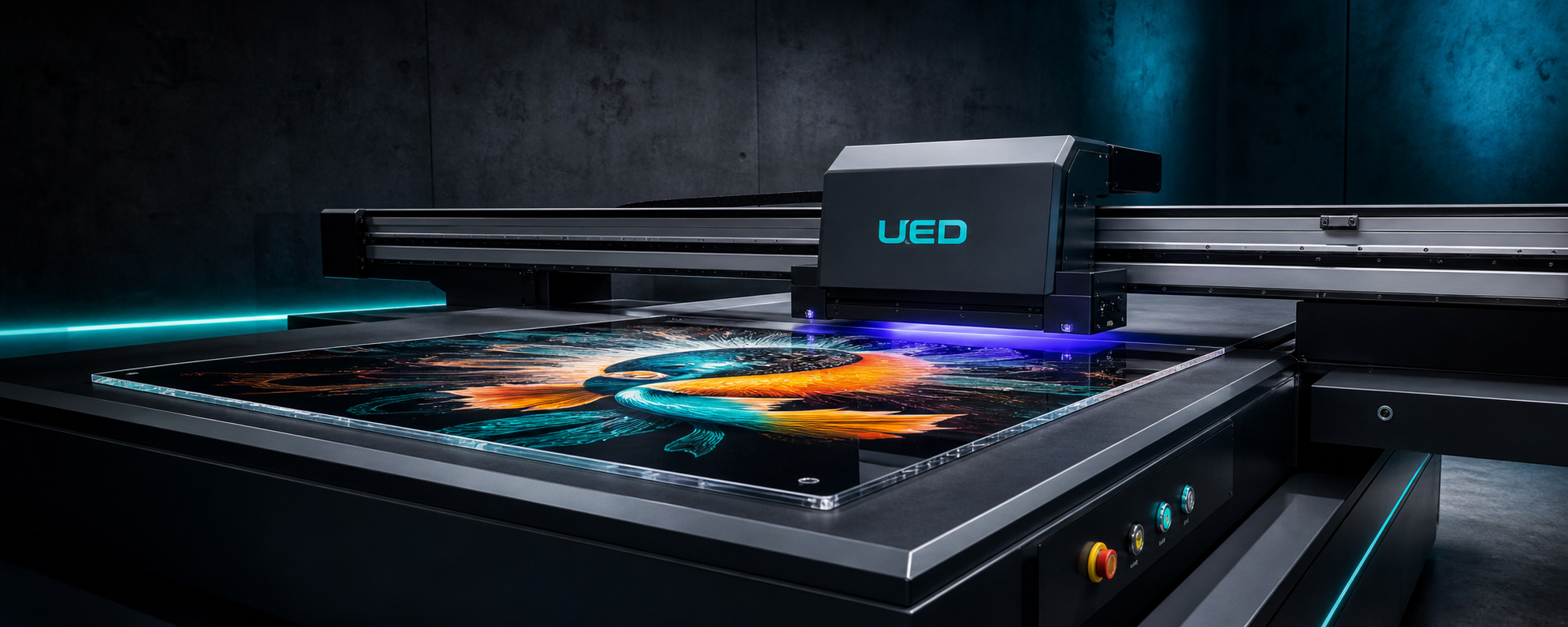
Start on pre-lam MDF photo panels for instant quality, add sealer-coated raw wood for the rustic premium line, and let a CNC pairing turn flat panels into furniture money. Reject damp boards without mercy. Models handling furniture-size sheets sit in our UV flatbed printer price guide and UV flatbed printer pages.
FAQs – Wood and MDF UV Printing Guide: Rates and Uses 2026
Can we print directly on raw wood with a UV flatbed?
Yes, but raw wood and raw MDF absorb ink and dull the colors. One coat of sanding sealer or white primer (Rs 300-600 per liter est.) on the print face fixes it. Pre-laminated boards print directly without any sealer.
What is the rate of wood photo printing in India?
MDF photo panels sell at Rs 180-350 per sqft, furniture shutters at Rs 250-450 and natural-wood nameplates at Rs 300-600 per sqft (est.) – roughly double the rates of equivalent sunboard work.
Which board is best for UV photo panels – MDF or plywood?
Pre-laminated MDF gives the smoothest, truest photo prints and is the industry default at 8-12 mm. Plywood works for larger panels but its surface grain and undulations need sealer and sanding first.
Does moisture in wood affect UV printing?
Yes – damp boards push moisture out under lamp heat and create cloudy patches in solid colors. Store boards dry for two to three days before printing and reject swollen or warped sheets at purchase.
Do we need white ink when printing on wood?
On light pre-lam boards, no white is needed. On dark wood, a white underbase makes colors pop; on rustic designs, skipping white deliberately lets the grain show through as a premium natural feature.
More UV flatbed printing guides: UV Flatbed Printer Media List, Acrylic UV Printing Guide, Sunboard Printing Guide, Glass UV Printing Guide.
Share your target products and buyers on the contact page – we reply with an exact machine quote, freight and installation plan for your city, with on-site training across India.
