

UV Printing for Sign Boards
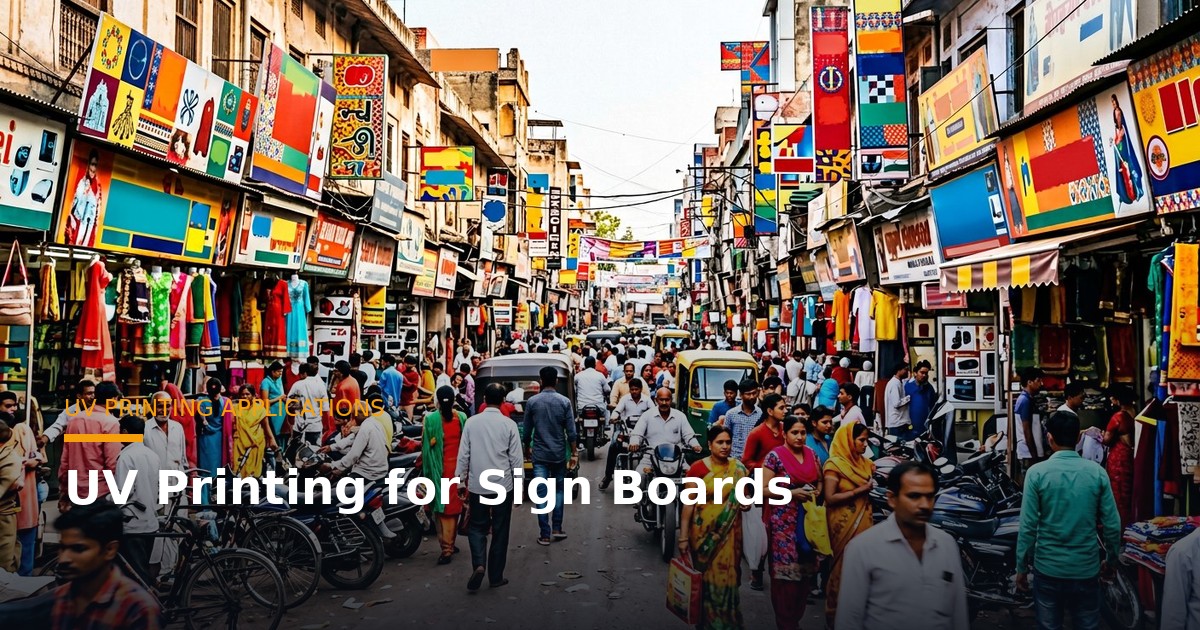
Sign boards are the most constant product in the UV printing trade: every shop, office, restaurant, clinic and showroom needs one, and they need them refreshed regularly. This guide covers the materials sign boards are made from, where they are used and the business opportunities they represent, so a sign business can see how UV printing serves the whole market.
The materials sign boards are made from
Sign boards are built from rigid substrates, each suited to different uses:
- Acrylic (Plexi): glossy, premium look for shopfronts, nameplates and indoor signage; prints on the front or the back face.
- Aluminium Composite Panel (ACP): rigid, weatherproof panel for outdoor and building signage.
- Foam board / PVC sheet: light, economical for indoor, exhibition and temporary signs.
- MDF and wood: warm, textured look for cafés, boutique and residential signage.
- Metal sheet: premium industrial and corporate applications.
- Glass: premium reception and directory signage.
All of these are rigid and are printed on a UV flatbed; white ink and varnish lift the finish, and the sheet is then cut, routed, bent or mounted into the final board.
Shopfront and fascia signage
The shopfront sign is the anchor application: a fascia board, a backlit panel or an acrylic sign that names the business. ACP and acrylic dominate outdoor shopfronts; UV prints the graphic, and fabrication adds the channel letters, lighting and mounting. Shopfront work is high-value, recurring (brands refresh) and builds the sign business’s reputation on the street, which is why it is the core of most sign companies.
Wayfinding and directional signage
Buildings need wayfinding: floor directories, departmental signs, arrow signs, room numbers and restroom signs. These are consistent, repeatable and often specified in volume for offices, malls, hospitals and campuses. UV flatbeds excel at variable wayfinding — the same template, different text — making it efficient, high-volume work that recurs with every fit-out and rebrand.
Office and reception signage
Reception logos, executive nameplates, departmental signs and motivational wall graphics give offices a professional identity. Acrylic, glass and metal boards with back-face printing and varnish deliver the premium look corporates pay for. Office signage recurs with fit-outs, expansions and rebrands, and it introduces the sign business to facilities and procurement teams who order repeatedly.
Retail and menu boards
Retail uses sign boards for menu boards, price displays, category headers and promotional panels; quick-service outlets use backlit menu boards that change with promotions. Because they update frequently, menu and retail boards are recurring work — a printed backlit panel today, an update next quarter. A sign business with backlit capability earns a steady refresh trade from restaurants and retail chains.
Exhibition and event signage
Exhibitions use sign boards for stand headers, backdrop panels, floor-standing signs and directional markers, usually on foam board, PVC or ACP for a rigid, premium look. Event work is fast-turnaround and seasonal, and it recurs with every show. A sign business that can produce rigid exhibition graphics quickly earns a reliable trade-fair channel.
Safety and compliance signage
Factories, warehouses and offices need safety and compliance signs — fire exits, warnings, mandatory notices — often on durable rigid or reflective materials, sometimes to standards. This is steady, specification-driven work that recurs and is often ordered in volume. A sign business serving industrial clients adds a dependable compliance line to its consumer and retail work.
Backlit and illuminated boards
Backlit sign boards — printed on translucent media and lit from behind — are the premium end: illuminated shopfronts, menu boards and directory signs. Backlit work carries higher margins, is highly visible at night and recurs with brand refreshes. The printed backlit panel plus fabrication and lighting is a complete premium product, and it is where much of a sign business’s margin sits.
White ink, varnish and the finish
Two capabilities define sign quality: white ink for back-face acrylic printing and opaque coverage, and varnish for gloss, matte or texture. A sign board with a crisp back-face print, white base and varnish finish looks premium and durable; without them it looks cheap. Mastering these on a flatbed is what lets a sign business sell premium boards at premium prices and win the visible, high-value shopfront and office work.
Machine choice for a sign business
Sign boards are rigid, so the machine is a UV flatbed: a large flatbed for full sheets, or a mid-size machine for smaller boards and nameplates. Where a sign business also serves flex banners and backlit film, a hybrid adds flexible capability on one platform. Most sign companies pair a flatbed for boards with a roll-to-roll for flex, covering the whole signage range; see our flatbed range.
Business opportunities in sign boards
- Shopfront and fascia signage; recurring with brand refreshes.
- Office and reception signage; recurring with fit-outs and rebrands.
- Wayfinding and directories; high-volume, variable work.
- Menu and retail boards; frequent promotional updates.
- Exhibition and event boards; seasonal, fast-turnaround.
- Safety and compliance; specification-driven, volume.
- Backlit premium boards; high margin, recurring.
Frequently asked questions
Which substrate for outdoor shopfronts?
ACP for large fascia and weatherproof panels, acrylic for premium illuminated or back-face signs; both print on a flatbed and are fabricated into the final board.
Is backlit worth investing in?
Yes — backlit boards carry premium margins, are visible day and night, and recur with brand refreshes, making them a strong sign-business channel.
Can a flatbed handle all sign materials?
Yes — acrylic, ACP, foam, MDF, metal and glass all print on a UV flatbed; the machine’s bed size and head capability set the range.
A deeper look: fabrication and installation
Printing is only the first step of a sign board: the printed sheet is cut, routed, bent, laminated, back-lit and mounted, and the whole sign is installed on site. A sign business’s margin often lives as much in fabrication and installation as in printing, so building or partnering these capabilities turns a print shop into a full signage supplier. Customers buy the finished, installed sign, not the printed sheet; delivering the whole product raises value, loyalty and ticket size.
A deeper look: recurring revenue from refresh cycles
Sign boards are not one-off: brands refresh, menus change, offices expand and campaigns rotate, so a sign business with a portfolio of clients earns recurring refresh work. Track installed clients and their refresh cycles, offer annual maintenance or update contracts, and be first to propose seasonal or promotional updates. This installed base is the sign business’s most valuable asset — a printed board today is a relationship that pays repeatedly.
The sign-business revenue stack
A healthy sign business stacks revenue layers: one-off board sales, recurring refresh and maintenance contracts, installation labour, and design services. The printed board is the entry point, but the installation, the annual update and the design work carry much of the margin. Build the stack deliberately — sell the board, then the installation, then the maintenance contract — so each client becomes a multi-year relationship rather than a single transaction.
Designing boards that last outdoors
Outdoor sign boards must be engineered for weather: weatherproof substrate (ACP, treated metal), UV-resistant and laminated graphics, sealed edges, and correct fixing and drainage. A board that fades, delaminates or corrodes damages the sign business’s reputation as much as a bad print. Specify outdoor-grade materials and finishes, and quote the expected life honestly; a durable board that survives years is the best advertisement a sign company can have hanging on a client’s wall.
Working with architects and fit-out firms
Much signage is specified by architects and interior fit-out firms for offices, retail, hospitals and campuses. Building relationships with these specifiers — supplying samples, specifications and reliable delivery — opens high-volume, repeat wayfinding and reception-signage projects. A sign business that becomes a trusted specifier’s supplier earns steady project work, often at scale, and gains referrals across the specifier’s whole portfolio.
Branding the sign business itself
A sign company’s own signage is its best advertisement: a beautiful shopfront board, a portfolio wall and photographed case studies prove capability to every passer-by and prospect. Invest in your own signs as a showroom, and turn every installed board into a photographed case study for your catalogue and website. The sign business that showcases its own work wins the premium clients who judge quality by what they see.
Quality control across the sign workflow
Sign quality is decided across the whole workflow, not just printing: correct file preparation, proofing with the client, colour calibration, careful fabrication and precise installation. Build checkpoints at each stage, especially colour proofing and pre-installation inspection, so faults are caught before the board is on a wall. A sign board installed wrong is expensive to fix and damaging to reputation, so disciplined QC protects both margin and the client relationship.
Growing from boards to full signage solutions
The mature sign business moves from selling boards to supplying solutions: signage audits, wayfinding programmes, brand rollouts across multiple locations and maintenance contracts. This shifts the relationship from transactional to strategic and raises the ticket dramatically. The printed board remains the foundation, but the value moves up the chain into planning, consistency and ongoing service — which is where the durable, high-margin sign business is built.
Materials selection by application
Match substrate to use: ACP for outdoor fascia and weatherproof panels, acrylic for premium back-face and illuminated signs, foam or PVC for economical indoor and exhibition boards, MDF or wood for warm boutique and cafe signage, metal for industrial and corporate durability. Each material prints on a flatbed, but its cost, weight, durability and finish suit different applications, so selecting the right substrate is the first design decision in every sign job.
Pricing sign work
Price sign boards on value, not area: a shopfront fascia carries its cost many times over and is priced on visibility and impact; wayfinding is priced per board at volume; backlit and premium boards command a premium; installation and design are charged separately. Bundle into packages – shopfront, office suite, wayfinding programme – to raise the ticket and simplify quoting. A sign business that prices on value and bundles into projects earns far more than one quoting square metres of print.
A deeper look: back-face printing on acrylic
Printing on the back face of acrylic and viewing through the sheet gives sign boards a glossy, protected, premium finish with no exposed print and deep colour. It demands a white base so the graphic is opaque, careful mirroring and a clear front face. Mastering back-face acrylic printing lets a sign business offer the high-end illuminated and reception signage corporates pay a premium for, and it is a signature of quality that competitors without the skill cannot match.
Master the materials and the sign board becomes the foundation of a durable signage business.
Every board installed is a relationship begun.
The sign board in one sentence
Every business needs a name on a wall, and UV printing can put that name on almost any rigid material beautifully – which is why the sign board is the trade’s most dependable, recurring product.
Print it, fabricate it, install it, and maintain the relationship.
The sign board is only the beginning.
A final thought on the sign trade
The sign board is the trade’s oldest and steadiest product because every business needs one and refreshes it. A shop that prints, fabricates, installs and maintains signs on rigid materials with UV quality owns a dependable, compounding niche in every town.
Print, fabricate, install, maintain – the whole sign relationship.
And the sign trade pays for years.
Steady, recurring and dependable.
Every board is a relationship begun.
The sign trade rewards the patient.
Print it well and it lasts.
Conclusion
Sign boards are UV printing’s most dependable market: acrylic, ACP, foam, MDF, metal and glass boards for shopfronts, offices, wayfinding, menus, exhibitions, safety and backlit signage, all printed on a flatbed with white and varnish, then fabricated and installed. The business is recurring — brands refresh, menus change and offices expand — so each board is the start of a relationship. Explore our flatbed printer range or talk to us about a signage-ready configuration.
