
 Get Best Price

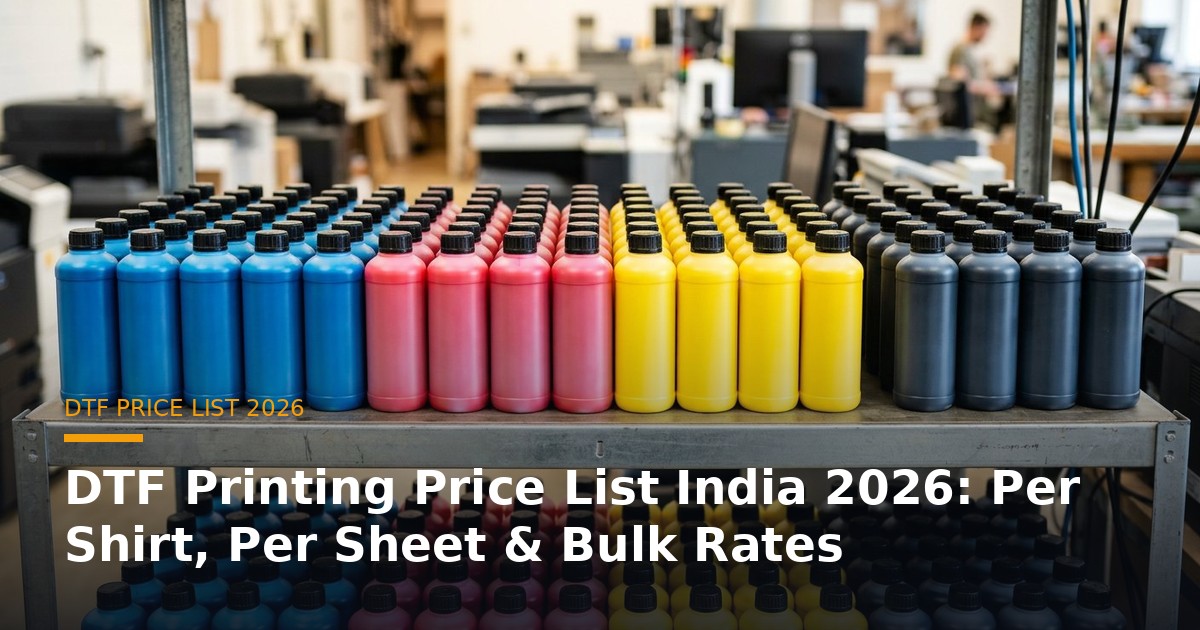
Whether you are buying DTF prints, selling custom apparel or starting a transfer business, knowing the going rates is essential. This DTF printing price list for India covers per-shirt, per-sheet and bulk rates, along with machine and consumable costs, so you can price accurately, budget correctly and understand the market.
DTF pricing depends on design size and coverage, garment quality, order volume and whether you’re buying finished garments or ready transfers. This guide gives realistic ranges for every common DTF product and service.
DTF Printing Price List India
| Item | Indicative Price |
|---|---|
| Custom DTF t-shirt (printed) | ₹150 – ₹400 |
| DTF hoodie (printed) | ₹450 – ₹900 |
| A3 DTF transfer / gang sheet | ₹50 – ₹100 |
| A4 DTF transfer / gang sheet | ₹30 – ₹60 |
| DTF transfers per running foot | ₹40 – ₹90 |
| Custom cap / bag (printed) | ₹150 – ₹400 |
Rates vary with design coverage, garment quality and order volume. Bulk orders typically attract lower per-unit prices.
DTF Machine and Setup Prices
| Item | Indicative Price |
|---|---|
| DTF printer (XP600) | ₹1.5L – ₹2.5L |
| DTF printer (Epson i3200) | ₹2.5L – ₹4.0L |
| Powder shaker & dryer | ₹1.5L – ₹2.5L |
| Heat press | ₹15,000 – ₹40,000 |
| Complete setup | ₹3.5L – ₹6.0L |
A complete DTF setup typically lands between ₹3.5 lakh and ₹6 lakh depending on configuration and automation.
DTF Consumable Prices
| Consumable | Indicative Price |
|---|---|
| DTF ink (per litre) | ₹300 – ₹700 |
| DTF film (per metre/roll) | ₹15 – ₹40 |
| DTF adhesive powder (per kg) | ₹300 – ₹600 |
Consumable prices vary with quality and purchase volume; buying in bulk lowers per-unit cost. These low consumable costs are a key reason DTF is so profitable.
DTF Cost Per Print (Production Cost)
Understanding production cost helps you price profitably. A single A3 DTF transfer typically costs ₹19–40 to produce (film, ink, powder, power). Add a blank t-shirt (₹50–120) and labour, and a finished printed t-shirt costs ₹80–185 to make. Against selling prices of ₹150–400, that leaves a healthy gross margin of 50–70 percent, which is why DTF is one of the most profitable small printing businesses.
Bulk and Wholesale DTF Rates
Bulk orders significantly reduce per-unit cost and price. Printing hundreds of the same design for a team, company or event lowers your cost per shirt through bulk consumable and garment buying and streamlined production. Wholesale gang sheets sold by the sheet or foot offer efficient volume. Most DTF businesses offer tiered pricing — standard rates for small orders and lower per-unit rates for bulk — to win team, corporate and wholesale business while protecting margin.
What Affects DTF Prices?
Several factors move DTF prices. Design size and ink coverage are the biggest — large, full-colour, white-heavy designs cost more. Garment quality affects finished-product prices. Order volume drives per-unit rates, with bulk orders costing less each. Rush orders and low minimums command premiums. Consumable quality and sourcing affect your costs. Understanding these factors lets you quote accurately and price competitively while protecting your margin.
How to Use This Price List
Use these indicative rates as a benchmark, but always validate against your own consumable costs, garment sourcing and local market. Calculate your true cost per product, add a healthy margin, and price according to value and competition in your area. Rates in metros may differ from smaller towns. Track your costs and margins per product so you price profitably and know which products earn the most. This price list is a starting point for accurate, competitive DTF pricing.
Why Buy Your DTF Setup from UED?
Unified Engineering Dynamics (UED) supplies, installs and services DTF setups across India, and helps you understand true running costs so you can price profitably. We provide genuine printheads, quality inks and consumables, professional installation and training, and dependable after-sales support — so you produce consistent, low-waste output and maximise the margin on every print.
Regional Variation in DTF Prices
DTF prices vary across India based on local factors. Metros and larger cities often have more competition, which can mean sharper pricing on prints but also higher rent and overheads for businesses. Smaller towns may have less competition and steadier local demand. Consumable prices are broadly similar nationwide but freight and local supplier availability affect cost. Garment sourcing and local selling power also differ. When pricing, benchmark against your local market and competitors, and factor in your own costs, rather than applying a single national rate to every job.
Pricing DTF for Different Customer Types
Different customers warrant different pricing. Retail individuals ordering single custom pieces pay premium rates for convenience and low minimums. Bulk buyers like teams, companies and event organisers expect lower per-unit prices for volume. Wholesale gang sheet buyers want competitive rates for regular orders. Online sellers need reliable print-on-demand pricing. Tailoring your pricing to each customer type — premium for retail, tiered for bulk, competitive for wholesale — maximises revenue across your whole customer base rather than applying one rate that leaves money on the table or prices out volume buyers.
Keeping DTF Prices Competitive While Staying Profitable
The key to competitive yet profitable DTF pricing is controlling your costs. Buy consumables and garments in bulk to lower per-unit cost, nest designs efficiently to reduce waste, maintain your printer to avoid reprints and downtime, and streamline your workflow. These efficiencies let you offer competitive prices while protecting your margin. Avoid racing to the bottom on price, because custom apparel customers value quality and reliability; compete on those, and use your cost efficiency to offer fair prices that sustain a healthy, growing business rather than undercutting yourself into losses.
Tracking and Updating Your DTF Prices
DTF costs and market rates change, so review your pricing regularly. Consumable prices fluctuate, garment costs vary, and competition shifts. Track your true cost per product — materials, labour, power and overheads — and update your prices when costs change. Monitor what competitors charge and what customers will pay. Review which products are most profitable and adjust your focus accordingly. Entrepreneurs who actively manage their pricing in line with costs and market stay competitive and profitable, while those who set prices once and forget often find their margins quietly eroding.
Quoting DTF Jobs Accurately
Accurate quoting protects your profit. Base every quote on the design size and coverage, the garment or format, the order volume and any rush or finishing requirements. Know your cost per transfer and per finished garment, then add a healthy margin. Offer tiered pricing for bulk so customers see the value of larger orders. Be transparent about what affects price so customers understand the quote. Accurate, confident quoting based on real costs — rather than guessing or copying competitors blindly — is essential to a profitable DTF business.
DTF Price by Design Size
Design size is one of the biggest drivers of DTF price, because larger designs use more ink, powder and film. A small logo or pocket print costs less than a large full-front or full-back design. As a rough guide, small prints add the least to garment cost, medium chest prints are moderate, and large full-front, full-back or all-over designs cost the most. White-heavy and full-colour designs also consume more ink. When quoting, base the price on the actual design size and coverage, and explain this to customers so they understand why larger, more complex prints cost more.
How to Calculate Your DTF Selling Price
A simple formula keeps your DTF pricing profitable. Start with your production cost per item — transfer (film, ink, powder, power), blank garment, labour and a share of overheads. Add your target profit margin, typically 50–70 percent for custom apparel. Factor in design complexity, order volume and any rush or finishing requirements. For example, a t-shirt costing ₹120 to produce might sell for ₹250–350 depending on the market. Review your costs regularly and adjust prices as consumable and garment costs change, so your margin stays healthy rather than quietly eroding.
DTF Price vs Screen Printing Price
DTF and screen printing are priced differently. Screen printing has high setup costs (screens, separation) but a low per-unit cost at volume, so it is cheaper for large runs of a single, simple design. DTF has no setup cost, so it is more economical for small batches, multi-colour and detailed designs, and one-off custom orders. For short runs and complex artwork, DTF is usually the better value; for very large single-design runs, screen printing can be cheaper. Understanding this helps you quote competitively and advise customers on the most cost-effective method for their order.
Offering DTF Pricing to Customers
How you present DTF pricing affects sales. Offer clear, transparent rates based on design size, garment and quantity, with tiered bulk pricing so customers see the value of larger orders. Provide quick, accurate quotes and explain what affects price — coverage, garment quality, volume and turnaround. Avoid hidden charges that frustrate customers. Competitive, transparent pricing builds trust and wins repeat business, while confusing or inconsistent pricing drives customers away. A simple price sheet or quick-quote process makes it easy for customers to order and helps you close sales faster.
DTF Price Trends in India
DTF prices in India have become more competitive as the technology has spread and more businesses offer it. Machine and consumable costs have fallen, making DTF accessible and keeping print prices affordable. However, competition means you can’t rely on price alone — quality, reliability, design capability and service are what win and retain customers. The trend is toward value-added services: finished garments, custom design, fast turnaround and niche products. Businesses that compete on quality and service rather than just price are best positioned to stay profitable as the DTF market matures.
Putting It All Together: Your DTF Pricing Strategy
A sound DTF pricing strategy combines accurate costs, healthy margins and market awareness. Know your true cost per product — transfer, garment, labour and overheads — and price above it with a 50–70 percent margin on custom apparel. Offer tiered bulk pricing to win team, corporate and wholesale orders, and premium rates for retail, rush and complex work. Stay competitive but never race to the bottom, because custom apparel customers pay for quality, design and reliability. Review your prices as consumable and garment costs change, and track which products earn the most so you can focus there. Done well, your pricing turns a busy DTF machine into a consistently profitable business rather than a high-volume, low-margin operation.
Final Word on DTF Pricing
DTF remains one of the most affordable and profitable printing businesses in India, with low machine and consumable costs, strong selling prices and healthy margins. Use this price list as a benchmark, but always base your own pricing on your true costs, local market and the value you deliver. Price for quality and reliability rather than racing to the bottom, offer tiered bulk rates, and review your prices as costs change. With accurate costing and confident pricing, a DTF business can turn modest investment into consistent, growing profit.
Frequently Asked Questions
What is the DTF printing rate per shirt in India?
Custom DTF-printed t-shirts typically sell for ₹150–400 depending on design, garment quality and market, with a production cost of roughly ₹80–185 per shirt.
How much do DTF transfers cost?
DTF transfers and gang sheets sell for roughly ₹30–60 (A4), ₹50–100 (A3) or ₹40–90 per running foot, with production costs of about ₹15–40 per sheet.
What does a complete DTF setup cost?
A complete DTF setup — printer, powder shaker-dryer and heat press — typically costs ₹3.5–6 lakh in India, depending on configuration and automation.
Are DTF prices the same across India?
No. Rates vary by city, competition, garment sourcing and local demand. Metros may have sharper print pricing but higher overheads, while smaller towns may have steadier local rates. Always benchmark against your own costs and local market.
Do these prices include GST and installation?
Usually not. Prices are typically ex-GST and may exclude installation and training. Always request a written, configuration-specific quotation.
Want help choosing the right DTF setup? Talk to UED’s specialists — share your budget and volume, and we’ll recommend the right machine with transparent pricing. Request a quote →
Prices and figures on this page are indicative estimates and vary with configuration, consumables, location and volume. Always confirm a written, configuration-specific quotation.
