

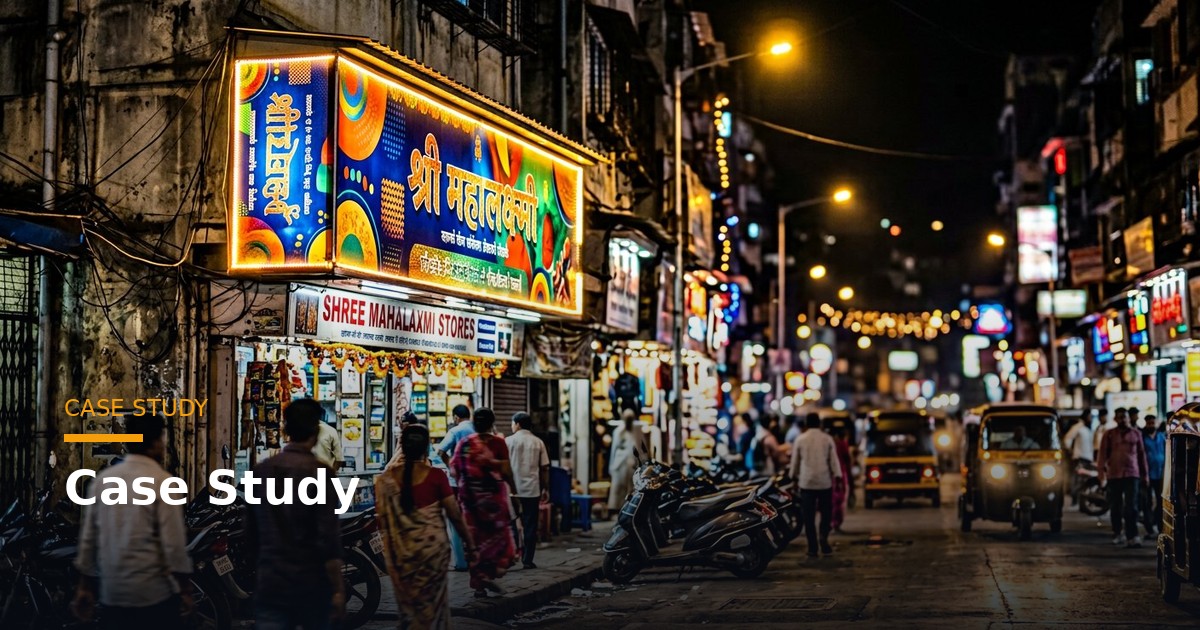
This anonymised case study follows a retail signage and glow-signboard business that had growing demand for backlit flex and illuminated signage but was limited by its production capacity. By investing in a UED Konica KM512i flex printer, the business scaled its output, took on larger retail and chain-restaurant contracts, and improved its reliability and margins. Here is how the upgrade transformed the business and what signage businesses can learn from it.
The Business and Its Challenge
The business — a signage company producing glow signboards, backlit flex, retail signage and shop boards — served local shops, restaurants and retailers. Demand was strong and growing, particularly from retail chains, restaurant brands and franchises that needed multiple illuminated signboards to a consistent standard across locations. These were valuable, repeat contracts. But the business’s production capacity limited how much it could take on, and its equipment struggled to consistently produce the vibrant, evenly-lit backlit flex that quality glow signage demands. The constraint was capacity and consistency, not demand.
The Situation Before
Before the upgrade, the business ran limited-capacity equipment that could not keep up with demand, especially for larger multi-location contracts. Backlit flex for glow signage requires vibrant, consistent, high-density printing that looks even when illuminated — any inconsistency shows up glaringly when the sign is lit. The older equipment struggled to deliver this consistently at volume, and its limited capacity meant the business had to turn away or subcontract larger contracts. As retail chains and franchises sought suppliers who could deliver multiple consistent signboards to deadline, the business was losing these valuable contracts to better-equipped competitors.
Machine at a Glance
| Specification | Detail |
|---|---|
| Machine | UED Solvent Flex Printer (Konica KM512i, 3.2 m) |
| Printheads | 4–8 × Konica Minolta KM512i (industrial) |
| Print width | 3.2 m |
| Speed | High-volume production |
| Ink | Quality solvent, matched to Konica heads |
| Best for | Backlit flex, glow signboards, large-format signage |
The Konica KM512i heads were well suited to the demands of backlit flex and high-volume signage. Backlit flex needs dense, vibrant, consistent ink coverage to glow evenly, and the industrial Konica heads deliver the reliable, high-quality output this requires, at production speed. The 3.2m width handled the large formats used for signboards and hoardings. For a business serving retail chains needing multiple consistent signboards, the combination of capacity, consistency and the ability to produce dense, vibrant backlit flex was exactly what was needed to win and fulfil larger contracts.
The Solution and Approach
The business invested in the UED Konica flex printer and standardised its backlit-flex production. It focused on the quality that illuminated signage demands — dense, vibrant, consistent printing on backlit flex that glows evenly, with no banding or thin spots that show when lit. It also established consistent colour management so that signboards for a chain matched across locations. Paired with quality solvent ink matched to the Konica heads, the business could produce the vibrant, durable, consistent backlit flex that retail and restaurant brands expect, at the volume needed for multi-location contracts.
Implementation and Support
The transition prioritised getting production-ready and quality-consistent. Operators were trained on the Konica machine, backlit-flex printing, colour management and maintenance. The business refined its backlit-flex workflow to ensure the dense, even coverage that illuminated signage requires. UED’s installation, training and support helped the business become productive quickly. Within a short period, it was producing vibrant, consistent backlit flex at volume and had the capacity and sample quality to bid for the retail-chain and franchise contracts it had previously had to decline or subcontract.
The Results
The upgrade transformed the business’s capacity and market. Indicative results:
| Aspect | Before | After |
|---|---|---|
| Production capacity | Limited | High-volume |
| Backlit flex quality | Inconsistent | Vibrant, even, consistent |
| Multi-location contracts | Turned away | Won and fulfilled |
| Reliability | Variable | Dependable |
| Subcontracting | Often needed | In-house |
The capacity leap let the business take on multi-location retail and franchise contracts it had previously declined, and bring work in-house that it had been subcontracting (improving margins and control). The consistent, vibrant backlit flex quality won and retained brand clients who needed reliable, matching signboards across locations. Reliability improved dramatically with the industrial machine. Within its first year, larger retail-chain and franchise contracts had become a significant, growing part of the business.
The Financial Impact
The economics were strong. Multi-location retail and franchise contracts are valuable — multiple signboards per contract, often recurring as chains expand or refresh locations. The capacity to fulfil these contracts unlocked significant new revenue. Bringing previously subcontracted work in-house also captured margin that had been going to third parties. And the reliable industrial machine reduced the downtime and quality problems that had caused waste and delays. Based on the larger contracts won and margins captured, the owner estimated a solid return within the machine’s first couple of years — typical for a well-utilised production machine in a business with genuine demand.
Why It Worked
Several factors drove the success. First, the business had real, growing demand — the machine addressed a genuine capacity constraint. Second, the Konica KM512i heads were the right choice for high-volume backlit flex and signage, delivering the dense, vibrant, consistent output illuminated signage demands. Third, quality ink and proper maintenance protected the machine and ensured consistent output. Fourth, focusing on the quality that backlit flex requires — even, dense coverage — won quality-conscious brand clients. And fifth, professional training and support got the business productive quickly. The combination of genuine demand, the right equipment and a focus on quality made the investment pay off.
The Owner’s Perspective
The owner’s key insight was about consistency at scale. “A shop owner wants one good signboard,” the owner explained. “A restaurant chain wants fifty identical ones, lit perfectly, delivered on time. That is a different game — and one we could not play before.” The ability to deliver consistent quality at volume was what unlocked the valuable chain and franchise contracts. The machine provided the capacity and consistency, but the business’s focus on the quality that illuminated signage demands was what won the clients. For the owner, the investment was about being able to compete for the larger contracts that build a serious signage business.
Key Takeaways
Signage businesses can draw clear lessons. First, the valuable contracts in retail and glow signage are multi-location chain and franchise jobs, which demand consistent quality at volume. Second, backlit flex requires dense, vibrant, even printing — quality that industrial Konica heads deliver reliably. Third, quality ink and maintenance protect the machine and ensure the consistency that wins brand clients. And fourth, capacity and consistency together unlock larger contracts and let you bring subcontracted work in-house. Signage businesses with growing demand that invest in production-capable equipment and focus on backlit-flex quality can move from local one-off jobs to the valuable chain contracts that build a resilient business.
This is an anonymised, representative case study based on typical UED machine performance. Individual results vary with market, management, utilisation and local conditions.
The Craft of Backlit Flex
Backlit flex for glow signage is a craft with specific demands, and mastering it was central to the business’s success. Unlike regular banners, backlit flex is illuminated from behind, so the print must be dense, vibrant and perfectly even — any thin spot, band or inconsistency glows visibly when the sign is lit, ruining the effect. Achieving this requires dense, saturated ink coverage, consistent printing with no banding, and quality backlit media. The business focused on these specifics, refining its process to produce backlit flex that glowed evenly and vibrantly. This is where the industrial Konica heads proved their worth, delivering the dense, consistent coverage that illuminated signage demands.
The quality of backlit flex is also immediately visible to clients — a glow signboard is seen lit, often at night, and poor quality is glaringly obvious. A sign that glows evenly and vibrantly showcases the client’s brand beautifully; one with thin spots or banding looks cheap and reflects badly on both the client and the sign maker. By mastering backlit flex, the business delivered signboards that made clients’ brands shine — literally. This quality is what won and retained retail and restaurant clients, for whom the illuminated signboard is a crucial piece of their brand presence and customer attraction.
Serving Chain and Franchise Clients
Serving retail chains and franchises has specific requirements that the business learned to meet. These clients need multiple signboards to a consistent standard across locations, delivered on coordinated schedules, often with brand-specific colour standards. This demands consistency (every sign identical), capacity (many signs to deadline) and reliability (coordinated delivery). The business built these capabilities — consistent colour management, production capacity from the Konica machine, and reliable scheduling. Meeting these requirements made it a trusted supplier for chains, which value a partner who can deliver consistent quality across many locations reliably.
Chain and franchise work is also highly valuable and recurring. Chains expand, open new locations, refresh branding and replace signboards, so a trusted signage supplier gains ongoing work. Franchises, in particular, need signage for each new franchisee, creating a steady stream. By becoming a reliable supplier to chains and franchises, the business built recurring revenue relationships far more valuable than one-off local jobs. This recurring, multi-location work became the foundation of the business’s growth — and it required exactly the capacity, consistency and reliability that the Konica investment provided.
Maintaining Production Reliability
With larger contracts came higher stakes for reliability — a chain expecting fifty signboards by a deadline cannot tolerate machine downtime. The business therefore invested in maintaining its production reliability: quality solvent ink to protect the Konica heads, disciplined maintenance routines, and keeping spare parts and support access. Reliability became a competitive advantage — the business could commit to deadlines and meet them, which is what wins and retains chain clients. A supplier who reliably delivers to deadline is far more valuable than a cheaper one who misses them.
This focus on reliability reflects a broader truth in production printing: uptime is money, especially on deadline-driven contracts. The business treated maintenance and quality ink not as costs but as investments in its ability to deliver reliably. The industrial Konica machine, properly maintained and fed quality ink, ran dependably, letting the business take on deadline-critical chain work with confidence. For a signage business serving chains and franchises, production reliability is not a nicety — it is the foundation of the trust that wins recurring, high-value contracts.
Could This Be Your Business’s Story?
This case study reflects a path open to many signage businesses. If you have growing demand for backlit flex and illuminated signage but are limited by capacity or consistency, the retail-chain and franchise market may be within reach — but it demands consistent quality at volume, and backlit flex demands dense, even, vibrant printing. The businesses that win these valuable contracts invest in production-capable equipment like a Konica flex printer, master the craft of backlit flex, and build the reliability that deadline-driven chain work requires.
The reward is a stronger, more resilient business built on recurring, high-value contracts. Chains and franchises provide ongoing work as they expand and refresh, far more valuable than one-off local jobs. And the reputation for consistent, reliable quality that wins them compounds. For a signage business with growing demand, investing in production capacity and mastering backlit-flex quality is a proven path to the valuable chain and franchise contracts that build a resilient business. The illuminated signage market rewards those who can deliver consistent, vibrant, reliable signboards at scale.
The illuminated signage market is growing with retail, restaurant and franchise expansion, and it consistently rewards suppliers who can deliver vibrant, even, reliable signboards at volume. For a signage business ready to move beyond local one-off jobs, production capacity and backlit-flex mastery are the keys to the valuable, recurring chain contracts that build a lasting business.
Ready to Scale Your Signage Business?
Retail-chain and franchise contracts reward capacity, consistency and quality. Unified Engineering Dynamics manufactures Konica flex printers for backlit flex and signage, with quality inks and nationwide support.
Discuss scaling your signage production with UED → Tell us your demand, and we will recommend the right machine.
