

This anonymised case study follows a traditional screen printing business that had served the garment market for years but was losing work it could not handle — short runs, full-colour and photographic designs, and complex multi-colour jobs. By adding a UED DTF printer alongside its screen printing, the business could serve the full range of garment decoration demand, retaining clients and winning new work. Here is how adding DTF complemented screen printing and what garment decorators can learn.
The Business and Its Challenge
The business — an established screen printing garment decorator — had built its reputation on screen-printed apparel for brands, teams, events and retail. Screen printing excels at bold, spot-colour designs at volume, and the business did it well. But the garment decoration market was changing: clients increasingly wanted short runs, full-colour and photographic designs, gradients and complex multi-colour artwork — work that screen printing handles poorly or uneconomically (each colour needs a screen, making complex or short-run jobs costly). The business was turning away or struggling with this growing category of work, and losing clients to decorators with digital capability.
The Situation Before
Before adding DTF, the business was limited to what screen printing does well. Short runs were uneconomical (screen setup costs could not amortise over few garments), full-colour and photographic designs were difficult or impossible (screen printing uses spot colours, not full-colour process), and complex multi-colour artwork was costly and time-consuming. As clients increasingly wanted exactly these — small batches, photographic prints, complex designs — the business had to decline them or produce them poorly. It was losing work and clients to digital-capable competitors, even though its core screen-printing business remained strong. The business needed digital capability to complement screen printing and serve the full range of demand.
Why DTF Complemented Screen Printing
DTF was the ideal complement to screen printing, because it excels exactly where screen printing struggles. DTF prints full-colour, photographic designs with unlimited colours and gradients — no screens, no colour limits. It is economical for short runs and one-offs, with no per-design setup costs, making small batches profitable. And it handles complex, detailed artwork easily. Meanwhile, screen printing remained the better choice for the bold, spot-colour, high-volume work it excels at. Together, the two technologies covered the entire garment decoration market: screen printing for volume spot-colour work, DTF for short runs, full colour and complex designs. Adding DTF did not replace screen printing — it completed the business’s capability.
Machine at a Glance
| Specification | Detail |
|---|---|
| Machine | UED DTF Printer (i3200, 60 cm) |
| Printheads | 2 × Epson i3200 (industrial) |
| Speed | ~180–220 sq m/hour (production) |
| Ink | DTF CMYK + White (quality grade) |
| Best for | Short runs, full colour, complex designs |
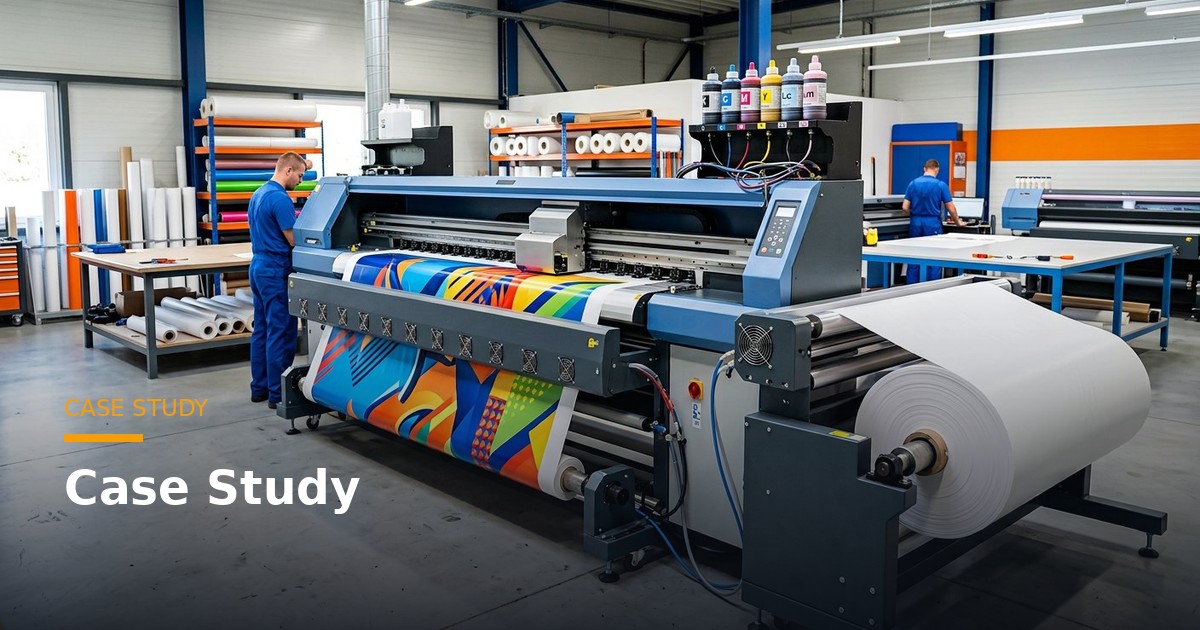
The i3200 60cm DTF printer was the right addition. Its production capability handled the DTF work at volume when needed, and the i3200 heads provided reliability. DTF’s white ink let it print on dark garments, and its full-colour capability handled the photographic and complex designs screen printing could not. The 60cm width suited garment decoration. Paired with quality DTF ink and proper white-ink maintenance, the printer gave the business a digital capability that perfectly complemented its screen printing — together covering every garment decoration need a client could have.
The Solution and Approach
The business integrated DTF alongside screen printing, offering clients the right technology for each job. It used screen printing for bold, spot-colour, high-volume work (where it excels and is most economical) and DTF for short runs, full-colour and photographic designs, and complex artwork (where DTF excels). This meant the business could now say yes to almost any garment decoration request, retaining clients it might otherwise have lost and winning new work it previously could not serve. Clients benefited from a decorator who could handle any job with the right technology. The business positioned itself as a full-capability garment decorator, not limited to one method.
Implementation and Support
Adding DTF required learning the digital process alongside its established screen-printing skills. The business trained its team on the DTF workflow — printing, powdering, curing, pressing — and on white-ink maintenance, critical for protecting the i3200 heads. It standardised on quality DTF ink and learned when to use DTF versus screen printing for optimal results and economics. UED’s installation, training and support helped the business add the digital capability smoothly. Within a few months, the business was confidently handling both screen-printed and DTF work, offering clients the best technology for each job and serving the full range of garment decoration demand.
The Results
Adding DTF transformed the business’s capability and market. Indicative results:
| Aspect | Screen Printing Only | Screen + DTF |
|---|---|---|
| Short runs | Uneconomical | Profitable (DTF) |
| Full colour / photo | Difficult | Easy (DTF) |
| Complex designs | Costly | Easy (DTF) |
| Volume spot colour | Excellent (screen) | Excellent (screen) |
| Clients retained | Losing some | Retained + new |
The business could now serve the full range of garment decoration demand, retaining clients it had been losing and winning new work it previously could not handle. The combination of screen printing and DTF made it a full-capability decorator, able to recommend the right technology for each job. Short runs, full-colour and complex designs — previously turned away — became profitable work. And clients valued having one decorator who could handle anything. Within its first year, adding DTF had expanded the business’s market, retained and grown its client base, and captured the work it had been losing to digital-capable competitors.
The Financial Impact
The economics of adding DTF were compelling. It captured work the business had been losing — short runs, full-colour and complex designs — turning declined jobs into revenue. It retained clients who might otherwise have moved to digital-capable competitors, protecting the existing revenue base. And it won new clients who needed the full-capability offering. The DTF investment paid for itself through the new and retained work, while the existing screen-printing business continued to serve its volume spot-colour work profitably. Based on the captured and retained work, the owner estimated a solid return — adding DTF was not just new revenue but protection of the existing business against competitors with digital capability.
Why It Worked
Several factors drove the success. First, the business recognised that DTF complements rather than replaces screen printing — each excels at different work. Second, DTF addressed exactly the gaps in screen printing: short runs, full colour and complex designs. Third, the i3200 DTF printer provided capable digital production. Fourth, quality DTF ink and white-ink maintenance protected the heads and ensured quality. And fifth, offering both technologies made the business a full-capability decorator, retaining and winning clients. The business succeeded by seeing DTF as a complement that completed its capability, letting it serve the full range of garment decoration demand and compete with digital-capable rivals — without abandoning its strong screen-printing core.
The Owner’s Perspective
The owner’s key insight was that DTF and screen printing are partners, not rivals. “Screen printing is still the best for bold, high-volume spot colour,” the owner explained. “But clients also want short runs and full-colour photo designs — and DTF does those perfectly. Together, we can do everything.” That complementary view was crucial. Many traditional screen printers see digital as a threat, but the successful ones see it as a complement that completes their capability. For the owner, adding DTF was not about replacing a proven business but about completing it — retaining clients, winning new work and ensuring the business could serve every garment decoration need in a changing market.
Key Takeaways
Garment decorators can draw clear lessons. First, DTF complements screen printing rather than replacing it — each excels at different work, and together they cover the entire garment decoration market. Second, DTF addresses screen printing’s gaps: short runs, full colour, photographic and complex designs. Third, adding DTF retains clients and captures work otherwise lost to digital-capable competitors. And fourth, quality DTF ink and white-ink maintenance are essential. For a traditional screen printer, adding DTF is a powerful way to become a full-capability decorator — serving the full range of demand, retaining clients and future-proofing the business in a market where digital capability is increasingly expected.
This is an anonymised, representative case study based on typical UED machine performance. Individual results vary with market, management, utilisation and local conditions.
When to Use DTF versus Screen Printing
A key skill the hybrid business developed was knowing when to use each technology, since choosing correctly optimises both quality and economics. Screen printing is the better choice for bold, spot-colour designs at higher volumes — where the screen setup cost amortises and screen printing’s vibrant, opaque spot colours excel. DTF is the better choice for short runs, full-colour and photographic designs, gradients and complex multi-colour artwork — where screen printing would be uneconomical or impossible. The business learned to assess each job and recommend the right technology, ensuring clients got the best result at the best price. This expertise — matching the technology to the job — is the value of a full-capability decorator.
This knowledge also let the business educate clients and win their trust. Many clients do not understand the differences between screen printing and DTF, and a decorator who can advise them on the best method for their design, quantity and budget is a valued partner. By guiding clients to the right technology, the business delivered better results and built trusted relationships. And internally, using the right technology for each job optimised costs and quality — screen printing where it excels, DTF where it excels. For a hybrid garment decorator, this expertise in matching technology to job is a key competitive advantage, enabling it to serve every requirement optimally and advise clients as a trusted full-capability partner.
White-Ink Discipline in a Hybrid Shop
Adding DTF introduced white-ink maintenance as a critical new discipline for the business. DTF’s white ink is essential for printing on dark garments but is demanding — its heavy pigment settles and clogs the expensive i3200 nozzles if not kept properly agitated and circulated. For a shop accustomed to screen printing (which has no equivalent maintenance concern), this was a new and essential routine. The business made white-ink care a rigorous daily habit — circulation, stirring, regular maintenance and never letting white sit stagnant — and used quality DTF white ink. This discipline protected the i3200 heads and ensured consistent output.
Neglecting white-ink maintenance is a leading cause of DTF printhead failure, and for a hybrid shop the DTF heads are a valuable addition that must be protected. The business recognised that its new DTF capability depended on this discipline — a clogged, ruined head would mean costly replacement and lost digital capability. By treating white-ink care as non-negotiable and using quality ink, the business kept its DTF heads healthy and its digital capability reliable. This is a key lesson for screen printers adding DTF: the technology brings powerful new capability, but also a critical maintenance discipline (white-ink care) that must be mastered to protect the investment and ensure the DTF complements screen printing reliably.
Future-Proofing a Garment Business
Adding DTF was ultimately about future-proofing the business in a changing garment decoration market. The market increasingly demands short runs, full colour, complex designs and fast turnaround — trends driven by e-commerce, personalisation, small brands and fast fashion — that favour digital decoration. A screen-printing-only business risks being left behind as the market shifts toward these digital-friendly requirements. By adding DTF, the business ensured it could serve the evolving market, retaining relevance and clients as demand changes. It was not abandoning screen printing, which remains strong for its core applications, but ensuring the business could meet the full range of current and future garment decoration demands.
This future-proofing is essential in an industry where digital capability is increasingly expected. Clients — especially brands, e-commerce sellers and those needing short runs and complex designs — increasingly seek decorators with digital capability. A business that offers both screen printing and DTF can serve the entire market and will not lose clients to digital-capable competitors. By adding DTF, the business future-proofed itself — retaining its proven screen-printing strength while gaining the digital capability the market increasingly demands. For a traditional garment decorator, adding DTF is not just about new work today; it is about ensuring the business remains competitive and relevant as the garment decoration market continues to evolve toward digital.
Ready to Expand Your Garment Decoration Capability?
DTF complements screen printing, covering short runs, full colour and complex designs. Unified Engineering Dynamics supplies production DTF printers, quality inks and expert support.
Discuss adding DTF to your garment business with UED → Tell us your current setup, and we will recommend the right DTF addition.
