

Updated: October 2026
Unipoles are the billboards of Indian highways – and their faces change every 30-90 days, forever. Whoever prints those faces owns one of the steadiest repeat businesses in outdoor advertising. Add trivision’s rotating slats to the mix and you serve the premium end of the same trade. This guide maps standard sizes, print rates, pasting rules and exactly how the agency money flows. All figures are estimates (est.).
Standard Indian Hoarding Sizes (est.)
| Format | Typical face size | Print approach |
|---|---|---|
| City unipole standard | 15 x 10 ft, 20 x 10 ft | seamless on 16 ft machine, single print |
| Highway mega unipole | 30 x 10 ft, 40 x 10 ft | 2-3 panel, 16 ft width, planned seam map |
| Gantry and arch media | custom 8-14 ft spans | panel per span, strict measurement |
| Trivision rotating slat face | matches host structure, 3 creatives | 3 faces printed as slat-strips with exact pitch cutting |
| Pole kiosk and street furniture | 4 x 6 ft class | routine 10 ft machine territory, often backlit |
Print Rate Reality for Unipoles (est.)
| Tier | Rate per sqft | Condition |
|---|---|---|
| Agency wholesale monthly card | Rs 4-6 | their faces per month committed, their payment on 30-90 day cycles |
| Standard retail unipole face | Rs 7-12 | your media, your print, normal city work |
| Star flex premium unipole | Rs 8-15 | close-view city media, agency brand standards |
| Rush and change-over premiums | plus 15-30% | 48-72 hour turnarounds at face-change dates |
One face example (est.): a 20 x 10 unipole at Rs 6 wholesale bills Rs 1,200 per face – small money alone, massive money when your card covers 40-80 faces monthly across one district.
Pasting and Survival Rules Nobody Writes Down
- Face-change rhythm: agencies rotate faces on 30-90 day cycles tied to advertiser campaigns – being two days early on a change date is normal service; two hours late makes you replaceable.
- Pole and site permissions sit with the site owner or concession agency – printers print; never invoice pasting unless you carry installers and insurance.
- Weather windows: face pasting in monsoon gusts is a reprint story – print with 48-72 hour buffer before pasting dates and store faces roll-tubed, numbered per site.
- Trivision cutting discipline: pitch measurement must match the structure’s slat spacing exactly – measure the structure again per site, never trust the last site’s drawing.
How the Agency Economy Actually Works
| Player | Role | What they need from a printer |
|---|---|---|
| Media site owner or unipole operator | owns structure and permissions | reliable face supply at change dates |
| Outdoor media agency | sells the slots to brands | rate-card printing, color discipline, rush capacity |
| Brand or advertiser | buys the campaign | sees only the result – one bad face photo ends relationships |
| Local installer teams | pasting and mounting crews | faces numbered with site maps, delivered early |
Winning Unipole Work for a 16 ft Plant
- Map every unipole within 100 km with face size and owner – a measured site register is worth more than any advertisement.
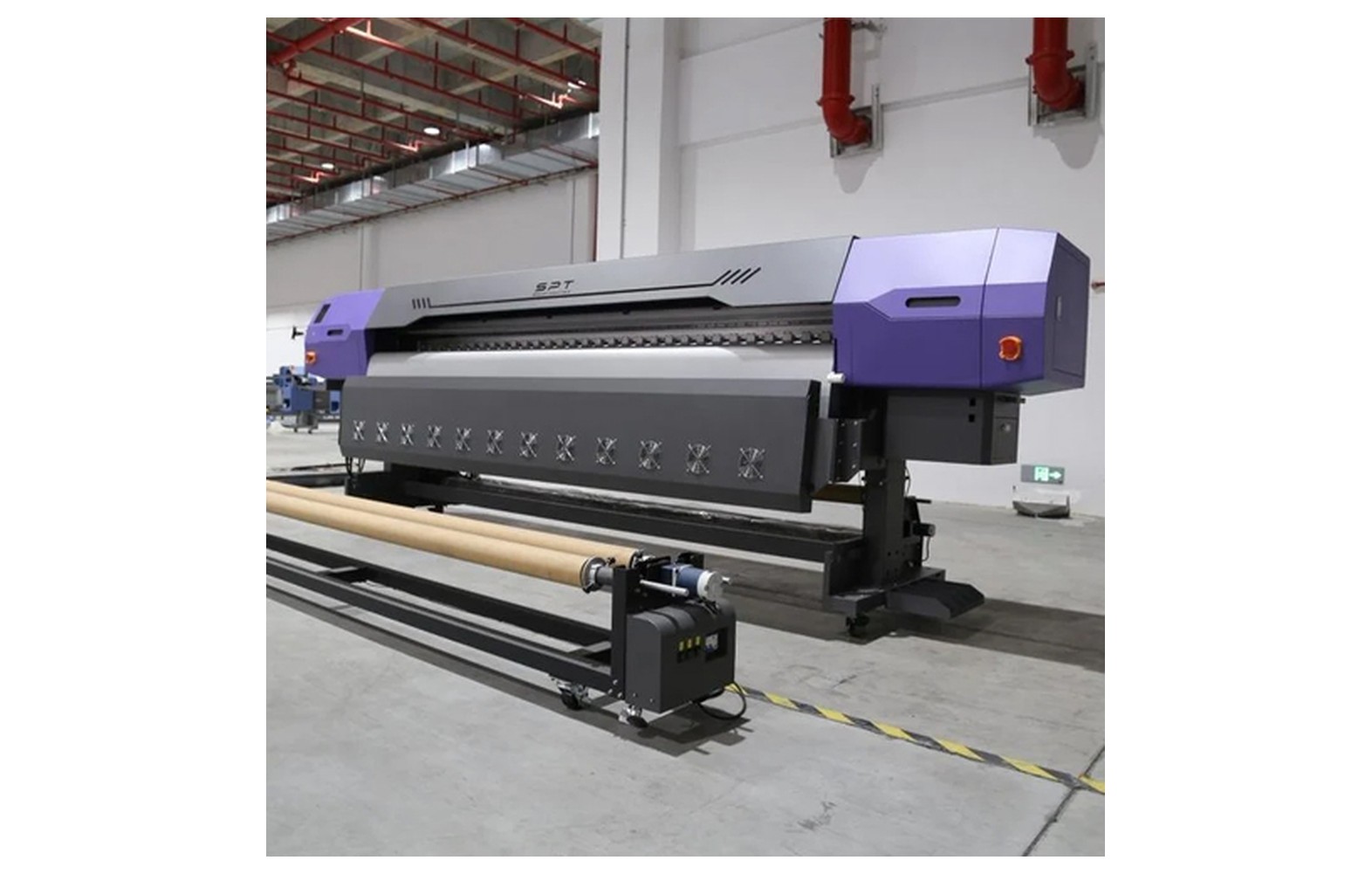
- Offer the seamless pitch first: on 15-20 ft faces your 5m machine prints what 10 ft competitors cannot – lead with that fact, not with a rate cut.
- Sign 30-90 day cycle cards with two agencies before chasing retail faces – predictable volume beats sporadic margin in this trade.
- Track pasting dates printed on every face roll label – the plant that never misses a change-date owns the district in two seasons.
Our Verdict
Unipole printing is the annuity business of flex: faces rotate forever and the printer who never misses a change-date never loses the contract. One district’s site register plus two agency cards equals a full order book. See this print-stream inside the Rs 2 Cr flex hoarding plant case study, compare wholesale formats in the all-India printing business startup guide, browse flex printing machines, and plan with the flex machine price guide.
FAQs – Unipole and Trivision Hoarding Printing Guide
What is the printing rate for unipole hoardings in India?
Rs 4-6 per sqft on agency monthly cards, Rs 7-12 retail with your media, and Rs 8-15 for star flex premium city faces (est.), plus 15-30% rush premiums at 48-72 hour change-overs. A 20 x 10 face at Rs 6 bills Rs 1,200 – volume, not ticket size, makes this business.
What size is a standard unipole hoarding face?
City standards run 15 x 10 ft and 20 x 10 ft; highway mega unipoles go 30-40 ft wide by 10 ft high (est.). A 16 ft machine prints city faces seamless in one pass; mega faces run as planned multi-panels with an approved seam map.
How does trivision hoarding printing work?
Trivision faces are three rotating creatives printed as precision slat-strips matched to the structure’s pitch (est.). Print them on one roll with exact pitch cutting, label strips in sequence, and measure each structure on site – pitch tolerances are unforgiving.
How do I get hoarding agency printing contracts?
Build a measured site register of unipoles within 100 km, visit the agencies and site owners with seamless-face samples and a written monthly rate card, and prove change-date reliability on the first three faces (est.). Two agency cards typically fill a 16 ft machine’s safe volume.
More 16 ft flex printing machine guides: 16 Feet Flex Machine Price Guide 2026, 10 ft vs 16 ft Flex Machine, Hoarding Printing Business Guide, Konica 512i vs 1024i Printheads, 16 ft Flex Machine Running Cost, Star Flex vs Normal Flex Difference, 16 ft Flex Machine Installation Guide, Flex Printing Materials and Rates, 16 ft Flex Machine Maintenance Schedule, 16 ft Flex Plant ROI Case Study, Second-Hand 16 ft Flex Machine Checklist, Building Wrap and Facade Printing Guide, 16 ft Flex vs UV Roll-to-Roll, 15 Common Flex Machine Problems and Fixes.
Share your hoarding sizes and target buyers on the contact page – we reply with an exact machine quote, freight and installation plan for your city, with on-site training across India.
