



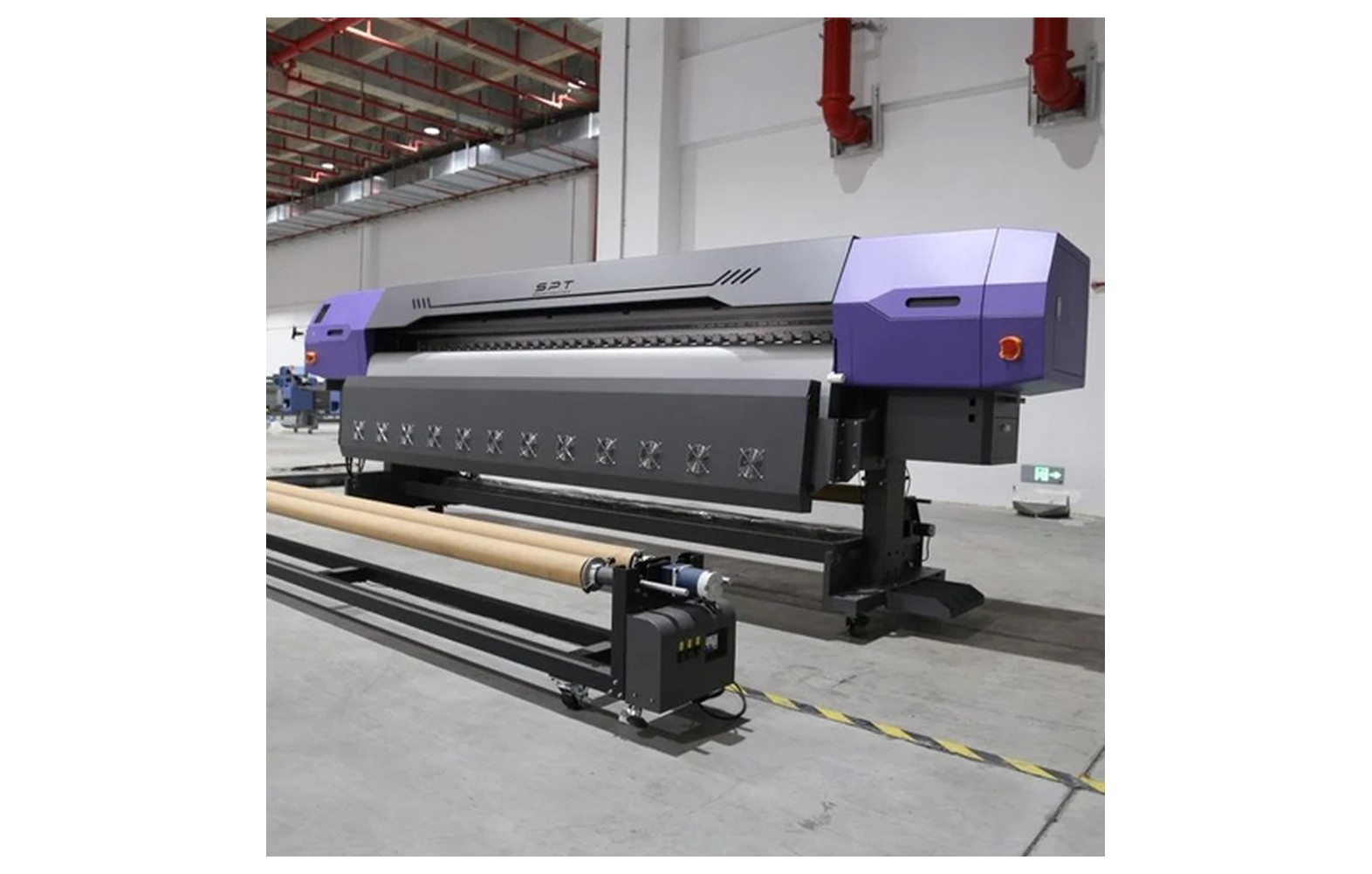
Direct answer: Moving from one printer to a production facility requires evidence of repeat demand, measured finished-output capacity, a documented workflow, a realistic cash plan and qualified site assessments. More equipment alone does not guarantee more orders, reliable delivery or profit.
What Expansion Changes
A one-printer shop may rely on a founder for sales, artwork, production and packing. A larger facility introduces more equipment, people, materials, handoffs and fixed obligations. The business must coordinate quality and cash as well as print capacity.
Expansion can mean an additional shift, finishing equipment, a second printer, a partner or another site. The right choice depends on the measured bottleneck and customer requirements. A printer’s advertised speed does not describe the complete operation.
This guide is educational, not investment, legal or tax advice. Examples are hypothetical and do not represent real customer outcomes or promised returns. Use actual records and qualified advisers for the business.
1. Confirm Repeat Demand
Review actual paid orders, repeat purchases, customer requirements and collection history. Separate written commitments from exploratory enquiries and forecasts. One successful pilot does not guarantee sustained demand.
Identify customer concentration and the effect of a delayed or lost order. Ask which products, quantities and delivery terms the proposed expansion would serve.
Build a downside case with slower sales. Additional capacity does not automatically create orders or profit.
2. Measure the Complete Workflow
Map enquiry, specification, artwork approval, blank sourcing, printing, curing or finishing, inspection, packing and delivery. Identify the owner and time required for each stage.
Measure accepted finished output for representative jobs. State whether setup, rework and packing are included. A machine’s maximum advertised print speed is not delivered capacity.
The bottleneck may be artwork approval, a heat press, cutter, binding partner or dispatch rather than the printer. Preserve samples and records so alternatives can be compared.
3. Standardise Product Specifications
For each offering, record the actual substrate, coating, dimensions, artwork, ink or transfer, fixture, finishing and intended use. A shirt, coated mug and painted bottle require different processes and tests.
Approve a physical sample and agree wash, adhesion, handling or distribution criteria with the customer and suppliers. A casual scratch or one wash is not a universal certification.
If a blank or supplier changes, reassess compatibility and obtain a new proof where needed. A visually similar material can behave differently.
4. Compare Capacity Options
Possible options include a second shift, improved scheduling, a finishing upgrade, another printer or a qualified partner. Each has different staffing, service, quality and cash implications.
Use current itemised quotations and measured work. Compare the same finished product scope, including setup, finishing, rejects, packing and delivery. Do not assume a new printer solves a downstream bottleneck.
Set a decision point and state the demand and cost assumptions. Retain the baseline so the result can be reviewed after a change.
5. Plan the Facility and Layout
Map receiving, material storage, artwork, printing, finishing, inspection, packing and dispatch. Allow safe access for operators and service according to equipment instructions. The required space depends on the actual machines, products and site.
Separate incompatible or dust-generating processes where appropriate. Assess ink, powder, adhesive and cleaning-material storage using safety data sheets and qualified workplace guidance.
Do not use a universal floor-area figure or assume a room fan controls every emission. Ask the equipment suppliers and qualified professionals to assess the actual facility.
6. Electrical and Ventilation Assessment
Collect nameplates and manuals for printers and separately powered accessories. A qualified electrician should assess supply, circuits, protection, isolation and earthing under applicable requirements. Do not size a stabiliser or UPS using a generic multiplier.
Ventilation depends on the actual inks, powders, cleaners and tasks. A qualified occupational-hygiene or ventilation professional can help assess controls, make-up air and discharge. A room fan or air conditioner alone does not prove exposure control.
Keep UV shielding, laser guards and interlocks in place. Stop for leaks, smoke, damaged guards or electrical warnings and use qualified personnel for restricted service.
7. Budget the Complete Expansion
Request itemised quotations for equipment, software, fixtures, finishing, delivery, installation, training, consumables, warranty and local service. Include site work and professional assessments where required.
Also consider staffing, stock, packaging, maintenance, insurance where appropriate and working capital. A printer price is not the full expansion cost. Record each figure as actual, quoted or assumed with its source and date.
Do not promise a fixed profit margin or payback period. Obtain qualified financial advice for the actual business and financing terms.
8. Calculate Unit Economics and Cash Timing
For each representative accepted item, list price and variable costs: blank, ink or transfer, job-specific labour, finishing, packaging, delivery and a reasoned reject allowance. Contribution is price minus defined variable costs; it is not net profit.
Fixed overhead, financing, taxes and other expenses still need coverage. A mixed-product business should model each product or a clearly stated sales mix. Do not assume one generic margin applies to every item.
Prepare a separate cash schedule. Equipment deposits, stock and wages may be due before customer invoices are collected. Test slower sales, delayed payments, higher rejects and a service interruption.
9. Plan Staffing and Training
Define responsibilities for sales, artwork, production, finishing, quality, packing, finance and service escalation. A second shift or location needs supervision and handover, not just another machine.
Use manufacturer instructions and task-specific training. Electrical enclosures, ink lines, UV lamps and restricted mechanical adjustments require qualified personnel. Operators should know normal shutdown and emergency reporting.
Record founder labour and training time in the plan. Do not assume that adding an employee immediately doubles output.
10. Build Supplier and Partner Resilience
Document approved inks, blanks, media, fixtures and finishing partners. Ask about lead times, spare parts, warranty exclusions and defect remedies. A low print-only quote may not include finishing or delivery.
Test a backup supplier before an urgent substitution. A visually similar coating, garment or adhesive can behave differently and may require a new customer proof.
Agree who supplies materials, owns tooling, approves artwork and pays for rework. Outsourcing does not remove responsibility for the customer promise.
11. Maintain Quality Across Shifts
A documented procedure should identify the product, material, machine configuration, safety steps, proof and acceptance criteria. It should also say when to stop and who can approve a change.
Use manufacturer-recommended nozzle or equipment checks and retain dated samples. A dry-feeling UV print does not prove complete cure or adhesion. Wash, barcode and distribution tests address different requirements.
Track defects and rework by a consistent definition. Do not insert an unverified industry reject percentage as fact or count the same loss twice in a financial model.
12. Protect Customer Data and Artwork
Personalised orders can contain names, photographs, employee identifiers or unreleased brand information. Agree access, transfer, retention and deletion procedures. Obtain permission to reproduce artwork.
Use controlled file versions and a final approval. If a partner handles data, define its responsibilities and any subcontracting. Do not store passwords or encoding keys in a shared machine log.
A printed ID card is not automatically an active access credential. The customer’s authorised security team must validate the actual system.
13. Product-Specific Compliance
Food-contact packaging, battery-powered products and protective clothing can have different requirements depending on the product, intended use and jurisdiction. A printing machine’s ability to place a logo does not establish finished-product compliance.
Obtain manufacturer guidance and qualified legal or regulatory review where required. Do not heat, puncture, disassemble or laser a battery or unknown enclosure. Do not decorate protective clothing without the required marking approval.
Budget the time and cost of required testing or documentation. Do not claim food safety, dishwasher resistance or preserved protective certification without evidence for the complete application.
14. Metrics for an Expansion Review
| Measure | Record | Why it matters |
|---|---|---|
| Paid and repeat orders | Actual product, quantity and customer | Separates evidence from forecasts. |
| Accepted output | Finished units and time scope | Shows the complete workflow capacity. |
| Defects and rework | Count, reason and cost | Reveals quality and capacity losses. |
| Contribution | Price less defined variable costs | Shows what remains toward overhead and other expenses. |
| Cash collection | Invoice, due and receipt dates | Highlights working-capital pressure. |
| Supplier performance | Lead time, defects and remedies | Shows external dependencies. |
Use consistent definitions and retain the source records. Do not substitute an unverified industry margin for actual data.
15. Investor and Founder Review
Separate historical paid orders, written commitments and forecasts. Explain the measured bottleneck, proposed use of funds, current quotations and what remains uncertain.
Disclose customer concentration, material lead times, service support, safety obligations and the downside case. Do not present hypothetical scenarios as real customer case studies or promise a fixed return.
Obtain qualified legal and financial advice for funding terms, decision rights and reporting. A plan supports due diligence but cannot guarantee investment or profit.
Illustrative Scenario: A Growing Label Shop
A hypothetical shop begins with one supported printer and a partner for cutting. Repeat customers request more labels, so the founder records accepted output and finds that cutting and inspection constrain delivery.
The founder compares a compatible cutter, a second shift and the partner’s capacity using current quotations and cash timing. The customer approves a sample after any proposed change. The scenario is not a real case or a guaranteed return.
Illustrative Scenario: A Second Location
A hypothetical company considers a second site for garment printing. It reviews actual orders, staffing, supplier support and a downside cash scenario before signing a lease.
The new site receives its own electrical, ventilation and safety assessment. Approved samples and records are shared securely. An installation that was suitable at the first site is not assumed suitable at the second.
Common Expansion Mistakes
- Buying capacity before confirming repeat demand and the actual bottleneck.
- Using maximum printer speed as finished production capacity.
- Omitting finishing, labour, rejects, site work or service.
- Calling contribution or revenue net profit.
- Ignoring customer credit and supplier deposits.
- Changing materials without a new proof.
- Omitting safety, data and product-specific approvals.
- Presenting hypothetical outcomes as verified returns.
Expansion Checklist
- Confirm actual demand and the proposed product range.
- Measure accepted output and identify the bottleneck.
- Compare in-house, partner and scheduling options on the same scope.
- Obtain current quotations and a complete site plan.
- Model unit contribution, overhead and cash timing separately.
- Approve samples and product-specific tests.
- Train staff and document handoffs and service escalation.
- Review actual results after the change.
Related Guides
Continue with building a scalable printing company, working capital and investor due diligence. Use actual records and qualified advice for your business.
Planning a Second Shift
A second shift can use existing equipment for more hours, but it requires trained staff, supervision, maintenance windows and a safe handover. It may also change utility use, noise, delivery timing and the availability of service support.
Compare the expected accepted output with actual customer orders and the costs of staffing and materials. A shift does not automatically double output, especially when finishing or customer approval is the bottleneck.
Document unresolved faults, approved settings and work awaiting proof approval at handover. Do not let a new operator bypass a safety control or repeat unapproved adjustments to meet a deadline.
Planning a Second Printer
A second printer may provide useful capacity or support a different compatible product, but only if demand and the complete workflow justify it. Ask whether the existing finishing, inspection and packing stages can handle the additional output.
Obtain a current itemised quotation and a demonstration on the actual material. Include installation, training, consumables, service, spare parts and the site assessment. Compare the purchase with a qualified production partner using the same finished-job scope.
Do not assume that two printers can share every ink, profile or fixture. Document each configuration and approve a representative sample.
Commissioning a New Facility
Before equipment arrives, confirm the site layout, safe access, electrical installation, ventilation and storage requirements with suppliers and qualified professionals. The actual machine and accessories determine the requirements; a generic floor-area or electrical rule is not a site design.
After installation, follow the manufacturer’s commissioning and training procedures. Retain test records, approved samples and the service contact. Do not begin production with unresolved safety warnings or bypassed guards.
Test the complete order workflow, including finishing and packing, before promising a large delivery. A printer that operates during installation has not necessarily proven the full facility’s capacity.
Planning a Controlled Transition
List open orders, approved materials and the equipment or partners needed during the move. Agree customer communication, proof approval and delivery responsibilities. Protect artwork and personal data during transfer between systems.
Do not change a blank, ink or partner solely to meet the schedule without checking compatibility and obtaining the required approval. A visually similar substitute can affect quality or product compliance.
Keep a documented fallback for unresolved commissioning or supplier issues. The appropriate response depends on the contracts and actual capacity; do not promise that a backup route eliminates all delay.
Reviewing the Expansion After Launch
Compare actual paid orders, accepted output, defects, service costs and collection dates with the original assumptions. Define each measure and keep source records. If the result differs, investigate before adding more equipment.
Review the cash forecast separately from unit contribution. A growing order book can require more stock and wages before customers pay. Consult a qualified accountant or financial adviser about the actual financing and tax treatment.
Report actual results separately from forecasts to investors or partners. A review supports better decisions but cannot guarantee profit or a particular return.
Questions to Resolve Before Signing a Lease
Confirm the permitted use of the premises, installation responsibilities, utility availability, safe access, insurance and any applicable local approvals with the landlord and qualified advisers. The printing equipment and materials may have additional requirements.
Obtain written site and supplier estimates and identify who pays for changes or reinstatement. Do not treat a generic workshop checklist as approval for the actual building. A lease commitment should be reviewed alongside the downside cash scenario.
Before presenting an expansion to investors, distinguish the customer orders already received from projected volume. Show the complete equipment and site quotation, measured accepted output, cash timing and the assumptions behind each scenario. Explain the proposed review points without promising that a second machine or facility will produce a particular return.
Frequently Asked Questions
When should a print shop expand?
Review actual repeat demand, the measured bottleneck, complete costs and cash flow before committing to additional capacity.
Does another printer guarantee more orders?
No. Additional equipment does not automatically create demand or solve a finishing or approval bottleneck.
Is advertised speed the same as finished capacity?
No. Setup, finishing, rejects, inspection and packing affect accepted output.
Can expansion use outsourced partners?
Yes. Agree specifications, approvals, quality, lead time and defect responsibilities with qualified partners.
Why does expansion need working capital?
More stock and wages may be paid before customer invoices are collected.
Can a second site reuse the first site electrical plan?
Not automatically. A qualified electrician should assess the actual site and equipment.
Does an expansion forecast guarantee profit?
No. Forecasts depend on assumptions and actual results. Obtain qualified advice.
