

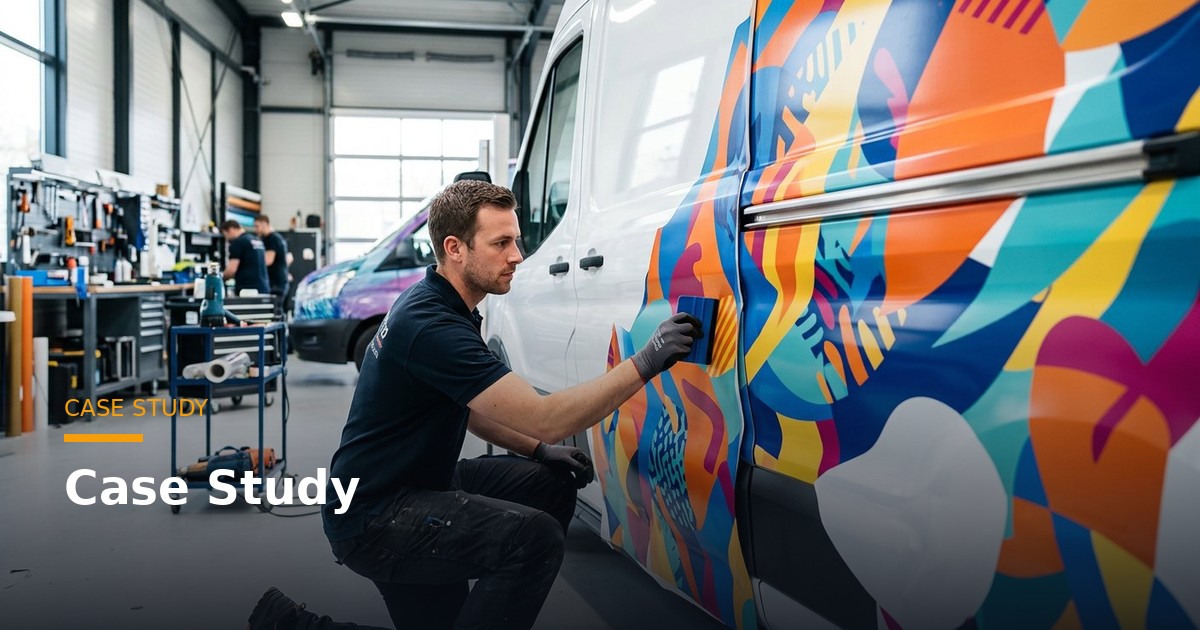
This anonymised case study follows a vehicle-wrap and premium graphics studio that wanted to move beyond small, one-off jobs into lucrative fleet and brand contracts. By investing in a eco-solvent printer and building a proper print-and-laminate workflow, the studio raised its quality, won larger contracts and significantly improved its margins. Here is how the transformation unfolded and what other graphics studios can learn.
The Business and Its Challenge
The studio — a graphics business specialising in vehicle wraps, decals and premium signage — had built a reputation for quality work on individual cars and small jobs. But the real money in the industry was in fleet wrapping and brand campaigns: logistics companies, taxi and delivery fleets, dealer groups and corporate brands wrapping multiple vehicles to a consistent standard. These contracts were larger, better-paying and recurring. To win them, however, the studio needed consistent, durable, high-quality output at volume — something its existing setup struggled to deliver reliably.
The Situation Before
Before the upgrade, the studio’s equipment limited both its quality consistency and its capacity. Vehicle wrapping demands flawless, durable prints — any banding, colour inconsistency or premature fading is glaringly visible on a wrapped vehicle and unacceptable to brand clients. The studio’s older equipment could not always deliver the consistency that fleet contracts required, and its capacity limited how many vehicles it could wrap to deadline. As a result, the studio kept winning small, one-off jobs but lost the larger fleet and brand contracts to better-equipped competitors. The gap between the work it wanted and the work it could reliably deliver was the constraint.
Machine at a Glance
| Specification | Detail |
|---|---|
| Machine | Eco-Solvent Printer (i3200, 4-head) |
| Printheads | Epson i3200-E1 (industrial) |
| Print width | ~1.8 m |
| Ink | Quality eco-solvent, matched to i3200 heads |
| Workflow | Print + laminate for durable vehicle graphics |
| Best for | Vehicle wraps, decals, premium graphics |
The i3200-E1 heads were key to the studio’s quality goals. Epson’s industrial i3200-E1 heads, designed for eco-solvent, deliver the sharp, consistent, vibrant output that premium vehicle graphics demand. Combined with quality eco-solvent ink and a proper lamination step, the studio could produce wraps that were not only beautiful but durable — resistant to UV, weather, washing and the abrasion of road use. For brand clients who expect their fleet graphics to look perfect for years, this durability and consistency was exactly what won contracts.
The Solution and Workflow
The studio invested in the eco-solvent printer and built a disciplined print-and-laminate workflow. Prints were produced on premium cast vinyl, then laminated to protect the graphics and extend their outdoor life — essential for vehicle work. The studio also invested in colour management, profiling its printer-ink-media combination so that colours were accurate and, crucially, consistent from vehicle to vehicle across a whole fleet. This consistency is what separates amateur wrapping from professional fleet work: a brand expects every vehicle in its fleet to match exactly, and that requires disciplined colour management and quality equipment.
Implementation and Support
The transition focused on mastering the quality and consistency that fleet work demands. Operators were trained on the eco-solvent printer, colour management and profiling, media and laminate selection, and print finishing. The studio developed standard workflows for common jobs to ensure repeatability. UED’s installation, training and support helped the studio get productive quickly with the new equipment. Within a few months, the studio was producing consistent, durable, premium vehicle graphics and had the confidence — and the sample work — to bid for the fleet and brand contracts it had previously been unable to win.
The Results
The investment transformed the studio’s market position. Indicative results:
| Aspect | Before | After |
|---|---|---|
| Job types | One-off cars, small jobs | Fleet and brand contracts |
| Colour consistency | Variable | Fleet-consistent |
| Durability | Adequate | Premium, long-lasting |
| Contract size | Small | Multi-vehicle, recurring |
| Margins | Modest | Significantly improved |
The studio began winning multi-vehicle fleet contracts that were larger, better-paying and often recurring — a fleet wrapped well leads to repeat business as vehicles are added or replaced. The consistent, durable quality impressed brand clients and generated referrals. Because fleet contracts involve multiple vehicles to a consistent standard, they use capacity efficiently and earn far more than scattered one-off jobs. Within its first year, fleet and brand work had become the studio’s most profitable segment.
The Financial Impact
The economics were compelling. Fleet and brand contracts command premium pricing because they demand consistent, durable, professional quality — and there are many vehicles per contract. The studio’s average contract value rose substantially as it moved from single cars to fleets. The reliable, consistent output also reduced reprints and rework, improving effective margins. Based on the larger contracts won, the owner estimated the equipment paid for itself within its first year or two. More importantly, it repositioned the studio in a higher-value, recurring-revenue segment of the market, improving both its profitability and its resilience.
Why It Worked
Several factors drove the success. First, the studio targeted a genuine high-value opportunity — fleet and brand work — rather than just buying a machine. Second, it invested in the full workflow, not just the printer: quality ink, lamination and colour management were as important as the machine. Third, consistency was treated as the core requirement, since that is what wins and retains fleet clients. Fourth, quality eco-solvent ink protected the i3200 heads and ensured the durable, vibrant output that vehicle graphics demand. And fifth, professional training and support got the studio productive quickly. The studio succeeded by treating the investment as a move upmarket, not just new equipment.
The Owner’s Perspective
The owner’s key realisation was about consistency. “Anybody can wrap one car nicely,” the owner explained. “Brands pay for ten, twenty, fifty vehicles that all look identical, years from now. That is what the new setup let us deliver.” That shift — from one-off craftsmanship to reliable, repeatable fleet quality — was the difference between a small studio and a serious graphics business. The equipment enabled it, but so did the discipline around colour management and workflow. For the owner, the investment was less about a printer than about being able to say yes to the contracts that build a real business.
Key Takeaways
Graphics studios can draw clear lessons. First, the premium money in vehicle graphics is in fleet and brand contracts, which demand consistent, durable quality at volume. Second, winning that work requires the full workflow — a capable eco-solvent printer, quality ink, lamination and, critically, colour management for fleet consistency. Third, quality ink protects the expensive i3200 heads and delivers the durability brand clients expect. And fourth, treat the investment as a strategic move upmarket into recurring, high-value work rather than just new equipment. Studios that master consistency and durability can move from scattered one-off jobs to the profitable, recurring fleet contracts that build a resilient business.
This is an anonymised, representative case study based on typical machine performance. Individual results vary with market, management, utilisation and local conditions.
Mastering Colour Management for Fleet Work
The single most important skill the studio developed was colour management, because it is what makes fleet work possible. A brand wrapping twenty vehicles expects every one to match exactly — the same red, the same skin tone, the same logo colour — and any variation is immediately obvious when the vehicles are seen together. Achieving this requires profiling the specific printer, ink and media combination, using consistent settings, and controlling the whole workflow. The studio invested in proper ICC profiling and disciplined processes, so that a design printed today matched one printed next month, and vehicle five matched vehicle one. This consistency is what separates professional fleet work from amateur wrapping.
Colour management also protects the studio commercially. Brand clients often specify exact colours — corporate brand colours that must be reproduced precisely. A studio that can hit a specified brand colour accurately and consistently wins and retains those clients; one that cannot loses them. The ability to reproduce brand colours faithfully, vehicle after vehicle, became a key selling point. It is a skill worth investing in, since it underpins the consistency that fleet and brand clients demand and pay a premium for. Mastering colour management turned the studio’s equipment investment into genuine competitive capability.
Choosing Media and Laminate for Durability
Vehicle graphics live a hard life — constant sun, weather, washing, abrasion and the flexing of body panels — so media and laminate selection matter as much as the printing. The studio standardised on premium cast vinyl, which conforms to curved vehicle surfaces and lasts outdoors, and always laminated its prints to protect the ink from UV, abrasion and chemicals. Laminate extends the life of the graphics dramatically and gives the professional, durable finish that fleet clients expect. Using inferior media or skipping lamination might save a little per job, but it risks graphics that fade, scratch or fail early — unacceptable on a branded fleet and damaging to the studio’s reputation.
This attention to materials is part of delivering professional vehicle graphics. Clients may not know the difference between cast and calendared vinyl, or laminated and unlaminated prints, but they know when graphics look cheap or fail prematurely. By using premium materials and proper finishing, the studio delivered graphics that looked good and lasted, building the reputation for quality that wins premium contracts. Quality equipment produces the print, but quality media, laminate and finishing deliver the durable, professional result that fleet and brand clients pay for and remember.
Growing into Fleet and Brand Contracts
Winning fleet and brand contracts required more than capability — it required actively pursuing them. The studio used its improved quality to build a portfolio of sample work, then approached logistics companies, dealer groups, taxi and delivery fleets and corporate brands with the message that it could deliver consistent, durable fleet graphics. It emphasised the things these clients care about: consistency across vehicles, durability, on-time delivery and a single reliable supplier. Winning the first fleet contract was the breakthrough — it provided references and proof, making subsequent contracts easier to win.
Fleet work also has a compounding advantage: it is recurring. A fleet is not wrapped once — vehicles are added, replaced and refreshed, and graphics need maintenance, so a fleet client becomes an ongoing relationship. The studio that delivers well on a first fleet contract gains a recurring revenue stream. This recurring nature makes fleet and brand work far more valuable than one-off jobs, and transforms the studio’s revenue from unpredictable one-offs into a steadier base of repeat business. Pursuing and excelling at fleet contracts was the key to the studio’s growth and resilience.
Could This Be Your Studio’s Story?
This case study reflects a path open to many graphics studios. If you are producing quality vehicle graphics but stuck on small, one-off jobs, the fleet and brand market may be within reach — but it demands consistent, durable quality at volume, and that requires the right equipment and workflow. The studios that make this move successfully invest in a capable eco-solvent printer, quality ink and lamination, and above all master the colour management that fleet consistency requires. They treat it as a strategic move upmarket, not just new equipment, and they actively pursue the fleet clients who value consistency and durability.
The reward is a stronger, more resilient business. Fleet and brand contracts are larger, better-paying and recurring — a far better foundation than scattered one-off jobs. And the reputation for consistent, durable quality that wins them compounds, bringing referrals and repeat business. For a graphics studio with the ambition to move beyond one-off work, the combination of capable equipment, quality materials, colour-management mastery and a focus on fleet clients is a proven path to a more profitable, more resilient business. The premium vehicle graphics market rewards those who can deliver consistency and durability at scale.
Ready to Win Premium Vehicle Graphics Contracts?
Fleet and brand work rewards quality, consistency and durability. Unified Engineering Dynamics supplies eco-solvent printers, quality inks and lamination, with expert support to help you move upmarket.
Discuss vehicle graphics equipment with UED → Tell us the work you want to win, and we will recommend the right setup.
