

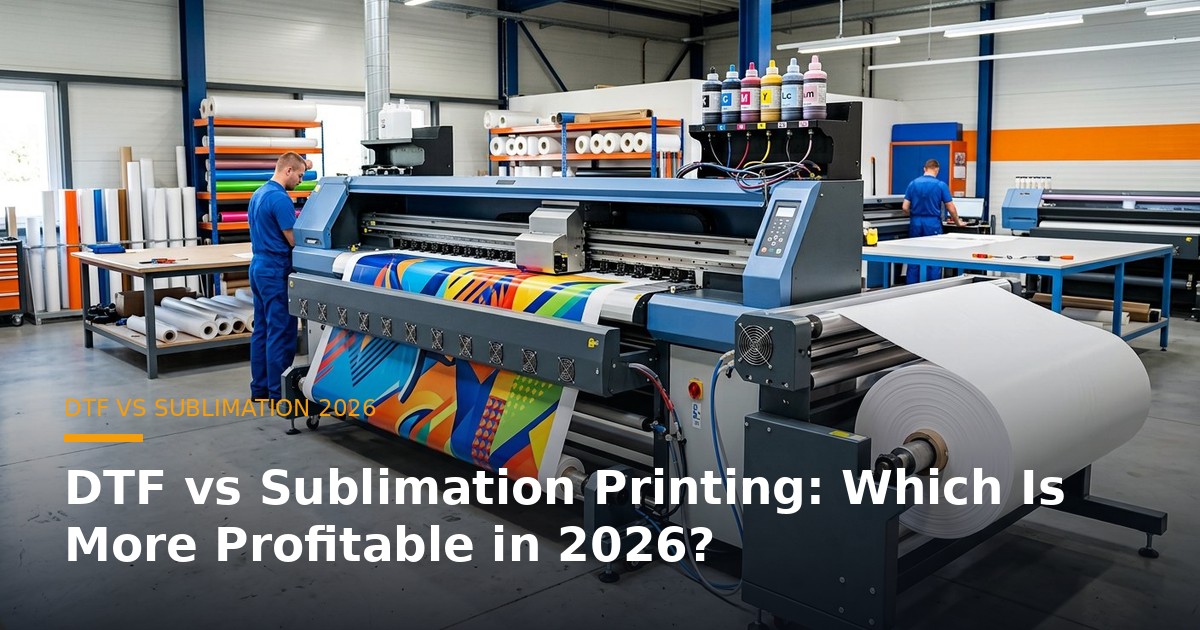
DTF and sublimation are the two most popular digital garment-printing methods in India, and entrepreneurs often ask which is more profitable. The honest answer is that each wins in different situations — but for most custom apparel businesses, DTF offers broader versatility and stronger profit potential. This guide compares DTF vs sublimation on cost, quality, fabrics, products and profit, so you can choose the right method for your business.
Both methods produce vibrant, durable prints, but they work differently and suit different products. Understanding the differences — especially around fabric compatibility and cost — is key to choosing the more profitable option for your market.
DTF vs Sublimation: Quick Comparison
| Factor | DTF | Sublimation |
|---|---|---|
| Fabrics | Cotton, poly, blends, dark | Polyester / poly-coated only, light |
| Dark garments | Yes (white ink) | No |
| Setup cost | ₹3.5L – ₹6L | ₹25,000 – ₹1.5L |
| Print feel | Soft flexible layer | Dye in fabric (no feel) |
| Best for | Custom apparel, all fabrics | Poly products, mugs, gifts |
The biggest difference is fabric: sublimation only works on polyester or poly-coated items and light colours, while DTF works on almost any fabric including cotton and dark garments.
How Each Method Works
Sublimation prints dye onto special paper with sublimation ink, then uses heat to turn the dye into gas that bonds into polyester fibres. The result is a print with no feel, but it only works on polyester or poly-coated substrates and light colours. DTF prints onto film with a white ink layer, applies adhesive powder, cures it, and heat-presses the transfer onto the garment. This works on cotton, polyester, blends and dark garments, making it far more versatile.
Cost Comparison
Sublimation has a much lower entry cost — a printer, ink, paper and heat press can start under ₹1 lakh — making it accessible for mugs, gifts and polyester products. DTF requires a bigger investment (₹3.5–6 lakh for a complete setup) but serves a vastly wider range of products and fabrics. Per-print costs are modest for both. The right choice depends on whether your market is polyester products and gifts (sublimation) or general custom apparel on all fabrics (DTF).
Quality and Durability
Both produce vibrant, durable prints when done correctly. Sublimation dyes into the fabric, so the print has no feel and won’t crack or peel, but it is limited to polyester and fades on cotton. DTF produces a soft, flexible layer that stretches with the fabric and survives many washes, and it works on all fabrics and colours. For cotton garments and dark apparel — the bulk of the custom apparel market — DTF is the only viable option of the two, which is a decisive advantage.
Which Is More Profitable?
For most custom apparel businesses, DTF is more profitable because it serves the entire garment market — cotton, polyester, blends, light and dark — while sublimation is limited to polyester and light colours. The custom t-shirt, hoodie and apparel market is overwhelmingly cotton and mixed fabrics, which sublimation cannot print. Sublimation is more profitable for specific niches like mugs, mousepads, polyester sportswear and poly-coated gifts, where its low entry cost and no-feel print shine. Choose based on your target products.
When to Choose Sublimation
Sublimation is the better choice if your focus is polyester products and personalised gifts: sublimation mugs, mousepads, keychains, photo frames, polyester sportswear, leggings and flags. Its low entry cost makes it ideal for a gift and merchandise business, and the no-feel, all-over-print capability is perfect for polyester apparel and hard substrates. If your market is gifts, promos and poly products rather than cotton apparel, sublimation offers a low-cost, profitable entry.
When to Choose DTF
DTF is the better choice if your focus is custom apparel on all fabrics — t-shirts, hoodies, caps, bags, sportswear and team wear on cotton, polyester and blends, including dark garments. This is the much larger custom apparel market. DTF’s versatility, durability and ability to print on cotton and darks make it the more profitable and future-proof choice for a general custom apparel business, despite the higher initial investment.
Can You Use Both?
Many successful businesses eventually use both. Sublimation handles mugs, gifts and polyester all-over-print products at low cost, while DTF handles the broad custom apparel market on all fabrics. Together they cover almost every personalised product category. If your budget allows only one to start, choose based on your primary market: gifts and poly products point to sublimation, general custom apparel points to DTF.
Why Buy from UED?
Unified Engineering Dynamics (UED) supplies, installs and services both DTF and sublimation equipment across India. We help you choose the right technology for your target products and market, provide genuine printheads, inks and consumables, professional installation and training, and dependable after-sales support — so your investment is matched to the most profitable products for your business.
DTF vs Sublimation: Fabric Compatibility in Detail
Fabric compatibility is the single most important difference between DTF and sublimation, and it determines which products you can profitably offer. Sublimation dye bonds only with polyester fibres, so it works on 100% polyester or poly-coated items, and only on white or light colours because there is no white ink. Cotton, blends and dark garments are out of reach. DTF, by contrast, uses an adhesive transfer that bonds to almost any fabric — cotton, polyester, blends, nylon — in any colour, including black, thanks to its white ink layer. Since the custom apparel market is dominated by cotton and mixed-fabric garments in many colours, this versatility makes DTF suitable for far more products and customers.
DTF vs Sublimation: Product Range and Market Size
The products you can sell determine your market size and profit potential. Sublimation excels at mugs, mousepads, keychains, photo panels, polyester sportswear, leggings, flags and all-over-print poly apparel — a solid but narrower market centred on gifts, promos and poly products. DTF covers the entire custom apparel market: t-shirts, hoodies, caps, bags, sportswear, team and corporate wear on all fabrics and colours. This is a much larger and more diverse market. For a business targeting general custom apparel, DTF’s broader product range translates directly into more customers and higher profit potential.
DTF vs Sublimation: Running Costs and Margins
Both methods have modest running costs, but their economics differ. Sublimation consumables — ink and paper — are inexpensive, and its low equipment cost means a quick break-even on gift and poly products. DTF consumables — film, ink and powder — are also low-cost per transfer, and its ability to print on premium cotton apparel and dark garments supports higher selling prices. Because DTF serves the larger custom apparel market at good margins, it typically offers greater overall profit potential, while sublimation offers a low-risk, profitable niche in gifts and polyester merchandise.
DTF vs Sublimation: Which Should a Beginner Choose?
For a beginner, the choice depends on budget and target market. If you have a limited budget and want to focus on mugs, gifts and polyester merchandise, sublimation offers a low-cost, accessible entry with a quick break-even. If you want to serve the broad custom apparel market — t-shirts, hoodies and team wear on all fabrics — DTF is the better long-term choice despite the higher initial investment, because it serves a much larger market. Many beginners start with one based on their primary products and add the other as they grow and diversify.
Future-Proofing: DTF’s Growing Advantage
Looking ahead, DTF’s versatility gives it a growing advantage in the Indian market. Demand for custom apparel on cotton and mixed fabrics, including dark garments, continues to rise, and DTF is the only one of the two methods that serves it. Sublimation remains strong in its niches — gifts, mugs and polyester all-over-print — but its fabric limitations cap its market. For a business built on custom apparel, investing in DTF is the more future-proof choice, positioning you to serve the widest range of customers and products as the customisation market grows.
DTF vs Sublimation: Print Feel and Hand
The feel of the print differs between the two methods, which matters for some products. Sublimation dyes into the polyester fibres, so the print has no feel at all — the fabric remains soft and breathable, which is ideal for all-over-print sportswear, leggings and flags. DTF produces a thin, flexible layer on the fabric surface that has a soft hand when done well but is slightly more noticeable than sublimation, especially on large solid areas. For most custom apparel this is not an issue, but for all-over-print polyester garments where a seamless, no-feel finish is desired, sublimation has the edge.
DTF vs Sublimation: Equipment and Space
Sublimation needs less equipment and space, making it accessible for small and home-based businesses. A sublimation printer, ink, paper and a heat press can fit in a small room and start under ₹1 lakh. DTF needs a printer, powder shaker-dryer (or curing oven) and heat press, with more space and a higher investment of ₹3.5–6 lakh. If your budget and space are limited and your focus is gifts and polyester products, sublimation is the easier entry. If you can invest more and want to serve the broad custom apparel market, DTF is worth it.
DTF vs Sublimation: Which for Team and Corporate Wear?
For team and corporate apparel, the choice depends on the garment. Sublimation is excellent for polyester sportswear, jerseys and all-over-print team kits, where its no-feel, vibrant, durable print shines and it handles complex full-colour designs beautifully. DTF is better for cotton and mixed-fabric team wear, polos, hoodies and corporate merch, and for adding logos and names to dark garments. Many team and corporate orders mix both: sublimated polyester jerseys plus DTF-printed cotton polos and hoodies. Choose based on the garments your team and corporate customers actually order.
Making the Right Choice for Your Market
Ultimately, the more profitable method is the one that matches your market. If your customers want mugs, gifts, mousepads and polyester all-over-print merchandise, sublimation offers a low-cost, profitable entry. If they want custom t-shirts, hoodies, caps and apparel on cotton, blends and dark garments — the much larger custom apparel market — DTF is the more profitable and versatile choice. Study what your local customers actually buy, and choose the method that serves those products best. Many growing businesses eventually add the second method to cover every personalised product category.
Summary: Choosing Between DTF and Sublimation
Both DTF and sublimation are profitable, but they serve different markets. Sublimation offers a low-cost entry and excels at mugs, gifts, mousepads and polyester all-over-print products, with a no-feel print that dyes into the fabric. DTF requires a higher investment but serves the far larger custom apparel market — printing on cotton, polyester, blends and dark garments with unlimited colours. For a business built on custom apparel, DTF is the more versatile and generally more profitable choice; for a gifts-and-poly-products business, sublimation is the smarter, lower-risk start. Many growing businesses eventually run both to cover every personalised product category and maximise their market.
Frequently Asked Questions
Which is more profitable: DTF or sublimation?
For most custom apparel businesses, DTF is more profitable because it prints on all fabrics including cotton and dark garments, while sublimation is limited to polyester and light colours. Sublimation is more profitable for mugs, gifts and polyester products.
Can sublimation print on cotton?
No. Sublimation only works on polyester or poly-coated substrates and light colours. For cotton and dark garments, DTF is the suitable method.
Which is cheaper to start?
Sublimation has a much lower entry cost (under ₹1 lakh), while a complete DTF setup costs ₹3.5–6 lakh. But DTF serves a far wider range of products and fabrics.
Do these prices include GST and installation?
Usually not. Prices are typically ex-GST and may exclude installation and training. Always request a written, configuration-specific quotation.
Want help choosing the right printing setup? Talk to UED’s specialists — share your budget and volume, and we’ll recommend the right machine with transparent pricing. Request a quote →
Figures on this page are indicative estimates and vary with configuration, consumables, location and volume. Always confirm a written, configuration-specific quotation.
