


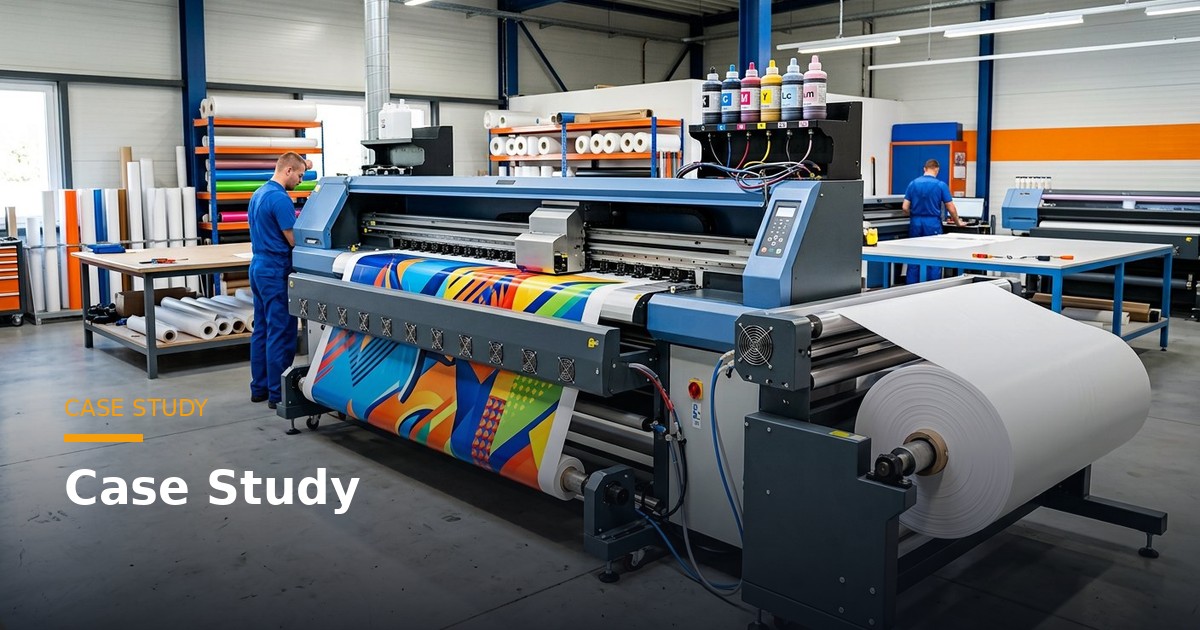
This anonymised case study follows a home-furnishing business that wanted to offer custom-printed soft furnishings — cushions, curtains, bedding, upholstery and décor textiles — tapping a growing demand for personalised home interiors. By investing in a UED sublimation printer, the business could produce vibrant, durable, custom-printed polyester textiles at scale. Here is how sublimation transformed the business and what home-textile and décor businesses can learn.
The Business and Its Challenge
The business — a home-furnishing company producing cushions, curtains, bedding and soft décor — saw growing demand for custom and designer-printed textiles. Customers and interior designers increasingly wanted unique, custom-printed soft furnishings rather than generic patterns — personalised cushions, designer curtains, custom bedding and décor textiles for homes, hotels and retail. This was a growing, high-value market, but producing vibrant, durable, custom-printed textiles at scale required digital textile printing capability the business did not have. It either relied on limited external printing or could not offer the customisation the market wanted.
The Situation Before
Before investing in sublimation, the business was limited in serving the custom textile market. Conventional textile printing had long-run economics unsuited to the short-run, customised demand, and the business could not easily offer the designer and personalised printed textiles that customers and interior designers wanted. It relied on external printing (limiting control, margins and flexibility) or offered only a limited range. As demand for custom, designer home textiles grew — driven by interior design trends, e-commerce and personalisation — the business could not fully participate. It had the market and the customers but not the digital textile printing capability to serve the custom demand profitably.
Why Sublimation Was the Answer
Sublimation was the ideal technology for custom home textiles on polyester. It produces vibrant, photographic-quality prints with unlimited colours and no repeat-size constraints — perfect for designer patterns, photographic images and custom artwork on soft furnishings. The dye bonds into the polyester fibres, so the prints are durable, wash-fast and will not crack or fade — essential for home textiles that are used and washed. And sublimation is economical for short runs and customisation, with no screens or long-run setup, suiting the custom, designer, made-to-order demand. For custom home textiles on polyester, sublimation delivers exactly the vibrant, durable, customisable printing the market wants.
Machine at a Glance
| Specification | Detail |
|---|---|
| Machine | UED Sublimation Printer |
| Technology | Dye-sublimation on polyester textiles |
| Ink | Quality sublimation ink |
| Output | Vibrant, durable, wash-fast textile prints |
| Workflow | Print → heat-press/calender into fabric |
| Best for | Custom cushions, curtains, bedding, décor textiles |
The sublimation printer gave the business the capability it needed: vibrant, durable, custom-printed polyester textiles at scale. Paired with quality sublimation ink and proper colour management — essential for the designer patterns and photographic prints the market demands — the printer produced the high-quality textile printing that elevated the business’s products. The durability and wash-fastness of sublimated prints suited home textiles perfectly, and the ability to print any design economically enabled the customisation and designer ranges customers wanted.
The Solution and Approach
The business built a custom home-textile offering around sublimation. It offered custom-printed cushions, curtains, bedding and décor textiles — any design, pattern or image, made to order — for retail customers, interior designers, hotels and retail. Bringing printing in-house gave control over quality, turnaround and the customisation that makes custom textiles special. The business offered both its own designer ranges and made-to-order custom printing. The vibrant, durable sublimated prints transformed soft furnishings into statement pieces, and the customisation meant the business could serve the growing demand for unique, personalised home textiles.
Implementation and Support
Building the custom textile capability required mastering sublimation. The business invested in the printer and trained its team on sublimation ink, colour management (critical for designer patterns and accurate colour), the calender/heat-press process and fabric handling. It developed workflows for printing and finishing textiles, and sourced quality polyester fabrics suited to sublimation. UED’s installation, training and support helped the business become productive quickly. Within a few months, it was producing vibrant, durable custom-printed home textiles, serving the custom demand it had previously been unable to fully meet.
The Results
Sublimation transformed the business’s textile offering. Indicative results:
| Aspect | Before | After |
|---|---|---|
| Custom textiles | Limited / outsourced | In-house, any design |
| Print quality | Basic | Vibrant, photographic |
| Durability | Variable | Wash-fast, durable |
| Short runs | Uneconomical | Profitable |
| Markets served | Narrow | Retail, designers, hospitality |
The business could now offer custom-printed home textiles — any design, made to order — with vibrant, durable quality, serving retail customers, interior designers, hotels and retail. Bringing printing in-house captured margin and gave control over quality and turnaround. The customisation and designer capability opened the growing custom home-textile market. And short-run, made-to-order production became profitable. Within its first year, custom sublimated textiles had become a significant, growing, higher-margin part of the business, differentiating it from competitors offering only generic furnishings.
The Financial Impact
The economics were favourable. Custom and designer home textiles command premium prices — customers and designers pay well for unique, quality printed furnishings. Bringing printing in-house captured the margin previously paid to external printers and enabled profitable short-run, made-to-order production. The customisation opened a growing, higher-margin market segment. And the durability and quality of sublimated textiles built the business’s reputation, driving repeat and referral business. Based on the premium custom textiles and captured margin, the owner estimated a solid return. Sublimation let the business move from generic furnishings into the profitable custom and designer textile market.
Why It Worked
Several factors drove the success. First, the business tapped a genuine, growing market — custom and designer home textiles, driven by interior design trends and personalisation. Second, sublimation was the right technology: vibrant, durable, customisable printing on polyester textiles, economical for short runs. Third, mastering colour management ensured the quality that designer textiles demand. Fourth, bringing printing in-house captured margin and control. And fifth, sourcing quality polyester fabrics suited to sublimation ensured good results. The business succeeded by using sublimation to serve the growing custom home-textile market with the vibrant, durable, customisable printing it demands.
The Owner’s Perspective
The owner’s key insight was about customisation. “People do not want the same cushions and curtains as everyone else — they want something unique,” the owner explained. “Sublimation let us print any design, make it to order, and make it last.” That customisation was the value. The shift toward personalised, designer home interiors created demand for custom textiles that conventional printing could not serve economically. By investing in sublimation, the business could offer the unique, made-to-order textiles the market wanted. For the owner, sublimation was not just printing — it was the ability to turn any design into a durable, beautiful home textile, on demand.
Key Takeaways
Home-furnishing and textile businesses can draw clear lessons. First, custom and designer home textiles are a growing, high-value market driven by interior design trends and personalisation. Second, sublimation is the ideal technology for polyester textiles — vibrant, durable, wash-fast and economical for short-run customisation. Third, mastering colour management and sourcing quality fabrics ensures the quality designer textiles demand. And fourth, bringing printing in-house captures margin and control. For a home-furnishing business, sublimation is a powerful way to move from generic products into the profitable custom and designer textile market, serving growing demand for unique, personalised home interiors.
This is an anonymised, representative case study based on typical UED machine performance. Individual results vary with market, management, utilisation and local conditions.
The Growing Custom Home Textile Market
The business’s move into custom sublimated textiles aligned with a strong market trend: the growing demand for personalised, designer home interiors. Homeowners and interior designers increasingly want unique, custom soft furnishings — designer cushions, bespoke curtains, custom bedding and décor textiles — rather than generic, mass-produced options. This customisation trend, driven by interior design culture, e-commerce and the desire for individual homes, is creating growing demand for custom-printed textiles. Sublimation, which can print any design economically at short run, is ideally placed to serve it. The business positioned itself in this growing market with its in-house sublimation capability.
This market also values quality and design. Customers choosing custom home textiles want vibrant, beautiful, durable prints that elevate their interiors. The business’s sublimation capability — delivering vibrant, photographic-quality, wash-fast prints — met this demand for quality. And the ability to print any design enabled the designer and bespoke ranges that the customisation market wants. As demand for personalised, designer home interiors grows, businesses that can deliver high-quality custom textiles are positioned to capture it. The business’s sublimation investment aligned it with a lasting trend toward unique, customised homes — a growing market for quality custom textiles.
Fabric and Quality Considerations
Succeeding in custom home textiles required attention to fabrics and quality, not just printing. Sublimation works on polyester, so the business sourced quality polyester fabrics suited to sublimation and to home-textile applications — the right fabrics for cushions, curtains, bedding and upholstery, with the feel, drape and durability these products need. Fabric choice affects both the print quality and the product’s suitability, so the business tested and selected fabrics carefully. It also ensured its sublimation quality — colour management, ink quality and finishing — met the standards home textiles demand, since these products are used, washed and lived with.
The durability of sublimated prints was particularly valuable for home textiles. Because the dye bonds into the fibres, sublimated prints are wash-fast and will not crack or fade — essential for cushions, curtains and bedding that are used and cleaned regularly. This durability meant the business’s custom textiles lasted, building its reputation for quality and driving repeat and referral business. By combining quality polyester fabrics, excellent sublimation printing and the inherent durability of the process, the business delivered custom home textiles that looked beautiful and lasted — the combination that satisfies customers in the home-textile market and builds a reputation for quality custom products.
Serving Designers and Hospitality
Beyond retail customers, the business found valuable opportunities serving interior designers and the hospitality sector with custom sublimated textiles. Interior designers specify custom soft furnishings for their projects, needing unique fabrics and designs produced to their specifications. Hotels, restaurants and boutique accommodations need custom branded and designer textiles for their interiors, often in quantity. These clients value quality, customisation and reliability, and their projects provide larger-volume, higher-value work than retail alone. The business’s sublimation capability — any design, quality printing, made to order — served these professional clients well.
Serving designers and hospitality also provided more stable, project-based work. A designer might specify custom textiles for a whole home or a development; a hotel might need textiles for many rooms. These larger projects complemented the business’s retail custom work and provided revenue stability. And professional clients, served well, become repeat sources of work with ongoing project needs. By serving retail customers, interior designers and the hospitality sector, the business built a diverse custom home-textile business — one sublimation capability serving the broad, growing demand for custom, designer textiles across multiple markets, from individual homes to large hospitality projects.
Could This Be Your Business’s Story?
This case study reflects a growing opportunity for home-furnishing and textile businesses. Demand for personalised, designer home textiles — custom cushions, curtains, bedding and décor — is rising with the trend toward unique, customised interiors, and it commands premium prices. Sublimation is the ideal technology to serve it on polyester: vibrant, durable, wash-fast printing that reproduces any design economically at short run, perfect for custom and made-to-order home textiles.
For a home-furnishing business, sublimation is a way to move from generic products into the profitable custom and designer textile market. By bringing printing in-house, mastering colour management and sourcing quality fabrics, you can deliver the unique, quality textiles that retail customers, interior designers and hospitality clients want. If you serve the home-interior market, custom sublimated textiles let you capture the growing demand for personalised furnishings — elevating your offering, your margins and your business.
Ready to Offer Custom Home Textiles?
Custom soft furnishings are a growing, high-value market. Unified Engineering Dynamics supplies sublimation printers, quality inks and expert support for home-textile printing.
Discuss sublimation for home furnishings with UED → Tell us your textile products, and we will recommend the right setup.
