



This anonymised case study follows an apparel manufacturing and export business that wanted to serve the growing international demand for short-run, customised and print-on-demand garments. By adding DTF digital printing, the exporter could offer flexible, customised apparel to global buyers, win new orders and move beyond bulk commodity manufacturing. Here is how digital printing transformed the export business and what apparel exporters can learn.
The Business and Its Challenge
The business — an apparel manufacturer and exporter producing garments for international buyers — had built its business on bulk orders of basic and screen-printed apparel. But the global apparel market was shifting: international buyers increasingly wanted short runs, customisation, faster turnaround and print-on-demand flexibility, driven by fast fashion, e-commerce brands, niche labels and the demand for variety. The exporter’s bulk-focused, conventional setup could not serve this growing demand for flexible, customised, short-run printed apparel. It risked losing buyers to more flexible suppliers and needed digital printing capability to stay competitive in the evolving global market.
The Situation Before
Before adding digital printing, the exporter was limited to bulk orders and conventional decoration. Its setup was optimised for large runs of relatively simple garments, and it could not economically serve the short-run, customised, fast-turnaround orders that international buyers increasingly wanted. As global buyers — especially e-commerce brands, niche labels and fast-fashion players — shifted toward smaller, customised, faster orders, the exporter faced a choice: adapt with digital capability or lose these buyers to more flexible competitors. The bulk commodity market was also increasingly price-competitive and lower-margin. The exporter needed to add the flexible, customised digital printing capability that the evolving global market demanded.
Machine at a Glance
| Specification | Detail |
|---|---|
| Machine | DTF Printer (i3200, 60 cm) |
| Printheads | 2 × Epson i3200 (industrial) |
| Speed | ~180–220 sq m/hour (production) |
| Ink | DTF CMYK + White (quality, export-grade) |
| Best for | Short-run, customised export apparel |
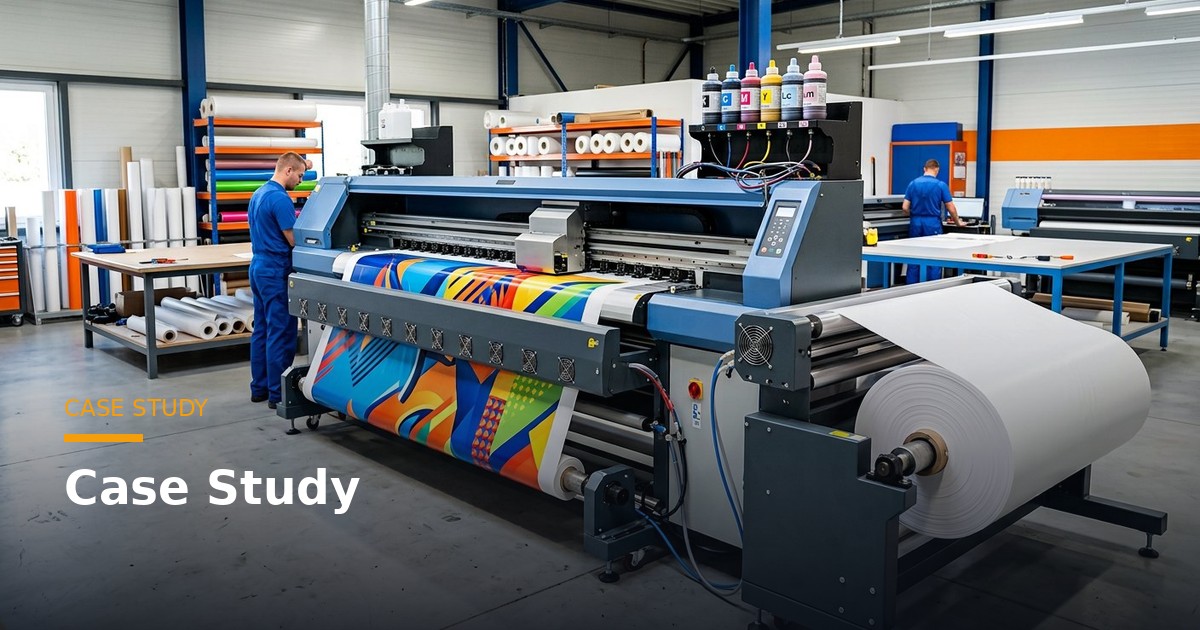
The i3200 60cm DTF printer gave the exporter the flexible digital capability it needed. DTF prints full-colour, customised designs on cotton, blends and dark garments — the range international buyers want — economically at short run, with no per-design setup. The i3200 heads provided the production capability and reliability for export volumes and the consistent quality that international buyers require. Critically, DTF’s quality and durability met export standards — international buyers demand high, consistent quality, and DTF delivered the vibrant, durable, wash-fast prints that satisfy demanding global markets. The printer let the exporter serve short-run, customised orders it previously could not.
The Solution and Approach
The exporter added DTF digital printing alongside its conventional manufacturing, enabling a flexible, customised offering for international buyers. It could now serve short-run, customised and print-on-demand apparel orders — smaller quantities, varied designs, faster turnaround — that global buyers increasingly wanted. This opened new markets: e-commerce brands, niche labels, promotional apparel and buyers wanting customisation and flexibility. The exporter positioned itself as a flexible, digitally-capable supplier, able to serve both bulk orders (conventional) and short-run customised orders (DTF). Quality was paramount, since export buyers demand high, consistent standards, and the exporter ensured its DTF output met international quality expectations.
Implementation and Support
Adding digital printing for export required meeting international quality standards. The exporter trained its team on the DTF process, white-ink maintenance and quality control to the exacting standards export buyers require. It standardised on quality, export-grade DTF ink and established rigorous quality assurance, since international orders have little tolerance for defects. It also ensured its DTF output met buyers’ specifications for colour, durability and wash-fastness. UED’s installation, training and support helped the exporter add the digital capability smoothly. Within a few months, it was serving short-run, customised export orders with the quality and flexibility that won and retained international buyers.
The Results
Adding digital printing transformed the exporter’s market position. Indicative results:
| Aspect | Before | After |
|---|---|---|
| Order types | Bulk only | Bulk + short-run custom |
| Customisation | Limited | Full, per-order |
| Turnaround | Long (bulk) | Fast (short-run) |
| Buyers served | Bulk commodity | + e-commerce, niche labels |
| Margins | Commodity | Improved (custom) |
The exporter could now serve the growing short-run, customised segment of the global market, winning buyers it had been losing to more flexible competitors. Customised, short-run orders commanded better margins than bulk commodity work. The flexibility and digital capability made it a more attractive, competitive supplier to international buyers, especially e-commerce brands and niche labels. And it retained its bulk business while adding the flexible capability. Within its first year, digital printing had opened new export markets, improved margins and future-proofed the business against the shift toward flexible, customised global apparel demand.
The Financial Impact
The economics were compelling. Short-run, customised apparel commands better margins than bulk commodity manufacturing, where price competition is intense. The DTF capability let the exporter serve this higher-margin segment and win buyers seeking flexibility. It also diversified the exporter’s markets, reducing dependence on volatile bulk commodity orders. And the digital capability made it more competitive for the growing flexible-demand segment of global apparel. Based on the higher-margin custom orders and new buyers won, the owner estimated a strong return. Adding digital printing was not just new capability — it was future-proofing the export business against the market’s shift toward short-run, customised, fast-turnaround apparel, and capturing the better margins that segment offers.
Why It Worked
Several factors drove the success. First, the exporter recognised the global market’s shift toward short-run, customised, flexible apparel and adapted. Second, DTF was the right technology: flexible, customised, full-colour printing on the garment range buyers want, economical at short run. Third, meeting international quality standards was essential and achieved through quality ink and rigorous QA. Fourth, the digital capability won buyers seeking flexibility and improved margins. And fifth, it future-proofed the business against market shifts. The exporter succeeded by adapting to the evolving global market — adding the flexible digital capability that international buyers increasingly demand, capturing better margins and securing its competitiveness in a changing industry.
The Owner’s Perspective
The owner’s key insight was about adapting to the market. “Global buyers do not want bulk commodity anymore — they want flexibility, customisation, fast turnaround,” the owner explained. “Digital let us give them that, and win buyers we were losing.” That adaptability was crucial. The global apparel market is shifting decisively toward short-run, customised, fast-fashion models, and exporters who cannot serve this shift risk obsolescence. By adding digital printing, the exporter adapted to the market, captured better margins and secured its future. For the owner, DTF was not just new equipment but the key to staying competitive and relevant in an evolving global apparel industry that rewards flexibility and customisation.
Key Takeaways
Apparel exporters can draw clear lessons. First, the global market is shifting toward short-run, customised, fast-turnaround apparel, and exporters must adapt to serve it. Second, DTF digital printing provides the flexible, customised, full-colour capability international buyers increasingly demand, economical at short run. Third, meeting international quality standards is essential — export buyers demand high, consistent quality. And fourth, customised short-run orders command better margins than bulk commodity work. For an apparel exporter, adding digital printing is a way to future-proof the business, win flexible-demand buyers, capture better margins and stay competitive in an evolving global market that rewards flexibility and customisation.
This is an anonymised, representative case study based on typical machine performance. Individual results vary with market, management, utilisation and local conditions.
Meeting International Buyer Expectations
Serving export markets meant meeting international buyers’ exacting expectations, and the exporter took this seriously. Global buyers demand high, consistent quality — garments that meet their specifications for colour, print durability, wash-fastness and finishing, with little tolerance for defects, since rejected export orders are costly. The exporter established rigorous quality assurance for its DTF output, using quality export-grade ink and disciplined processes to ensure every order met international standards. It also ensured its prints met buyers’ durability and wash-fastness requirements, since apparel is worn and washed extensively and international buyers test for this.
Meeting these standards was also what won and retained international buyers. Global buyers choose suppliers who reliably deliver quality to specification, and they build ongoing relationships with those who do. By consistently meeting international quality expectations, the exporter built the trust that secures repeat orders and long-term buyer relationships. This reliability is especially important in export, where distances and lead times make quality failures particularly costly. The exporter’s focus on meeting international standards — through quality ink, rigorous QA and disciplined production — was the foundation of its success in serving the demanding but rewarding global apparel market.
The Shift in Global Apparel Sourcing
The exporter’s move into digital printing aligned with a significant shift in global apparel sourcing. International buyers increasingly favour flexibility, smaller orders, faster turnaround and customisation over the traditional bulk-order model — driven by fast fashion, e-commerce brands, niche labels, reduced inventory risk and the demand for variety and speed. This shift favours suppliers with digital, flexible capability over those optimised only for bulk. The exporter recognised this shift and adapted, positioning itself to serve the growing flexible-demand segment of global apparel sourcing that bulk-only suppliers cannot serve.
This shift also offers better margins and more diverse opportunities. The flexible, customised, short-run segment commands better margins than bulk commodity manufacturing, and it serves a growing population of buyers — e-commerce brands, niche labels, promotional apparel — who value flexibility. By adapting to this shift with digital printing, the exporter positioned itself in a growing, higher-margin segment, rather than competing in the price-pressured bulk commodity market. For apparel exporters, understanding and adapting to the shift toward flexible, customised global sourcing is essential — and digital printing is the key capability that enables it.
Building a Flexible Export Offering
The exporter built a flexible offering that combined its bulk capability with new digital flexibility, serving the full range of buyer needs. It could handle large bulk orders through its conventional manufacturing and short-run, customised orders through DTF — making it a versatile supplier able to serve diverse buyer requirements. This flexibility was a competitive advantage: buyers value a supplier who can handle both their bulk basics and their customised, short-run needs. The exporter positioned itself as a flexible, full-service apparel supplier, able to adapt to whatever buyers needed, rather than a bulk-only manufacturer limited to one type of order.
This flexible offering also future-proofed the business. As global sourcing continues to shift toward flexibility and customisation, a supplier with both bulk and digital capability is well positioned for the evolving market, while bulk-only suppliers face declining relevance. By building a flexible export offering, the exporter ensured it could serve current and future buyer demands. For the exporter, adding digital printing was not just about new orders — it was about building a versatile, future-proofed offering that could adapt to the evolving global apparel market, serving buyers’ changing needs and securing the business’s competitiveness and growth for years to come.
Could This Be Your Business’s Story?
This case study reflects a critical adaptation for apparel exporters. The global market is shifting decisively toward short-run, customised, fast-turnaround apparel, driven by fast fashion, e-commerce brands and niche labels. Exporters who cannot serve this shift risk losing buyers to more flexible competitors and being squeezed in the price-pressured bulk commodity market. Digital printing — DTF for versatile, customised garment decoration — is the capability that enables this adaptation, letting exporters serve the growing flexible-demand segment at better margins.
For an apparel exporter, adding digital printing is future-proofing: it captures the higher-margin customised segment, wins flexible-demand buyers, diversifies beyond volatile bulk orders and keeps the business competitive as global sourcing evolves. With production DTF capability, export-grade quality and rigorous QA to meet international standards, an exporter can serve the full range of buyer needs. If you export apparel, digital printing is not just an addition — it is the key to staying relevant and profitable in an evolving global market that increasingly rewards flexibility and customisation.
Ready to Serve Flexible Global Demand?
International buyers increasingly want short-run, customised apparel. Unified Engineering Dynamics supplies production DTF printers, export-grade inks and expert support.
Discuss digital printing for apparel export with UED → Tell us your export markets, and we will recommend the right setup.
