



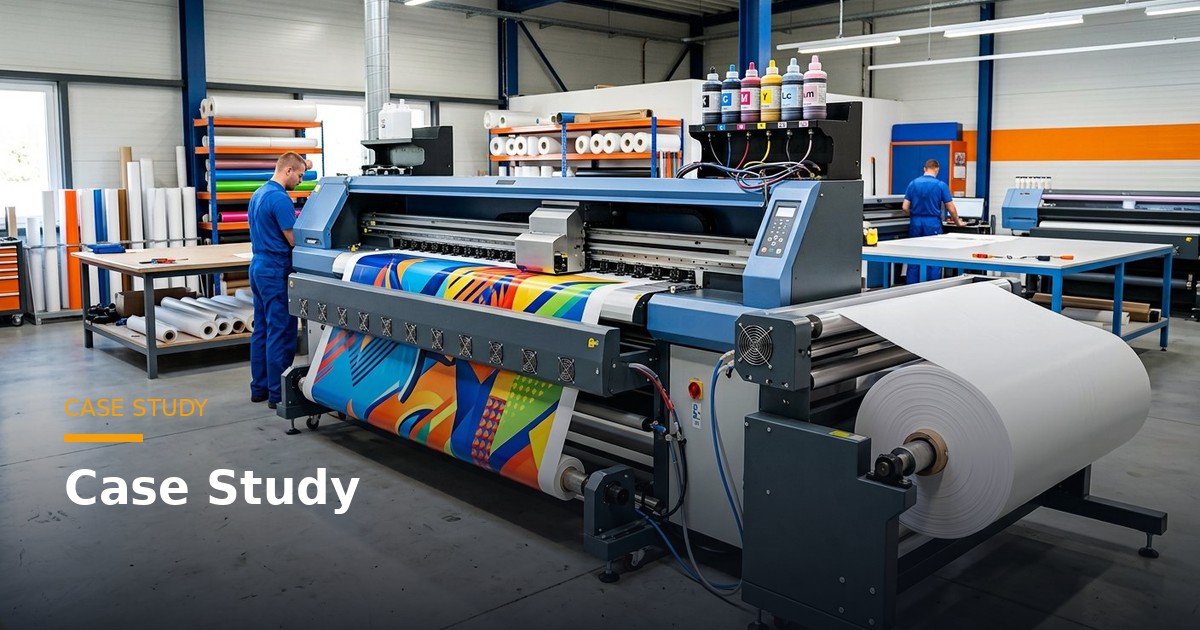
This anonymised case study follows a garment and apparel printing business that wanted to scale up and serve a wider range of customers. By investing in a DTF i3200 printer, the business moved from small-batch, limited-capacity printing to reliable production-scale output on cotton, blends and dark garments. Here is how DTF transformed the business and what garment printers can learn from it.
The Business and Its Challenge
The business — a garment printing operation serving local brands, schools, sports teams and retail customers — had built a following for custom T-shirts and apparel. But it faced growth constraints. Its existing setup limited both capacity and the range of garments it could print on well. Demand for custom apparel was growing, especially for cotton garments and dark-colour designs, but the business could not scale to meet it or serve the full range of requests. The owner recognised that to grow, the business needed production-capable DTF equipment that could handle volume and print on any fabric and colour.
The Situation Before
Before the DTF investment, the business operated at limited capacity with a setup that constrained both volume and versatility. It could handle small batches but struggled with larger orders, and turning work around quickly at scale was difficult. The business also faced limitations in what it could print — some garments and colours were harder to serve well with its existing method. As demand grew, the owner saw opportunities slipping away: larger orders it could not fulfil in time, and requests it could not serve well. The business had the customers and the reputation, but not the production capability to grow. Scaling required a proper DTF setup.
The Solution: A DTF i3200 Printer
The business invested in a DTF i3200 60cm 2-head printer, built around two Epson i3200 industrial printheads delivering production speeds of roughly 180–220 square metres per hour. DTF was the right technology choice for the garment market: it prints on cotton, polyester, blends and dark garments thanks to its white ink underbase — covering the full range of apparel customers wanted. The i3200 heads provided the speed and reliability for production volumes, a step up from entry-level heads. Paired with quality DTF ink (including reliable white ink) and a proper powder curing setup, the machine gave the business production-scale, versatile garment printing capability.
Implementation and Support
The transition focused on getting production-ready quickly. Operators were trained on the DTF workflow — printing, powdering, curing and pressing — and critically on white-ink maintenance, since white ink care is essential to keeping the i3200 heads healthy and avoiding clogging. The business standardised on quality DTF ink to protect the expensive heads and ensure vibrant, consistent output. UED’s installation, training and support helped the business master DTF production efficiently. Within a short period, the business was producing at scale, handling larger orders and serving the full range of garment requests it had previously had to decline.
The Results
The DTF investment transformed the business’s capacity and reach. Indicative results:
| Aspect | Before DTF | After DTF |
|---|---|---|
| Production capacity | Limited, small-batch | Production-scale |
| Fabrics served | Limited range | Cotton, poly, blends, dark garments |
| Large orders | Hard to fulfil | Handled confidently |
| Turnaround | Slow at volume | Fast, reliable |
| Customer range | Narrow | Broad |
The capacity leap let the business take on larger orders — team kits, bulk branded apparel, retail runs — that it had previously had to turn away. DTF’s versatility across cotton, blends and dark garments meant it could serve almost any customer request. Faster, reliable turnaround improved customer satisfaction and enabled the business to win and retain larger clients. The business grew from small-batch custom work into a production-capable apparel printer.
The Financial Impact
The economics supported the investment. The additional capacity let the business capture larger orders and more volume, growing revenue substantially. DTF’s per-garment economics — economical ink, film and powder costs against good garment pricing — delivered healthy margins at scale. Because the business already had demand and a customer base, the DTF machine unlocked its ability to serve that demand profitably. Based on the increased order volumes and revenue, the owner estimated a reasonable payback within the machine’s first year or two — typical for a well-utilised DTF printer in a business with genuine garment demand.
Why It Worked
Several factors drove the success. First, the business had real, growing demand — the DTF machine addressed a genuine capacity and versatility constraint. Second, DTF was the right technology for the broad garment market, covering cotton, blends and dark garments that other methods cannot. Third, the i3200 heads provided production-capable speed and reliability. Fourth, quality DTF ink and disciplined white-ink maintenance protected the expensive heads and ensured consistent output. And fifth, professional training and support got the business productive quickly. The combination of genuine demand, the right technology, quality consumables and good maintenance made the investment pay off.
Lessons for Garment Printing Businesses
Garment printers looking to scale can draw clear lessons. If demand is outgrowing your capacity, or you cannot serve the full range of garment requests, production-capable DTF can be transformative — it prints on any fabric and colour, at scale, economically. Choose a DTF machine with reliable industrial heads (like the i3200) for production volume. Prioritise quality DTF ink, especially white, and master white-ink maintenance to protect your heads. And invest in training and support to get productive fast. The businesses that succeed are those with genuine demand who invest in production-capable DTF and run it well, protecting their heads with quality ink and good maintenance.
The Role of the Right Partner
Success with DTF depends on the right equipment, ink and support. A production-capable DTF printer with reliable Epson heads, quality DTF ink with good white, and proper training — especially on white-ink maintenance — are essential, since the printhead is the most valuable component and white ink is demanding. A manufacturing partner that supplies capable DTF machines, quality inks and expert support helps a garment business scale confidently, protecting its investment and getting it productive quickly.
This is an anonymised, representative case study based on typical machine performance. Individual results vary with market, management, utilisation and local conditions.
Machine at a Glance
| Specification | Detail |
|---|---|
| Machine | DTF i3200 60cm 2-Head Printer |
| Printheads | 2 × Epson i3200 (industrial) |
| Print width | 60 cm |
| Speed | ~180–220 sq m/hour (production) |
| Ink | DTF CMYK + White (quality grade) |
| Best for | Cotton, poly, blends and dark garments at production scale |
The i3200 heads were central to the machine’s production capability. Epson’s i3200 is an industrial head designed for the sustained duty cycle of production DTF printing, offering speed and reliability well beyond the entry-level XP600 heads used in starter machines. For a business moving from small-batch to production volumes, this reliability under continuous use was essential. The 60cm width balanced productivity with the garment-transfer sizes the business needed, and the two-head configuration delivered the throughput to handle larger orders without the cost of the largest industrial models.
White Ink: The Make-or-Break Detail
If there was one thing the business learned to respect, it was white ink. DTF’s ability to print on dark garments depends entirely on a white underbase, and white ink is the most demanding part of the process. Its heavy pigment settles, and if it is not kept properly agitated and circulated, it clogs the expensive i3200 nozzles. The business made white-ink discipline a core routine — circulation, stirring before use, regular maintenance and never letting white sit stagnant. It also standardised on quality DTF white ink, recognising that cheap white ink is the fastest route to a clogged, ruined head.
This focus on white ink protected the business’s most valuable component. The i3200 heads are expensive to replace, and white-ink neglect is a leading cause of premature failure. By treating white-ink care as non-negotiable and using quality ink, the business kept its heads healthy and its output consistent. It is a lesson every DTF printer must learn: the machine’s reliability lives or dies on white-ink discipline. The businesses that thrive with DTF are those that master this detail; those that neglect it face costly, repeated head failures.
The Owner’s Perspective
The owner summed up the transformation as moving from turning work away to turning it around. “Before, a big order was a problem — could we even do it in time?” the owner recalled. “Now it is an opportunity.” That shift in mindset, enabled by production-capable equipment, changed how the business approached growth. Larger orders went from being risks to being the engine of growth. DTF’s versatility across cotton, blends and dark garments meant almost no request had to be declined, and the production speed meant deadlines were met comfortably. The machine did not just add capacity; it removed the ceiling that had been holding the business back.
The Growing Demand for Custom Apparel
The garment printer’s growth reflects one of the strongest trends in Indian printing: the booming demand for custom and personalised apparel. From corporate branding and team kits to fashion labels, e-commerce brands, schools, events and individual customers, the market for custom-printed garments is expanding rapidly. DTF is ideally placed to serve it, because it prints on the cotton and blended garments that dominate Indian apparel, in any colour, economically and at scale. Businesses with production-capable DTF are positioned to capture this growing demand, while those with limited capacity can only serve a fraction of it.
This demand is also becoming more sophisticated. Customers increasingly expect vibrant, durable, professional prints and fast turnaround on larger orders — expectations that require production-capable equipment and quality consumables. A business that can reliably deliver quality DTF prints at volume wins the larger, repeat contracts from brands, e-commerce sellers and institutions, which are far more valuable than one-off small orders. The ability to serve these demanding, high-volume customers is what separates a growing garment-printing business from one that stays small.
For garment printers, the opportunity is clear: invest in production-capable DTF, master white-ink discipline, use quality ink to protect your heads, and pursue the growing market for custom apparel. UED offers DTF printers across a range of scales — from XP600 30cm starter machines to i3200 60cm production models and industrial 6-head lines — so a business can match its investment to its demand and grow over time. The custom apparel market is growing; the businesses equipped to serve it at scale and quality are the ones that will grow with it.
Key Takeaways
This garment printer’s story offers clear lessons. First, DTF is the right technology for the broad Indian apparel market, because it prints on cotton, blends and dark garments — the garments customers actually wear — economically and at scale. Second, production-capable equipment with reliable industrial heads is what turns small-batch custom work into a scalable business able to serve larger, more valuable orders. Third, white-ink discipline is non-negotiable: it protects the expensive printhead and is the single most important maintenance habit in DTF. And fourth, quality ink and good training underpin reliable, consistent production.
The overarching message is about removing the ceiling. The business had the customers, the reputation and the demand — what it lacked was the capacity to serve them. Production-capable DTF removed that ceiling, transforming large orders from problems into opportunities. For garment printers with growing demand, the path is clear: invest in production-capable DTF matched to your volumes, master white-ink care, use quality ink to protect your heads, and pursue the expanding custom-apparel market. The demand is there and growing; the businesses equipped to serve it at scale and quality are the ones that will capture it.
In the end, the decision to invest in production-capable DTF was a decision to stop limiting the business. The demand had been growing all along; the only question was whether the business could serve it. With the right machine, quality ink and disciplined white-ink care, it could — and the growth that followed was simply the natural result of finally matching capacity to opportunity.
Ready to Scale Your Garment Printing Business?
DTF lets you print on any fabric and colour, at production scale. Unified Engineering Dynamics manufactures DTF printers — from XP600 30cm to i3200 60cm and industrial 6-head models — with quality DTF inks and nationwide support.
Discuss scaling your garment printing with UED → Tell us your volumes and garment range, and we will recommend the right DTF setup.
