

This anonymised case study follows a signage and graphics studio that had built a solid business on flexible-media printing but wanted to move upmarket into higher-value work. By adding a UV flatbed printer, the studio entered the premium rigid-substrate market — signage boards, acrylic, packaging and personalisation — and significantly improved its margins. Here is how the strategic investment transformed the business and what it teaches about moving upmarket.
The Business and Its Ambition
The studio — a mid-sized signage and graphics business — had established itself printing banners, vinyl graphics and flexible-media signage on an eco-solvent roll-to-roll machine. The business was stable but faced a familiar challenge: flexible-media signage work was competitive and price-sensitive, with modest margins. The owner recognised that the real money was in premium, rigid-substrate work — acrylic signage, display panels, packaging, personalised and promotional products — which commanded much higher prices. But that work required UV printing technology the studio did not have. The question was whether to invest in UV and move upmarket.
The Situation Before
Before adding UV, the studio competed in the crowded, price-competitive flexible-media signage market. Jobs were won largely on price, margins were thin, and the studio could not bid for the higher-value rigid-substrate work that better clients wanted — acrylic signage, retail displays, packaging prototypes, premium personalisation. Without UV capability, that whole market was closed to it. The owner saw competitors winning lucrative rigid-substrate contracts and realised that staying only in flexible media meant staying in a low-margin, competitive segment. Moving upmarket required UV, and the investment decision hinged on whether the premium work would justify it.
The Solution: A UV Flatbed
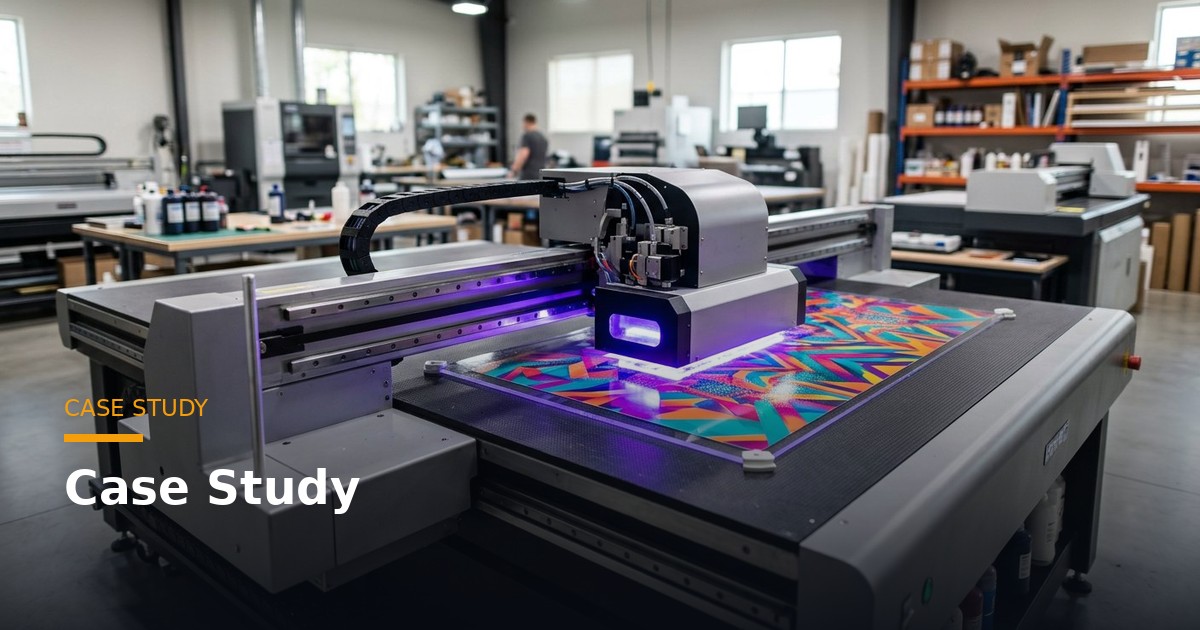
The studio invested in a UV flatbed printer with Epson i3200 printheads, configured with CMYK plus white and varnish. This configuration was key: white ink let the studio print on dark, transparent and coloured substrates, while varnish added gloss, matte and textured premium finishes. The flatbed format handled rigid materials — acrylic, foam board, wood, metal, glass and tiles — opening the entire rigid-substrate market. The i3200 heads delivered the sharp, high-quality output that premium signage and display work demands. This single machine gave the studio capabilities it had completely lacked: printing on almost any rigid material, with white and premium finishes.
Implementation and Support
The studio approached the transition strategically. Operators were trained on UV flatbed operation, substrate handling, white and varnish techniques, and the specific curing and colour management UV requires. The studio also developed its understanding of different substrates and their preparation. UED’s installation, training and support helped the studio become productive with UV quickly — important, since UV printing has a learning curve around substrates, curing and white/varnish use. Within a few months, the studio was confidently producing premium rigid-substrate work and bidding for the higher-value contracts it had previously had to decline.
The Results
Adding UV transformed the studio’s market position and economics. Indicative results:
| Aspect | Before UV | After UV |
|---|---|---|
| Market | Flexible-media signage only | Rigid + flexible substrates |
| Job types | Banners, vinyl graphics | + acrylic, displays, packaging, personalisation |
| Price point | Competitive, price-sensitive | Premium, higher-value |
| Margins | Thin | Significantly improved |
| White/varnish capability | None | Yes |
The studio could now bid for and win premium rigid-substrate contracts it had previously been unable to serve. These jobs commanded much higher prices than flexible-media signage, dramatically improving margins. The white and varnish capabilities also enabled premium finishes that impressed clients and justified higher pricing. Within its first year, the UV flatbed was a significant and growing revenue stream.
The Financial Impact
The financial logic of the UV investment was clear. Although a UV flatbed and its ink cost more than eco-solvent equipment, the premium work it enabled earned far more per job. A single acrylic signage or display contract could earn what many flexible-media banners did. The studio’s average job value and margins rose substantially as premium work grew. Based on the higher-value contracts won, the owner estimated the UV flatbed paid for itself within its first year or two — and, more importantly, it repositioned the business in a higher-margin market with better long-term prospects. The investment was not just about a machine; it was about moving the whole business upmarket.
Why It Worked
The success came from a clear strategic logic. First, the studio identified a genuine opportunity — the higher-margin rigid-substrate market it could not serve. Second, it chose the right tool: a UV flatbed with white and varnish, which opened that market fully. Third, it invested in learning UV properly — substrates, curing, white and varnish — so it could deliver premium quality. Fourth, it targeted the right clients with its new capability, actively pursuing the premium work. And fifth, it treated UV as a strategic move upmarket, not just another machine. The businesses that succeed with UV are those that see it as a way into higher-value markets and actively pursue them.
Lessons for Signage and Graphics Businesses
Signage and graphics businesses competing on price in flexible media can learn from this. If you are stuck in a thin-margin, price-competitive segment, UV printing offers a route into higher-value rigid-substrate work — signage, displays, packaging, personalisation — with much better margins. The investment is higher, but so are the returns per job. The key is to choose a capable UV flatbed (with white and varnish for full capability), learn UV properly, and actively market your new capability to the clients who value premium work. UV is not just a machine purchase; it is a strategic move into a more profitable market.
The Role of the Right Partner
Moving into UV successfully depends on the right equipment and support. A capable UV flatbed with white and varnish, quality UV ink, and proper training on substrates and curing are essential — UV has a learning curve, and doing it well is what wins premium work. A manufacturing partner that supplies capable UV machines, quality inks and expert support helps a business make this strategic move confidently and get productive quickly, turning the investment into a profitable new capability rather than an underused machine.
This is an anonymised, representative case study based on typical machine performance. Individual results vary with market, management, utilisation and local conditions.
Machine at a Glance
| Specification | Detail |
|---|---|
| Machine | UV Flatbed Printer (i3200 4-Head) |
| Printheads | Epson i3200 (industrial) |
| Ink channels | CMYK + White + Varnish |
| Substrates | Acrylic, foam board, wood, metal, glass, tile, vinyl |
| Curing | UV LED |
| Best for | Premium rigid signage, displays, packaging, personalisation |
The white and varnish channels were what unlocked the premium market. White ink allowed printing on transparent acrylic (for backlit and reverse-printed signage), dark materials and coloured substrates — work impossible without it. Varnish enabled gloss, matte and textured spot finishes that elevated ordinary prints into premium products. Together, these capabilities let the studio offer finishes and effects that justified significantly higher prices, transforming not just what it could print but how much that work was worth.
The Learning Curve: Mastering UV
UV printing has a genuine learning curve, and the studio invested in climbing it. Operators had to learn substrate-specific behaviour — how ink adheres to acrylic versus wood versus metal, when primers or pre-treatment were needed, and how to manage the UV curing for different materials. White ink required understanding opacity, layering and its interaction with colour. Varnish required mastering gloss and matte application. Colour management on rigid substrates differed from the flexible media the studio knew. This learning took a few months, but it was the difference between owning a UV machine and truly mastering UV printing — and mastery is what wins premium clients who expect flawless results.
The studio approached this deliberately, running test jobs on different substrates, building a library of settings for common materials, and refining its technique. UED’s training and support accelerated this process. The investment in learning paid off: within a few months the studio was producing premium work confidently and had developed the substrate expertise that let it quote accurately and deliver reliably across a wide range of rigid materials. This expertise became a competitive advantage in itself — not every print shop can print well on any substrate.
The Owner’s Perspective
For the owner, the UV flatbed was less a machine purchase than a strategic repositioning. “We stopped competing on price for banners and started being chosen for premium work,” the owner explained. That shift — from a price-competitive commodity service to a sought-after premium capability — changed the character of the business. Better clients, better margins, more interesting work. The UV investment did not just add a revenue stream; it moved the studio into a different, more profitable league, and that repositioning was worth more than the machine’s direct output.
The Market Opportunity in Premium UV Work
The studio’s move into UV reflects a broader opportunity in the Indian printing market. As brands, retailers and businesses invest more in visual merchandising, retail displays, premium signage and personalised products, demand for high-quality rigid-substrate printing is growing. This is work that commands premium prices — a branded acrylic display, a retail signage package, a run of personalised promotional items — because it delivers visible value that clients are willing to pay for. Print businesses with UV capability can serve this growing, higher-margin market, while those limited to flexible media compete in a more commoditised, price-driven segment.
UV’s versatility compounds this opportunity. A single UV flatbed can serve signage, retail display, packaging prototyping, awards and trophies, personalised gifts, industrial marking and more — a breadth of applications from one machine. This diversification reduces reliance on any single market and opens multiple revenue streams. For a signage or graphics business, adding UV is not just adding a machine; it is opening doors to a wide range of premium applications that were previously out of reach, each with better margins than commodity flexible-media work.
The businesses that capture this opportunity are those that invest in capable UV equipment — with white and varnish for full capability — and, crucially, develop the expertise to use it well. UV printing rewards mastery: the studio that can print flawlessly on any substrate, with premium finishes, wins the high-value clients. That expertise, combined with the right machine, positions a business to ride the growing demand for premium printed products. For a signage business looking beyond price competition, UV represents one of the clearest paths to higher margins and a stronger market position.
Key Takeaways
The lessons from this studio’s UV move are clear. First, UV printing is a route out of price-competitive commodity work and into higher-margin premium markets — signage, displays, packaging and personalisation that clients pay well for. Second, capability matters: white and varnish channels unlock the full range of premium work, so a machine without them limits the opportunity. Third, UV rewards expertise — investing time in mastering substrates, curing and finishes is what separates a business that owns a UV machine from one that truly profits from it. And fourth, the right support accelerates that mastery.
The deeper insight is strategic. The UV flatbed was not just an additional machine; it repositioned the entire business in a more profitable market. That is the real power of a well-chosen technology investment — it can change not only what you produce but who your clients are and what your work is worth. For a signage or graphics business competing on price in flexible media, UV represents a genuine opportunity to move upmarket. The businesses that seize it — with capable equipment, developed expertise and a focus on premium clients — build stronger margins and a more resilient position than those that stay in the commoditised segment.
Ready to Move Your Signage Business Upmarket?
UV printing opens the door to premium rigid-substrate work and higher margins. Unified Engineering Dynamics manufactures UV flatbed and roll-to-roll printers — from i3200 4-head to industrial Konica configurations — with white and varnish, quality inks and nationwide support.
Explore UV printing for your business with UED → Tell us the work you want to do, and we will recommend the right UV printer to move you upmarket.
