



You don’t need a huge budget to start a DTF printing business. With smart equipment choices, you can set up a working, profitable DTF business for under ₹3 lakh in India. This guide shows you exactly how to build a low-cost DTF setup under ₹3 lakh, what to prioritise, and how to grow from there.
A lean start lets you test the market, build a customer base and generate income with minimal risk — then reinvest profits to scale. Here’s how to do it right.
Low-Cost DTF Setup Under ₹3 Lakh: What You Need
| Equipment | Budget Option | Indicative Price |
|---|---|---|
| DTF printer | Single-head XP600 | ₹1.5L – ₹2.0L |
| Powder curing | Curing oven (manual) | ₹30,000 – ₹60,000 |
| Heat press | Manual 16×20 | ₹15,000 – ₹25,000 |
| Initial consumables | Ink, film, powder, garments | ₹25,000 – ₹40,000 |
| Total | ₹2.2L – ₹3.2L |
With careful choices, a complete working DTF setup lands around ₹2.2–3.2 lakh, making it one of the most affordable printing businesses to start.
The Core: A Single-Head XP600 Printer
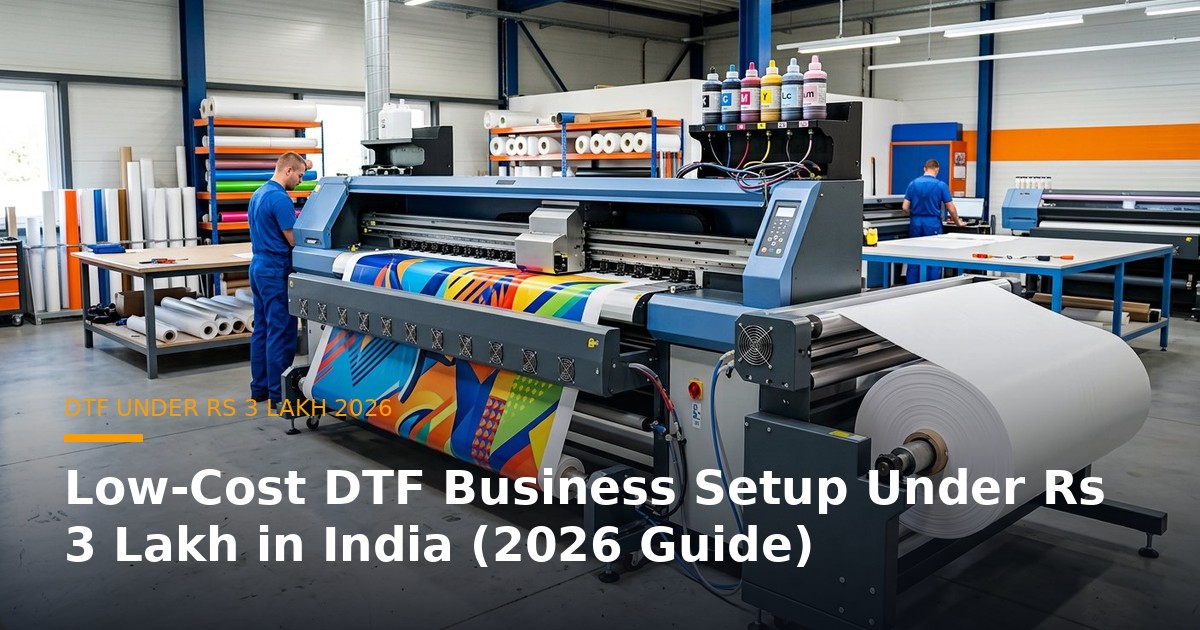
The heart of a low-cost DTF setup is a single-head XP600 DTF printer, available for ₹1.5–2 lakh. It produces quality DTF transfers and is ideal for a home-based or small business. While slower than multi-head machines, it’s perfectly capable of handling a growing order flow when you start. The XP600 is the standard entry point for DTF and, with good inks and maintenance, delivers reliable, vibrant transfers. Don’t overspend here — a solid XP600 is all you need to start profitably.
Saving on Powder Curing
An automated powder shaker-dryer costs ₹1.5–2.5 lakh, which breaks the under-₹3-lakh budget. Instead, start with a manual curing oven or heat tunnel for ₹30,000–60,000. You apply powder manually and cure in the oven — slower and more labour-intensive than an automated shaker, but perfectly workable at low volume. This single choice saves over ₹1 lakh. As your volume grows, you can add an automated shaker-dryer for faster, consistent curing.
Affordable Heat Press
A manual heat press is all you need to start. A good 16×20 inch manual press costs ₹15,000–25,000 and handles t-shirts, hoodies and most apparel. Avoid expensive auto-open or pneumatic presses initially — a reliable manual press with consistent temperature and pressure produces quality transfers. As you grow, you can add a larger or automatic press for higher volume, but a basic manual press is a solid, affordable start.
Initial Consumables Budget
Budget ₹25,000–40,000 for your initial consumables: DTF inks (CMYK + white), DTF film, adhesive powder, and a small stock of blank garments to start. Buy quality consumables — cheap ink and film cause poor quality and wasted prints that cost more than they save. Start with enough to fulfil your first orders without over-investing in inventory. As you build order flow, buy consumables in bulk to lower per-unit cost and improve margins.
What to Prioritise on a Low Budget
- A reliable printer — don’t compromise on the core machine.
- Quality consumables — good ink and film prevent waste.
- Proper curing — even manual, cure correctly for durability.
- A good heat press — consistent temperature and pressure.
- Training — learn the process to avoid costly mistakes.
What You Can Skip at First
To stay under ₹3 lakh, skip the expensive extras initially. You don’t need an automated powder shaker-dryer (use a manual oven), a multi-head printer (a single XP600 works), an auto-open heat press (manual is fine), RIP software beyond the basics, or a large garment inventory. These upgrades improve speed and convenience but aren’t essential to start. Add them as your income grows and volume justifies the investment. Starting lean and upgrading from profits is the smart path.
Growing from a Low-Cost Start
A low-cost start is a foundation, not a ceiling. As your order flow and income grow, reinvest profits to scale: add an automated powder shaker-dryer for faster curing, upgrade to a dual-head or i3200 printer for more throughput, add a larger or automatic heat press, and expand your product range. Many successful DTF businesses started with a basic under-₹3-lakh setup and scaled to industrial operations from profits. Starting lean minimises risk and lets you grow sustainably.
Is a Low-Cost DTF Setup Profitable?
Yes. A low-cost DTF setup earns the same healthy margins as an expensive one — the transfers and finished garments sell at the same prices. The difference is throughput: a basic setup handles lower volume, so your income is capped by how much you can produce. But for a home-based or small business building a customer base, a lean setup is perfectly profitable, with payback typically in 6–12 months. As volume grows, you scale capacity. The low entry cost makes DTF one of the most accessible profitable businesses.
Why Buy from UED?
Unified Engineering Dynamics (UED) supplies, installs and services DTF setups across India, including budget-friendly configurations under ₹3 lakh. We help you build a lean, effective setup that fits your budget, provide genuine printheads, inks and consumables, professional installation and training, and dependable after-sales support — so you start profitably and have a clear path to scale as you grow.
Choosing the Right XP600 DTF Printer on a Budget
Not all XP600 DTF printers are equal, so choose wisely even on a budget. Look for a machine with a genuine XP600 printhead, reliable white-ink circulation to prevent clogging, a stable film-feed system, and good build quality. Buy from a reputable supplier who offers installation, training and after-sales support — a slightly higher price from a reliable dealer beats a cheap machine that breaks down and wastes your money and time. Ask about warranty, spare-parts availability and service. A reliable XP600 is the foundation of a profitable low-cost DTF business.
Manual vs Automated Powder Curing on a Budget
On a budget, manual powder curing is the smart choice. An automated powder shaker-dryer costs ₹1.5–2.5 lakh, but a manual curing oven or heat tunnel costs ₹30,000–60,000. With manual curing, you apply adhesive powder to the wet print by hand, shake off the excess, and cure in the oven. It’s slower and more labour-intensive, but perfectly workable at low volume and saves over ₹1 lakh. Master proper powdering and curing for durable transfers. As your volume grows, an automated shaker-dryer becomes a worthwhile upgrade for speed and consistency.
Setting Up Your Low-Cost DTF Business at Home
A low-cost DTF setup fits comfortably in a home workspace. You need a stable table for the printer, space for the curing oven and heat press, good ventilation, and a standard power supply. A spare room, garage or shed works well. Keep the environment clean and dust-free to protect print quality, and ensure stable power to avoid printer damage. Starting from home eliminates rent and keeps your costs minimal, which is one of the great advantages of a lean DTF start. As your business grows, you can move to a dedicated commercial space.
Getting Your First Orders on a Low-Cost Setup
Your low-cost setup can fulfil real orders from day one. Start by reaching out to your network — friends, family, local businesses, schools and sports teams — who need custom apparel. Offer sample shirts to showcase your quality. Use social media to display your work and attract customers. Partner with local boutiques or online sellers who need printing. Focus on a niche or local market to build a reputation. Even a basic XP600 setup can handle a steady flow of custom orders. The key is active marketing — your machine is ready; now go find the customers.
Upgrading Your Low-Cost DTF Setup Over Time
The beauty of a low-cost start is that you can upgrade from profits as you grow. The first upgrade is usually an automated powder shaker-dryer for faster, consistent curing. Next, a dual-head or i3200 printer for more throughput. Then a larger or automatic heat press, and eventually a second printer for industrial volume. Each upgrade is funded by the income your business generates, so you scale sustainably without debt. Many DTF entrepreneurs start under ₹3 lakh and build up to industrial operations over a few years, reinvesting profits at every step.
Avoiding Costly Mistakes on a Low Budget
Starting lean doesn’t mean starting careless. The most costly mistake is buying the cheapest, unreliable equipment that breaks down and wastes your money and time — a reliable XP600 from a reputable supplier is worth a little more. The second is skimping on consumables; cheap ink and film cause poor quality and wasted prints that cost more than they save. The third is skipping training, leading to ruined garments and unhappy customers. The fourth is over-investing in inventory or upgrades you don’t need yet. Spend wisely on the essentials — a reliable printer, quality consumables and proper training — and skip the extras until profits justify them.
Low-Cost DTF: Quality You Can’t Compromise On
Even on a low budget, quality is non-negotiable, because it builds the reputation that grows your business. Use good DTF ink, film and adhesive powder — cheap consumables cause dull colours, poor adhesion and wash failures that lose customers. Cure your prints properly for durability. Press with correct temperature, time and pressure. Take the time to learn the process and test your settings. A low-cost setup producing excellent, durable prints will earn repeat customers and referrals; a cheap setup producing poor quality will fail regardless of its price. Quality is the one thing you cannot afford to compromise on.
Marketing a Low-Cost DTF Business
Your low-cost setup is only as profitable as your order flow, so marketing is essential. Start with your network — friends, family, local businesses, schools and sports teams who need custom apparel. Offer sample shirts to showcase your quality. Use Instagram and Facebook to display your work and attract customers. Partner with local boutiques or online sellers who need printing. Focus on a local market or niche to build a reputation. Active marketing fills your machine’s capacity and turns a modest setup into a solid income. The machine is ready; your job is to find the customers.
From Under ₹3 Lakh to a Growing Business
A low-cost start is a launchpad, not a limit. Many successful DTF businesses began with a basic under-₹3-lakh setup and grew into thriving operations by reinvesting profits. As your order flow and income grow, add an automated powder shaker-dryer for faster curing, upgrade to a dual-head or i3200 printer for more throughput, add a larger heat press, and eventually a second printer. Each upgrade is funded by your earnings, so you scale sustainably without debt. Starting lean minimises risk, proves the market and lets you grow confidently — the smart path from a modest investment to a substantial, profitable DTF business.
Start Your DTF Business Today
A low-cost DTF setup under ₹3 lakh makes starting a profitable printing business genuinely accessible. With a reliable XP600 printer, manual curing, a basic heat press and quality consumables, you can begin fulfilling real custom apparel orders and building income with minimal risk. Prioritise the essentials, market actively to fill your capacity, deliver consistent quality, and reinvest your profits to scale. Starting lean and growing sustainably is the smart path from a modest investment to a thriving DTF business.
Frequently Asked Questions
Can I start a DTF business under ₹3 lakh?
Yes. A single-head XP600 printer, manual curing oven, manual heat press and initial consumables total roughly ₹2.2–3.2 lakh, making a complete working DTF setup accessible under ₹3 lakh.
What can I skip to save money?
Skip the automated powder shaker-dryer (use a manual oven), multi-head printer, auto-open press and large inventory initially. Add these upgrades from profits as your volume grows.
Is a low-cost DTF setup profitable?
Yes. It earns the same margins as an expensive setup, just at lower throughput. For a home-based or small business, a lean setup is profitable with payback in 6–12 months.
Do these prices include GST and installation?
Usually not. Prices are typically ex-GST and may exclude installation and training. Always request a written, configuration-specific quotation.
Want help choosing the right DTF setup? Talk to UED’s specialists — share your budget and volume, and we’ll recommend the right machine with transparent pricing. Request a quote →
Figures on this page are indicative estimates and vary with configuration, consumables, location and volume. Always confirm a written, configuration-specific quotation.
