

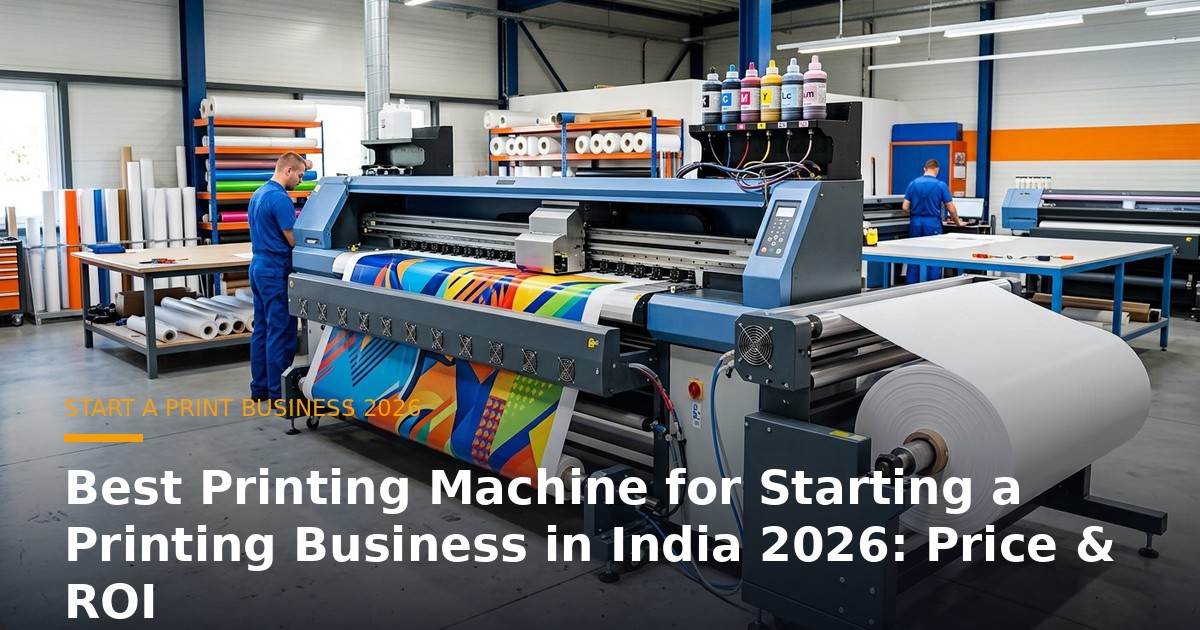
Starting a printing business in India in 2026 is one of the most accessible and rewarding entrepreneurial paths, because demand for signage, apparel, packaging and displays is steady and diversified across every town and city. But the single most important decision you will make is choosing the right machine. This guide covers the best printing machine for starting a printing business in India in 2026, with prices and return-on-investment guidance to help you invest wisely.
The right first machine balances affordability, capability and the products your local market actually buys. Buy well, and your machine becomes the engine of a profitable, growing business; buy poorly, and it becomes an expensive lesson. This guide helps you get it right.
Best Printing Machines for Starting a Business in 2026
| Business Type | Recommended Machine | Indicative Price |
|---|---|---|
| Signage & banners | Flex / eco-solvent (XP600 or i3200) | ₹1.8L – ₹5L |
| Custom apparel | DTF complete setup | ₹3.5L – ₹6L |
| Premium products & gifts | UV flatbed | ₹4L – ₹10L |
| Stickers & wraps | Eco-solvent (i3200) | ₹3L – ₹5L |
For most first-time entrepreneurs, a flex or eco-solvent machine for signage offers the broadest local demand at the lowest entry cost, while DTF suits those targeting the booming custom apparel market.
Choosing Based on What You Want to Print
Your first machine should match the products your local market buys most. If you are in a town with lots of shops, restaurants and offices, signage and banner work is in constant demand, and a flex or eco-solvent machine is ideal. If you want to serve the customisation and apparel trend, a DTF setup is perfect. If you target retail brands, interior designers and corporate gifting, a UV machine for premium rigid products fits. Start with the technology that matches your strongest local market rather than trying to do everything at once.
How Much Do You Need to Start?
A realistic starting budget covers more than the machine. Alongside the printer (₹1.8–6 lakh depending on technology), budget for initial media, ink and consumables, a RIP licence if not bundled, power protection, finishing equipment, and a few months of working capital while you build your order book. As a rule of thumb, keep roughly 20–30 percent of your total budget beyond the machine for these essentials. Starting lean on a capable entry machine and reinvesting profits is far safer than over-investing before you have steady demand.
Return on Investment for a New Printing Business
Printing offers attractive margins when the machine is well utilised. With running costs of roughly ₹25–40 per square foot for flex and eco-solvent work and selling prices of ₹60–120 per square foot, even modest monthly volumes can repay an entry machine within its first year. DTF and UV businesses often achieve even higher margins on custom apparel and premium products. The key to a good return is keeping the machine busy through active local marketing and reliable service, so choose a machine that matches the volume you can realistically sell.
Mistakes New Printing Entrepreneurs Make
The most common mistakes are buying on price alone and neglecting service, buying too small and outgrowing the machine quickly, underestimating working capital, and failing to market actively. Avoid these by prioritising a supplier with responsive local support, buying a little more capability than you need today if your budget allows, keeping cash aside for materials and operations, and treating marketing as seriously as printing. A well-chosen machine paired with active customer-building is the foundation of a profitable printing business.
Why Start Your Printing Business with UED?
Unified Engineering Dynamics (UED) specialises in helping new printing entrepreneurs choose the right machine for their market and budget. We supply genuine flex, eco-solvent, UV and DTF equipment, provide professional installation and operator training, and back every machine with responsive after-sales support and ready spares. Our goal is to get your first machine earning quickly and to be the partner you grow with as your business expands.
Building Your Customer Base from Day One
A machine only earns when it is busy, so customer-building should start before you even install it. Identify your local market — shops, restaurants, offices, schools, advertising agencies, event organisers, apparel brands — and reach out directly. Set up a Google Business Profile so nearby customers searching for printing services can find you, use WhatsApp Business and social media to showcase your work, and keep well-made samples at your shop. Offer fast turnaround and reliable quality, because in local markets reputation spreads quickly and repeat business is the foundation of profitability. The entrepreneurs who succeed treat marketing and customer service as seriously as the printing itself.
Setting Up Your Print Shop: Space, Power and Workflow
Plan your premises around the machine you choose. You need space to load media and collect output, a clean and reasonably climate-controlled print area, stable power with protection, and room for finishing work. Establish a simple workflow with a good RIP, reliable profiles for your media, and job sheets that record settings and costs. Keep initial stocks of the media and inks your customers ask for most. A well-organised shop wastes less material, delivers consistent quality and scales smoothly as orders grow, while a disorganised one loses money through reprints and missed deadlines.
Choosing a Supplier You Can Grow With
Your supplier relationship matters long after the sale. Choose a supplier who provides genuine printheads and consumables, clear written specifications, professional installation and operator training, and — most importantly — responsive local service with ready spares. When your machine stops, every hour of downtime is lost revenue, so fast support is worth more than a marginal saving on the purchase price. A good supplier also advises you as you grow, helping you add capacity or new technologies when demand justifies it. UED positions itself as exactly this kind of long-term partner for printing entrepreneurs across India.
Scaling Your Printing Business Over Time
Most successful printing businesses grow step by step. Start with one capable machine matched to your strongest local market, build a reputation for quality and reliability, and reinvest profits. As demand grows, add capacity — a faster machine, a second unit, or finishing and installation services that increase margins. Many printers eventually offer multiple technologies, serving signage, apparel and premium products from one business. The key is to grow in line with real demand rather than aspiration, keeping your equipment busy and your finances healthy at every stage. A well-chosen first machine is the foundation of that growth.
Choosing Your Niche: Which Printing Business Suits You?
The most successful new printing businesses focus on a clear niche that matches their local market rather than trying to serve everyone at once. If you are in an area dense with shops, restaurants, offices and local advertisers, a signage and banner business built on a flex or eco-solvent machine offers broad, steady demand and the lowest entry cost. If you are drawn to fashion, merchandising and the customisation trend, a DTF setup for custom apparel taps into a fast-growing, high-margin market with minimal equipment. If you want to serve retail brands, interior designers, architects and corporate gifting, a UV machine for premium rigid products commands the highest margins. Consider your local competition, your own interests and skills, and the customers you can realistically reach. Starting focused lets you build a strong reputation in one area, then expand into adjacent products and technologies as your customer base and profits grow, which is far more effective than spreading thin across everything from the start.
From Purchase to Profit: Your First-Year Roadmap
Turning a printing machine into a profitable business follows a practical roadmap. Before the machine arrives, prepare your space with adequate room, clean conditions and protected power, and line up your initial media, ink and finishing supplies. During installation, take full advantage of the supplier’s operator training so you can produce consistent quality from the start and avoid costly reprints. In your first months, focus relentlessly on building customers — reach out to local businesses, set up a Google Business Profile and social media presence, keep attractive samples on display, and deliver fast, reliable service that earns referrals. Track the true cost and profit of every job so you price sensibly and know which work to prioritise. Reinvest early profits into materials, marketing and, eventually, additional capacity or technology. Entrepreneurs who follow this disciplined path — prepare well, learn the machine, market actively and manage costs — typically see their first machine repay itself within the year and set the foundation for steady, sustainable growth.
Legal, GST and Registration Basics
Starting a printing business in India involves a few straightforward legal and tax steps that are worth handling properly from the outset. Most small printing businesses register as a proprietorship, partnership, LLP or private limited company depending on their scale and plans, and obtain a GST registration, which is essential for issuing proper invoices and claiming input credit on the machine and consumables you buy. You may also need a local shop or trade licence and, depending on your location, basic compliance for power and premises. Keeping clean records of your machine purchase, GST paid and running costs helps with tax filing and any future financing. A chartered accountant can guide you through registration and compliance cheaply, so you start on a solid, legitimate footing that supports growth and any future equipment financing.
Pricing Your Printing Services for Profit
Many new printing businesses struggle not because of poor quality but because of poor pricing. Start by calculating your true cost per job — materials, ink, power, labour, machine depreciation and overheads — so you know your break-even on every product. Then price according to value and market rather than simply undercutting competitors: commodity banners compete on price and carry thin margins, while finished, value-added work like laminated signage, installed displays, custom apparel and premium UV products command much healthier margins. Offer tiered pricing for volume, charge appropriately for design, finishing and installation, and avoid the race to the bottom that traps many small printers. Confident, cost-based pricing that reflects your quality and service is what turns a busy machine into a genuinely profitable business.
Scaling from One Machine to a Print Shop
Most successful printing businesses grow incrementally rather than all at once. You start with one capable machine matched to your strongest local market, build a reputation for quality and reliability, and reinvest profits. As demand grows, the natural next steps are adding capacity — a faster or second machine so you are never turning away work — and expanding your service range, such as finishing, lamination, installation or additional technologies like UV or DTF. Each addition should follow real demand, not aspiration, so your equipment stays busy and your finances stay healthy. Printers who scale patiently, keep their machines utilised and their customers satisfied build durable, profitable businesses, while those who over-invest too early often struggle with idle capacity and cash-flow pressure.
Frequently Asked Questions
What is the best printing machine for starting a printing business in India in 2026?
For most new businesses, a flex or eco-solvent machine for signage offers the broadest local demand at the lowest entry cost. A DTF setup suits custom apparel, and a UV machine suits premium rigid products and gifts.
How much does it cost to start a printing business in India?
Alongside a machine costing ₹1.8–6 lakh, budget for media, ink, power protection, finishing equipment and working capital. Keep roughly 20–30 percent of your total budget beyond the machine for these essentials.
Which printing business is most profitable?
Custom apparel (DTF) and premium UV products often command the highest margins, while signage and flex offer the broadest, steadiest local demand. The best choice depends on your local market.
Do these prices include GST and installation?
Usually not. Prices are typically ex-GST and may exclude installation and training. Always request a written, configuration-specific quotation.
Want an exact, configuration-specific quote? Talk to UED’s printing specialists — share your requirements and budget, and we’ll recommend the right machine with transparent pricing. Request a quote →
Prices on this page are indicative 2026 market ranges (ex-GST) and vary with configuration, accessories, installation and location. Always confirm a written, configuration-specific quotation before purchase.
