



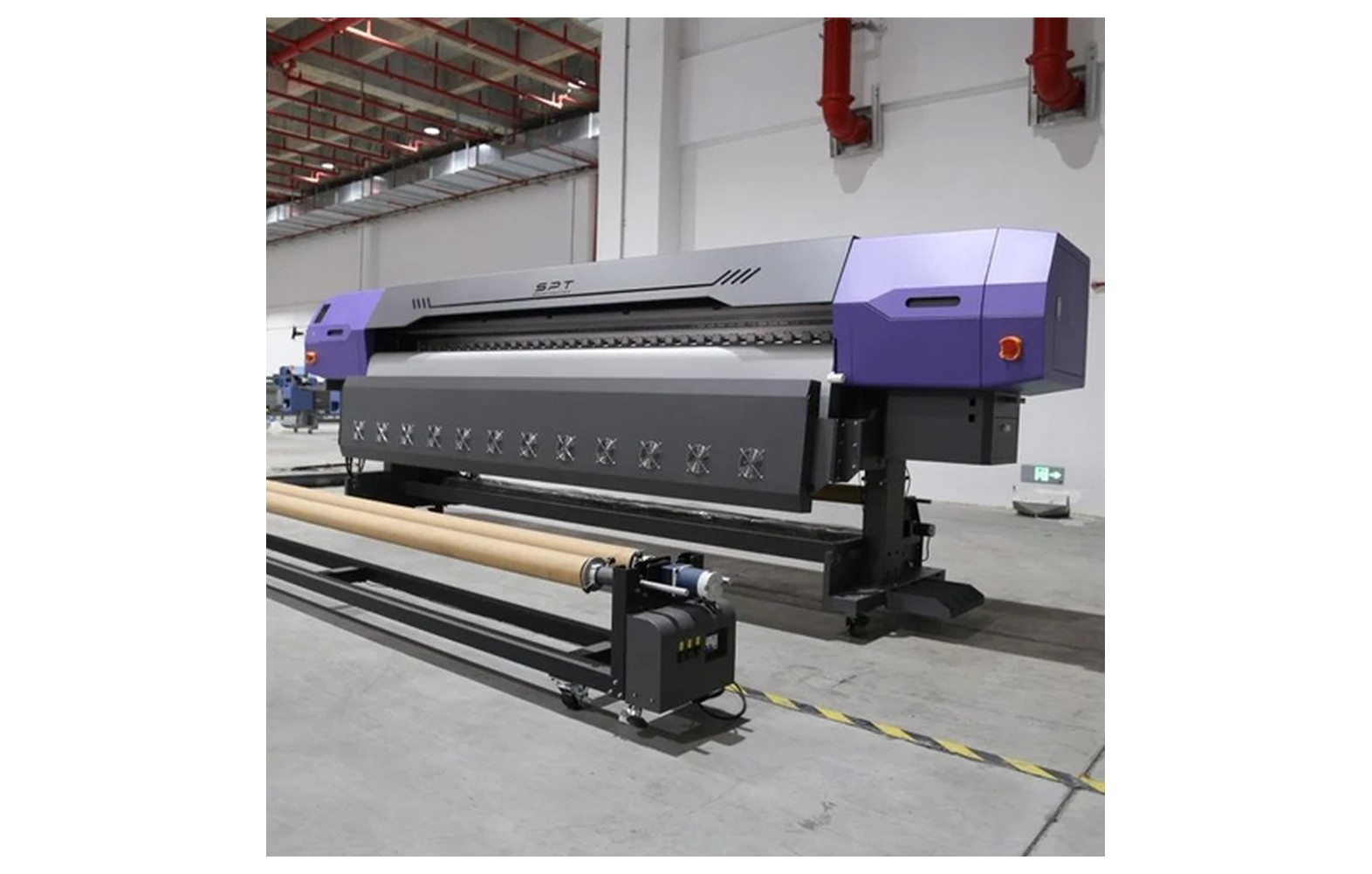
Direct answer: A digital printing startup can own production equipment, coordinate outsourced print partners, operate a hybrid workflow, serve repeat business customers or fulfil individual orders. Investors should assess verified demand, product-specific economics, cash requirements, capacity and risks rather than assuming that a printer automatically creates a scalable business.
Why the Business Model Matters More Than the Machine Name
A printer is a production asset. A business model explains who pays for what, how the order is fulfilled, which costs vary with the job and what resources must be financed. Two businesses using similar equipment can have very different customers, payment cycles, labour requirements and exposure to downtime.
A founder offering short-run labels to local brands might need material compatibility, repeat ordering and reliable delivery. A merchandise supplier assembling corporate kits may need several specialist partners, quality approvals and coordination across products. A print-on-demand seller may face artwork review, single-order fulfilment, returns and customer-service work.
Each model must be tested in its actual market. This guide is general educational information for founders and investors, not an investment recommendation. Examples are hypothetical and do not represent a real customer’s results or a promised return.
Model 1: Own the Production Equipment
An owner-operator purchases or otherwise acquires equipment and controls selected production steps. Potential advantages can include direct oversight of scheduling and quality, but they come with responsibilities for site readiness, staff training, maintenance, consumables, service and equipment utilisation.
Before committing, identify the actual products and confirm that the machine supports their materials, sizes, finishes and volume. A UV printer, textile DTF system, sublimation printer and label press are different systems. A machine that can print a sample does not automatically handle all finishing or every customer product.
Ask the supplier to demonstrate representative artwork on the actual substrate. Request an itemised quotation covering equipment, software, fixtures, finishing, installation, training, warranty, consumables and local support. Measure the whole job, including setup, production, finishing, inspection and packing.
Investors should examine utilisation assumptions and the cost of downtime. If sales are irregular, the equipment, rent and staff may remain payable when orders are low. A lower machine purchase price does not by itself establish a lower cost per accepted product.
Model 2: Outsource to Specialist Print Partners
An outsourced model coordinates customer orders while qualified partners perform some or all production. The startup may manage artwork, specifications, proofs, quality checks, assembly and delivery. It can test demand without immediately owning every machine, but supplier capability and handoff risk become important.
Use written specifications for the blank, artwork, quantity, finishing, acceptance criteria and delivery. Agree who supplies material, owns tooling, approves samples and handles rework or damage. Confirm the partner’s ability to protect confidential customer files and meet any relevant safety or product requirements.
Compare the full delivered cost, not only the supplier’s print price. Include shipping, inspection, coordination, payment timing, rejected work and customer service. Outsourcing does not remove the startup’s responsibility to deliver what it promised.
Model 3: Hybrid Production
A hybrid business owns selected operations and outsources others. For example, it might prepare artwork and apply compatible transfers in-house while buying printed transfers, or print labels while outsourcing a specialist finish. The arrangement must match the actual products and supplier instructions.
Map every handoff. Who checks the material, approves the proof, stores stock and pays for a failed batch? What happens when the outside partner misses a deadline or changes a blank? These operational questions affect customer experience and working capital.
Test the complete workflow using the same product the customer will receive. A successful transfer on one garment or decal on one coating does not prove compatibility with every item.
Model 4: Print-on-Demand
Print-on-demand produces or arranges an item after an order is received. A startup may own production or use a fulfilment partner. The model can reduce some finished-goods inventory, but it does not eliminate blank stock, supplier lead time, returns or customer-service responsibilities.
Assess how artwork is received, whether the business has the right to reproduce it, how variable names or photographs are checked, and what happens if an item is damaged or rejected. Protect customer data and agree access, retention and deletion procedures.
Measure cost per accepted and delivered order, including payment fees, packaging, shipping, reprints and support. A single-item order may have different economics from a repeat batch. Do not infer a profit margin from a retail price alone.
Model 5: Repeat B2B Contracts
A business-to-business printing service may supply recurring labels, signage, packaging or uniforms. Repeat work can make forecasting easier when supported by evidence, but a concentration of revenue in a few customers can also create risk.
Review the customer’s written specifications, quality standards, purchase process, payment terms and ability to change or cancel an order. A verbal promise of future volume is not the same as a contract or historical reorder record.
Consider credit exposure and capacity reserved for that customer. A profitable-looking order can strain cash if blanks and wages are paid before the invoice is collected. A qualified accountant can help model the actual terms.
Model 6: A Product or Material Niche
A startup can focus on one customer problem, such as short-run product labels or branded workwear. Specialisation may simplify training and supplier relationships, but it can also expose the business to a narrow demand source or material dependency.
Validate the niche through customer interviews, paid pilots and repeat-order evidence. Avoid claiming that a market has no competition without research. Ask what alternatives customers already use and what switching costs or quality concerns they face.
Document the exact materials and process. A label’s face stock, adhesive and liner matter; a garment’s fabric and colour matter; and a bottle’s exterior coating may differ from its base material. A generic machine label is not a compatibility guarantee.
Model Comparison: Questions Before Investing
| Model | Main resource requirement | Evidence to request |
|---|---|---|
| Owned production | Equipment, site, staff and maintenance | Itemised quotes, sample, capacity and service terms. |
| Outsourced | Partner management and quality control | Written specification, proof, lead time and defect terms. |
| Hybrid | Both internal operations and partner handoffs | Responsibility map and complete job cost. |
| Print-on-demand | Order processing and reliable fulfilment | Accepted-order cost, return process and data controls. |
| B2B contracts | Capacity, quality and working capital | Orders or contracts, payment history and concentration. |
| Niche service | Material knowledge and repeatable quality | Customer evidence, test results and supplier support. |
The table is a planning aid, not a ranking of models. The best choice depends on the founder’s evidence, capabilities and risk tolerance.
Unit Economics: Contribution Is Not Net Profit
List the selling price and variable costs for a representative accepted job: blank or media, ink or transfer, job-specific labour, finishing, packaging, delivery, payment fees and an appropriate allowance for rejects. Separate these from fixed overheads and financing costs.
For a simple illustration, suppose a hypothetical product sells for Rs 200 and variable costs per accepted item total Rs 120. The contribution is Rs 80. This is not net profit; rent, staff not included in variable cost, equipment financing, taxes and other expenses still need to be covered. The values are invented assumptions, not market prices or expected results.
Stress-test the model for a lower selling price, higher material cost, more rejects or a delayed customer payment. Make every assumption visible. For mixed products, calculate each product’s contribution and understand the sales mix rather than relying on a single average.
Capacity: Use Accepted Finished Output
Machine specifications may quote a maximum print speed for a defined mode. Actual capacity depends on artwork preparation, loading, nozzles or other quality checks, printing, curing or drying, cutting, pressing, assembly, inspection and packing.
Time a representative job and count accepted output. State clearly whether setup and finishing are included. Repeat the measurement across relevant order types where practical; one favourable demonstration is not proof of daily capacity.
Consider operator availability, maintenance, supplier lead times and quality requirements. A bottleneck can be a press, cutter, packing table or approval process rather than the printer itself.
Working Capital and Payment Timing
Map when cash leaves and enters the business. Blanks, media, wages, freight, deposits, tax and loan payments may be due before the customer pays. Inventory and work in progress can tie up cash even when an order appears profitable.
Agree customer deposits, credit terms, cancellation and rework responsibilities in writing. Review supplier minimums and lead times for the exact material. A forecast should include a downside scenario for delayed payment or slower sales.
Consult a qualified accountant or financial adviser about the actual business and financing terms. Do not present a generic revenue estimate as an expected return.
Quality, Compliance and Safety Risks
Quality starts with the actual substrate, ink, fixture and finishing. Approve a physical proof and agree wash, adhesion, handling or distribution tests appropriate to the product. A casual scratch or one wash is not a universal certification.
Food-contact packaging, electronic products and protective clothing may require product-specific approvals. Do not claim food safety, dishwasher resistance or preservation of protective certification without evidence for the complete application. Obtain qualified legal or regulatory guidance where required.
For the site, gather machine and accessory nameplates and manuals. A qualified electrician should assess the supply, protection and earthing. Review safety data sheets, guarding and ventilation with appropriate professionals. Do not use a generic stabiliser multiplier or bypass interlocks.
Supplier and Service Due Diligence
Request an itemised quote for the exact configuration, including software, fixtures, installation, training, consumables, warranty exclusions and local service. Ask which materials are approved and which tasks are operator-level versus restricted service.
Check what happens if a part is unavailable, a demonstration sample fails or a customer changes the blank. Retain the supplier’s written response and physical samples. A machine can be technically suitable but commercially unsuitable if the required support or finishing is missing.
Plan maintenance according to the manufacturer documentation. Keep dated tests, faults and service reports. A log supports diagnosis but does not guarantee zero downtime.
Investor Checklist Before Funding
- Customer evidence: Separate actual paid orders, written commitments and untested assumptions.
- Product fit: Review approved samples, material specifications and relevant performance tests.
- Economics: Check price, variable costs, rejects, overheads and financing without confusing contribution with profit.
- Capacity: Review measured accepted output and the time included in the measurement.
- Cash: Examine inventory, deposits, customer collection, supplier terms and downside scenarios.
- Operations: Identify who owns each production and outsourcing handoff.
- Safety and compliance: Confirm qualified site assessments and product-specific obligations.
- People and service: Review training, maintenance, spare parts and support terms.
- Governance: Agree reporting, use of funds and decision rights with qualified legal advice.
Illustrative Comparison: Apparel and Corporate Gifts
Suppose a founder has enquiries for branded cotton shirts and painted bottles. They could outsource both, own a compatible garment workflow and outsource bottles, or invest in separate supported systems. Each option needs a sample, complete cost and a realistic estimate of demand.
The shirt requires garment and wash validation. The bottle requires surface identification, fixture, adhesion and intended-use checks. A power bank in the same kit would require product-manufacturer approval and should not be treated like a blank bottle.
The founder compares actual quotations, production responsibilities and payment timing. The scenario is illustrative: it does not describe a real order or prove that one route is more profitable.
Common Claims Investors Should Challenge
- One machine prints everything: Materials, shapes, inks and safety requirements differ.
- Revenue is profit: Variable costs, overhead, financing and taxes must be considered.
- Maximum speed is delivered capacity: Setup, finishing, rejects and packing matter.
- A dry-looking UV print proves suitability: Cure, adhesion and end-use performance are separate.
- A customer enquiry is guaranteed demand: Validate purchasing authority, price and repeat behaviour.
- A generic margin or payback applies to every shop: Use the actual business assumptions and costs.
Practical Next Steps for a Founder
- Choose one customer segment and document the proposed problem and offer.
- Gather evidence through interviews, samples and, where possible, paid pilot orders.
- Obtain written in-house and outsourced quotations for the actual product.
- Build unit-cost and cash-flow scenarios with transparent assumptions.
- Approve a physical sample and agree the relevant performance test.
- Have qualified professionals assess site, electrical, safety and legal requirements.
- Agree supplier, customer and investor responsibilities in writing.
- Track accepted output, defects, cash collection and customer feedback after launch.
Related Guides
Continue with starting a digital printing business, small-brand merchandise setup and machine electrical requirements. Obtain current quotations and qualified advice for your own situation.
How to Present a Forecast Honestly
Separate historical results, committed orders and projections. For every projection, state the assumed selling price, order volume, variable cost, fixed cost, collection period and equipment utilisation. Show the source of each input and identify where a supplier quote or customer discussion remains unconfirmed.
Provide a downside case as well as a base case. Consider slower sales, a larger reject rate, longer payment collection and an equipment-service interruption. The purpose is not to predict a particular outcome but to show how the business would respond if assumptions change.
Do not use a hypothetical scenario as a customer testimonial or label a gross contribution as net earnings. A qualified accountant or investment professional can review the model and the terms appropriate to the actual proposal.
What to Include in a Funding Discussion
Explain the specific use of funds: equipment, installation, initial supplies, training, working capital and contingency where applicable. Identify which expenses are supported by current written quotations and which remain estimates. Describe the milestones and evidence that would be reviewed before releasing additional funds.
Agree who makes equipment and supplier decisions, how spending and operating results are reported, and how changes to the plan are approved. Obtain qualified legal and financial advice before entering a partnership, loan or investment agreement. A detailed plan improves clarity but cannot guarantee an investment outcome.
Reviewing the Plan After a Pilot
After a pilot, compare the actual accepted output, customer feedback, supplier invoice and collection timing with the assumptions. Record why any result differed and whether the next order requires a different material or process. A single successful pilot is useful evidence, but it does not establish sustainable demand or a guaranteed return.
Discuss the result with the founder, production partner and qualified financial adviser before increasing inventory or purchasing equipment. Retain the physical proof and written customer approval so the next comparison has a reliable baseline.
Frequently Asked Questions
What business models can a digital printing startup use?
It can own production, outsource, use a hybrid workflow, fulfil on demand or focus on repeat business customers, depending on evidence and capability.
Should a startup buy a printer immediately?
Not necessarily. Compare validated demand, samples, full costs and an outsourced option before committing to equipment.
Is print-on-demand always inventory-free?
No. It may reduce some finished-goods inventory, but blanks, supplier lead times, returns and fulfilment still matter.
What is the difference between contribution and net profit?
Contribution is selling price minus variable costs under stated assumptions; fixed costs, financing, tax and other expenses still need consideration.
What should an investor check first?
Review actual customer evidence, product fit, unit economics, cash flow, capacity, service support and risks.
Can one machine produce all merchandise?
No. Materials, shapes, inks, fixtures and safety requirements differ. Confirm each actual product with suppliers.
Does a forecast guarantee a return?
No. Forecasts depend on assumptions. Separate actual results from projections and review downside scenarios with qualified advisers.
