 (+91) 8853765397
 NEWSLETTER

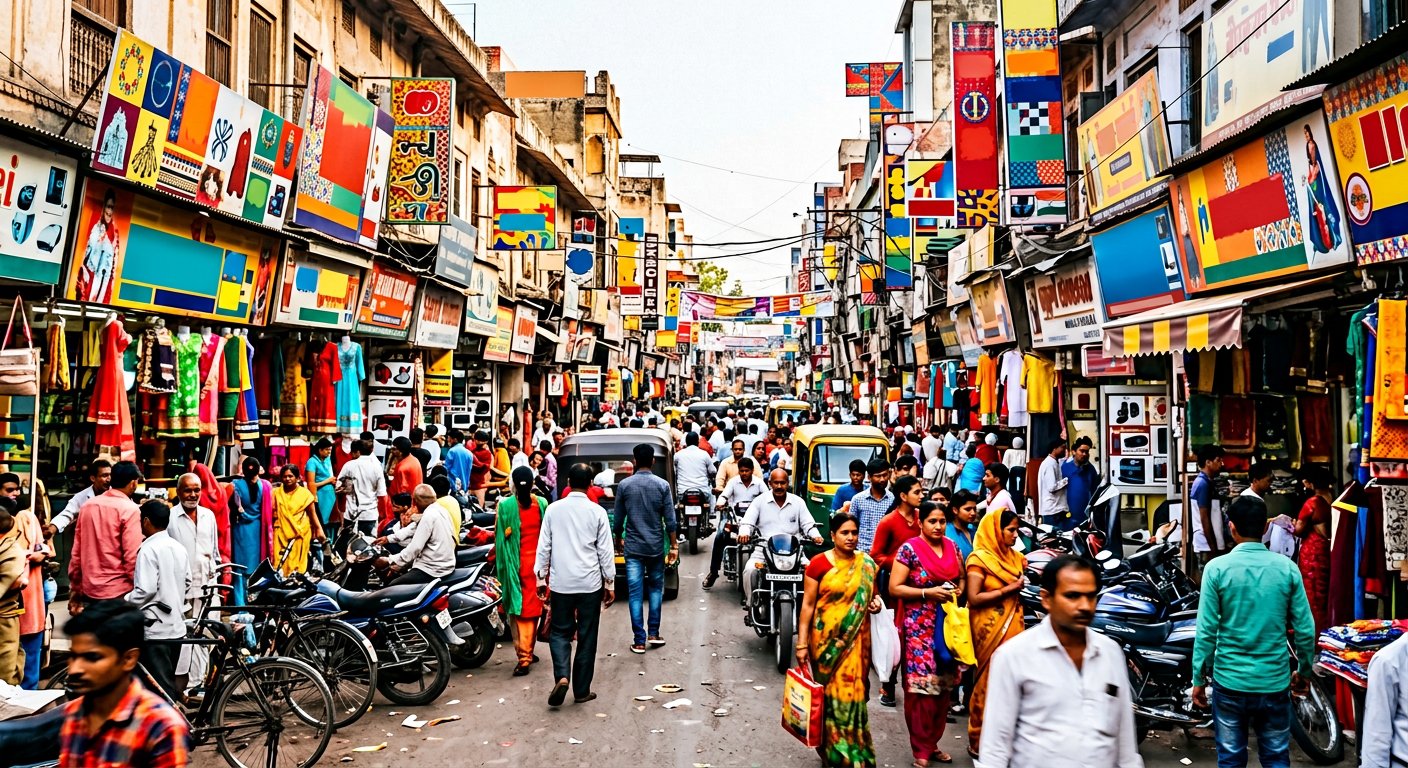
Flex printing is a large-format digital printing process where designs are printed onto flexible PVC (polyvinyl chloride) banner material using solvent, eco-solvent, or UV inkjet printers. If you’ve ever seen a shop board, a roadside hoarding, a wedding stage banner, or a political rally hoarding in India — you’ve seen flex printing at work. It is the most popular, affordable, and widely used large-format printing method in the country, with lakhs of square feet printed every single day. This beginner’s guide explains everything: what flex is, how the printing works, the machines used, applications, costs, and how people build businesses around it.
What Exactly Is Flex Printing?
Flex printing means printing on flex media — a durable, flexible banner material made of a polyester scrim (woven mesh) sandwiched between two layers of PVC coating. This construction makes flex:
- Waterproof — it survives rain and monsoon outdoors
- Tear-resistant — the polyester scrim holds it together even if the surface is nicked
- Lightweight — easy to tie, paste, or frame anywhere
- Printable — its coated surface absorbs solvent inks beautifully
Flex comes in rolls (typically 3.2 ft, 5 ft, 8 ft, or 10 ft wide) and different thicknesses measured in GSM — from 240 GSM (thin, cheap) up to 610+ GSM (thick, premium). The most common grades in India are 240 GSM for temporary banners and 280–340 GSM for shop boards.
How Flex Printing Works: Step by Step
Step 1: Designing
The artwork is created in CorelDRAW, Photoshop, or Illustrator — usually at 72–150 DPI (large formats are viewed from distance, so 300 DPI isn’t needed). Files are saved in CMYK colour mode with bleed margins.
Step 2: RIP processing
The design is sent through RIP (Raster Image Processor) software like MainTop or PhotoPrint, which converts it into precise instructions for the printer — controlling ink drops, passes, and colour profiles.
Step 3: Printing
The flex roll is loaded onto the printer. Piezoelectric printheads (Epson i3200, DX5, Ricoh Gen5, Konica, etc.) fire microscopic droplets of solvent ink onto the media. The ink slightly dissolves the PVC coating, bonding the pigment permanently into the material — this is why flex prints are waterproof and long-lasting.
Step 4: Drying
Built-in heaters (pre-heat, mid-heat, and post-heat zones at 35–55°C) evaporate the solvent so the print is dry and smudge-free the moment it exits the machine.
Step 5: Finishing
The printed banner is trimmed, hemmed (edges folded and glued/welded), fitted with eyelets (metal rings) for tying, and optionally laminated for extra protection.
Step 6: Installation
The banner is tied to poles, pasted on walls, stretched over an angle-iron frame (for shop boards), or mounted on hoarding structures.
Types of Flex Printing Technologies
| Technology | Ink Type | Best For | Cost per sq ft |
|---|---|---|---|
| Solvent printing | Solvent ink | Outdoor banners, hoardings — most durable & economical | Lowest |
| Eco-solvent printing | Eco-solvent ink | Indoor signage, finer detail, low odour | Low–Medium |
| UV printing | UV-curable ink | Premium signage, rigid boards, scratch-proof prints | High |
| Latex printing | Water-based latex ink | Eco-friendly indoor/outdoor, hospitals & schools | Medium–High |
In India, solvent printers dominate flex printing — around 90% of the banners you see are printed on solvent machines (typically 6 ft, 8 ft, or 10 ft wide with 2, 4, or 8 printheads), because solvent ink is cheap, weatherproof, and works on the lowest-cost media.
What Is Flex Printing Used For?
Flex printing covers an enormous range of applications:
- Shop boards & signage — flex stretched over a frame is the default shop sign in India
- Hoarding & outdoor advertising — highway billboards, building wraps
- Event banners — weddings, birthdays, religious events, concerts
- Political hoardings & cut-outs — the largest seasonal demand driver
- Shop branding & fascia boards — franchises, showrooms, mobile shops
- Promotional banners — sales, launches, real estate projects
- Standees & backdrops — exhibitions, conferences, photo booths
- Vehicle branding — truck and tempo side branding
- Wall wrapping & society signage — residential and commercial compounds
Advantages of Flex Printing
- Unbeatable cost: ₹10–25 per sq ft — the cheapest way to print large graphics
- Fast turnaround: 300–1,000+ sq ft per hour on modern machines; same-day delivery is normal
- Weatherproof: survives sun, rain, and dust for 6 months to 2+ years depending on media
- Any size: multiple panels can be joined for hoardings hundreds of feet wide
- Reusable & portable: banners roll up, travel, and get re-installed elsewhere
Limitations You Should Know
- Not for close-up detail: flex is a coarse material; for photos viewed at arm’s length, vinyl or paper prints look sharper.
- Fading over time: direct UV sunlight fades colours after 1–3 years (premium inks last longer).
- Wrinkles & wind damage: poorly tensioned flex flaps and tears in storms; mesh flex solves windy locations.
- Solvent smell: fresh solvent prints have an odour — fine outdoors, avoid indoors; use eco-solvent or latex inside.
Flex Printing vs Other Printing: Quick Comparison
| Parameter | Flex Printing | Vinyl Printing | Paper Poster | Fabric Printing |
|---|---|---|---|---|
| Cost | ₹10–30/sq ft | ₹25–60/sq ft | ₹8–20/sq ft | ₹40–120/sq ft |
| Outdoor life | 0.5–2+ years | 1–5 years | Days–weeks | 1–3 years |
| Waterproof | Yes | Yes | No | Partial |
| Best surface | Frames, hoardings, fences | Smooth walls, vehicles, glass | Indoor posters | Flags, backdrops |
| Close-view quality | Good | Excellent | Excellent | Good |
How Much Does Flex Printing Cost?
For customers, retail printing rates in 2026 run ₹10–18/sq ft for standard flex, ₹18–30 for Star Flex, and ₹35–60 for backlit flex, varying by city and quantity. For businesses, the economics are even more attractive: the raw production cost (media + ink + power) works out to just ₹6–8/sq ft, leaving print shops with 45–60% gross margins on retail work — which is why flex printing remains one of India’s most popular small businesses.
Thinking of Starting a Flex Printing Business?
A flex printing setup typically includes:
- Solvent flex printer (6–10 ft wide, 2–8 heads) — the core machine
- Computer with RIP software and design tools
- Finishing tools — eyelet machine, lamination machine, cutter
- Working space of 300–800 sq ft
Total investment for a small setup starts around ₹4–8 lakhs for a budget machine and scales up for high-speed multi-head machines. With consistent local demand from shops, events, and political work, most shops recover their investment within 12–24 months.
Frequently Asked Questions (FAQs)
Q1. What is flex printing in simple words?
Flex printing is printing your design on a strong, waterproof PVC banner cloth using large inkjet printers. It’s used for shop boards, hoardings, and banners of all sizes.
Q2. Is flex printing waterproof?
Yes. Solvent inks bond chemically with the PVC coating, making flex prints fully waterproof — one reason it dominates outdoor advertising in India’s monsoon climate.
Q3. How long does flex printing last outdoors?
Standard flex lasts 6–12 months outdoors; premium Star Flex and frontlit grades with quality inks last 1–3 years depending on sunlight exposure.
Q4. What file do I need to give the printer?
A CDR (CorelDRAW), PDF, or high-resolution JPG/PNG at actual banner size, in CMYK mode. 72–150 DPI is enough for large banners.
Q5. What is the difference between flex and banner?
“Flex” is the material (PVC banner fabric); “banner” is the finished product. People use the terms interchangeably — “flex printing” and “banner printing” mean the same service.
Q6. Can flex be printed for indoor use?
Yes, but solvent flex has a mild odour when fresh. For indoor spaces like malls or offices, eco-solvent or latex printing on flex or fabric is preferable.
Q7. What size flex printing machines are available?
Common widths are 3.2 ft (eco-solvent), 5 ft, 6 ft, 8 ft, and 10 ft (solvent). In India, 6 ft and 8 ft machines are the most popular for banner businesses.
Q8. Is flex printing profitable in India in 2026?
Yes — demand from shops, events, real estate, and political campaigns keeps growing. Production cost is ₹6–8/sq ft against retail rates of ₹10–25/sq ft, giving healthy margins.
Q9. Which machine is best for starting flex printing?
A 6 ft or 8 ft solvent printer with 2–4 Epson i3200 or Konica heads is the sweet spot for startups — affordable, fast (300+ sq ft/hr), and easy to maintain.
Q10. Can flex prints be recycled?
PVC flex isn’t easily recycled in India, so many shops reuse old banners for covers and packaging. Eco-conscious buyers can ask for recyclable media options.
Start Your Flex Printing Journey with UED
Unified Engineering Dynamics supplies complete flex printing solutions across India — solvent & eco-solvent machines, genuine inks, spare parts, installation, and free operator training. Join thousands of successful print shop owners.
View Flex Printing Machines → | Shop Printing Inks → | Contact Us for a Quote →
Final Word
Flex printing is the backbone of Indian signage and advertising — cheap, fast, durable, and scalable from a single shop banner to a 200-foot highway hoarding. Whether you’re a customer getting your first banner printed or an entrepreneur evaluating the business, understanding this simple process — design, print on PVC, finish, install — helps you make smarter decisions and get better value every time.
