

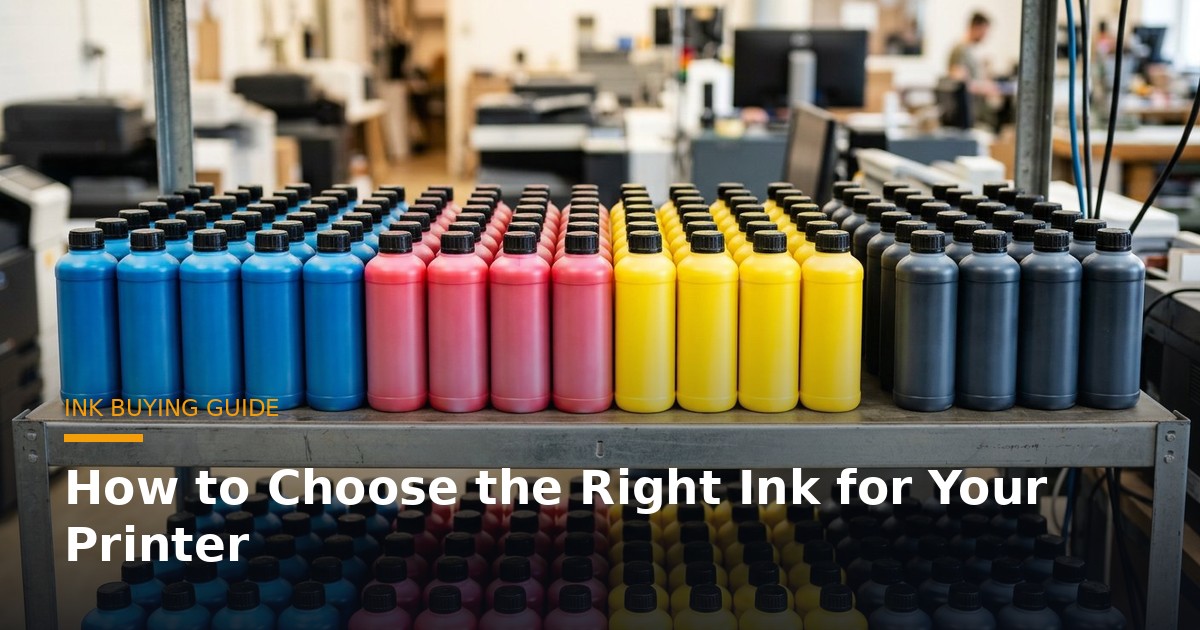
Choosing the right ink for your printer is one of the most important decisions for a printing business, because ink affects your output quality, your printhead’s health, your costs and your customers’ satisfaction. With so many ink types — solvent, eco-solvent, UV, DTF, sublimation — and quality grades and prices, choosing well can seem complex. But it comes down to a few key factors: your printhead, your application, quality and cost. This complete guide walks you through choosing the right ink for your wide-format, UV, DTF or flex printer in India.
Start with Your Printhead and Machine
The first and most fundamental factor is your printhead — the ink must be compatible with it. Your printer uses a specific printhead (Epson i3200, i1600, DX5/DX7, Konica KM512i, KM1024i, Starfire HS1000, or others), and the ink must be formulated for that head. Using incompatible ink can clog nozzles, produce poor output and damage the head — an expensive mistake. So before anything else, identify your printer’s printhead and use ink recommended for it. Your machine’s manual or supplier will specify the right ink type and grade. This compatibility is non-negotiable: the right ink starts with matching your specific printhead.
Match the Ink to Your Application
The ink type must suit what you print. For flex banners, vinyl and outdoor signage, solvent or eco-solvent ink is used — solvent for maximum outdoor durability, eco-solvent for versatility and low odour. For rigid substrates — acrylic, glass, metal, packaging — UV ink is required. For garments on cotton and dark fabrics, DTF ink is needed. For polyester apparel and hard goods, sublimation ink is used. Each ink type is designed for specific applications and substrates, so match the ink to what you actually print. Choosing the wrong ink type for your application simply will not work — the ink and the job must be matched.
Prioritise Quality
Within the right ink type, quality is the most important factor, because it protects your printhead and determines your output. Quality ink has consistent, finely ground pigment that flows cleanly and resists clogging, protecting your expensive printhead. It delivers vibrant, consistent colour, so your output looks good and reorders match. Poor-quality ink clogs nozzles, produces inconsistent output and can damage your head. As we explain in our guide on why cheap ink ruins printheads, cheap ink is a false economy — the small saving is dwarfed by head damage and rejected output. Prioritise quality ink from a reputable supplier over the lowest price; it protects your most valuable component and your reputation.
Consider Cost — But Wisely
Cost matters, but consider it wisely — not just the per-litre price but the total value. Cheaper ink may seem economical but can cost more through waste, reprints and head damage. Quality ink costs a bit more per litre but protects your printhead, gives consistent output and covers efficiently, often giving a lower true cost per print. Also consider buying in sensible volumes for better pricing, but not beyond shelf life. When evaluating cost, think about total value — quality, head protection, consistency and efficiency — not just the sticker price per litre. The most economical ink is the one that gives you reliable, quality output while protecting your expensive printhead, not the cheapest per litre.
Buy from a Reliable Supplier
Where you buy ink matters as much as the ink itself. A reliable supplier provides consistent, quality ink properly formulated for your printhead, with dependable supply so you are never caught short mid-production, and support when you need it. Your machine supplier is often the best source, since they stock ink matched to their machines and understand your equipment’s needs. Be wary of unknown cheap sources, since inconsistent ink clogs heads and produces poor output. Build a relationship with a knowledgeable, reliable supplier who understands your printer and stands behind their ink — they are a valuable partner in your business, providing not just ink but advice and support.
Check Compatibility and Consistency
Before committing to a large quantity of any ink, check its compatibility and consistency. Confirm it is formulated for your specific printhead. If trying a new ink or supplier, test it first — print test jobs and check output quality, colour and how your head behaves. Monitor for clogging or problems over the first period of use. Consistency matters: once you find quality ink that works well with your machine, stick with it rather than switching between brands and formulations, since different inks may not mix well and switching can cause problems. Checking compatibility and consistency before committing protects you from the cost and disruption of ink that does not work well with your printer.
Consider Your Specific Ink Needs
Different applications have specific ink needs worth considering. For UV printing, consider whether you need white ink (for dark or clear substrates) and varnish (for gloss or matte finishes), which cost more but enable premium work. For DTF, white ink quality is critical, since it provides the underbase for dark garments and is hard on heads. For outdoor flex, prioritise durability and UV resistance. For quality graphics, prioritise colour vibrancy and consistency. Consider the specific demands of your work — white, varnish, durability, colour — and choose ink that meets them. Understanding your specific needs ensures the ink you choose actually delivers what your applications require.
Understand Storage and Shelf Life
Ink has a shelf life — typically six months to a year — so buy what you can use within that time and store it properly. Store ink in a cool, dry place away from heat and sunlight, sealed tightly. Use first-in-first-out rotation so you print with fresh ink. Over-buying beyond shelf life wastes money as ink degrades and causes poor output. For DTF, white ink needs special care — keep it agitated or stirred to prevent settling. Understanding storage and shelf life ensures your ink stays fresh and performs well, and avoids waste from degraded ink. Buy sensible volumes, store properly, and use ink while it is fresh for consistent, quality results.
Getting Expert Help with Your Choice
Choosing the right ink involves several factors — printhead compatibility, application, quality, cost — and getting it wrong is costly. So expert help is genuinely valuable, especially if you are new to printing or unsure. A knowledgeable supplier who understands your printer and applications can recommend the right ink, help you avoid costly mistakes and support you. Unified Engineering Dynamics manufactures a wide range of printers and supplies quality inks matched to them, and we advise businesses on choosing the right ink for their specific machine and work. We help you match the ink to your printhead and applications, so you get quality output, protect your equipment and avoid the costly mistakes of wrong or poor-quality ink.
Frequently Asked Questions
How do I know which ink my printer needs?
Match the ink to your printhead and application. Check your machine’s manual or ask your supplier for the recommended ink type and grade for your specific printhead.
Can I use any ink in my printer?
No — the ink must be formulated for your specific printhead. Incompatible ink can clog nozzles, produce poor output and damage the head.
Is expensive ink worth it?
Quality ink is worth it — it protects your expensive printhead, gives consistent output and covers efficiently, often costing less in total than cheap ink plus its problems.
How much ink should I buy at once?
Buy what you can use within its shelf life (six months to a year). Buy sensible volumes for better pricing, but avoid over-buying beyond shelf life.
Where should I buy printer ink?
From a reliable supplier, ideally your machine supplier, who stocks quality ink matched to your printer and supports you. Avoid unknown cheap sources.
Do you help choose the right ink?
Yes. Unified Engineering Dynamics supplies quality inks matched to our printers and advises on the right ink for your machine and applications.
Ink Choice Across Printer Types
The right ink depends heavily on your printer type, so it is worth summarising the choice for each. For flex and solvent printers using Konica or Starfire heads, use quality solvent ink formulated for those industrial heads, prioritising outdoor durability. For eco-solvent printers using Epson i3200 or DX7 heads, use quality eco-solvent ink matched to the head, balancing versatility and low odour. For UV printers using i3200, i1600 or Konica heads, use quality UV ink, considering white and varnish needs. For DTF printers using Epson heads, use quality DTF ink with excellent white, prioritising white quality and head safety. For sublimation, use quality sublimation ink matched to the head, prioritising colour consistency.
In every case, the principles are the same: match the ink to your specific printhead, prioritise quality to protect that head, suit the ink to your application, and buy from a reliable supplier. The differences are in the specifics — which ink type, which qualities matter most (durability for outdoor flex, white for DTF, colour for sublimation, curing for UV). Understanding both the common principles and the printer-specific specifics lets you choose the right ink for your machine. When in doubt, your machine supplier’s recommendation for your specific printer and head is the surest guide, since they know exactly what your equipment needs.
A Practical Checklist for Choosing Ink
To make choosing ink straightforward, follow this practical checklist. 1. Identify your printhead — know exactly which head your printer uses. 2. Confirm ink compatibility — use ink formulated for that specific head. 3. Match to your application — ensure the ink type suits what you print. 4. Prioritise quality — choose quality ink from a reputable supplier, not the cheapest. 5. Consider specific needs — white, varnish, durability or colour, as your work requires. 6. Check with your supplier — follow your machine supplier’s recommendation. 7. Test before committing — try a new ink on test jobs before buying in bulk. 8. Buy sensible volumes — within shelf life, for good pricing. This checklist covers the key factors and helps you choose ink that protects your printer and delivers quality results.
Using this checklist turns ink selection from a confusing decision into a clear process. It ensures you never use incompatible ink that risks your head, never compromise on quality, and always match the ink to your actual needs. Many costly mistakes — wrong ink type, poor quality, incompatible formulation — are avoided simply by working through these steps. And the final step, consulting your supplier, gives you expert confirmation. Whether you are setting up a new printer or re-evaluating your ink, this checklist helps you choose wisely, protecting your expensive printhead and ensuring the quality output your business depends on.
Common Ink Mistakes to Avoid
Avoiding common mistakes makes choosing ink much easier. Do not use incompatible ink — always match the ink to your specific printhead, since the wrong ink damages your expensive head. Do not chase the lowest price — cheap ink risks clogging, poor output and head damage, costing more in the long run. Do not switch brands casually — different formulations may not mix well; be consistent once you find quality ink that works. Do not buy from unknown sources — inconsistent ink and no support are a poor gamble. Do not over-buy beyond shelf life — ink degrades, wasting money and causing poor output.
These mistakes are common and costly, but easily avoided by following the principles in this guide: match the ink to your head, prioritise quality, buy from a reliable supplier, and buy sensible volumes. Printers who avoid these mistakes protect their expensive printheads, get consistent quality output and avoid the waste and disruption that wrong or poor-quality ink causes. Choosing ink is not complicated when you focus on compatibility and quality — the mistakes come from cutting corners on these, and avoiding them is simply a matter of discipline and buying from suppliers you trust.
Choose the Right Ink — Protect Your Printer and Output
Choosing the right ink means matching it to your printhead and application, prioritising quality, and buying from a reliable supplier. Unified Engineering Dynamics supplies quality inks matched to our printers, with expert advice and nationwide support.
Get expert ink advice and pricing from UED → Tell us your printer and what you print, and we will recommend the right ink for your business.
Related Reading
- How to Store Printer Ink: Shelf Life, Tips & Safety
- Printer Ink Problems: Clogging, Banding & Not Drying (Causes & Fixes)
- Original vs Compatible Ink: What’s the Difference and Which to Use?
- Printer Ink Consumption & Cost per Print: How to Calculate (2026)
Unified Engineering Dynamics supplies quality printer inks and machines with expert support across India. Get in touch for ink advice and pricing →
