



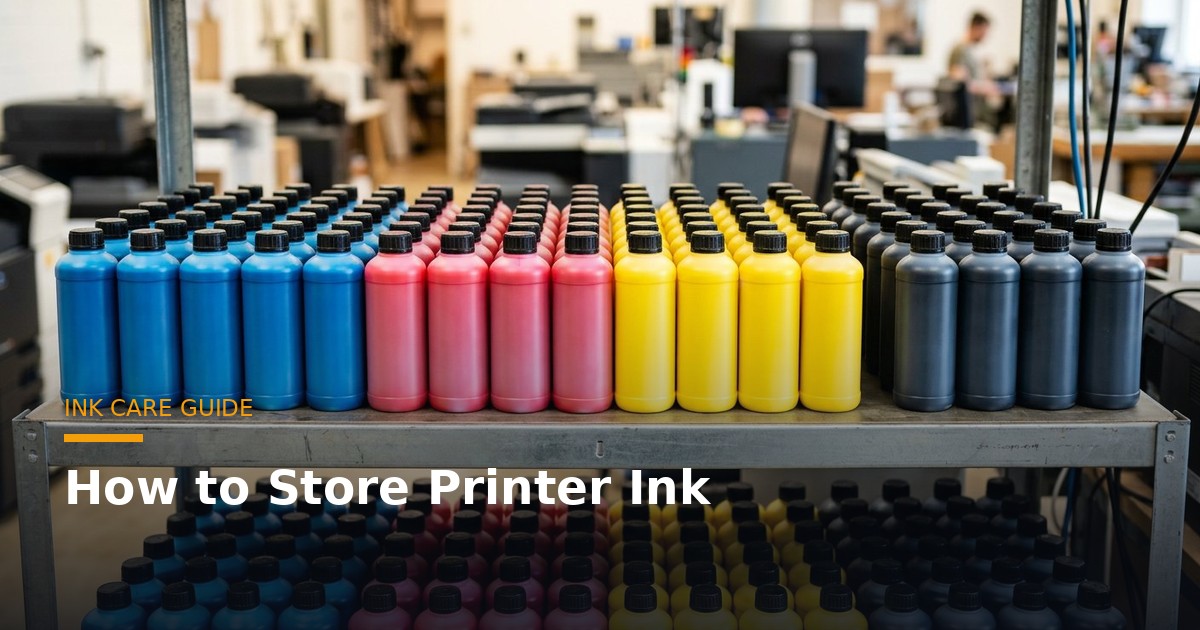
Printer ink is a significant investment and a precision product, and how you store it directly affects its quality, your print results and your printhead’s health. Store ink badly and it degrades, causing poor output, clogging and wasted money. Store it well and it stays fresh and performs reliably throughout its shelf life. Yet proper ink storage is often overlooked. This guide explains how to store printer ink correctly — shelf life, temperature, handling, special care for DTF white ink, safety and organisation — so your ink stays fresh and your printer runs smoothly.
Why Proper Ink Storage Matters
Ink is a carefully formulated chemical product, and its performance depends on it staying in good condition. Improper storage — exposure to heat, light, air or contamination — degrades ink, changing its viscosity, causing pigment to settle or separate, and reducing its quality. Degraded ink produces dull or inconsistent colour, clogs nozzles and can damage your printhead. Since ink is expensive and your printhead is even more so, proper storage protects both. Good storage ensures that the ink you paid for performs as it should when you use it, rather than degrading on the shelf and causing problems, wasted ink and head damage. It is a simple practice with significant benefits for output quality, printhead health and cost.
Understanding Ink Shelf Life
All printer ink has a shelf life — typically six months to a year from manufacture, though this varies by ink type and manufacturer. Within this period, properly stored ink performs as intended. Beyond it, ink degrades: pigment settles and may not redisperse, solvents evaporate or change, and quality declines, causing poor output and clogging. Check the manufacture or expiry date on your ink, and use it within its shelf life. This is why buying sensible volumes matters — over-buying means ink sits beyond its shelf life and degrades, wasting money and causing problems. Understand shelf life, check dates, and use ink while it is fresh for reliable, quality results.
The Right Temperature and Environment
Temperature and environment are critical to ink storage. Store ink in a cool, stable environment — ideally around room temperature (roughly 15–25°C), away from heat sources and direct sunlight. Heat accelerates ink degradation and can cause solvents to evaporate or pigments to separate. Extreme cold can also affect ink. Avoid temperature fluctuations, which can cause condensation and affect ink quality. A cool, dry, stable storage area — away from windows, heaters and machinery that generates heat — is ideal. Protecting ink from heat and temperature swings is one of the most important aspects of storage, since heat is a primary cause of ink degradation.
Sealing and Preventing Contamination
Keep ink containers tightly sealed when not in use, to prevent evaporation, contamination and skinning. Exposure to air lets solvents evaporate, thickening the ink, and can introduce dust or contaminants that clog nozzles. Always reseal bottles tightly after use. Avoid contaminating ink — do not introduce foreign objects, mix different inks, or let dirt into the container. When decanting or handling ink, use clean tools and containers. Contaminated ink clogs nozzles and damages printheads, so keeping ink sealed and clean is essential. Good sealing and contamination prevention preserve ink quality and protect your printhead from the clogging that contaminants cause.
Special Care for DTF White Ink
DTF white ink needs special storage care because of its heavy pigment. White pigment settles over time, and settled white ink clogs nozzles and gives weak, uneven opacity. To store and handle white ink properly, keep it agitated — many DTF systems circulate white ink to keep pigment suspended, and you should stir or shake white ink before use as recommended. Store white ink in a way that minimises settling, and never let it sit stagnant in lines or the head for long periods. White ink is the most demanding ink to store and handle, and proper care — agitation, stirring and avoiding stagnation — is essential to prevent the clogging that ruins DTF printheads and output.
First-In-First-Out Rotation
Use a first-in-first-out (FIFO) system so you print with the oldest ink first, before it approaches the end of its shelf life. When you buy new ink, store it behind your existing stock, and use the older ink first. This simple practice ensures no ink sits unused until it degrades and expires. Label containers with purchase or opening dates if helpful, so you know which to use first. FIFO rotation is standard good practice in any consumable management, and for ink it ensures you always print with fresh ink and avoid wasting money on ink that expires unused. It is a small organisational habit that maximises the value of every litre you buy.
Organising Your Ink Storage
Good organisation makes ink management easier and reduces waste. Store ink in a designated, cool, dry area, organised by type and colour, so you can find what you need and see your stock levels at a glance. Keep ink in its original, labelled containers, and store it upright and secure to prevent leaks. Keep an eye on stock levels so you reorder before running out but do not over-buy beyond shelf life. A tidy, organised ink store helps you use FIFO, spot low stock, avoid over-buying and keep ink in good condition. Organisation is a small effort that improves your ink management, reduces waste and ensures you always have fresh, quality ink ready when you need it.
Safety When Handling and Storing Ink
Printer ink is a chemical product, so handle and store it safely. Store ink away from heat, sparks and open flames, since some inks are flammable. Keep ink out of reach of children and away from food. Ventilate your storage and printing area, especially for solvent inks that give off fumes. Use appropriate protective equipment — gloves and eye protection — when handling ink, and wash skin promptly if ink contacts it. Follow the safety data sheet for your specific ink. Keep ink in its original, labelled containers. Safe handling and storage protect you, your staff and your premises, and are an important part of responsible ink management, particularly with solvent and UV inks.
Storing Ink in the Printer
Ink in your printer also needs care, especially if the machine sits idle. Ink left in the printhead and lines can dry or settle, causing clogging. If your printer will be idle for a while, follow the manufacturer’s guidance — some recommend running a maintenance cycle before storage, keeping the head capped, or other steps to protect it. For DTF, never let white ink sit stagnant in the head. If storing a printer for an extended period, consult your supplier about the right preparation. Even in normal use, keeping the head capped when idle and running regular maintenance prevents ink drying in the head. Caring for the ink in your printer, not just your stored stock, is essential to preventing clogging and protecting your printhead.
Signs Your Ink Has Degraded
Learn to recognise degraded ink, so you do not use it and cause problems. Signs include separation that does not remix with stirring, unusual thickness or clumping, a change in colour, or a skin or film on the surface. Ink past its shelf life, or stored poorly in heat, may show these signs. Using degraded ink causes poor output, clogging and potential head damage, so if ink shows signs of degradation, do not use it — dispose of it properly and use fresh ink. Checking ink condition before use, especially ink that has been stored a while, protects your output and printhead from the problems degraded ink causes.
Getting Quality Ink and Storage Advice
Proper storage preserves ink quality, but it starts with quality ink from a reliable supplier. Unified Engineering Dynamics supplies quality inks matched to our printers and printheads, and we advise on proper storage, handling and shelf-life management. We help businesses keep their ink in top condition, so it performs reliably and protects their equipment. Whether you need quality solvent, eco-solvent, UV, DTF or sublimation ink, or advice on storing and managing it, our experts can help you get the most from your ink and keep your printer running smoothly.
Frequently Asked Questions
How long does printer ink last?
Typically six months to a year from manufacture, if stored properly. Check the expiry date and use ink within its shelf life for best results.
What is the best way to store printer ink?
In a cool, dry, stable place away from heat and sunlight, tightly sealed, upright, and organised with first-in-first-out rotation so you use the oldest ink first.
Does DTF white ink need special storage?
Yes — white pigment settles, so keep it agitated or stir before use, and never let it sit stagnant. Proper white-ink care prevents clogging and poor opacity.
Can heat damage printer ink?
Yes — heat accelerates degradation, causing solvent evaporation and pigment separation. Store ink cool, away from heat sources and direct sunlight.
Is printer ink safe to store at home or in a shop?
Yes, with care — store away from heat and flames, out of children’s reach, ventilated, and follow the safety data sheet. Use gloves when handling.
Do you supply ink and storage advice?
Yes. Unified Engineering Dynamics supplies quality inks matched to our printers and advises on proper storage, handling and shelf-life management.
Building Good Ink-Storage Habits
Proper ink storage is not complicated, but it does require consistent habits rather than occasional attention. Make it routine to reseal containers tightly after every use, return ink to its cool, designated store rather than leaving it by the machine, and check dates and stock when you order. For DTF, build white-ink agitation and stirring into your workflow so it never sits stagnant. These small, consistent habits keep your ink in top condition without effort, and prevent the degradation that causes poor output and head damage. Like any good practice in a printing business, ink storage becomes second nature once established, and quietly protects your investment in ink and equipment every day.
Good storage habits also connect to your wider ink management. Buying sensible volumes within shelf life, using FIFO rotation, monitoring stock and storing properly all work together to ensure you always have fresh, quality ink ready and none wasted through degradation. This disciplined approach maximises the value of every litre you buy and keeps your printer running reliably. Printers who manage their ink well — buying smartly, storing properly and using it fresh — avoid the waste, poor output and head problems that careless ink handling causes, and get the full performance and value from the quality ink they invest in.
The Bottom Line on Ink Storage
Proper ink storage is a simple practice with significant benefits: it preserves ink quality, ensures reliable output, protects your expensive printhead and avoids wasted money on degraded ink. The essentials are straightforward — store ink cool and away from heat and light, keep it tightly sealed and uncontaminated, use it within its shelf life with FIFO rotation, care specially for DTF white ink, and handle it safely. None of this is difficult, but doing it consistently makes a real difference to your output quality, printhead health and costs. Combined with quality ink from a reliable supplier, good storage is a foundation of smooth, professional, profitable printing.
Taking these habits seriously also reflects the professionalism of your business. A printer who manages ink carefully — storing it well, using it fresh and protecting the printhead — produces consistently good work and runs reliably, and that care shows in the quality customers receive. Ink may seem a small detail, but how you handle it touches your output, your equipment and your reputation, so treating storage as part of good practice is well worth the modest effort it takes.
Store Ink Well — Protect Its Quality and Your Printer
Proper storage keeps ink fresh and performing, protecting your output and printhead. Store it cool, sealed and organised, use it within shelf life, and care for white ink specially. Unified Engineering Dynamics supplies quality inks and expert storage advice.
Get quality ink and storage advice from UED → Tell us your printer, and we will supply quality ink and help you store and manage it properly.
Related Reading
- How to Choose the Right Ink for Your Printer: Complete India Guide
- Printer Ink Problems: Clogging, Banding & Not Drying (Causes & Fixes)
- Original vs Compatible Ink: What’s the Difference and Which to Use?
- Why Cheap Ink Ruins Your Printhead (And What It Really Costs You)
- Sublimation Ink Price in India: Cost, Quality & Where to Buy
Unified Engineering Dynamics supplies quality printer inks and machines with expert support across India. Get in touch for ink advice and pricing →
