


DTF (Direct-to-Film) printing has become one of the most accessible and profitable printing businesses to start in India, because it needs little equipment, no screens, no minimum orders, and it serves the booming custom-apparel market. This complete guide explains how to start a DTF printing business in India — the investment required, the equipment you need, the setup process, the products you can sell, and a realistic profit plan.
Unlike screen printing, which demands screens, setup and large minimum runs, DTF lets you print full-colour, detailed designs onto a film and transfer them onto almost any fabric with a heat press. That flexibility makes it perfect for custom t-shirts, small batches and on-demand orders — exactly what today’s customers want.
Why Start a DTF Printing Business?
The timing is excellent. Customisation is booming, driven by e-commerce, social media and demand for personalised apparel. DTF has low entry costs, minimal space requirements and no minimum orders, so even a home-based or small-shop operation can start profitably. It prints vibrant, durable full-colour designs on cotton, polyester and blends — including dark garments — without the limitations of other methods. For an entrepreneur seeking an accessible, high-growth printing niche, DTF is one of the best opportunities in India right now.
Investment Required to Start
| Item | Indicative Cost |
|---|---|
| DTF printer (i3200/XP600) | ₹1.5L – ₹3.0L |
| Powder shaker & dryer | ₹1.5L – ₹2.5L |
| Heat press | ₹15,000 – ₹40,000 |
| Initial film, ink, powder, garments | ₹30,000 – ₹60,000 |
| Total startup investment | ₹3.5L – ₹6L |
A complete DTF setup typically lands between ₹3.5 lakh and ₹6 lakh, making it one of the most affordable garment-printing businesses to launch. You can start even leaner with a printer and a manual oven for curing if your budget is very tight.
Equipment You Need
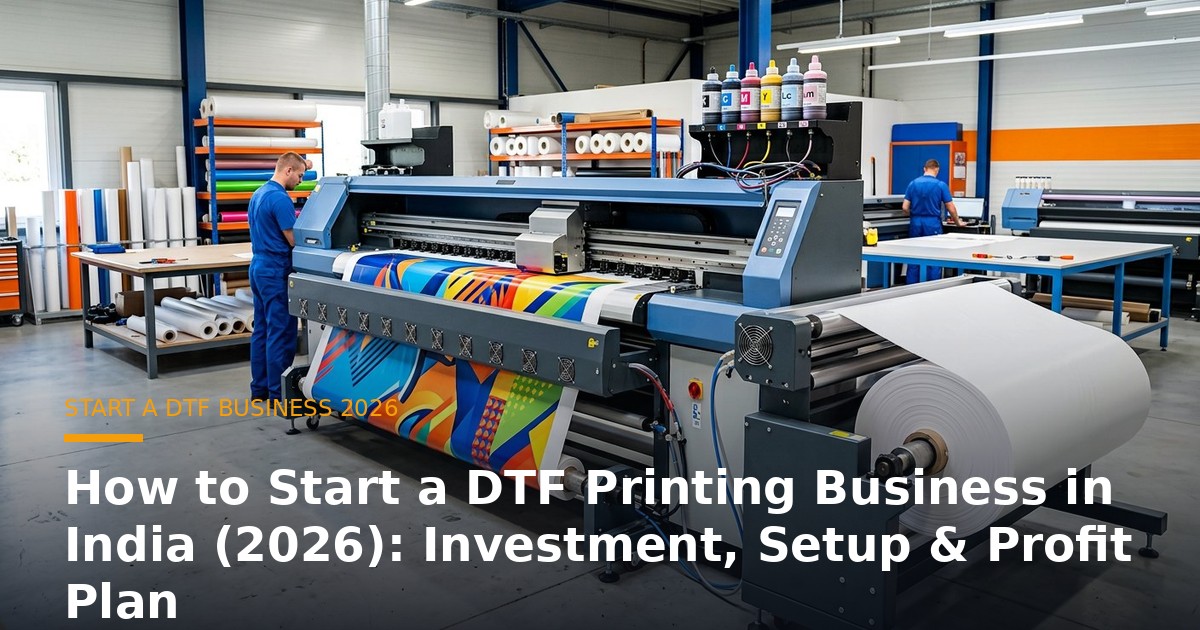
A DTF business needs surprisingly little: a DTF printer, a powder shaker and dryer (or a manual curing oven for small setups), a heat press, plus DTF film, DTF inks (including white) and adhesive powder. There are no screens, no colour separations and no lengthy setup. This minimal equipment and space requirement is a major advantage, allowing you to start from a small room or shop and scale as demand grows.
Step-by-Step Setup Process
- Choose your machine: an i3200-based DTF printer offers the best quality; XP600 is the budget option.
- Set up curing: a powder shaker-dryer automates curing; a manual oven works for low volume.
- Get a heat press: sized for your garments, with accurate temperature and pressure control.
- Stock consumables: good DTF film, fresh inks and quality adhesive powder.
- Dial in settings: run test prints to calibrate curing temperature, powder coverage and press time for each fabric.
- Start selling: take custom orders and build your customer base.
What You Can Print and Sell
DTF works on a wide range of fabrics and products: cotton, polyester and blended t-shirts, hoodies, caps, bags, sportswear, uniforms and fashion apparel. Because it handles full-colour, detailed designs with no colour limits, it is ideal for photographic prints, gradients, logos and complex graphics. It also works on dark garments. This versatility makes DTF perfect for custom apparel brands, merchandisers, event and team wear, corporate gifting and on-demand printing services.
Realistic Profit Plan
DTF margins are attractive. Your cost per transfer — film, ink and powder — is low, often ₹15–40 depending on design size, while custom printed garments sell for ₹150–400 or more depending on the market. Even at modest volumes, a DTF business can break even quickly and become profitable within months. The keys are keeping the equipment busy, marketing your custom apparel services actively, and pricing confidently for quality and customisation rather than competing on price alone.
Why Start Your DTF Business with UED?
Unified Engineering Dynamics (UED) supplies, installs and services complete DTF setups across India — printers, powder shakers, dryers and heat presses. We help you choose the right configuration for your budget and volume, provide genuine printheads, inks and consumables, professional installation and operator training, and dependable after-sales support, so your DTF business starts producing saleable custom apparel quickly and reliably.
Choosing Your DTF Niche and Customers
The most successful new DTF businesses focus on a clear niche rather than trying to serve everyone. You might target custom t-shirts for individuals and small brands, team and sports apparel, corporate merchandising and uniforms, event and festival wear, or print-on-demand for online sellers. Each niche has different customers, order sizes and price expectations. Starting focused lets you build a strong reputation, streamline your designs and workflow, and market efficiently to the customers most likely to buy. As you grow, you can expand into adjacent niches, but a clear starting focus is what turns a machine into a dependable stream of repeat orders.
DTF Business Registration and Legal Basics
Starting a DTF business involves a few simple legal and tax steps worth handling properly. Most small operations register as a proprietorship, partnership or private limited company depending on scale, and obtain a GST registration, which is essential for issuing proper invoices and claiming input credit on your machine and consumables. You may need a local shop or trade licence depending on your location. Keeping clean records of your equipment purchase, GST paid and running costs helps with tax filing and any future financing. A chartered accountant can guide you through registration cheaply, so you start on a solid, legitimate footing that supports growth and equipment loans later.
Marketing Your DTF Business from Day One
A machine only earns when it is busy, so customer-building should start before you install it. Set up a Google Business Profile and social media pages showcasing your printed apparel, because visual products sell themselves online. Use WhatsApp Business and Instagram to take custom orders, and offer sample pieces to local businesses, gyms, schools, event organisers and startups who need branded apparel. Partner with online sellers who need print-on-demand fulfilment. Deliver consistent quality and fast turnaround, because in custom apparel, reputation and reliability drive repeat business and referrals, which are the foundation of a profitable DTF operation.
Scaling Your DTF Business Over Time
DTF scales naturally as demand grows. You can start with a single printer and heat press for custom and small-batch work, then add an automated powder shaker-dryer for faster curing and higher throughput as volume increases. Many businesses add a second printer or a larger shaker-dryer line once orders justify it, and some expand into selling ready transfers (gang sheets) to other printers. Because DTF serves the booming customisation market, growth often comes quickly through repeat customers and bulk team or corporate orders. Start lean, deliver consistent quality, market actively and reinvest profits to scale.
Common Mistakes New DTF Entrepreneurs Make
New DTF businesses stumble on a few familiar errors. The most common is underestimating consumable quality — cheap film, old ink or poor powder causes adhesion failures and wash-offs that damage your reputation. The second is skipping calibration, so curing and press settings are wrong for different fabrics, producing inconsistent results. The third is underpricing detailed, full-colour work that showcases DTF’s strengths. The fourth is neglecting printer maintenance, leading to clogged heads and downtime. Avoid these by using good consumables, dialling in settings per fabric, pricing for value, and maintaining your printer with regular cleans and proper capping.
Choosing the Right DTF Printer
Your printer is the heart of the business, so choose it carefully. Most DTF machines are built on either an Epson i3200 head, which offers the best quality with sharp detail and smooth colour, or an XP600 head, which is the budget option for lower-volume work. For a business targeting quality and growth, an i3200-based machine is usually worth the premium. Consider print width, whether you need an automated powder shaker-dryer for higher throughput, and the supplier’s service and spares support. Buying a genuine-head machine from a supplier who provides installation, training and reliable after-sales cover is far more valuable than saving a little on an unsupported unit.
Setting Up Your DTF Workspace
DTF needs little space, but a sensible layout improves quality and efficiency. You need room for the printer, the curing unit and the heat press, with a clean, dust-controlled environment because dust causes print defects and head problems. Provide stable power with protection, good ventilation for the curing process, and organised storage for film, ink, powder and garments. Keep a finishing and packing area for pressing, quality-checking and preparing orders. A well-organised workspace reduces waste, speeds production and helps you deliver consistent quality as your order volume grows.
DTF Consumables: What to Stock
Reliable consumables are essential to consistent output and happy customers. Stock good-quality DTF film in the type that suits your workflow (hot-peel or cold-peel), fresh DTF inks including white from a reputable supplier, and quality adhesive powder. Keep a range of blank garments in popular sizes and colours so you can fulfil orders immediately. Buy from reliable suppliers and, as volume grows, in bulk to lower costs — but never compromise quality, because cheap film, old ink or poor powder causes failed transfers and wash-offs that cost far more in reprints and lost customers than the saving.
Learning DTF: Training and Practice
DTF is easy to start but rewards skill. Take full advantage of your supplier’s operator training, and practise dialling in your curing temperature, powder coverage and heat-press settings for each fabric you use. Learn basic printer maintenance — head cleaning, capping and nozzle checks — to keep output consistent and avoid downtime. Experiment with different garments and designs to understand how settings affect results. The entrepreneurs who invest time in learning their machine produce consistently durable, vibrant prints that win repeat customers, while those who rush often struggle with quality problems that damage their reputation.
Your First 90 Days in the DTF Business
A practical first-quarter plan sets you up for success. In month one, install and calibrate your equipment, produce samples, and set up your Google Business Profile and social media pages. In month two, actively reach out to local businesses, gyms, schools, event organisers and online sellers, take your first custom orders, and refine your workflow and pricing based on real jobs. In month three, focus on repeat customers, ask for referrals, and track your costs and margins so you price profitably. This disciplined start builds momentum, cash flow and reputation — the foundation of a growing DTF business.
DTF Business: Quick-Start Summary
Starting a DTF printing business in India comes down to a few essentials: invest ₹3.5–6 lakh in a complete setup (printer, powder shaker-dryer and heat press), stock good film, ink, powder and garments, dial in your settings for each fabric, and market actively to custom-apparel customers. Keep your costs low, price for value, deliver consistent quality and scale as demand grows. With low entry costs, strong margins and booming demand for personalised apparel, DTF is one of the most accessible and profitable printing businesses you can start today.
Frequently Asked Questions
How much does it cost to start a DTF printing business in India?
A complete DTF setup — printer, powder shaker, dryer and heat press — typically costs ₹3.5–6 lakh, plus initial consumables. You can start leaner with a printer and manual curing oven on a tighter budget.
Is a DTF printing business profitable?
Yes. With low equipment and running costs, no minimum orders and strong demand for custom apparel, DTF offers attractive margins and a quick break-even, especially in the on-demand customisation market.
What equipment do I need to start?
A DTF printer, a powder shaker and dryer (or manual oven), a heat press, and consumables — DTF film, inks and adhesive powder. No screens or colour separations are required.
Do these prices include GST and installation?
Usually not. Prices are typically ex-GST and may exclude installation and training. Always request a written, configuration-specific quotation.
Want help choosing the right DTF setup? Talk to UED’s specialists — share your budget and volume, and we’ll recommend the right machine with transparent pricing. Request a quote →
Prices and figures on this page are indicative estimates and vary with configuration, consumables, location and volume. Always confirm a written, configuration-specific quotation and validate costs for your own operation.
