



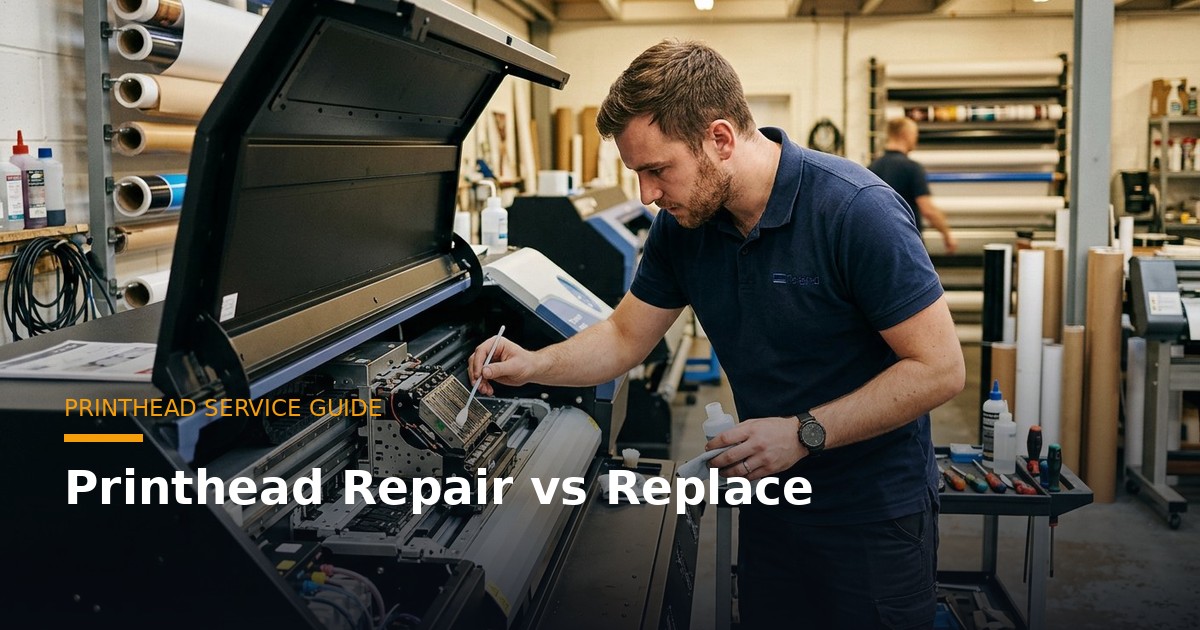
When a printhead starts losing nozzles, banding or fading, every printer owner faces the same dilemma: repair it or replace it? The wrong choice wastes money — repairing a head that is beyond saving, or replacing one that only needed a clean. This guide explains what can and cannot be repaired, the real costs involved in India, and a simple framework to decide, so you spend your money where it actually brings the head back to life.
First: What “Repair” Really Means for a Printhead
It helps to understand that a printhead is a precision micro-component with hundreds or thousands of microscopic nozzles, delicate electronics and a nozzle plate. “Repair” usually means one of these:
- Deep cleaning / flushing: dissolving dried ink and clearing clogged nozzles.
- Ultrasonic cleaning: using an ultrasonic bath to dislodge stubborn clogs.
- Electrical / connector work: fixing cable or contact issues (limited success).
- Nozzle-plate cleaning: carefully removing surface ink and debris.
What cannot truly be “repaired” is physical wear or damage to the nozzles themselves — eroded, chipped or permanently blocked nozzles do not come back. Once the piezo elements or nozzle plate are worn, the head is done and must be replaced.
When Repair (Cleaning) Is Worth It
Try cleaning first when the problem is clogging, which is the most common and most fixable issue:
- The head worked fine, then lost nozzles after idle time or a ink change.
- Print quality dropped gradually, suggesting dried ink rather than damage.
- Nozzle tests show missing jets that respond (even partly) to cleaning.
- The head is otherwise relatively new and undamaged.
In these cases, a proper cleaning — manual flush, then ultrasonic if needed — often restores most or all nozzles for a fraction of a new head’s cost. Always attempt cleaning before spending on replacement.
When Replacement Is the Right Call
Replace the head when cleaning cannot fix the underlying problem:
- Nozzles stay dead after thorough cleaning and flushing.
- The nozzle plate is physically damaged, scratched or chipped.
- The head is old and output has degraded across the board.
- There is electrical failure inside the head (not the cable).
- You are losing more money in downtime and wasted media than a new head costs.
A head that no longer responds to cleaning is worn out, and continued attempts to revive it just burn time and ink. At that point, replacement restores your quality and protects your jobs.
Cost Comparison in India
Here is the honest economics, using typical figures:
| Option | Typical Cost (India) | Success Rate | Best When |
|---|---|---|---|
| Manual clean / flush | ₹0 – ₹1,500 (DIY/labour) | Good for clogs | First step, always |
| Ultrasonic / professional clean | ₹1,500 – ₹4,000 | Good for stubborn clogs | Cleaning fails manually |
| Replace — Epson XP600 | ₹10,000 – ₹20,000 | Full restore | Head worn/damaged |
| Replace — Epson i3200 | ₹55,000 – ₹85,000 | Full restore | Production head worn |
| Replace — Konica KM512i | ₹35,000 – ₹55,000 | Full restore | Solvent head worn |
| Replace — Konica KM1024i / Ricoh | ₹85,000 – ₹1,40,000+ | Full restore | Industrial head worn |
The decision rule is simple: if cleaning (up to a few thousand rupees) restores the head, do it. If it does not, and the head is worn or damaged, replace it — because a failing head wastes media, ink and customers far faster than a replacement costs.
The Real Cost of NOT Replacing a Dead Head
Owners sometimes keep nursing a worn head to avoid the replacement cost. That is usually a false economy:
- Wasted media and ink on rejected prints.
- Missed deadlines and unhappy customers.
- Repeat cleaning labour that never fully fixes it.
- Risk to other components — a badly failing head can affect the carriage and electronics.
When you add up the lost production, a genuine replacement head is often cheaper than another month of struggling.
A Simple Decision Framework
- Test: run a nozzle check to see how many jets are out.
- Clean: do a proper manual clean, then ultrasonic if needed.
- Re-test: if quality returns, keep printing — you saved a fortune.
- Evaluate: if nozzles stay dead and the head is old or damaged, price a genuine replacement.
- Replace genuine: buy a genuine head with warranty — never a counterfeit, which fails fast and can damage the printer.
Prevention: Make Your Printhead Last
The cheapest printhead is the one you do not have to replace early. Protect your investment:
- Use recommended, well-filtered ink.
- Do daily nozzle checks and keep the capping station clean and sealed.
- Never leave the head uncapped or dry.
- Keep the workshop clean — dust kills nozzles.
- Follow a regular maintenance schedule.
Frequently Asked Questions
Can a printhead actually be repaired?
Clogged nozzles can usually be cleaned back to life. Physically worn or damaged nozzles cannot be repaired — the head must be replaced.
How much does printhead replacement cost in India?
From around ₹10,000 for an Epson XP600 up to ₹1,40,000+ for industrial Konica/Ricoh heads. Cleaning costs just ₹0–₹4,000, so always try it first.
Should I clean or replace first?
Always clean first. Cleaning is cheap and fixes the most common problem (clogging). Replace only when cleaning fails and the head is worn or damaged.
Is a refurbished head a good middle option?
Sometimes, from a trusted tested source — but expect shorter life and no long warranty. For production machines, genuine new is safer.
Can UED help decide and fit the head?
Yes. UED can test your head, advise repair vs replace, and supply and fit genuine printheads with warranty across India.
Step-by-Step: How to Clean a Printhead Properly
Before spending anything on replacement, a proper clean resolves most nozzle problems. Do it in this order:
- Run a nozzle check to see exactly which jets are missing.
- Use the machine’s built-in cleaning cycle — often enough for light clogs.
- Manual flush: using recommended cleaning solution and a syringe, gently flush the head to dissolve dried ink. Never use excessive pressure.
- Soak / ultrasonic: for stubborn clogs, an ultrasonic bath or a careful soak in cleaning solution loosens dried ink.
- Re-test: run another nozzle check. Repeat cleaning if jets are returning.
- Let it rest: after cleaning, let the head settle with clean ink before judging final quality.
Patience here saves money. Many heads declared “dead” simply needed a thorough, repeated clean. Only when nozzles stay absent after genuine cleaning effort is the head truly worn out.
Replacement Cost by Head Model
So you can budget accurately, here are indicative genuine replacement prices across the common heads in Indian machines:
| Printhead | Genuine Replacement Cost (ex-GST) |
|---|---|
| Epson XP600 | ₹10,000 – ₹20,000 |
| Konica KM512i | ₹35,000 – ₹55,000 |
| Epson i3200 | ₹55,000 – ₹85,000 |
| Konica KM1024i | ₹85,000 – ₹1,40,000 |
| Ricoh Gen5i | ₹90,000 – ₹1,50,000 |
| Ricoh Gen6 / Starfire | ₹1,20,000 – ₹2,00,000+ |
Cleaning, by contrast, costs almost nothing in parts — which is why it is always the first step.
Calculating Your Downtime Cost
The hidden cost of a failing head is lost production, and it is easy to underestimate. Do the maths for your shop: estimate your profit per hour of printing, then multiply by the hours you lose to a degraded head — rejected prints, slow output, reprints, missed deadlines. For most businesses, a few days of compromised production costs more than a genuine replacement head. This is the strongest argument for replacing a worn head promptly rather than nursing it.
How Often Do Printheads Need Replacing?
- Epson XP600: often within about a year of heavy daily use.
- Konica KM512i: roughly 1.5–3 years with good maintenance.
- Epson i3200: several years in production with proper care.
- Konica KM1024i / Ricoh: 2–4+ years, given industrial build and good upkeep.
These are guidelines, not guarantees — ink quality, maintenance discipline and daily hours are the real determinants. A well-cared-for head consistently outlives a neglected one of the same model.
More Repair-vs-Replace Questions
Can cleaning damage the printhead?
Done gently with the right solution, no. Excessive pressure or harsh chemicals can harm it, so follow proper technique or let a technician do it.
My head prints fine sometimes and badly other times — repair or replace?
Intermittent output usually points to clogging or ink/maintenance issues — try thorough cleaning first. Consistent failure points to wear.
Is it worth replacing one head in a multi-head machine?
Yes — you replace only the failing head, not all of them. Match it with a genuine unit for consistent output.
DIY Cleaning vs Calling a Technician
Basic cleaning — running the machine’s cleaning cycle and a careful manual flush — is something most owners can do safely. But there are times to call a professional:
- You are unsure about flushing technique and risk damaging the head.
- The problem persists after proper cleaning and you need an ultrasonic clean.
- You suspect electrical or carriage issues rather than simple clogging.
- The head needs replacing and precise alignment afterwards.
A technician’s fee is small compared with the cost of damaging an expensive head through improper handling. When in doubt, get expert help rather than risking the component.
Choosing a Genuine Replacement Head
If replacement is the answer, buy genuine — never counterfeit. A fake head may seem cheaper but fails quickly, produces poor output, and can even damage your carriage electronics, turning a head replacement into a far bigger repair. Buy from an authorised dealer or your machine OEM, insist on a written warranty, and have the head fitted and aligned correctly. A genuine head, properly installed, restores your machine to full quality and lasts for years.
Extend Head Life: A Simple Daily Routine
The cheapest printhead is the one you do not replace early. Build these habits:
- Morning: run a nozzle check; clean if any jets are missing.
- During runs: use recommended, filtered ink and watch for degradation.
- End of day: clean and cap the head properly so it never dries out.
- Weekly: inspect and clean the capping station and wipers.
- Always: keep the workshop clean — dust is a silent nozzle killer.
Five minutes of daily care routinely doubles a head’s useful life compared with a neglected one.
More Repair Questions
How do I know if it’s the head or the ink?
If output improves with fresh, recommended ink and cleaning, it was likely ink or clogging. If problems persist with good ink and cleaning, the head is worn.
Can I replace the head myself?
On some machines yes, but alignment is critical. Improper fitting causes poor quality, so professional installation is often worth it.
Real-World Repair-vs-Replace Decisions
Three common scenarios show how the decision plays out in practice:
Scenario 1 — Printer sat idle for a month. A shop reopens after a slow period and finds heavy nozzle loss. This is almost certainly dried ink, not wear. A thorough clean and flush brings most or all nozzles back. Decision: repair (clean) — cost near zero.
Scenario 2 — Old head, gradual decline. A two-year-old KM512i in daily production slowly loses quality; cleaning helps briefly but output keeps slipping. The head is simply worn. Decision: replace with a genuine head — nursing it wastes media and time.
Scenario 3 — Sudden banding after an ink change. Banding appears right after switching ink brands. The new ink may be incompatible or poorly filtered, causing clogs. Try flushing and reverting to recommended ink before concluding the head is dead. Decision: clean and correct the ink first; replace only if nozzles stay lost.
The pattern is consistent: clean first, diagnose the cause, and replace only when the head is genuinely worn or damaged. Most “dead” heads are clogged, and most worn heads cannot be saved by cleaning. Knowing which situation you are in saves real money either way.
Keep Your Printer Earning
A printhead problem does not have to stop your business. Clean first, replace with genuine parts when needed, and maintain the head daily so the next failure is far away. When you are unsure, an expert diagnosis beats guesswork — and a genuine replacement, fitted correctly, gets you back to full-quality production fast.
Get Expert Help — Repair or Replace, Done Right
Do not guess with an expensive component. Unified Engineering Dynamics can test your printhead, tell you honestly whether cleaning will save it, and if not, supply and fit a genuine replacement head with warranty — anywhere in India.
Get a printhead diagnosis and quote → Tell us your printer model and the problem, and we will recommend the most cost-effective fix.
