



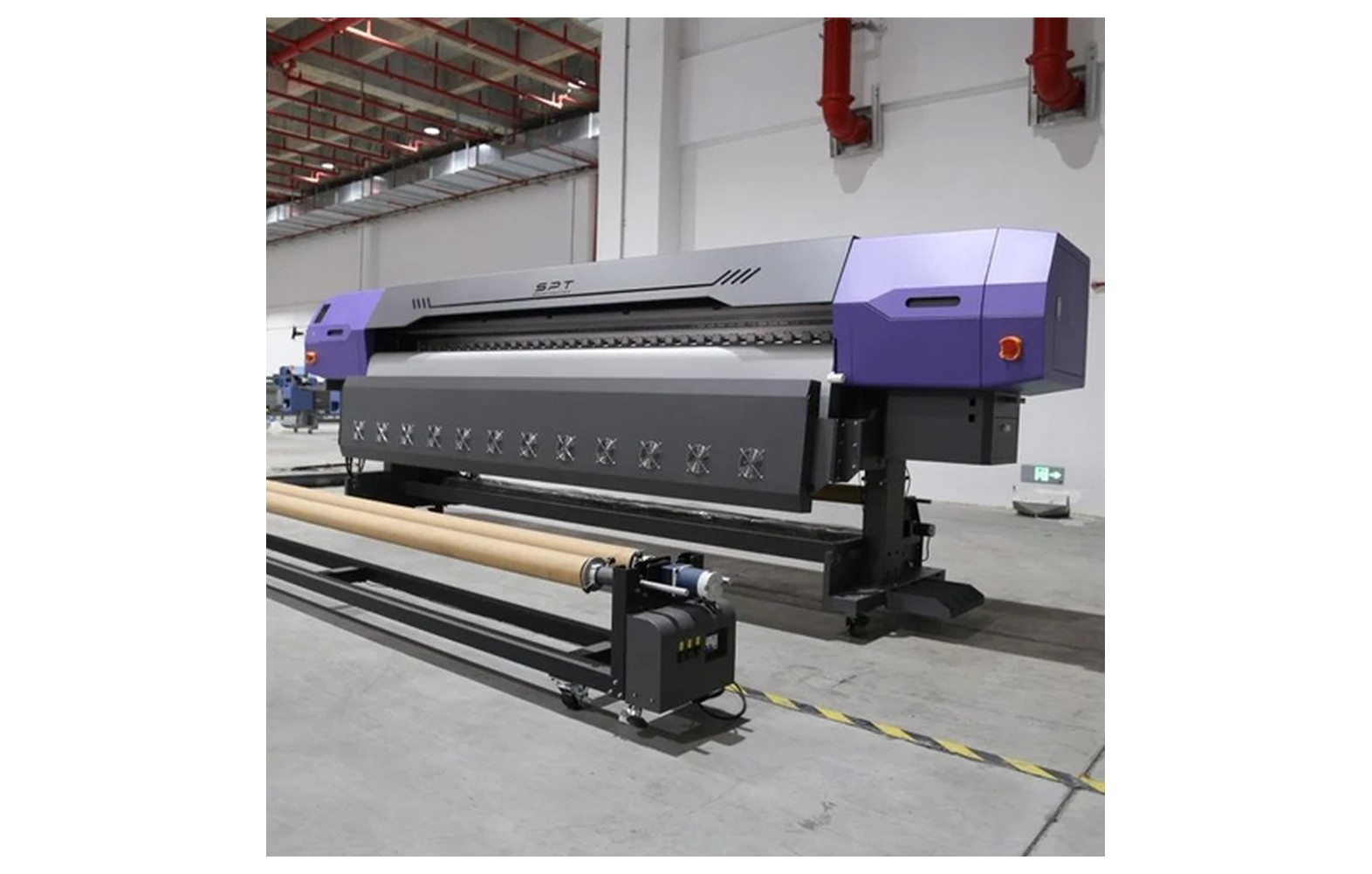
Direct answer: An online printing marketplace and an owned print-production facility solve different parts of the value chain. A marketplace coordinates orders, suppliers and customer experience, while a facility operates selected production equipment. Either can outsource or combine models. Compare demand, complete costs, quality, cash flow and risk before investing.
What Are the Two Models?
An online marketplace or ordering platform helps customers discover, specify and purchase print products. Depending on the model, it may route work to independent suppliers, use a contracted fulfilment partner or operate some equipment itself. Ownership, customer support and quality responsibilities depend on the actual agreement.
An owned print facility controls selected production operations using its own or leased equipment and staff. It may sell online, through a sales team or through other channels. Owning equipment does not prevent a business from using partners for specialist work.
The comparison is therefore not website versus machine. It is a decision about which capabilities, assets, customer relationships and risks the business will own. Examples in this guide are hypothetical and are not investment recommendations or guarantees.
Marketplace Model: How Value Is Created
A marketplace can make it easier for a customer to specify, approve and order a product while coordinating a supplier. The value may include product selection, artwork checking, pricing, quality control, delivery coordination and customer support.
The platform must define who supplies blanks, who approves proofs, who inspects output and who handles a defect or delay. A supplier listing alone does not ensure that a customer receives a compatible, safe or correctly finished item.
Revenue may come from a disclosed service charge, margin or another agreed arrangement. The actual economics depend on customer acquisition, payment fees, partner pricing, rework, support and delivery. Do not assume that an asset-light model is automatically profitable.
Owned Facility: How Value Is Created
A facility operates selected equipment and can directly manage those production steps. It also takes responsibility for the site, staff, maintenance, consumables, quality and service. The actual capability depends on the equipment and materials installed.
A digital inkjet printer, textile DTF system, sublimation setup and label press are different workflows. A heat press applies a compatible transfer but does not print the artwork. A machine that produces one sample does not automatically handle every product or finishing step.
Request demonstrations on actual materials and measure acceptable finished output including setup, finishing, inspection and packing. An advertised maximum speed does not establish delivered capacity.
Hybrid Models
A business can own a frequent process and outsource specialist work, or operate a marketplace while using an affiliated production facility. A shop may also prepare artwork and apply compatible transfers while buying those transfers from a qualified partner.
The hybrid model requires clear handoffs: who supplies blanks, approves the proof, performs tests, handles defects and communicates a delay? Costs and risks do not disappear merely because one stage is external.
Record the actual arrangement and avoid double-counting a supplier charge or excluding internal coordination time. A customer receives the complete product, not separate production stages.
Customer Acquisition and Demand Evidence
Both models need a defined buyer and an offer. A corporate customer ordering repeat labels, an event organiser and an individual buying a personalised shirt have different requirements and acquisition costs.
Record actual enquiries, approved quotations, paid orders and repeat purchases using clear definitions. A marketplace listing, web visit or machine demonstration is not proof of future sales. Where practical, test with a paid pilot and a physical sample.
Do not claim that a channel has no competition or a guaranteed conversion rate without evidence. Assess the actual customer, alternatives, payment terms and service expectation.
Product Specification and Compatibility
A marketplace and a facility both need a product-specific specification: material, coating, size, artwork, print area, finishing and intended use. A shirt, coated mug, painted bottle and adhesive label require different processes.
Textile DTF, sublimation, direct UV and UV DTF are not interchangeable. A decal is not guaranteed to adhere to every surface, and a sublimation blank needs a compatible material or coating. Ask suppliers to demonstrate the actual item.
Food-contact products, electronics and protective clothing can require product-specific approvals. Do not promise compliance or durability from a generic machine capability.
Artwork, Rights and Personal Data
Online orders can contain customer logos, photographs, names or other sensitive information. Obtain permission to reproduce artwork and use a controlled production version. Agree how files are transferred, accessed, retained and deleted.
For a marketplace, define which partner receives the file and whether subcontracting is permitted. Do not store passwords or unnecessary customer data in a shared machine log. Legal obligations depend on the facts and jurisdiction.
For variable information, check spelling and placement against the approved source. A printed ID card is not automatically an activated access credential; the customer’s authorised team must validate the actual system.
Quality Control and Proof Approval
Both models require a physical proof on the actual substrate and an agreed acceptance process. Confirm colour, placement, detail, finishing and the intended handling conditions. A screen preview does not establish the appearance of every printed material.
Agree relevant wash, adhesion, barcode or distribution tests with the customer and suppliers. A casual scratch or one wash is not a universal certification. Use a qualified laboratory where formal evidence is required.
Document who approves the sample and what happens if a supplier changes the blank, ink or process. A marketplace cannot assume that every listed supplier produces identical output.
Unit Economics: Use the Same Scope
For a marketplace order, include supplier charges, blanks where separate, payment fees, shipping, customer support, reprints and other variable costs. For an owned facility, include blank, ink or transfer, job-specific labour, finishing, rejects, packing and delivery.
Contribution is selling price minus variable costs under stated assumptions. It is not net profit. Platform development, rent, general salaries, financing, taxes and other expenses still need to be considered.
For illustration only, a hypothetical order sells for Rs 500 and has Rs 320 of variable costs, leaving Rs 180 contribution before fixed and other expenses. These invented figures are not market rates or expected results. Recalculate using actual quotations and records.
Fixed Costs and Use of Funds
A facility may need equipment, installation, site preparation, staff, maintenance and working capital. A marketplace may need software, supplier onboarding, customer support, marketing and payment infrastructure. A hybrid can have elements of both.
Request current itemised quotations and record what is included. A printer price is not the full cost of a facility; a website build is not the full cost of running a marketplace. Consider licensing, training, service, security and contingency.
Do not promise a fixed profit margin or payback period. Use the actual proposed financing terms and obtain qualified financial advice.
Working Capital and Payment Timing
A marketplace may pay partners before collecting from a customer, or may collect first under a particular arrangement. A facility may buy blanks, ink and packaging before an invoice is paid. The actual contract and channel determine the cash cycle.
Map deposits, supplier payments, customer receipts, taxes, refunds and reprints by date. Build a downside scenario with delayed collection, a rejected batch or a partner interruption. Break-even and cash flow are different questions.
Agree payment, cancellation and defect responsibilities in writing. Consult a qualified accountant or financial adviser for the actual business.
Capacity and Bottlenecks
A marketplace’s capacity can depend on supplier availability, proofing, customer support and logistics. A facility’s bottleneck may be artwork, printing, curing, cutting, assembly or packing. A single printer’s speed does not describe the entire system.
Measure accepted finished output and the time from approved order to dispatch. State whether setup, finishing, rework and delivery are included. A favourable demonstration is not proof of capacity during every order mix.
Before buying equipment or onboarding another supplier, identify the measured bottleneck and compare alternatives. Additional capacity does not automatically create demand.
Supplier Onboarding and Service
A marketplace should verify each partner’s supported materials, samples, quality process, lead time and defect terms. Agree whether the partner may substitute blanks or subcontract. A visually similar coating or fabric may perform differently.
A facility should obtain itemised equipment quotations, installation, training, warranty exclusions, spare parts and local service terms. Keep dated maintenance and fault records.
For either model, define what happens if a machine fails or a supplier cannot deliver. A backup partner should be tested and approved before an urgent substitution.
Technology and Platform Risk
An online platform needs reliable product specifications, artwork upload, proof approval, payment, order routing and customer communication. Features and costs depend on the chosen software and business model. A website alone does not establish operational capability.
Protect customer files and restrict access. Plan for order errors, failed payments, supplier delays and restoration from backups. Obtain qualified cybersecurity and legal advice appropriate to the information handled.
Where a business relies on a third-party marketplace, review its actual fees, policies, customer-data access and payment timing. Do not assume every platform has the same rules or margin impact.
Site, Electrical and Workplace Safety
For owned production, collect equipment and accessory nameplates and manuals. A qualified electrician should assess supply, circuits, protection and earthing under applicable requirements. Do not size a stabiliser or UPS using a generic multiplier.
Read safety data sheets for inks, powders, adhesives and cleaners. Ventilation depends on the actual process; a room fan alone does not establish exposure control. Keep UV shielding, laser guards and interlocks in place and use qualified personnel for restricted service.
An outsourced model should also verify the partner’s capability and product approvals where relevant. Outsourcing does not make unsafe product claims acceptable.
Compare the Models
| Area | Marketplace or coordinator | Owned facility |
|---|---|---|
| Primary control | Order, supplier and customer coordination | Selected production operations and staff. |
| Major dependencies | Partner capability, platform and delivery | Equipment, site, materials, operators and service. |
| Quality responsibility | Specifications, partner checks and customer remedy | Process controls, inspection and any outsourced stages. |
| Cash needs | Partner payments, refunds, support and technology | Equipment, stock, wages, maintenance and receivables. |
| Scale constraint | Approved partner capacity and order management | Measured workflow bottleneck and demand. |
The table is a planning aid, not a ranking. A hybrid business can share characteristics of both columns.
Investor Due-Diligence Questions
- Which orders are paid or contracted, and which are forecasts?
- Who owns the customer relationship and handles defects?
- Are samples and product-specific approvals documented?
- What is contribution after all relevant variable costs?
- How are customer receipts, partner payments and refunds timed?
- What happens when a supplier or machine is unavailable?
- How are customer data and artwork rights protected?
- What site, product and regulatory obligations remain?
Separate actual results from projections and disclose uncertainty. Obtain qualified legal and financial advice before an investment or partnership agreement.
Illustrative Scenario: An Online Label Service
A hypothetical founder accepts enquiries for short-run labels and uses a qualified converter. The founder specifies the container, adhesive, artwork and delivery, and the customer approves a physical sample. The partner’s quote includes printing, cutting and roll preparation.
The founder records customer acquisition, supplier payments, inspection and delivery as well as the print charge. The scenario is a planning exercise, not a real customer result or a guaranteed return.
Illustrative Scenario: An Owned Garment Facility
A hypothetical business owns a supported garment-printing workflow and sells through an online store. It measures artwork checking, printing, pressing, inspection and packing and compares accepted output with actual orders.
The business still outsources a specialist hard-surface item and defines the partner handoff. Owning one process does not establish compatibility with every product.
Common Mistakes
- Treating website traffic or a machine demonstration as confirmed demand.
- Comparing a partner print charge with a facility’s incomplete cost.
- Calling revenue or contribution net profit.
- Using maximum machine speed as delivered capacity.
- Ignoring proof approval, reprints, refunds or cash timing.
- Assuming one printer or partner works on every material.
- Omitting data, safety or product-specific compliance responsibilities.
- Presenting hypothetical outcomes as verified customer cases.
Founder Checklist
- Define the customer, product and evidence of demand.
- Map the complete order-to-delivery workflow and each owner.
- Approve a physical sample and relevant tests on the actual item.
- Compare complete marketplace, owned and hybrid costs.
- Model unit contribution and cash timing with stated assumptions.
- Review partner, data, safety and compliance responsibilities.
- Measure accepted output and actual pilot results before expanding.
- Obtain qualified advice for the proposed financing and agreements.
Related Guides
Continue with printing startup business models, print-on-demand planning and scaling a printing company. Use actual quotations and qualified advice for your business.
How to Run a Fair Pilot
Select a representative product and document the same blank, artwork, quantity, quality and delivery scope for each route. Obtain written partner quotations and, if considering owned equipment, a demonstration on the actual substrate. Include setup, finishing, inspection, packaging and shipping in the comparison.
Approve a physical sample and define the relevant wash, adhesion or handling test before the full order. Record accepted output and defects. A pilot is useful evidence, but it does not guarantee repeat demand or establish performance on every material.
After delivery, compare the actual supplier invoice, internal labour and collection timing with the original assumptions. Explain differences and update the model. Do not present an illustrative order as a real customer case or a promised return.
Choosing Governance and Responsibilities
Before funding a platform, facility or hybrid, agree who can approve suppliers, equipment, product substitutions and customer remedies. Record how spending, quality and cash collection will be reported. Obtain qualified legal and financial advice for the actual agreement.
If a product requires food-contact, electronic or protective-clothing approval, identify the responsible manufacturer and qualified reviewer. A platform listing or an owned printer does not itself establish compliance for the complete product.
Keep written specifications, approved samples and data-handling terms accessible to authorised staff. Reassess the workflow when a partner, substrate or customer requirement changes.
Before scaling either route, review whether the measured bottleneck is customer acquisition, proofing, production, partner capacity or dispatch. Compare an equipment purchase with an approved supplier or process improvement using the same finished-order scope. Additional capacity can be useful only if the complete workflow and customer demand support it.
Keep the approved pilot sample, supplier terms and cost calculation with the decision record. Review actual results at an agreed point and update assumptions when evidence changes. A documented review supports clearer decisions but does not guarantee funding or profitability.
Frequently Asked Questions
What is an online printing marketplace?
It coordinates or enables print orders through an online workflow; production may be performed by partners, owned equipment or both.
Does a marketplace need to own printers?
Not necessarily. It can use qualified partners, but must define specifications, quality, delivery and defect responsibilities.
Is owning a facility always more profitable?
No. Compare actual demand, complete costs, utilisation, cash timing, service and risk for the proposed business.
Can one company use a hybrid model?
Yes. It can own selected operations and outsource specialist work with documented handoffs and approvals.
What should investors compare?
Review demand evidence, contribution, cash flow, capacity, partner terms, customer data controls and risks.
Does print-on-demand eliminate all inventory?
No. Blank stock, supplier availability, packaging and returns may still matter.
Does a forecast guarantee a return?
No. Forecasts depend on assumptions. Separate actual results from projections and seek qualified advice.
