



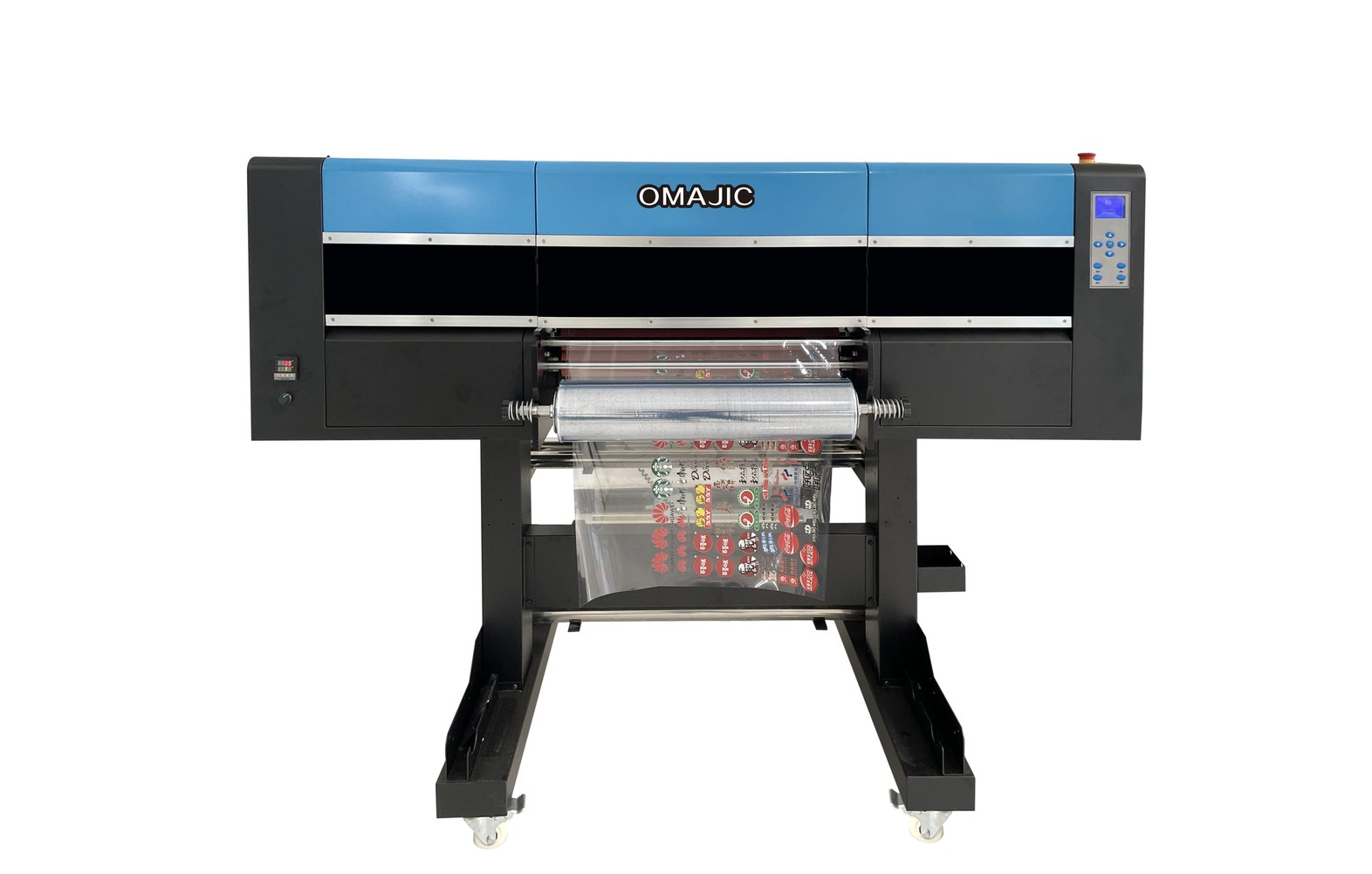
Direct answer: Glass branding can be done using direct UV printing, compatible UV DTF decals, screen-based processes or laser etching. The best route depends on the shape, substrate finish, artwork, handling and customer requirements.
Compare the Methods
| Method | How it works | What to check |
|---|---|---|
| UV flatbed | Directly prints suitable items that fit the machine. | Confirm the bed clearance, fixtures, surface preparation and any approved primer. |
| UV DTF | A cured transfer is applied to a compatible hard surface. | Test adhesion and application on the actual jar, especially curves and coatings. |
| Screen or pad printing | An industrial supplier applies compatible ink using suitable tooling. | Ask about minimum order quantity, ink and curing. |
| Laser etching | A suitable laser creates a frosted mark rather than a full-colour print. | Use suitable guarding and extraction; test glass type and surface. |
Buying and Production Checklist
- Request a sample on the customer’s exact glass and finish.
- Agree whether branding will touch lips, food or beverages; use only appropriately verified systems for any food-contact application.
- Test handling, cleaning and adhesion before making durability claims.
- Include fixtures, printing, packaging, breakage and delivery in the quote.
Budget and Supplier Questions
Prices vary by model, capacity, accessories, installation and service. Ask for a current itemised quotation including applicable tax, training, consumables and maintenance. Obtain a physical demonstration and sample before making a purchase.
See the material compatibility chart. Share your items and expected volume on our contact page.
Frequently Asked Questions
Can normal glass be sublimation printed?
Standard sublimation requires a compatible coating; ordinary uncoated glass does not work as a direct sublimation blank.
Is UV ink automatically food safe?
No. Do not assume any ink or decal is safe for food or mouth contact. Check supplier documentation and applicable requirements, and place branding away from contact areas unless suitability is verified.
What is best for curved jars?
UV DTF, rotary-capable systems, screen or pad printing may be considered depending on the item and volume. Request an application sample.
