



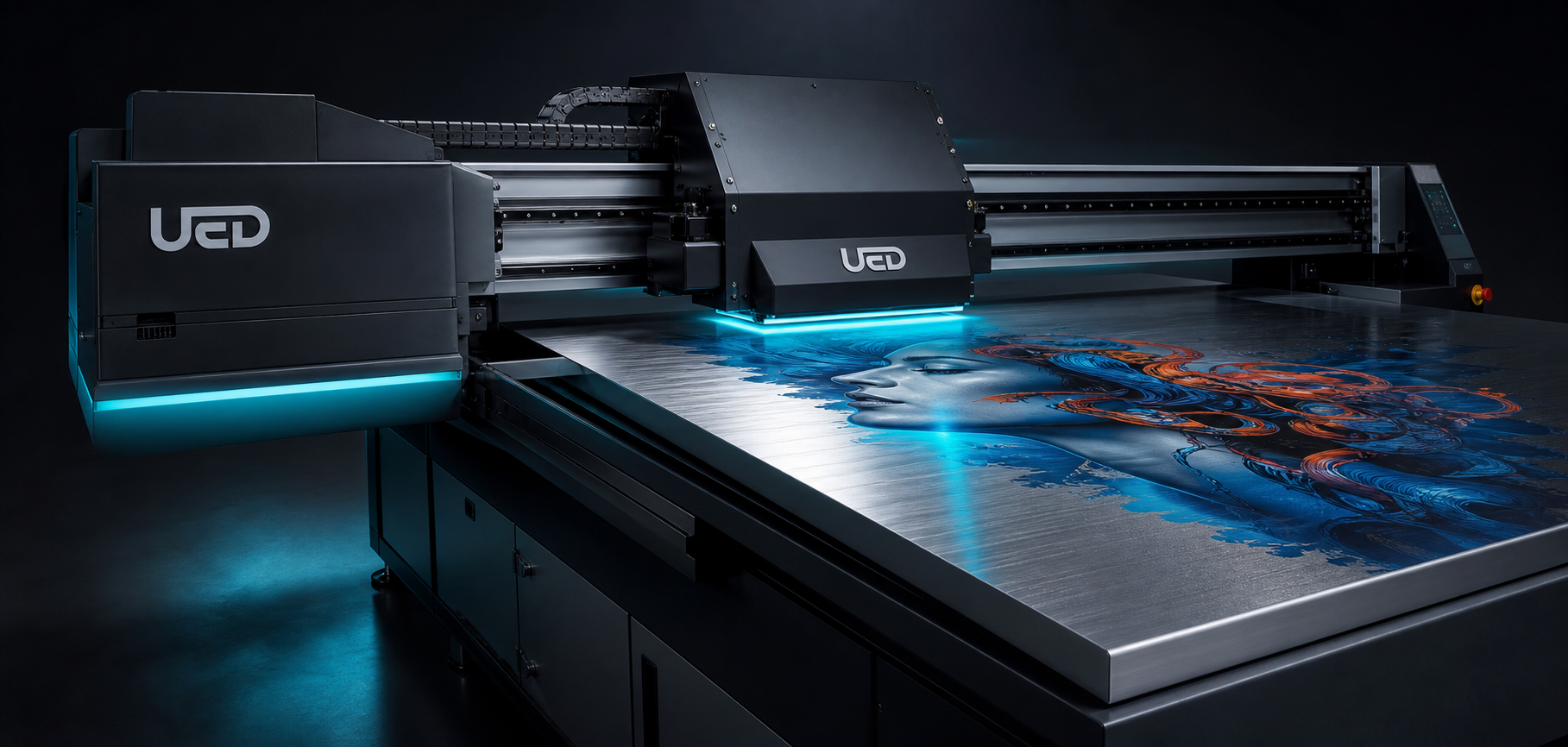
Metal is the substrate of durable signage, industrial identification and premium décor: aluminium composite panels, stainless steel, mild steel, anodised aluminium and powder-coated surfaces all take UV print, and all demand respect for adhesion science. Done right, a UV-printed metal sign outlives vinyl outdoors for years; done casually, it peels at the first monsoon. This guide covers metal types, surface preparation, primers, ink choice, applications and the business case.
The metals you will actually print
Aluminium composite panel (ACP) is the workhorse of outdoor signage — light, flat and usually pre-finished with a painted or PVDF coating that prints well. Solid sheet aluminium appears in nameplates, panels and décor. Stainless steel shows up in industrial labels, kitchen equipment branding and premium signage. Mild steel appears mostly as powder-coated or painted fabrication. Each surface is different: bare mill-finish aluminium is reactive and needs treatment; anodised aluminium is porous-ish and bonds differently; painted and powder-coated surfaces depend on the coating, not the metal. The professional habit is to treat “metal” as a family of coatings and test each one.
Adhesion: why metal fails and how to make it permanent
UV ink bonds to metal mostly by mechanical and polar adhesion to the surface coating. Smooth, clean, high-energy surfaces bond best; grease, oil, oxide dust and old paint kill adhesion. The preparation chain is: degrease with solvent or a dedicated metal prep, lightly abrade glossy or powder-coated surfaces to give a key, remove abrasion dust, and apply a metal adhesion promoter where the ink set or coating demands it. For outdoor work, an adhesion promoter plus a flexible UV ink and a protective varnish is the standard durable recipe. Always cross-hatch tape test a cured sample of the exact sheet before production.
Outdoor durability: making metal signage last years
Metal signage lives outside, so the print must survive sun, rain, heat and cleaning. UV inks are inherently UV-stable, but the weak point is the ink-metal interface under thermal cycling and moisture. The durable stack is: clean + abrade + promoter, flexible ink, and a UV-protective varnish top-coat. On ACP, printing on the factory coating with this stack routinely yields multi-year outdoor life. For marine or coastal sites, add edge sealing and specify more frequent inspection. Being able to state a realistic outdoor service life per application is what separates a professional metal signage supplier from a hobbyist.
White ink and printing on dark or brushed metal
Much metal is dark, brushed or mirror. A white under-base is essential for solid colour on these, and UV white handles it well. On brushed or hairline stainless, a semi-transparent print that lets the brush show through is a premium industrial look for nameplates and machine badges. On mirror or polished surfaces, printing on the back of a clear overlaminate or using a white sandwich avoids the fragility of printing direct on a surface that will be polished. Understanding these configurations turns metal from a risky substrate into a design playground.
Applications and the money in metal
The demand spans signage (shop boards, hoardings on ACP, wayfinding, building numbers), industrial identification (machine labels, asset tags, safety signage, control-panel facias), and décor (metal wall art, splashback-style panels, door skins, ceiling features). Industrial identification is a quiet goldmine: factories need durable, chemical-resistant labels and panels in modest quantities, repeatedly, and they value a supplier who understands adhesion and durability. Signage on ACP is volume. Décor on metal is margin. A balanced metal offer touches all three.
Machine and ink choice for metal
Metal sheets are rigid and often large, so a UV flatbed printer with a flat vacuum bed and good Z-height is the tool. Because metal work rewards durability, choose an ink set with proven adhesion and flexibility plus a reliable white channel; a varnish channel adds the protective top-coat in-line. For shops that also print flexible banner media, a UV roll-to-roll printer complements the flatbed, but the metal itself is a flatbed job. Ask suppliers for outdoor test data on ACP and coated steel, not just gloss numbers.
Preparation workflow checklist
- Degrease with solvent; handling gloves after cleaning.
- Lightly abrade glossy/powder-coated faces; remove all dust.
- Apply adhesion promoter where required; respect flash time.
- Confirm bed vacuum and head height; metal sheets can bow.
- Print flexible ink; cure fully; apply protective varnish for outdoor.
- Cross-hatch and outdoor-soak test samples per sheet batch.
Cost, pricing and ROI
Metal substrates are inexpensive relative to the finished value; ACP in particular is cheap per square foot, so margin comes from durability engineering, design and installation. Price industrial identification on a per-piece menu with setup amortised, signage per square foot installed, and décor as bespoke pieces. Because metal signage is bought on longevity, customers accept premiums for a specified durable system — and return for replacements and expansions, making it a recurring trade line.
Common mistakes that cause peel and fade
- Printing on oily or oxide-dusty metal without degreasing and abrading.
- Using rigid ink outdoors where thermal cycling cracks the film.
- Skipping varnish and accepting early chalk/fade on sun-facing boards.
- Assuming powder coat bonds like paint — test every coater’s finish.
- Handling primed sheets bare-handed and re-contaminating the face.
Frequently asked questions
Does UV print stick to stainless steel?
Yes with degrease, light abrasion and promoter; stainless is smooth and inert, so preparation is the whole game. Industrial labels on stainless are a strong niche.
Can I print on powder-coated metal?
Yes, but powder coatings vary widely; abrade and test each one. Some powders are designed to shed contamination and need promoter.
How long does UV print last outdoors on ACP?
With promoter, flexible ink and varnish, multi-year outdoor life is typical; state a realistic range per site exposure and offer varnish for harsh sun.
A deeper look: industrial identification as a service line
Factories, utilities and facilities renew identification constantly: new machines, new safety layouts, new asset registers. A print shop that offers durable UV-printed metal and polycarbonate labels, control-panel facias, pipe markers and safety signage becomes a maintenance supplier rather than a one-off vendor. The keys are durability credibility (test data, samples), fast turnaround on small batches, and a simple re-order system with saved artwork. UV flatbed printing is ideal because it handles rigid panels, variable data and tiny batches without plates or screens. Build a sample kit of metal, ACP and polycarbonate labels that have survived a solvent wipe and a scratch, and take it to maintenance managers — it is one of the highest-retention sales calls in printing.
A deeper look: metal décor and the interior market
Interior metal décor — printed aluminium wall panels, metal art, door skins, ceiling rafts — borrows its growth from the same trend that drives acrylic and glass décor: customers want durable, premium, customisable surfaces. Metal adds an industrial-modern aesthetic that suits cafés, gyms, offices and loft interiors. Print on brushed aluminium with the grain showing for an authentic metal look, or lay solid colour for graphic art. Because metal panels are light and rigid, installation is simple, and the product ships flat. Pair metal décor with your wood and glass offers into a single “printed surfaces” catalogue and you give interior designers a one-stop specification source.
Powder-coated and pre-finished metal: a coater-by-coater discipline
Powder coating is increasingly common on fabricated signage, fencing and furniture, and it is the surface most likely to surprise you. Two powder coats that look identical can have radically different adhesion because of additives, cure and gloss. Build a simple log: coater, powder brand and colour, prep method used, and tape-test result. Over a few months this becomes a proprietary database that lets you quote confidently and instantly. Where a powder fails, your options are abrasion to a matte key plus promoter, or printing onto a bonded face film instead. Having a documented fallback per failure mode is what lets a shop take on coated-metal work without fear.
Aluminium versus steel: weight, rust and the right job for each
Aluminium and ACP win where weight and corrosion matter — high signage, coastal sites, anything fixed to a facade. Steel wins on cost and rigidity for ground-level boards and industrial panels, but it must be protected: print over a good primer or galvanised plus powder coat, and seal cut edges, because rust starting at a drilled hole will lift any print. Stainless sits at the premium end for hygiene and appearance. Matching substrate to exposure and budget, and explaining the trade-off simply, is consultative selling that earns trust and avoids premature failures that cost you the account.
Variable data and serialisation on metal
Industrial and asset-tag work is full of variable data: serial numbers, QR codes, barcodes, panel references. UV flatbed printing handles variable data natively from a data file, so a run of a hundred machine labels each with a unique serial is no harder than a hundred identical ones. This capability is a genuine differentiator versus screen printing and a reason factories consolidate identification with a digital supplier. Combine it with durable ink and varnish and you have a recurring, high-retention service. Keep a template library per client so re-orders are minutes of work.
Edges, cutting and finishing after print
Metal is usually cut, drilled or routed after or before printing, and the sequence matters. For ACP, routing and cutting before printing avoids handling large printed sheets; drill after print with a backing board to keep breakout clean. Seal cut edges on outdoor steel. For premium décor, a folded or bonded edge hides the substrate and reads as a finished product. Deburr and clean any post-print machining dust before varnish or installation. These fabrication details are small, but they are the difference between a print on metal and a manufactured metal product.
Maintenance and quality control for metal lines
Metal work punishes a dirty bed and a mis-set head: sheets are heavy and a strike scratches both print and sheet. Keep the bed clean of swarf and overspray, verify vacuum on large panels, and store sheets flat and interleaved so they arrive at the bed dust-free. Maintain white ink circulation for dark-metal work, and keep a quarterly outdoor exposure rack of test coupons from each supplier so your durability claims stay current and provable. That rack is both a quality system and a sales prop — showing a two-year-old coupon that still passes a scratch test closes industrial accounts.
Choosing your metal printing setup: a practical buyer’s view
If metal will be a serious line, size the flatbed to your largest common ACP sheet, insist on a dependable white and varnish option, and confirm the supplier can show outdoor adhesion test data on coated aluminium and steel rather than generic gloss figures. Plan the workshop so degreasing and abrasion happen at a dedicated prep bench away from the printer, and budget for adhesion promoter and varnish consumables from day one, because durable metal work uses them on nearly every job. A UV flatbed printer chosen with adhesion and durability at the centre, not just bed size, is the difference between a metal line that builds reputation and one that builds reprints.
The long game: metal as a reputation builder
Metal work is visible work. A shop board on ACP, a factory’s identification scheme, a brushed-steel reception panel — these stand in public view for years and carry your craftsmanship whether or not anyone knows your name. That is why the shops that invest in proper metal adhesion, durable inks and honest service-life claims find that metal becomes their strongest referral channel: signmakers, fabricators and facility managers see the work surviving seasons and call the name on the corner of the board. Treat every metal job as a long-term advertisement, engineer it to last, and the substrate that once seemed risky becomes the backbone of your reputation and your recurring revenue.
Conclusion
Metal rewards the shop that engineers adhesion: degrease, abrade, promote, use flexible ink and varnish, and test every coating. With that discipline, metal signage, industrial identification and décor become durable, recurring, well-paid work. Review our digital UV printer range for metal-ready machines, or contact us about adhesion promoters and outdoor ink systems.
