

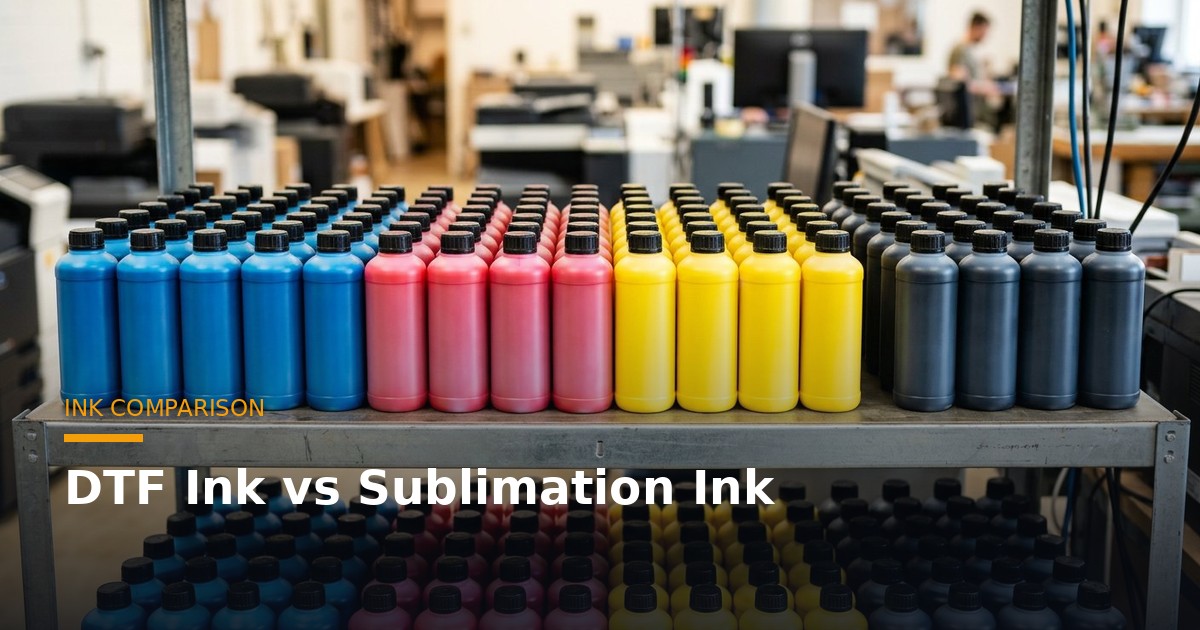
For garment and apparel printing in India, DTF and sublimation are two of the most popular digital methods, and choosing between them is a key business decision. Both produce vibrant, professional results, but they work very differently and suit different fabrics, products and business models. Many new garment businesses are unsure which to invest in, or assume one is simply better. Neither is — they serve different needs. This guide compares DTF and sublimation honestly across fabrics, durability, feel, colour and cost, so you can choose the right method for your garment business.
How DTF and Sublimation Work
The two methods differ fundamentally. DTF (direct-to-film) prints a design onto a special film with a white ink underbase, applies adhesive powder, then heat-presses it onto the garment, where it bonds as a flexible layer on the fabric surface. Sublimation prints a design onto transfer paper, then heat-presses it onto polyester, where the ink turns to gas and bonds into the fibres themselves, becoming part of the fabric. So DTF sits on top of the fabric as a transfer, while sublimation becomes part of the fabric. This core difference drives everything else — which fabrics they work on, how they feel, and how durable they are.
Which Fabrics Each Works On
This is the most important practical difference. DTF works on almost any fabric — cotton, polyester, blends, denim, nylon — and on any garment colour, light or dark, thanks to the white underbase. Sublimation only works on polyester or polymer-coated materials, and only on white or light colours, because the dye bonds into polyester fibres and there is no white underbase to cover dark fabric. For the Indian market, where cotton garments are extremely popular, this is decisive: DTF can print on cotton T-shirts, the biggest garment segment, while sublimation cannot. If you print on cotton or dark garments, DTF is the only choice of the two.
Hand Feel and Appearance
The two differ noticeably in how the print feels and looks. Sublimation has no hand feel at all — because the dye is in the fibres, the print is completely smooth and soft, indistinguishable from the fabric, which is ideal for sportswear and all-over prints. DTF has a slight hand feel, since it is a transfer layer on the surface — though modern DTF is quite soft and flexible, it is not invisible like sublimation. For all-over-print sportswear and performance apparel, sublimation’s zero hand feel is superior. For logos and designs on cotton, DTF’s soft transfer is excellent. The choice depends on whether you prioritise a completely seamless feel (sublimation) or versatility across fabrics (DTF).
Durability and Wash Fastness
Both are durable when done well, but differently. Sublimation is exceptionally durable — since the dye is in the fibres, it will not crack, peel or fade, and it is completely wash-fast, lasting the life of the garment. DTF is also very durable and wash-fast with proper application, and modern DTF transfers withstand many washes without cracking, though as a surface layer it can eventually show wear with heavy use over time. For maximum longevity, especially on sportswear that is washed frequently, sublimation’s in-fibre bond is unmatched. But DTF’s durability is more than adequate for most apparel. Both are far more durable than older transfer methods.
Colour Vibrancy and Quality
Both produce vibrant, high-quality colour. Sublimation gives exceptionally vibrant, photographic results on polyester, with smooth gradients and no feel — ideal for colourful sportswear and fashion. DTF gives vibrant, opaque colour on any fabric, with the white underbase making colours pop even on dark garments. Sublimation has a slight edge in seamless photographic quality on white polyester, while DTF’s ability to print vibrant opaque designs on dark and cotton garments is its strength. For most apparel applications, both deliver professional, vibrant results. The quality difference is less decisive than the fabric and feel differences.
Cost Comparison
Costs differ across equipment, consumables and per-garment economics. Equipment: DTF printers range widely, from entry machines around ₹1.5–2.5 lakh to industrial i3200 machines at ₹2.5–4 lakh and beyond; sublimation printers and heat presses are generally lower-cost to start. Consumables: DTF uses ink, film and powder; sublimation uses ink and paper. Per-garment: both are economical, though DTF’s film and powder add consumable cost. Sublimation is often the lower-cost entry, but it is limited to polyester/light garments. DTF costs a bit more but serves the far larger cotton and dark-garment market. For most Indian garment businesses, DTF’s market reach outweighs sublimation’s lower entry cost.
Which Should You Choose?
It depends on your products. Choose DTF if you print on cotton, blends or dark garments, want versatility across fabrics and colours, or target the broad T-shirt and apparel market — DTF’s ability to print on any fabric and colour makes it the versatile choice for most garment businesses. Choose sublimation if you focus on polyester sportswear, all-over-print fashion, or polyester-based products where the seamless, permanent, soft feel is the selling point. For the Indian market, where cotton dominates, DTF is the more versatile choice for most apparel businesses, while sublimation excels in the polyester sportswear and fashion niche.
Can You Do Both?
Yes, and many successful garment businesses do. DTF and sublimation are complementary: DTF covers cotton, blends and dark garments, while sublimation covers polyester sportswear and all-over print. Running both lets you serve the full range of garment demand — cotton T-shirts via DTF, polyester performance wear via sublimation. This is a natural growth path: many start with DTF for its broad market reach, then add sublimation to capture the sportswear and all-over-print segment. Rather than seeing them as rivals, see them as two tools covering different parts of the garment market, together letting you serve almost any apparel customer.
Choosing Equipment and Ink
Whichever you choose, quality equipment and ink matter. DTF machines use Epson heads like the i3200, i1600 or XP600, and need quality DTF ink including reliable white ink. Sublimation uses sublimation-specific printers and ink. In both cases, quality ink protects the printhead and ensures vibrant, consistent results. Buy machines and ink from a reliable supplier who understands garment printing and can support you. Because the printhead is the most valuable component and ink quality directly affects output and head life, investing in quality equipment and ink from a knowledgeable supplier is essential to a smooth, profitable garment-printing business.
Frequently Asked Questions
Can sublimation print on cotton?
No. Sublimation only bonds into polyester or polymer coatings, not cotton. For cotton, DTF is the right method.
Can DTF print on dark garments?
Yes — DTF’s white underbase lets it print vibrant designs on dark garments, which sublimation cannot do.
Which feels better on the garment?
Sublimation has no hand feel at all, since the dye is in the fibres. DTF has a slight, soft transfer feel.
Which is more durable?
Sublimation is exceptionally durable and wash-fast since it is in the fibre. DTF is also very durable and wash-fast with proper application.
Which is cheaper to start?
Sublimation generally has a lower entry cost, but it is limited to polyester. DTF costs a bit more but serves the much larger cotton and dark-garment market.
Do you supply both?
Yes. Unified Engineering Dynamics supplies both DTF and sublimation printers and inks, and advises on the right setup for your garment business.
Choosing Based on the Indian Market
The Indian garment market has specific characteristics that shape the DTF-versus-sublimation decision. Cotton is hugely popular in India, from everyday T-shirts to a vast range of apparel, and DTF’s ability to print on cotton and dark garments makes it the more versatile choice for serving this large market. Sublimation, limited to polyester and light colours, serves the sportswear, jersey and all-over-print fashion segments, which are growing but narrower than the cotton market. For a garment business targeting the broad Indian apparel market, DTF’s fabric versatility is a decisive advantage — it lets you print on the cotton garments most customers actually wear, in any colour.
This does not make sublimation the wrong choice — it excels in its niche. The polyester sportswear, team-jersey and all-over-print fashion markets are vibrant and growing, and sublimation’s seamless, permanent, soft results are ideal for them. Businesses focused on sportswear, activewear or all-over-print fashion will find sublimation perfect. But for a general garment business serving the wide Indian market, DTF’s ability to print on cotton and dark garments gives it broader reach. Understanding your target segment within the Indian market — broad apparel versus polyester sportswear — is the key to choosing the right method.
Growing Your Garment Business with the Right Method
Think about your growth path when choosing. DTF gives you immediate broad market reach across cotton, blends and dark garments, making it a strong foundation for a general garment business — you can serve most customers from day one. Sublimation gives you a specialised, high-quality capability in polyester sportswear and all-over print, ideal if that is your focus. Many businesses start with DTF for its broad reach, then add sublimation as they grow into the sportswear and all-over-print segment, or vice versa if they start specialised. The two methods complement each other, and running both lets you serve nearly the entire garment market.
Whichever you choose, quality equipment and ink are the foundation of a successful garment business. DTF machines with reliable Epson heads and quality DTF ink — especially good white ink — deliver the vibrant, durable prints customers expect. Sublimation needs quality sublimation ink and proper colour management for its vibrant results. Because garment printing is competitive and customers judge on quality and consistency, investing in quality equipment, ink and support is essential. Choose the method that fits your market, invest in quality, and build a reputation for reliable, vibrant garment printing that keeps customers coming back and grows your business.
The Bottom Line on DTF vs Sublimation
The choice between DTF and sublimation comes down to the fabrics and garments you intend to print. DTF’s decisive advantage is versatility — it prints on cotton, blends and dark garments, which covers the broad Indian apparel market where cotton dominates. Sublimation’s advantage is its seamless, permanent, soft results on polyester, which is ideal for the sportswear, jersey and all-over-print fashion niche. Neither is better in the abstract; each is the right tool for a different part of the garment market. Match the method to the garments your customers actually want.
For a general garment business serving the wide Indian market, DTF’s fabric versatility usually makes it the stronger starting choice, since it reaches most customers. For a business focused on polyester sportswear or all-over print, sublimation is perfect. And because the two complement each other, many successful businesses run both, covering cotton and dark garments with DTF and polyester sportswear with sublimation. Unified Engineering Dynamics supplies both DTF and sublimation printers and inks, and we advise on the right setup based on the garments you print, so you can serve your market fully and grow from there.
Finally, remember that the method matters less than the quality and consistency you deliver with it. Whichever you choose, quality equipment, quality ink and good process discipline are what produce the vibrant, durable, consistent prints that win repeat customers. A garment business that prints reliably on its chosen method — cotton and dark garments via DTF, or polyester sportswear via sublimation — builds a reputation that grows the business, while inconsistent quality on either method loses customers. So choose the method that fits your market, then invest in doing it well: quality ink, proper maintenance and consistent process are the real keys to a successful garment-printing business.
Getting this right from the start also saves you from costly changes later. Because your printer, ink and process are built around your chosen method, switching after investing is expensive and disruptive. Taking the time to match the method to your target garments — and getting expert advice if you are unsure — ensures your investment serves your market well from day one and supports steady growth, rather than leaving you equipped for the wrong segment of the garment industry.
Choose the Right Method for Your Garment Business
DTF and sublimation suit different fabrics and products. Match the method to your garments and market. Unified Engineering Dynamics supplies both printer types and inks, with expert advice and nationwide support.
Get expert advice on DTF vs sublimation for your business → Tell us what garments you print, and we will recommend the right method and setup.
Related Reading
- How to Choose the Right Ink for Your Printer: Complete India Guide
- Best DTF Ink in India: Quality, White Ink & Buying Guide (2026)
- DTF Ink Price in India: White + Colour Ink Cost & Best Options
- Sublimation Ink Price in India: Cost, Quality & Where to Buy
- How to Store Printer Ink: Shelf Life, Tips & Safety
Unified Engineering Dynamics supplies quality printer inks and machines with expert support across India. Get in touch for ink advice and pricing →
