



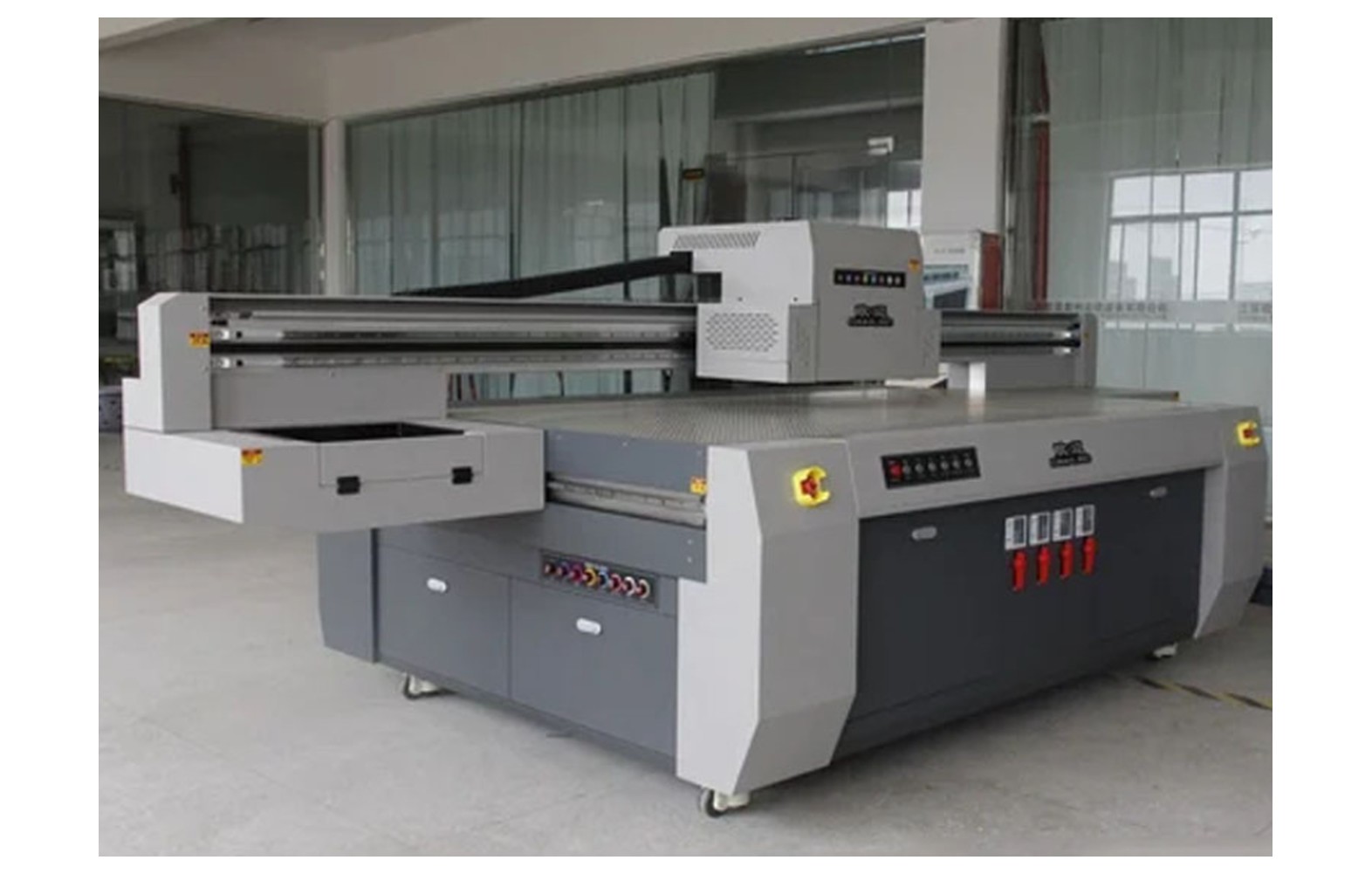
Direct answer: A UV printhead replacement must match the exact flatbed printer, head variant, board, approved ink and manufacturer part number. A familiar head family or a similar connector is not proof of compatibility. Have qualified authorised service diagnose the complete system and perform replacement, safety checks and representative application testing under the machine manufacturer’s procedure.
Document the actual configuration
Record the printer manufacturer, model, serial, revision, installed head, board, ink, maintenance system, curing module and software. Retain commissioning and service records. A used or upgraded flatbed may not match its original catalogue.
Ask whether the machine was modified or converted to another ink. The manufacturer’s original parts list may no longer describe the installed system. An authorised technician should assess the current configuration before a head is selected.
This guide supports purchasing and diagnosis discussions. It does not provide wiring, flushing, head-alignment or installation instructions. Electrical, ink-system and guarded mechanical work requires trained authorised personnel and the exact manual.
Head family and exact variant
Commercial listings often use a head family name, but different variants and printer integrations can have different ink, board, mounting or service requirements. Request the full manufacturer part number and written confirmation for the actual printer serial and revision.
A genuine head for another configuration can still be unsuitable. A compatible or refurbished offer should specify the supported printer, ink and control system, condition, warranty and the manufacturer’s support position. Similar dimensions or connectors are not sufficient proof.
Ask whether cables, dampers, seals, authorised configuration or other related parts are included. A head-only price is not a complete replacement scope.
UV ink compatibility
Use only UV inks and maintenance products approved for the exact printer and head. Formulations differ, and an unapproved substitution can affect the head, fluid path, cure, warranty and safety. Do not mix inks or use a generic cleaning fluid because it worked on another machine.
An ink conversion requires a documented assessment of the complete system by the manufacturer or authorised service provider. Components such as tubes, dampers, seals, pumps and maintenance stations may have material requirements linked to the actual formulation.
Keep current safety data sheets and have qualified professionals assess ventilation, fire, storage, protective equipment, spills and waste under local requirements. Uncured UV ink may present health hazards, including skin sensitisation for some formulations; avoid direct skin contact and follow the site procedure.
Symptoms are not proof of head failure
Missing nozzles, banding, weak white or colour shifts can involve artwork, RIP, ink delivery, maintenance, head, electronics, substrate or curing. A nozzle pattern is useful evidence at one moment but is not a complete diagnosis or a guarantee of future head life.
Record the job, ink, substrate, settings, operating stage, exact alarm and last accepted output. Retain a physical sample marked with orientation where safe. Tell the technician about recent service, transport or ink changes without assuming they caused the issue.
Use only manufacturer-approved operator checks. Repeated aggressive cleaning or an improvised flush can damage components and create chemical hazards. If the issue persists, stop and ask authorised service to assess the complete system.
Flatbed substrate and head-strike risks
A flatbed holds a wide range of rigid or other approved materials. Warped, moving or incorrectly positioned items can create a head-strike risk. Use the manufacturer’s substrate-height, fixture and hold-down procedure and stop safely if an item lifts or is not secure.
A visible mark or poor print can arise from substrate preparation, movement, artwork, ink, head or cure. Preserve the evidence rather than assuming the head is at fault. The technician and production team should assess the approved setup.
Do not bypass a height sensor, guard or interlock to finish an order. The qualified responsible team must determine the safe fixture and operating method for the actual machine and substrate.
UV source and curing safety
UV radiation can injure eyes and skin. Never look at an operating lamp, expose a source outside its enclosure or defeat guards and interlocks. Lamp, electrical and guarded service must follow the manufacturer’s isolation procedure and be performed by authorised personnel.
A surface that feels dry or passes an informal rub test does not by itself prove complete cure or suitability for the intended product. The ink, lamp, substrate and process interact. The responsible qualified team should select appropriate cure and adhesion tests for the actual application.
Do not claim food-contact, medical, regulatory or other safety suitability from a successful print alone. The product owner and qualified advisers must determine current requirements and approve the finished product.
Genuine, compatible and refurbished heads
For a genuine head, verify the exact number, configuration and source using the manufacturer’s recommended process where available. Ask about authorised installation, warranty, exclusions and return terms.
For an alternative, request the precise supported printer, head, ink and board configuration and the manufacturer’s support position. A generic compatibility claim or similar connector is insufficient. A used or refurbished head may have uncertain history and prior ink exposure; ask what was tested and who accepts the risk.
Compare the whole service scope rather than just the head price. An unverified component installed into an unresolved system fault can add cost without restoring production.
Diagnose before ordering
Provide the authorised technician with the machine record, last accepted output, nozzle pattern if produced under the manual, ink and substrate, settings and service history. Ask what evidence distinguishes the head, ink path, maintenance station, board, file, fixture and cure as possible contributors.
Use controlled tests only where safe and approved. Record the original configuration and one authorised change at a time where feasible. Do not swap heads or boards between printers as an informal experiment.
Request a written diagnosis and scope including head, related parts, labour, configuration, safety checks, test and warranty. If uncertainty remains, agree the next authorised diagnostic step and cost.
Identify the replacement checklist
- Record the printer: model, serial, revision, head, board, ink and curing system.
- Preserve evidence: error, file, substrate, settings and reference output.
- Confirm diagnosis: use authorised model-specific checks.
- Verify the part: exact manufacturer number, variant, condition and ink approval.
- Check related items: cables, dampers, seals, firmware and service scope where applicable.
- Perform authorised work: follow isolation, UV and ink safety procedures.
- Accept: restore protection, test representative work and retain the report.
Do not open a guard or disconnect an ink line merely to photograph the part. The manufacturer may identify it from the machine record; otherwise an authorised technician should inspect it under the approved procedure.
Acceptance after service
Agree the intended substrate, surface preparation, artwork, ink, print mode and quality criteria. Qualified personnel should restore guards and interlocks and run the manufacturer’s checks. Inspect the original symptom over the relevant area.
Where cure or adhesion is important, the responsible qualified team should use an appropriate documented method for the actual product. A dry-feeling surface, quick rub or successful colour print alone does not establish complete cure or suitability.
Retain the service report, part number, settings, sample and any limitation. A short successful print does not guarantee future head life. Customer approval and product-specific compliance remain separate decisions.
Cost, warranty and downtime
Compare diagnosis, exact head, related parts, freight, taxes, authorised labour, configuration, safety checks, testing and downtime using current written quotations. Clarify warranty start, exclusions, return terms and who approves extra work if another fault is found.
For a hypothetical example, diagnosis costs Rs 1,000, a component Rs 10,000 and authorised labour Rs 2,000. The illustrative subtotal is Rs 13,000 before taxes, freight and other costs. These invented numbers are not market prices. Use the actual quotation and retain diagnostic uncertainty.
A pre-qualified backup printer or subcontractor can help with urgent work, but confirm the substrate, ink, cure and customer proof. Do not bypass a UV guard or use an unverified head to meet a deadline.
Questions for the supplier
- What exact head variant and part number fit this printer serial?
- Which UV ink, board and maintenance system are approved?
- What evidence supports replacing the head?
- Who performs safe installation and configuration?
- What cure, adhesion and print-quality checks are appropriate for the actual job?
- What warranty, returns and related parts are included?
For engineering context see printhead ink compatibility and UV cure and adhesion testing. For parts purchasing read the UV flatbed spares buyer guide.
Conclusion
Choose a UV printhead from the verified printer, head, board and ink configuration after qualified diagnosis. Use authorised service, UV and chemical safety controls, and an application-specific acceptance plan before customer production resumes.
Separate nozzle evidence from the cause
A nozzle check can show whether a particular test pattern is incomplete at a given moment. Keep the approved test, date, ink, machine configuration and conditions. Ask the service provider how the manufacturer specifies the test for the installed head and printer; a generic image from another system is not a reliable acceptance threshold.
An incomplete pattern can be associated with multiple parts of the ink delivery, maintenance or head system. The authorised technician should assess those possibilities using the model-specific process. Do not conclude that the head must be replaced solely because a pattern contains a missing line.
A normal short check also does not establish that the machine will produce every customer job. If the complaint appears after a long run, when white ink is used or on a particular substrate, document that operating stage and ask for a safe representative investigation.
Understand white and colour channels
Some flatbeds use white ink for an underbase, overprint or other approved effect. The artwork, layer order, opacity, ink condition and printer configuration can affect the result. Weak white does not automatically prove that a particular head or circulation component failed.
Ask the manufacturer how the installed white system is intended to operate and which ink is approved. Some systems circulate or agitate; others use different designs. Follow the exact manual and do not impose an invented schedule, speed or universal maintenance interval.
Use a representative file and substrate to compare the approved output. The operator should not open the ink path or bypass a protective device to investigate. An authorised technician and qualified safety team determine the safe checks.
Confirm the source and condition of the head
Request the complete part number, condition, supply-channel evidence, supported machine configuration and warranty in writing. A genuine head can be wrong for another revision; a compatible or refurbished listing should identify the exact printer, ink, board and service conditions it supports.
Ask whether a refurbished head was tested, what prior ink exposure is known and what the supplier will do if it is unsuitable. The machine manufacturer or authorised service provider should decide whether the option is supported. A low quote is not proof of suitability or remaining life.
Clarify storage, packaging, return conditions and who inspects the part before installation. Do not force a connector, open protected packaging unnecessarily or attempt a trial in another machine. Related electronics can be affected by an incorrect component or an unresolved fault.
Prepare the substrate acceptance test
Define the actual substrate, coating, surface preparation, fixture or vacuum setup, artwork, ink and print mode. The manufacturer and responsible production team should specify how the item is held. A moving or warped substrate can damage the head and compromise a diagnostic print.
Assess the output against the customer’s approved dimensions, colour and detail. If the purpose includes adhesion, durability or a regulated use, qualified personnel must define the appropriate tests for that product and jurisdiction. A visual sample should not be represented as proof of compliance.
A surface that appears dry can still be inadequately cured. A simple rub or scratch check can reveal some defects but does not establish complete cure, safe skin contact, food-contact suitability or another regulatory claim. Retain the actual test method and limits.
Compare complete supplier scopes
Ask whether the quote includes diagnosis, the head, related dampers, cables or seals, freight, tax, authorised installation, configuration and acceptance testing. Ask what happens if another fault is found or the original symptom remains. A part-only price should not be compared as if it includes full service.
Review the warranty start, exclusions, required ink and service records, return process and responsibility for related components. A warranty on a head does not automatically cover downtime or customer reprints. Keep the written terms with the purchase decision.
For urgent work, use a pre-qualified backup rather than operating with an exposed UV source, disabled guard or ink leak. Compare the alternate system’s substrate, ink, cure and customer proof before dispatch.
After-service monitoring
Retain the installed part number, ink and configuration, technician’s report, approved checks and representative output. Confirm that guards, interlocks and safety systems are restored under the service process. Operators should know the current stop and escalation procedure.
If the symptom returns, record the new conditions and contact the service provider. Avoid repeated part swaps or unapproved cleaning. The same visible defect can have a different cause from the original fault.
Separate the equipment service acceptance from customer and product-owner decisions. Review any reprinted items against the approved artwork, substrate and tests required for the intended use. Document limitations instead of promising a universal durability or compliance outcome.
When ordering, confirm who is responsible for technical compatibility, who approves the commercial scope and who will perform the authorised service. Keep those decisions separate. A supplier quotation does not itself establish that the existing head is defective.
If the technician finds a related leak, cable or control issue, agree a revised scope and cost before additional work. Do not operate with an exposed UV source or unresolved hazard while waiting for a component. A pre-qualified backup can protect customer deadlines without compromising the safe procedure.
At shift handover, communicate the accepted test, remaining limitations and the service contact. Preserve the customer’s substrate and artwork specification for any repeat order.
Keep the manufacturer’s current ink and safety documentation accessible to authorised personnel before the next production run.
Retain approved records.
Frequently Asked Questions
Does a missing nozzle prove a UV head must be replaced?
No. Ink delivery, maintenance, electronics, settings and other factors may contribute. Obtain a model-specific qualified diagnosis.
Can any UV ink be used with any head?
No. Use the ink approved for the exact printer and head and seek documented guidance before a conversion.
Does a familiar head family guarantee compatibility?
No. Confirm the exact head variant, printer, board, ink and manufacturer part number.
Can an operator look directly at a UV lamp to test cure?
No. Never look at an operating UV source or defeat guards. Use manufacturer-approved procedures and qualified service.
Does a dry-feeling print prove complete cure?
No. Surface feel alone does not establish complete cure or suitability for the intended product.
Can a warped substrate damage a head?
It can create a head-strike risk. Use the manufacturer’s approved height, fixture and hold-down procedure and stop if the item is not secure.
How is head replacement accepted?
Restore protective systems, run approved checks and assess representative output and application-specific tests, retaining the service report.
