



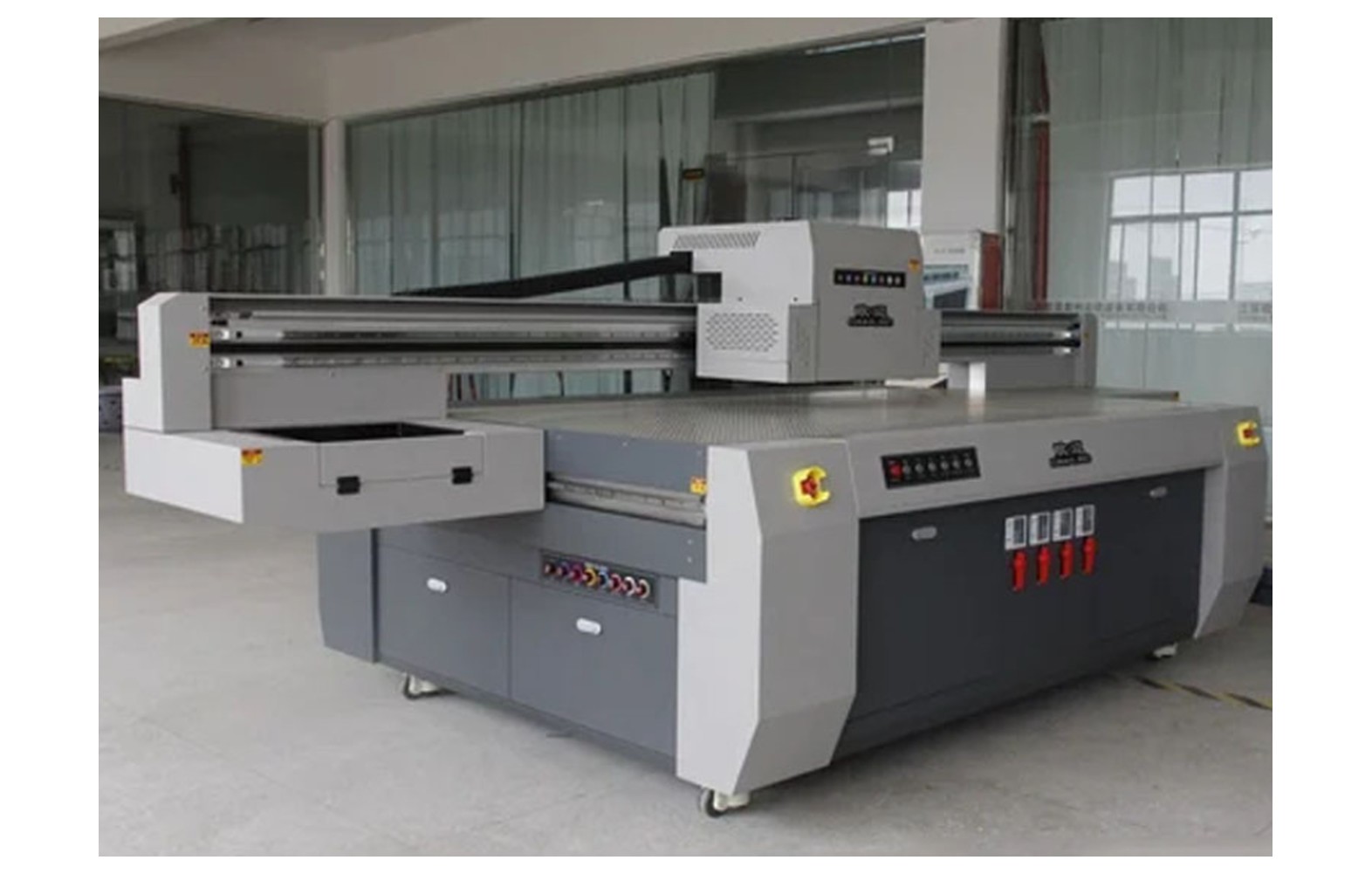
Direct answer: UV printer ink waste and cleaning residues must be handled using the exact product safety data sheets, machine instructions and applicable local requirements. Do not assume uncured UV ink, contaminated wipes or mixed cleaning waste can go into a drain or ordinary bin. The responsible business, qualified site team and appropriate waste provider must determine classification, storage and disposal for the actual substances.
Identify the real waste stream
A UV flatbed operation may generate waste ink, cleaning fluids, used wipes, filters, tubing, gloves or packaging. The actual composition depends on the printer, ink, maintenance products and work performed. Some waste may contain uncured ink or residues; do not assign a legal classification from a product name alone.
Record the printer model, approved ink and cleaning products and any authorised conversion. Obtain current safety data sheets and identify which activities generate waste. The qualified site team and waste provider need accurate information to assess handling and applicable obligations.
This guide is for planning and questions, not a universal legal classification or disposal instruction. Requirements vary by substances, quantities, site and jurisdiction. Consult current local rules and qualified environmental advisers.
Protect people from uncured ink
Uncured UV ink and residues can pose health hazards, including skin sensitisation for some formulations. Avoid direct skin contact and follow the actual safety data sheets and qualified site assessment for ventilation, personal protection, storage, fire precautions and spill response.
A surface that feels dry does not by itself establish complete cure or safe contact. The responsible product owner and qualified quality team should determine the required cure, adhesion and product-specific tests. Do not infer food-contact, medical or skin-contact suitability from a simple rub or touch.
Do not direct untrained staff to handle a spill or contaminated part beyond their authority. If an unsafe condition occurs, stop and follow the site’s emergency procedure and notify the responsible qualified team.
UV and equipment safety
UV radiation can injure eyes and skin. Do not look at an operating source, expose a lamp outside its enclosure or bypass guards and interlocks. Lamp, electrical and guarded service requires qualified authorised personnel using the manufacturer’s isolation procedure.
If there is a leak, exposed UV source, smoke, burning smell or unsafe carriage movement, stop under the site procedure. Do not continue a hazardous run to meet a customer deadline or obtain a demonstration.
Waste handling may occur near moving, heated or electrical equipment. Follow the machine’s safe stop and isolation instructions. A generic article cannot authorise a person to open a guarded waste path or service an ink line.
Identify tanks, lines and containers
Some printers use waste containers, tubes, pumps, sensors or counters as part of a model-specific maintenance system. Ask the manufacturer to identify the installed arrangement, approved parts and authorised service process. A similar-looking bottle or tube is not automatically suitable.
Confirm material compatibility with the actual waste, machine mounting, seals and manufacturer part number. The qualified site team must also assess storage and handling requirements. Do not use an improvised container or fitting simply because it appears to fit.
Record the printer serial, revision, ink, maintenance products and any authorised conversion. A part approved for the original configuration may not be correct after a change. Ask the manufacturer or authorised technician to verify the current system.
Monitoring and warning messages
Some machines provide a waste-level indication, counter or maintenance message; others use a different system. The manufacturer should explain the meaning and permitted operator checks for the exact model. A counter can represent a service condition rather than a direct measurement of liquid.
Do not reset a warning or bypass a sensor merely to finish a job. Follow the model-specific procedure and escalate where authorised service is required. If overflow or leakage is possible, stop safely and notify the responsible team.
Record the exact message, operating stage and recent maintenance. An alarm can have several causes. A technician should assess the complete system rather than replacing a pump or sensor based on a generic symptom list.
Storage, segregation and records
Use containers and storage arrangements approved for the actual waste and site. Labels, segregation, quantity limits, inspection and recordkeeping may be required by applicable rules. The qualified site team and waste provider must determine those requirements for the substances and jurisdiction.
Do not mix waste streams or add unapproved cleaners to a container without a documented compatibility and disposal assessment. Mixing can change hazards and handling obligations. Keep product identification and safety data available to the responsible team.
Retain collection and internal records according to applicable requirements and company policy. Review the plan when ink, cleaning products, equipment or the waste provider changes.
Spills and emergency response
If material escapes its intended path, stop under the site’s emergency plan, notify the responsible supervisor and consult the actual safety data sheets. Qualified personnel determine isolation, ventilation, personal protection, cleanup and waste handling for the specific products.
Do not wash waste into a drain, mix chemicals or ask untrained staff to handle a spill beyond their authority. If there is fire, smoke or another immediate danger, follow the emergency plan and contact emergency services as appropriate.
Record the product, location, observation and authorised response. A clean-looking surface does not establish that the leak or system fault is resolved. The responsible service and safety teams must approve the next step.
Disposal and the waste provider
Ask a qualified environmental adviser and an appropriate waste provider to determine the applicable classification, storage, collection and disposal route for the actual waste. Requirements can differ by jurisdiction and material. Do not assume UV ink waste is ordinary refuse or suitable for drain disposal.
Provide the actual ink and cleaning-product identities, safety data sheets and a description of the process. Disclose any authorised conversion or potential mixture. A provider cannot assess an unknown waste accurately from a generic UV label alone.
Confirm responsibilities for containers, labelling, collection, transport and records in writing. Review the arrangement if products or processes change. This article does not determine legal compliance for a specific business.
Choose compatible replacement parts
Confirm the manufacturer part number, printer serial, revision, component position and compatibility with the actual products. Ask whether seals, fittings or related hardware are included. A genuine part for another revision can still be wrong.
For compatible, refurbished or used components, request written application and condition information and check the manufacturer’s support position. A used container or tube may have uncertain prior contents or contamination. Qualified personnel should determine whether reuse is supported.
Do not open a guarded area or disconnect a line merely to photograph a part. The manufacturer may identify it from the machine record; otherwise an authorised technician should inspect under the proper isolation procedure.
Acceptance after authorised service
- Record the baseline: machine, waste configuration, actual products, warning or symptom.
- Verify parts: exact tank, line, connector or sensor number and approved application.
- Perform authorised work: follow model-specific isolation and site safety procedures.
- Restore protection: confirm guards and interlocks under the service process.
- Run approved checks: qualified personnel verify the waste and printer system.
- Review waste records: follow the qualified provider’s and applicable local requirements.
- Document release: retain the report and any remaining limitation.
A successful check shows the tested conditions at that time, not a guarantee against future leaks. For an intermittent fault, agree a safe follow-up with the service and safety teams.
Print cure and customer release are separate
A maintenance or waste-system repair does not establish that printed output is fully cured or suitable for its intended use. The responsible product owner and qualified quality team should determine appropriate cure, adhesion and other tests for the actual substrate and jurisdiction.
Do not make food-contact, medical, skin-contact or universal durability claims from a lamp, waste container or a dry-feeling surface. Record the test method and limitations. Customer appearance approval and product-specific compliance are separate decisions.
If customer work was interrupted, compare replacement output with the approved proof and communicate any variation. A pre-qualified backup does not justify operating the original printer with a leak or disabled interlock.
Supplier and cost questions
Compare diagnosis, exact tank or tube, related fittings, freight, tax, authorised labour, safe handling, waste collection and acceptance checks using current written quotations. A container-only price is not the complete operating cost.
For a hypothetical example, a component costs Rs 1,000, freight Rs 200 and authorised service Rs 800. The illustrative subtotal is Rs 2,000 before taxes, waste handling and other expenses. These invented figures are not market or disposal rates. Use your own quotations.
- What parts and containers are approved for this printer and actual waste?
- Which checks can trained operators perform and which require authorised service?
- What safety data and site controls apply?
- Who determines classification, collection and local disposal obligations?
- How are leaks, warnings and service records handled?
Common mistakes
Assuming dry means fully cured: use application-specific qualified testing.
Pouring waste into a drain: obtain the appropriate qualified waste route.
Using a similar container: confirm approved parts and compatibility.
Resetting a warning to continue: follow the exact manufacturer and site procedure.
Handling a spill without training: stop and involve the qualified team.
Bypassing UV protection: never expose an operating source or defeat an interlock.
Related reading
Read UV ink handling safety and UV cure and adhesion testing. For the ink path see UV ink system parts.
Conclusion
Manage UV ink waste using the actual safety data, approved machine components, qualified service and the appropriate local waste route. Protect people from uncured ink and UV exposure, and keep disposal decisions distinct from print cure and customer approval.
Prepare information for qualified waste advice
List the actual ink and maintenance products used, their current safety data sheets and the operations that generate waste. Identify whether cleaning wipes, filters, packaging or mixed fluids are included. Explain any authorised ink conversion that could leave different residues in the system.
Ask the qualified adviser or waste provider what information is needed to assess the waste under the applicable local rules. Classification can depend on the actual material and jurisdiction. Do not assume a generic UV label provides a complete answer or claim that every business has the same legal obligation.
Confirm the provider’s instructions for containers, labelling, collection, transport and records. The business remains responsible for following the obligations applicable to its operation. Review the arrangement when products, quantities or processes change.
Choose storage from the actual risk assessment
The site team should assess where waste and cleaning products are held, the actual substances, container compatibility, ventilation, fire precautions and access. Use supplier guidance and qualified professional advice rather than a generic cabinet, container or storage duration suggested online.
Keep waste streams identifiable and do not mix them without an approved assessment. A container that previously held another chemical may be unsuitable even if it appears empty. The provider and safety team should determine the appropriate arrangement for the actual waste.
Inspect and record conditions according to the site’s approved procedure. If there is a leak, damaged container or unexpected odour, stop and escalate. Do not ask untrained staff to improvise a cleanup or use an unknown absorbent.
Differentiate an equipment check from disposal approval
An authorised technician may verify a printer waste line, container or counter according to the machine manual. That equipment check does not determine the legal classification or disposal route for the contents. The qualified environmental and site team must address those questions separately.
Likewise, an arrangement with a waste provider does not authorise bypassing a printer sensor or resetting a warning outside the manufacturer’s procedure. Keep the machine service record and waste documentation together where useful, but identify the different responsible parties.
After a component replacement, confirm the installed part number, guards, sensors and any required system checks. Record any remaining limitation and inform the next shift. A short successful operation is not a guarantee against a future leak.
Protect staff and customer output during an incident
If a leak or spill is suspected, use the site emergency plan and the actual safety data sheets. The qualified team determines isolation, protective equipment, ventilation, cleanup and when the area may be re-entered. Do not touch or move contaminated material without the authorised procedure.
Identify affected customer work and keep suspect items separate as directed. The product owner and quality team decide whether output can be assessed, reprinted or otherwise handled. A waste-system repair does not itself establish that the print is fully cured or safe for its intended use.
If urgent work is moved to a backup provider, assess the actual substrate, ink, cure and finishing against the customer specification. A different printer or formulation may require separate testing. Document the customer approval and revised delivery.
Review the process when products change
An authorised ink or cleaning-product change can alter the waste composition, container compatibility and safety data. Ask the manufacturer and qualified site team to review the complete process before use. Do not mix new and old waste streams without an assessment.
Update the machine record, product identification, safety documents, training and provider instructions. Keep prior records for traceability. If the disposal provider or local requirements change, obtain current qualified advice rather than relying on an old generic guide.
At shift handover, communicate outstanding alarms, service requests and the approved stop and escalation process. A temporary workaround should not become an undocumented routine merely because a deadline is approaching.
Before an authorised service visit, agree who supplies suitable containers, who handles removed parts and how any waste will be collected. The qualified provider should identify applicable packaging and transport requirements for the actual substances. Keep the printer stopped if a leak or protective warning remains unresolved.
After the incident, review the machine service report and waste records with their respective owners. Update training if the approved procedure changes, and keep current safety data accessible to authorised staff.
Retain the approved records and contact details.
Frequently Asked Questions
Can UV ink waste go down a drain?
Do not assume so. The qualified site team and waste provider must determine the appropriate route for the actual waste and local rules.
Is a dry-feeling UV print necessarily fully cured?
No. Surface feel alone does not establish complete cure or suitability for the intended use.
Can any bottle replace a printer waste container?
No. Confirm the manufacturer’s approved part and the qualified site’s assessment for the actual waste.
Can different ink or cleaner waste streams be mixed?
Do not mix them without a documented compatibility and disposal assessment by the responsible qualified team and waste provider.
What should staff do if UV ink spills?
Stop and follow the site’s emergency procedure, consult the actual safety data sheets and notify the responsible qualified team.
Can an operator reset a waste warning?
Only follow the exact manufacturer procedure within the operator’s training. Do not reset or bypass a warning merely to continue printing.
Who determines disposal obligations?
The business should consult qualified environmental advisers and an appropriate waste provider for the actual substances and applicable local rules.
