



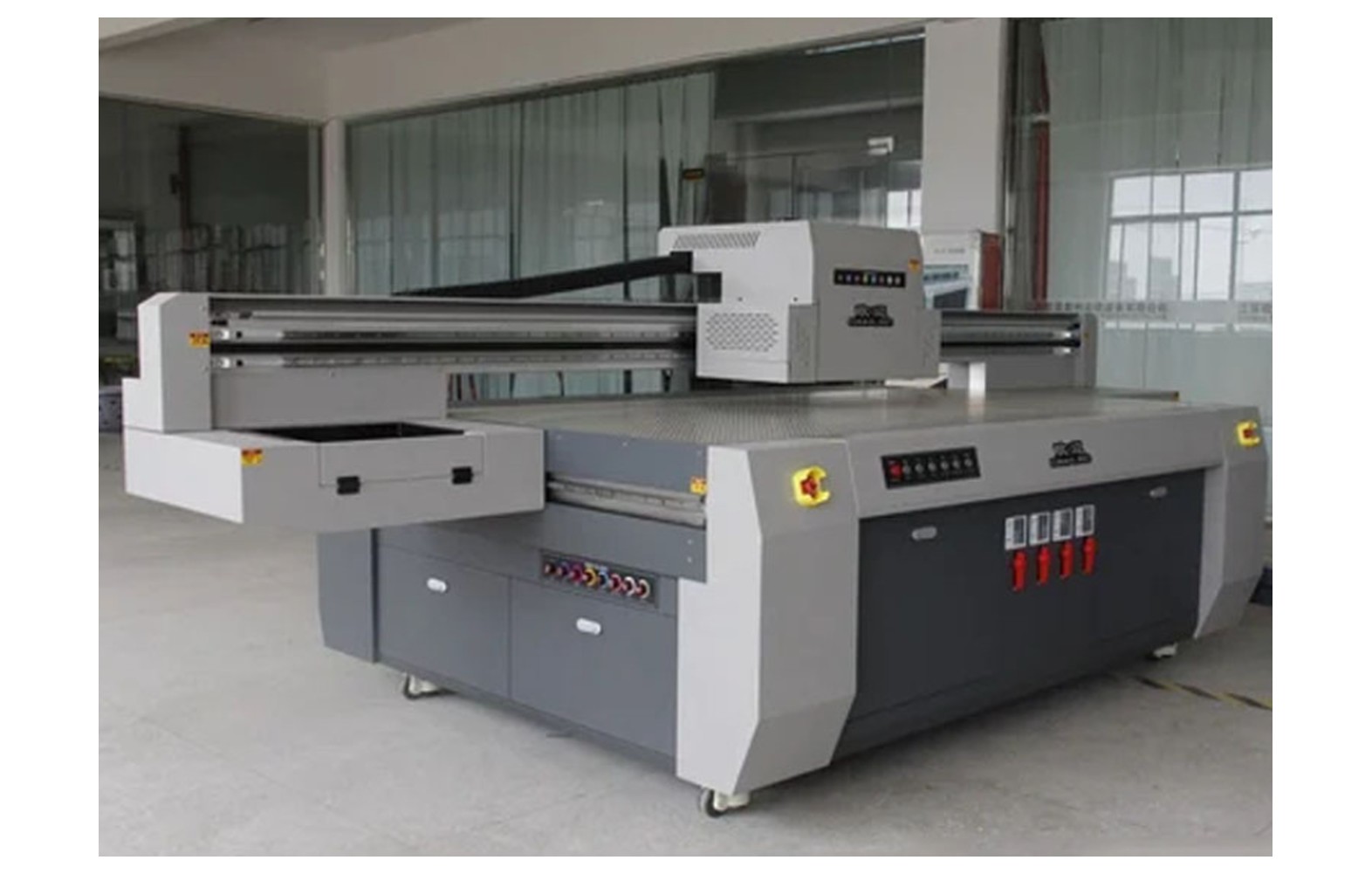
Direct answer: UV flatbed mainboards, head boards, cables, motors, power supplies and safety interlocks must match the exact printer configuration and manufacturer’s part numbers. A similar connector or alarm does not establish a failed or compatible part. UV radiation and electrical equipment can cause serious injury; use qualified authorised service, maintain guards and interlocks, and test the complete system before production resumes.
Start with the installed system
A flatbed can contain main control boards, head electronics, data cables, motors, drivers, power modules, sensors, UV curing assemblies and protective devices. Their names and arrangement vary by manufacturer. Obtain the exact model’s diagram and service documentation rather than relying on a generic parts catalogue.
Record printer model, serial, revision, installed heads, approved ink, curing module, table options, firmware and any authorised modification. A used or upgraded printer may not match its original parts list. Ask the manufacturer or authorised technician to identify the current configuration.
This guide supports purchasing and service planning. It does not provide wiring, pinouts, live electrical tests, interlock bypass or a universal repair procedure. Qualified authorised personnel must follow the exact manual and applicable site requirements.
Electrical and UV safety
UV radiation can injure eyes and skin. Never look directly at an operating source, expose a lamp outside its enclosure or defeat guards and interlocks. Electrical and guarded service requires qualified authorised personnel using the manufacturer’s safe stop and isolation procedure.
If there is smoke, a burning smell, damaged wiring, an exposed source, ink leak or unsafe movement, stop under the site emergency procedure and notify the responsible supervisor. Do not repeatedly reset protection or continue a hazardous run to obtain evidence.
Uncured UV ink and residues can pose health hazards, including skin sensitisation for some formulations. Obtain the actual safety data sheets and have qualified professionals assess ventilation, protection, fire, spills and waste under local rules. Avoid direct skin contact.
Mainboards and head boards
A mainboard may coordinate printer functions while head-related electronics can participate in control or communication. The precise roles, number and naming of boards vary. Ask the manufacturer which assembly applies to the actual printer serial and reported symptom.
Confirm the manufacturer part number, revision, supported heads, ink system, options and any firmware or configuration requirement. A genuine board for another revision can still be wrong. A similar connector or familiar head family does not establish complete electrical compatibility.
Ask whether a quote covers the board alone or a complete assembly with cables, labour, configuration and testing. Do not open a guarded panel merely to photograph the part; the manufacturer may identify it from machine records.
Data and printhead cables
Cables link boards, heads, sensors and other components in model-specific ways. Similar length, width or connector appearance does not prove the correct contact arrangement, routing or signal requirements. Verify the exact manufacturer number and machine configuration.
Carriage cables may follow a particular route and bend path. An authorised technician should inspect and install them under the manufacturer procedure. Do not pull cables, force connectors or move a carriage by hand outside the approved process.
If ink or liquid reaches electronics, stop and follow the site incident procedure. A qualified technician and safety team should determine handling. Do not clean a connector with an improvised solvent.
Motors and drivers
A flatbed may use different motors for carriage movement, table motion, vacuum or other functions. The associated driver and controls are matched to the system. A motor advertised for another axis or printer is not automatically interchangeable.
Record the operating stage and exact alarm or symptom. A stopped carriage or shifted graphic may involve mechanics, feedback, sensor, cable, driver, motor, substrate or software. An authorised technician should diagnose the complete system before a replacement is ordered.
Do not copy parameters from another printer, substitute a board by connector shape or bypass protective devices. Electrical and mechanical work requires qualified authorised personnel using the exact service procedure.
Power supplies and site electrical design
The printer and accessories may have different electrical loads and power assemblies. Obtain model-specific nameplate and manufacturer requirements. A qualified electrician should assess the actual site supply, wiring, earthing, protective devices and isolation under applicable local rules.
A similar voltage label does not establish full compatibility with a replacement supply. Ask the manufacturer for the exact part number, revision, control and safety requirements. A power alarm alone does not prove that the supply failed.
Do not repeatedly reset protection or increase a device rating by guesswork. Stop and ask qualified professionals to assess the machine and site. A generic article cannot specify the correct breaker, cable or backup supply for every installation.
Interlocks and protective controls
Interlocks, covers and sensors can serve safety functions that depend on the printer design. Never bypass, bridge or defeat them to operate a UV source or moving carriage. If a guard is damaged or an interlock warning appears, stop and request authorised service.
A sensor or switch must match the exact manufacturer part number, position and approved configuration. A similar-looking component does not establish safe operation. Qualified personnel should restore and verify the protective system under the manufacturer’s procedure.
Do not look at an operating lamp to decide whether an interlock works. The authorised service provider must use the proper guarded diagnostic method and equipment.
Recognise symptoms without guessing
Operators may report communication errors, missing colour, carriage alarms, shifted graphics or a power interruption. These can involve artwork, software, media placement, head, cable, board, sensor, drive or supply. A single message or print defect does not prove one failed part.
Record the exact message, operating stage, file, substrate, ink, settings and last accepted output. Retain a safely handled sample and note recent service or changes without assuming causation. Do not reproduce smoke, unsafe motion or UV exposure for evidence.
An authorised technician should use the manufacturer’s diagnostic sequence and explain the evidence and uncertainty. Avoid swapping boards between printers or replacing multiple parts at random.
Substrate, artwork and cure are separate factors
Define the approved substrate, fixture or vacuum, height, artwork, ink and layer order. A warped or moving item can affect registration or cause a head-strike risk. Stop safely if the substrate is not secure.
A dry-feeling surface or quick rub does not establish complete UV cure or product suitability. The responsible product owner and qualified quality team must choose application-specific cure, adhesion and other tests. Equipment repair, customer appearance and regulatory compliance are separate decisions.
For food-contact, medical, skin-contact or other regulated uses, qualified advisers must determine current requirements for the actual product and market. Do not infer compliance from a successful print or spare replacement.
Identify and compare spare parts
Confirm manufacturer part number, printer serial, revision, function and any approved supersession. Ask whether related cables, mounting, firmware or other components are included. Similar appearance or a nominal electrical rating does not prove complete compatibility.
Record whether an offer is genuine, compatible, refurbished or used and obtain written support and warranty terms. A genuine part for another configuration can still be wrong. For an aftermarket item, ask the printer manufacturer whether the combination is approved.
Request complete quotations for diagnosis, part, related items, freight, tax, qualified labour, configuration, safety checks and acceptance. Clarify how additional work is authorised if another fault is found.
Acceptance after authorised service
- Record the baseline: printer, components, symptom, error, file, substrate and settings.
- Verify parts: exact number, revision, condition and written compatibility.
- Perform authorised work: use the manufacturer’s isolation and service procedure.
- Restore protection: confirm guards, shielding and interlocks under the service process.
- Run approved checks: qualified personnel verify electrical, motion and protective functions.
- Print representative work: assess the original symptom on the intended substrate.
- Assess the application: qualified teams select cure, adhesion and product tests.
- Document release: retain the report, settings, sample and any limitation.
A successful startup or short print is evidence under those conditions, not a guarantee of future reliability or complete cure. For an intermittent fault, agree a safe follow-up and escalation plan.
Costs, downtime and backup
Compare diagnosis, parts, related hardware, freight, taxes, qualified labour, configuration, safety and application testing, and downtime using current written quotations. A component-only price is not the complete repair cost.
For a hypothetical example, diagnosis costs Rs 1,000, a component Rs 5,000 and authorised labour Rs 2,000. The illustrative subtotal is Rs 8,000 before taxes and other expenses. These invented figures are not market prices. Use your own quotes and document uncertainty.
A pre-qualified backup may support urgent work, but its substrate, ink and curing process must meet the customer’s and product owner’s actual requirements. Do not operate the original printer with exposed UV or disabled protection to meet a deadline.
Common mistakes
Replacing a board from an alarm alone: diagnose the complete system.
Choosing by a similar connector: verify exact part and control configuration.
Bypassing an interlock: stop and use qualified authorised service.
Ignoring an unsecured substrate: assess the approved fixture and hold-down.
Assuming dry means fully cured: use qualified application-specific testing.
Questions for the provider
- Which exact board, cable, motor, supply or interlock is installed?
- What evidence supports the proposed diagnosis?
- What head, ink, curing and firmware configuration is approved?
- Who performs electrical, UV and safety checks?
- How will the original symptom and actual product be tested?
For UV ink safety see UV ink handling. For application testing read UV cure and adhesion.
Conclusion
Choose UV flatbed electronics and protective parts by exact configuration and qualified diagnosis. Maintain UV and electrical safety, use authorised service and distinguish equipment acceptance from product-specific cure and compliance.
Record an intermittent electrical or position fault
Note the full displayed message, operating stage, job and last accepted output. If the fault appears after a recent service or power interruption, retain that timeline without assuming causation. Do not open a guard, probe a circuit or reproduce an unsafe movement to create a better record.
The authorised technician should determine which checks are safe and supported for the exact model. A cable, board, supply, drive or sensor can interact with other components. Ask the provider to distinguish a confirmed fault from a possibility and to state any remaining uncertainty.
If a short service test does not reproduce the issue, agree a safe follow-up and escalation plan. Identify who can stop production and how customer work will be isolated. Do not repeatedly reset protection or swap components between machines as an informal experiment.
Check a board or cable quotation
Ask for the exact machine serial, board or cable number, revision, installed heads and approved firmware or configuration. A seller’s description naming a familiar head family may not identify the complete printer integration. Request the manufacturer’s written confirmation where the application is unclear.
Clarify whether the price includes diagnosis, related cables, authorised installation, configuration and acceptance testing. A part-only quote is not a complete service offer. Review warranty and return conditions before protected packaging is opened.
If an item arrives damaged or its number differs from the approved order, hold it for clarification. Do not force a connector or install a visually similar board because the original machine is needed urgently.
Plan for an interlock or UV fault
An interlock or guard can be part of the printer’s safety design. If it is damaged or a warning indicates a problem, stop according to the manufacturer and site procedures. Never bridge, disable or defeat the device to check whether a lamp or carriage will run.
Qualified authorised personnel should use the correct isolation and diagnostic process for the exact equipment. Never look at an operating UV source or expose it outside the protective enclosure. The provider should document how protection was restored and verified.
Keep an alternate production plan for customer deadlines. A backup must still meet the actual substrate, ink, cure and finishing requirements. The product owner and qualified quality team decide what tests are needed for that alternative process.
Separate the electrical test from the product test
A qualified technician’s functional check can establish whether the equipment operates under the defined test conditions. It does not automatically establish complete ink cure, adhesion or legal suitability of the finished item. The product owner and qualified advisers determine the tests for the actual application.
Record the substrate, preparation, ink, artwork, layer order and print mode. A dry-feeling surface or informal rub can reveal some defects but cannot prove food-contact, medical or other regulated suitability. Keep the method and limitations with the job record.
For interrupted production, compare items printed before and after service with the accepted customer proof. If a different ink, lamp or substrate is used, ask the responsible quality team whether previous application evidence remains valid.
Handover and inventory
Retain the installed part numbers, firmware or configuration record, technician report, safety checks and representative sample. Tell each shift which checks are authorised and what symptoms require an immediate stop. Do not turn a temporary diagnostic setting into an undocumented operating procedure.
Review spare boards, cables and sensors after an approved upgrade. A part held for an earlier revision may no longer be supported. Store components in supplier-approved packaging and separate uncertain items until the manufacturer confirms the application.
If an alarm returns, provide the original report and new observations to the service provider. Avoid repeated resets or random part swaps. The same message may have a different cause, and only qualified personnel can determine the safe next test.
Review power incidents with qualified professionals
If an issue follows a power interruption, record the time, displayed message and machine state. Timing is context rather than proof that a board or supply failed. The authorised service provider and, where appropriate, a qualified electrician should assess the actual machine and site under the applicable instructions.
Ask what checks are included in the written service scope and how an unresolved connected fault will be handled. A replacement component can be damaged or fail to solve the symptom if the underlying cause remains. Do not repeatedly reset protection or substitute a different rating.
Retain the site assessment and service report with the machine record. Tell operators which symptoms require a safe stop and whom to contact, without asking them to perform electrical work beyond their qualification.
Related UV flatbed guides
For the next step, see UV LED replacement checks and UV carriage and encoder components. Use the manufacturer instructions and the responsible qualified team for the actual printer and application.
Frequently Asked Questions
Does a printer alarm prove a board failed?
No. Power, cables, sensors, software and other components may contribute. Obtain model-specific qualified diagnosis.
Can a similar-looking board or cable be substituted?
Not without written manufacturer approval for the exact printer, revision, heads and controls.
Can an operator test a live board?
Electrical diagnosis requires appropriately qualified authorised personnel using the manufacturer’s isolation and safety procedures.
Can a UV guard or interlock be bypassed?
No. Never defeat protective devices or expose an operating UV source to continue production.
Can staff look directly at a UV lamp?
No. Do not look at an operating source; use guarded manufacturer procedures and qualified service.
Does a dry-feeling print prove complete cure?
No. Surface feel alone does not establish complete cure or product suitability.
How is electrical service accepted?
Restore protection, perform approved qualified checks and assess representative output and application-specific tests, retaining the report.
