



Updated: November 2026 | Figures are estimates (est.)
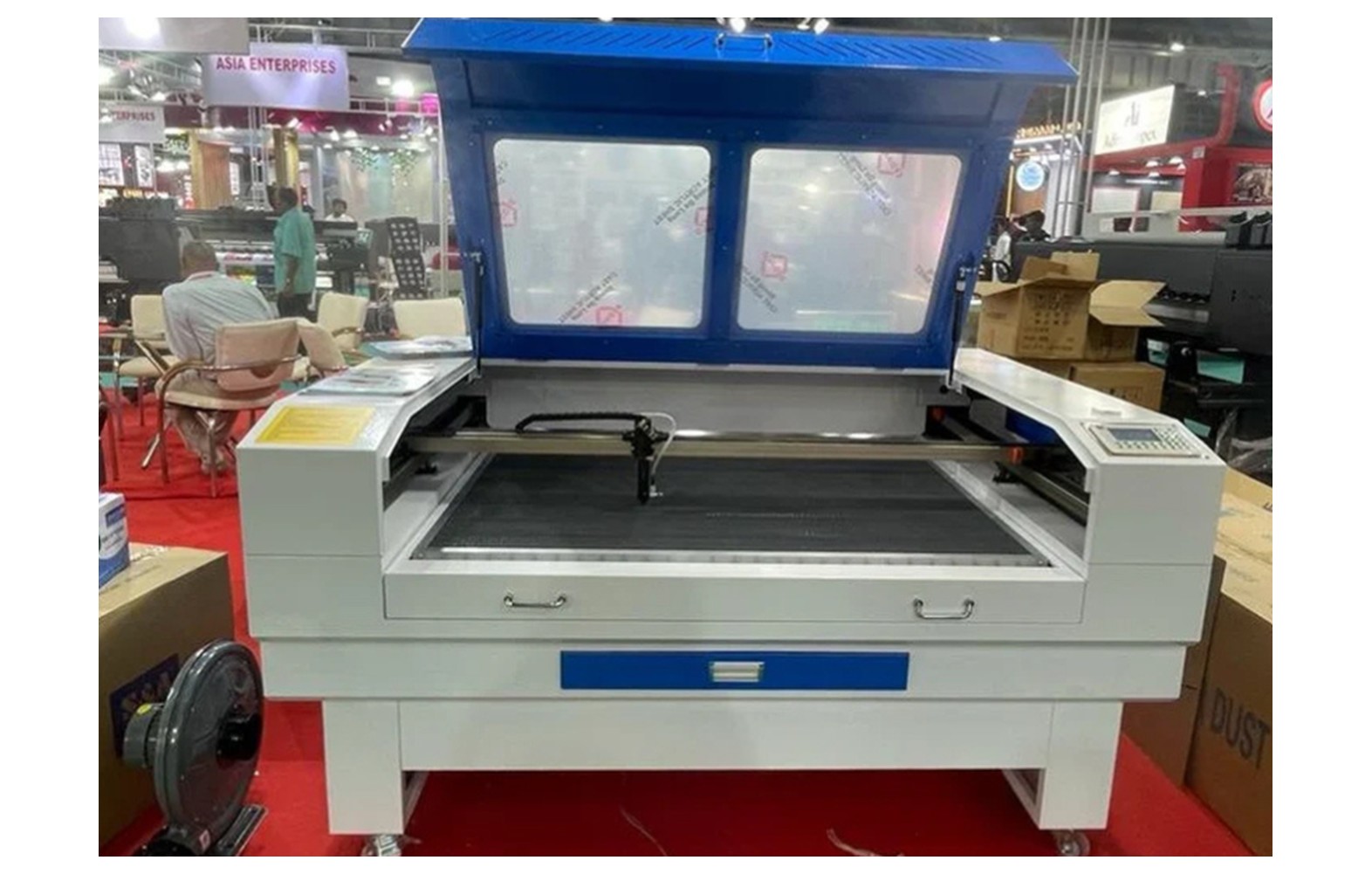
Overview: a workshop cutting MDF and plywood jali panels for interior designers, furniture units and builders. Investment Rs 6.5 lakh for two 100 W lasers and a small CNC router; monthly billing Rs 2.2-3.4 lakh at 22-30% net margin (est.). This is a genuinely thin-margin, machine-uptime business – the difference between 60% and 85% uptime is the difference between struggling and profitable.
Setup (est.)
| Item | Cost |
|---|---|
| 100-130 W laser with 1.3×0.9 m bed | Rs 2.2-3.2 lakh |
| Second laser (used, backup and overflow) | Rs 1.2-1.8 lakh |
| Small CNC router for thick panels | Rs 1.5-2.5 lakh |
| Extraction, chiller, compressor | Rs 60,000-1.2 lakh |
| Sheet stock and consumables | Rs 50,000-90,000 |
| Premises and working capital | Rs 80,000-1.4 lakh |
| Total | Rs 6.8-11 lakh |
Rate Card and Volume (est.)
| Work | Rate | Monthly volume |
|---|---|---|
| MDF jali, medium density | Rs 90-160 per sqft | 800-1,400 sqft |
| MDF jali, dense pattern | Rs 150-250 per sqft | 300-600 sqft |
| Ply cutting, simple shapes | Rs 40-80 per sqft | 400-900 sqft |
| Acrylic cutting | Rs 60-120 per sqft | 100-300 sqft |
| Installation or site fitting | quoted separately | occasional |
Monthly Economics (est.)
| Line | Amount |
|---|---|
| Billing | Rs 2.2-3.4 lakh |
| Sheet material | Rs 70,000-1.1 lakh |
| Laser tubes and optics (amortised) | Rs 15,000-30,000 |
| Two operators | Rs 40,000-60,000 |
| Rent, power, extraction | Rs 30,000-50,000 |
| Net profit | Rs 48,000-1,00,000 |
The Uptime Equation (est.)
| Uptime | Effective monthly capacity | Effect on profit |
|---|---|---|
| 85% | full volume achievable | top of the profit range |
| 70% | 15% capacity lost | Rs 25,000-40,000 lost monthly |
| 55% | 30% capacity lost | business barely covers fixed costs |
Which is why the workshop keeps a second laser: when one tube fails mid-order, work moves instead of waiting for a delivery (est.).
What the Owners Learnt (est.)
- Two lasers beat one bigger laser – redundancy is worth more than capacity in a deadline business.
- Dense patterns must be quoted from test cuts, not estimated from area.
- Sheet quality matters – warped or damp MDF causes double cutting and rejects.
- Designers are the channel – two interior designers supplied over half the volume.
- Installation is a separate profit centre – charging for fitting added Rs 20,000-45,000 monthly.
Mistakes (est.)
| Mistake | Cost |
|---|---|
| Quoting dense jali by area alone | two jobs ran at a loss |
| No dust extraction upgrade | lens cleaning every few hours, lost time |
| Taking a builder order on 45-day credit | Rs 90,000 locked for a quarter |
Machine and material context is in the CO2 laser price, CNC router price and stone engraving guide.
Our Verdict
Jali work is a volume-and-uptime business: quote dense patterns from test cuts, keep a backup machine, and treat designers as your salesforce. Margins are thinner than gifting work, so discipline on quoting and collection decides whether the workshop earns or merely runs.
FAQs – Case Study: Laser Jali Workshop
How profitable is a laser jali workshop? (est.)
Rs 2.2-3.4 lakh monthly billing at 22-30% net margin, giving Rs 48,000-1,00,000 in profit (est.). Margins are thinner than gift products because sheet material is a large share of cost and rates are competitive.
How much investment does a jali workshop need? (est.)
Rs 6.8-11 lakh for two 100-130 W lasers, a small CNC router, extraction and chiller, sheet stock, premises and working capital (est.). Starting with a single laser is possible but leaves the business exposed to tube failures.
Why keep a second laser instead of one bigger machine? (est.)
Redundancy matters more than capacity in deadline-driven jali work (est.). When a tube fails, a second machine keeps orders moving; waiting days for a replacement tube can cost more than the machine itself.
How should I price dense jali patterns? (est.)
From an actual test cut, not from area alone (est.). Dense floral jali can take three to four times the machine time of open geometric patterns at the same square footage, which is why area-only quoting produces loss-making jobs.
How do I get jali cutting orders?
Through interior designers, furniture manufacturers and builders (est.). In this workshop two designers supplied over half the volume, and installation service opened additional work. Site visits with sample panels convert far better than phone calls.
What are the biggest risks in jali work? (est.)
Machine downtime, builder payment cycles and sheet quality (est.). A 45-day credit order locked Rs 90,000 for a quarter, and warped or damp MDF caused double cutting and rejects. Both are manageable with policy, not luck.
More case studies: Rs 50 Lakh DTF Unit, Tier-3 Sublimation Gifting Unit, Flex Unit in a Wedding Town, UV Decor Studio in a Metro, Eco-Solvent Sticker Unit, Election Season Printing Unit, Small-Town Mixed Plant. Full index: all digital printing case studies.
Planning something similar? Share your city and budget on the contact page – we reply with a configuration and honest numbers.
