

Updated: October 2026
Acrylic is the single highest-margin media on a UV flatbed – a Rs 40 sheet becomes a Rs 400 photo panel in one print pass (est.), and no other rigid media sells as easily to both homes and businesses. This guide covers what acrylic products to print, the exact layer process, and the rates they carry in Indian markets. All figures are estimates (est.).
Acrylic Products You Can Print, and Their Rates (est.)
| Product | Acrylic Used | Typical Sell Rate (est.) |
|---|---|---|
| Photo acrylic (wedding, baby, couple) | Clear cast 3-8 mm | A4 Rs 250-450, A3 Rs 450-800 per piece |
| LED sign face / office reception board | Clear or opal 3-5 mm | Rs 200-350 per sqft printed |
| Nameplates and door plates | Clear / black / color 3-5 mm | Rs 300-600 per sqft |
| Trophies, awards, mementos | Clear / color 8-12 mm with cut shapes | Rs 150-800 per piece by size |
| Menu boards / price boards | White or clear 3 mm | Rs 150-300 per sqft |
| Keychains and small gifting | 3 mm offcuts in jigs | Rs 40-150 per piece |
How the Layer Process Works
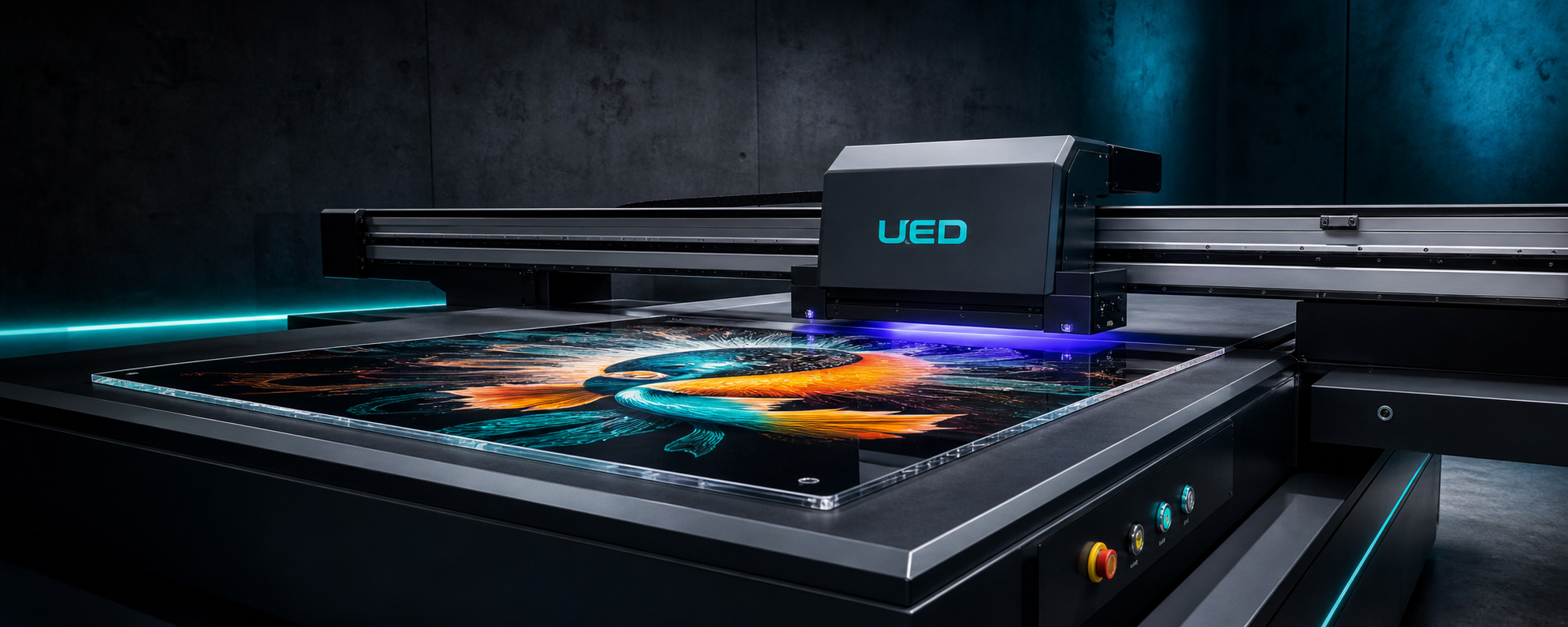
For products viewed from the front face, you print in reverse on the back face: mirror the artwork, print color first, then white behind it. The clear acrylic shows the image through the sheet, the white makes it opaque, and the ink sits protected behind the sheet where fingers and weather cannot touch it. For backlit sign faces, print color plus white on the front so the LED glow passes through correctly. Add a final varnish pass when the buyer wants that wet-gloss premium look.
Prep: The Two Wipes That Save Every Job
Peel both protective films fully – half-peeled film edges are where first-time printers lose heads. Then an antistatic wipe, because acrylic builds static that pulls dust onto the sheet mid-print and causes pinholes in solid color areas. IPA on a lint-free cloth is the industry standard, and it costs almost nothing.
Cast vs Extruded: Which Sheet to Buy
Cast acrylic cuts cleaner, prints slightly sharper and handles engraving, which is why trophy and premium photo work runs on cast at Rs 90-140 per sqft (est.). Extruded acrylic is cheaper at Rs 60-90 per sqft (est.), fine for flat sign faces and menu boards, but it bows more under lamp heat on big coverage prints. Buy cast for anything a customer holds in hand.
Cutting the Shapes: Pair With a Router
Printing is only half the product – trophies, keychains and shaped nameplates need cutting after printing. Shops pair the flatbed with a CNC router or laser cutter, which is why the trophy factories mix both machines on one floor. Real numbers for this model sit in the Rs 26 lakh UV trophy plant case study (Pune) and the Rs 42 lakh UV signage unit case study (Chennai).
Our Verdict
Keep 3 mm and 5 mm cast clear in permanent stock, quote photo acrylic by the piece and signage by the square foot, and white-ink discipline decides your reputation: one pinholed nameplate travels further than ten perfect ones. For printer models that handle acrylic daily, see our UV flatbed printer price guide and live UV flatbed printer listings.
FAQs – Acrylic UV Printing Guide: Process and Rates 2026
Which acrylic sheet is best for UV flatbed printing?
Clear cast acrylic in 3-8 mm gives the sharpest photo prints and cleanest cuts. Extruded acrylic is cheaper (Rs 60-90 per sqft est.) and works for flat sign faces, but bows more under heat on heavy coverage prints.
Why is white ink printed behind color on acrylic?
Products viewed from the front are printed in reverse on the back face: mirrored color first, white behind it. The clear sheet shows the image through, white makes colors opaque, and the ink stays protected behind the sheet.
What is the rate of photo acrylic printing in India?
A4 photo acrylic retails Rs 250-450 and A3 Rs 450-800 per piece (est.) including print, against a sheet-plus-ink cost of roughly one-third the price – which is why photo acrylic leads flatbed margins.
Does UV print on acrylic scratch off?
Properly printed reverse-face jobs are nearly impossible to scratch because the ink sits behind the sheet. Front-face prints survive indoor use well, and a varnish pass adds surface toughness for handled items.
What thickness of acrylic works on a flatbed printer?
3-12 mm covers all mainstream products: 3 mm for boards and keychains, 5 mm for nameplates, 8-12 mm for trophies. Beds typically accept up to 50-80 mm, so thickness is never the limit – flatness is.
More UV flatbed printing guides: UV Flatbed Printer Media List, Sunboard Printing Guide, Glass UV Printing Guide, Wood and MDF UV Printing Guide.
Share your target products and buyers on the contact page – we reply with an exact machine quote, freight and installation plan for your city, with on-site training across India.
