



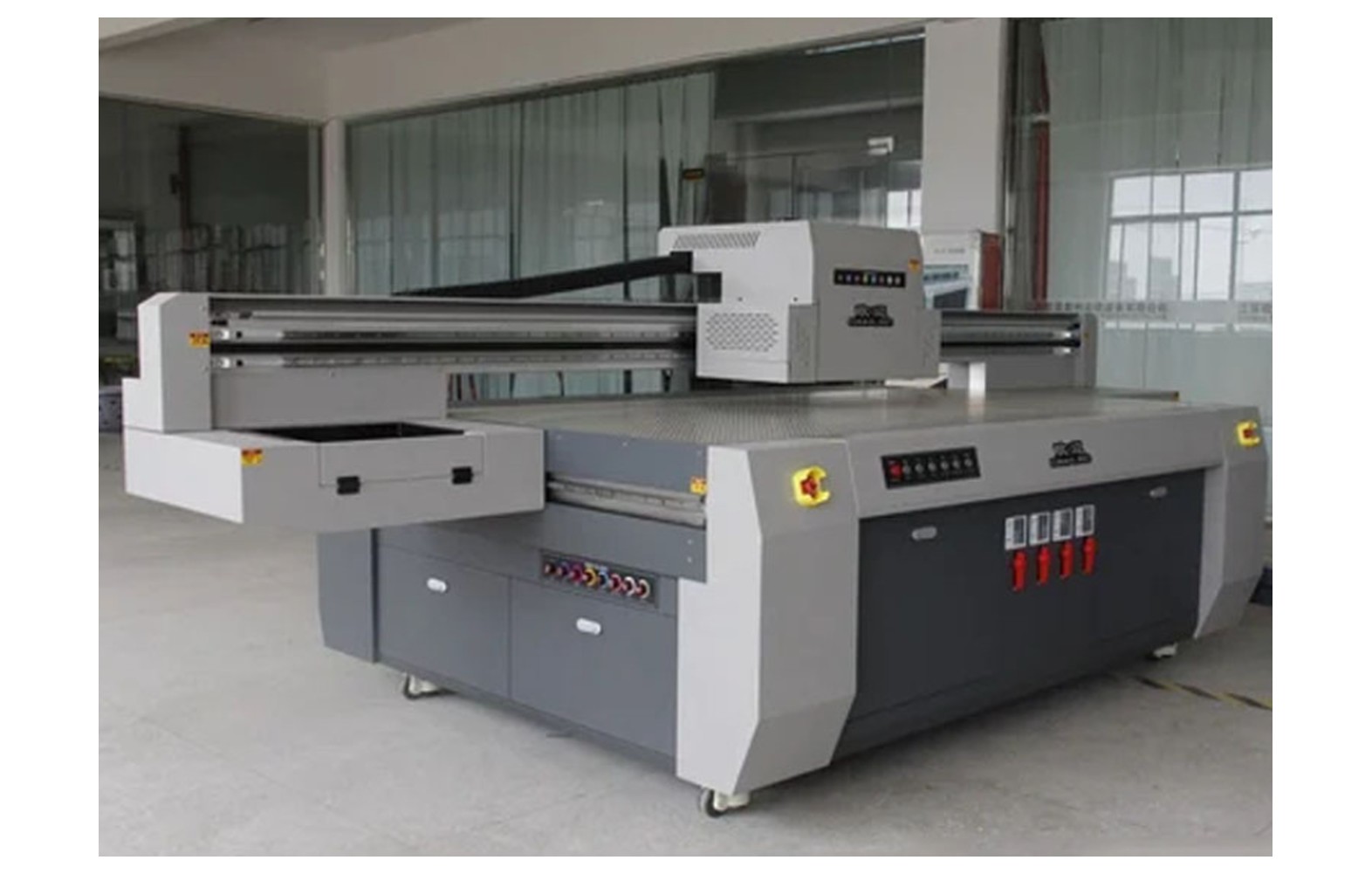
Direct answer: Repair or replace a UV flatbed component only after qualified diagnosis, review of the manufacturer’s supported options and a comparison of complete cost, downtime, warranty and safety. A nozzle defect, tacky print or weak hold-down does not identify a failed part by itself. Protect people from UV exposure and uncured ink, and use application-specific quality tests before releasing customer products.
Define the machine and decision
Record the printer model, serial, revision, installed heads, approved UV ink, curing module, vacuum table, controls and any authorised modifications. A used or upgraded flatbed may not match its original catalogue. Obtain the exact manual and current service history.
List the supported options: further diagnosis, authorised repair, verified replacement, a larger assembly replacement or temporary outsourcing. Not every component can or should be repaired. Ask the manufacturer or authorised service provider what is approved for the actual machine.
Define the business requirement: substrate, customer quality, cure or adhesion testing, deadline and backup capacity. A low component quote or a fast claimed repair is not enough to establish a safe and suitable result.
Safety before cost
UV radiation can injure eyes and skin. Never look at an operating source, expose a lamp outside its enclosure or bypass guards and interlocks. Lamp, electrical and guarded mechanical service requires qualified authorised personnel using the manufacturer’s isolation procedure.
Uncured UV ink and residues can pose health hazards, including skin sensitisation for some formulations. Obtain the actual safety data sheets and have qualified professionals assess ventilation, protection, fire, spills and waste under local requirements. Avoid direct skin contact.
If there is a leak, exposed UV source, smoke, burning smell, unsafe heat or carriage movement, stop under the site emergency procedure. A customer deadline is not a reason to operate a hazardous machine or reproduce the fault for a video.
Record evidence before ordering parts
Capture the exact error, operating stage, file, substrate, fixture, ink, layer order, print mode and last accepted output. Retain a safely handled sample and mark its orientation. Note recent service or authorised changes without assuming they caused the issue.
Ask the technician which approved checks distinguish ink delivery, head, lamp, vacuum, motion, electronics and artwork as possible causes. A missing nozzle or tacky surface is an observation, not a complete diagnosis.
For an intermittent fault, agree a safe representative test and record its limits. Do not swap parts between machines, repeatedly reset protection or perform an improvised flush to force a result.
Confirm whether repair is supported
Ask the manufacturer or authorised provider whether the exact component can be repaired, refurbished or must be replaced. Procedures differ by printer and component. Some work may require specialised equipment, related parts or model-specific configuration.
Request a written diagnosis, repair scope, labour, expected turnaround, test and warranty. Clarify what happens if another fault is found or the original symptom remains. A verbal promise that a component will work like new is not a complete service specification.
Do not authorise unapproved electrical repair, UV-module modification, ink conversion or interlock bypass from a generic guide. The exact manual and qualified service take priority.
Evaluate replacement options
Confirm the manufacturer part number, printer serial and revision, head, approved ink, curing and control configuration. Ask whether an offered number is an approved supersession and which related cables, seals or controls are needed.
Record whether the part is genuine, compatible, refurbished or used. A genuine item for another configuration can still be wrong. For an alternative, request written specifications and the manufacturer’s warranty and support position.
Similar connectors, dimensions or a familiar head family do not establish fluid, electrical, optical or mechanical compatibility. A new part installed into an unresolved system fault may not fix the symptom.
Printhead and ink-path decisions
A missing nozzle, weak white or banding can involve the head, ink delivery, maintenance station, artwork or settings. A manufacturer-approved nozzle pattern is evidence at a moment, not a complete diagnosis or guaranteed head life.
Use only the approved UV ink and maintenance products. Do not mix formulations or improvise a flush. Uncured ink and residues require the actual safety data sheets and qualified site controls. A used or converted machine may need a configuration assessment before parts are ordered.
Ask whether related dampers, lines, filters or seals need assessment and what the service quote includes. The technician should explain the evidence rather than replacing parts at random.
Lamp and curing decisions
A tacky surface, odour or adhesion issue does not prove a UV module failed. Ink, substrate, layer order, print mode, controls and curing can all affect the result. Qualified service must use the manufacturer’s guarded diagnostic method.
Never look at an operating source or defeat an interlock. A similar-looking module or nominal label does not establish optical and electrical compatibility. Confirm the exact manufacturer part and approved ink configuration.
A dry-feeling print or quick rub does not establish complete cure or product suitability. The responsible product owner and qualified quality team must determine the required tests for the actual application and market.
Vacuum, motion and electronics
Weak hold-down may involve substrate, fixture, zones, seals, valves, pump or controls. A warped or moving item can create a head-strike risk. Stop safely and use the manufacturer’s approved setup and qualified diagnosis.
Carriage noise or position errors can involve belts, rails, bearings, encoders, sensors, cables or electronics. Do not use a generic tension or lubricant. Guarded mechanical and electrical service belongs to authorised personnel.
Boards, motors, power supplies and interlocks require exact machine and control compatibility. Never bypass a protective device, swap boards at random or copy unverified firmware to meet a deadline.
Compare complete costs
Request itemised quotes for diagnosis, part or repair, related hardware, freight, tax, authorised labour, configuration, safety checks, application testing and downtime. Make the scopes equivalent and mark unknown costs rather than assuming zero.
For a hypothetical example, an approved repair is quoted at Rs 8,000 including labour and a verified replacement at Rs 12,000 including labour. These invented figures are not market prices. If timing or backup production differs, add the actual relevant costs and retain uncertainty.
Separate a documented invoice from a hypothetical lost opportunity. Do not double-count labour or downtime. A qualified accountant can help with cash-flow, financing and accounting treatment for the business.
Schedule and backup work
Ask for the estimated time for diagnosis, parts, service, safety checks and acceptance. A service response time is not necessarily a guaranteed repair time. Clarify how extra work is authorised if the first diagnosis changes.
A pre-qualified backup printer or subcontractor may support urgent work, but the actual substrate, ink, cure and finishing must meet the customer’s requirements. A different lamp or ink may need a separate application assessment.
Do not expose an operating UV source, disable a guard or operate with an ink leak to meet a deadline. Communicate a revised delivery and keep suspect output separate under the site procedure.
Warranty and return terms
Ask who warrants the repair or part, when coverage starts, exclusions, authorised installation requirements and claim evidence. Confirm whether related components, freight or labour are included.
A component warranty does not automatically cover connected equipment, downtime or customer reprints. Retain invoices, part numbers, service reports and acceptance samples. For contaminated returns, follow the supplier’s and site’s safe handling instructions.
For a compatible or refurbished part, check the printer manufacturer’s support position. A lower initial price does not establish suitability, remaining life or safe curing.
Acceptance after authorised service
- Record the baseline: printer, symptom, substrate, ink, settings and reference output.
- Agree the scope: supported repair or exact replacement, related parts and cost.
- Perform authorised work: follow the manufacturer’s isolation, UV and ink safety procedures.
- Restore protection: confirm guards and interlocks under the service process.
- Run approved checks: qualified personnel test the relevant equipment functions.
- Print representative work: use the intended substrate, artwork, ink and mode.
- Assess the application: the responsible qualified team selects cure, adhesion and product tests.
- Document release: retain the report, sample and limitations.
A successful short print is evidence under those conditions, not a guarantee of future part life or complete cure. Technical service acceptance and customer or product-owner approval are separate.
Decision checklist
- What is confirmed and what remains uncertain?
- Which options does the manufacturer support for this configuration?
- Are complete cost, lead time and warranty scopes comparable?
- Who performs guarded, electrical and ink-system work?
- What UV and chemical controls must remain in place?
- Which cure, adhesion and product tests are required?
- What happens to customer work during downtime?
If a critical requirement cannot be verified, pause and obtain a qualified assessment. Do not order from a photograph or treat a generic part listing as manufacturer approval.
Common mistakes
Replacing from a symptom alone: diagnose the complete system.
Looking at a UV lamp: use guarded authorised procedures.
Mixing unapproved ink: follow the manufacturer and safety data sheets.
Assuming a dry surface proves cure: use application-specific qualified tests.
Ignoring an unsecured substrate: assess the approved fixture and vacuum.
Comparing only part prices: include labour, safety, testing and downtime.
Related reading
For spare identification see UV flatbed genuine and compatible parts. For curing see UV curing problem checks and cure and adhesion testing.
Conclusion
Choose repair, replacement or further diagnosis using verified evidence, supported options and a like-for-like comparison of cost, timing, warranty and risk. Use authorised service and application-specific acceptance before customer production resumes.
Separate a component failure from the underlying cause
Ask the technician whether the proposed repair addresses the reported symptom and any underlying system condition. A board or head can be affected by a different fault, while a poor print may originate in the substrate or artwork. The provider should document what has been checked and what remains uncertain.
Where the diagnosis cannot be completed safely at once, agree a staged scope with an approval limit. The first stage can establish the supported tests and written findings; the next can cover an approved repair after the evidence is reviewed. This avoids ordering parts solely from an initial guess.
If the original symptom remains after service, preserve the before-and-after samples and report. Request the next authorised diagnostic step rather than swapping another component at random. A customer deadline does not justify running with a leak, exposed UV source or disabled guard.
Evaluate the real flatbed application
Record the customer’s substrate, surface preparation, fixture or vacuum, artwork, ink, white or varnish layers and intended use. A flat panel used in service may not represent a textured or coated production item. The responsible team should define a representative test without exposing staff to unsafe UV or uncured ink.
Inspect appearance and dimensions against the accepted proof, but keep cure and adhesion decisions separate. A surface that feels dry or passes an informal rub can still require further assessment. The product owner and qualified advisers determine any food-contact, medical, skin-contact or other regulatory requirements.
If a repair changes the lamp, ink, fixture or process, ask whether prior application evidence remains valid. Keep the method, conditions and limitations with the job record. Do not promise that a replaced part guarantees universal durability or compliance.
Compare an authorised backup
A backup flatbed or subcontractor can protect customer deadlines while the original printer is unavailable. Confirm its actual substrate handling, ink, white layers, curing and finishing against the approved product specification. A different machine or formulation may require separate qualification by the responsible team.
Use the written subcontractor quote and delivery terms in the business comparison. Separate direct invoices from a hypothetical lost opportunity and identify costs already included in the repair quote. This prevents double-counting and keeps uncertain assumptions visible.
Do not run the original machine with an exposed UV source, disabled interlock, ink leak or unsecured item to avoid outsourcing. Communicate the revised plan to the customer and obtain approval of any variation.
Review supplier and warranty scope
Ask each provider to identify the exact component, machine revision, approved ink or curing configuration, related parts, authorised labour and acceptance test. A part-only offer should not be compared directly with a complete service scope.
Clarify warranty start, exclusions, return freight and what happens if the original symptom remains. A warranty on a lamp or head does not automatically cover connected equipment, customer work or downtime. Keep the provider’s written terms and diagnostic report.
If an alternative or refurbished part is proposed, obtain the machine manufacturer’s support position and precise compatibility evidence. Similar appearance or a lower price does not establish safe electrical, fluid or optical performance.
After the decision
Record the authorised work, installed part numbers, settings, safety checks and representative output. Tell each shift which operator checks are permitted and what requires a safe stop. A temporary diagnostic workaround should not become a production routine.
If the symptom returns, provide the new sample and original service report to the authorised technician. A repeated defect can have a different cause. Avoid repeated resets, unapproved ink changes or part swaps without a documented plan.
Review customer items made before and after service against the approved specification. Equipment service acceptance, customer appearance approval and product-specific compliance are separate decisions and should have separate responsible owners.
Agree the next step if the first repair fails
Before approving work, ask whether further diagnosis is included if the original symptom remains. Define who can approve additional parts, labour and cost, and how customer deadlines will be communicated. Keep the original print and service report as references.
If there is an unresolved UV exposure, leak, damaged guard or unsafe motion, keep the printer stopped under the site procedure. The authorised service and safety teams determine which test is safe. Do not repeatedly reset protection to demonstrate that the machine starts.
A pre-qualified backup may support urgent orders, but its substrate, ink, cure and finishing must be assessed for the actual product. A different process may require separate application testing and customer approval.
After resolution, record the final scope and any remaining limitation. Review the supplier and inventory records for this exact machine rather than assuming the same part or repair decision applies to another flatbed.
Keep the approved records accessible to authorised staff.
Related UV flatbed guides
For the next step, see compare UV parts suppliers and service. Use the manufacturer instructions and the responsible qualified team for the actual printer and application.
Frequently Asked Questions
Does a missing nozzle prove a UV head needs replacement?
No. Ink delivery, maintenance, electronics and settings can also contribute. Obtain a model-specific qualified diagnosis.
Is repair always cheaper than replacement?
No. Compare the complete written scope, related parts, authorised labour, testing, downtime and warranty.
Does a tacky print prove the lamp failed?
No. Ink, substrate, settings, controls and other factors may contribute. Use qualified diagnosis and testing.
Can staff look at an operating UV lamp?
No. Never look at an operating source or defeat guards; use manufacturer-approved procedures and qualified service.
Does a dry-feeling print prove complete cure?
No. Surface feel alone does not establish complete cure or suitability for the intended product.
Can an interlock be bypassed temporarily?
No. Keep protective devices in place and use authorised service.
How is a repair accepted?
Restore safety systems, run approved checks and assess representative output and application-specific tests, retaining the report.
