


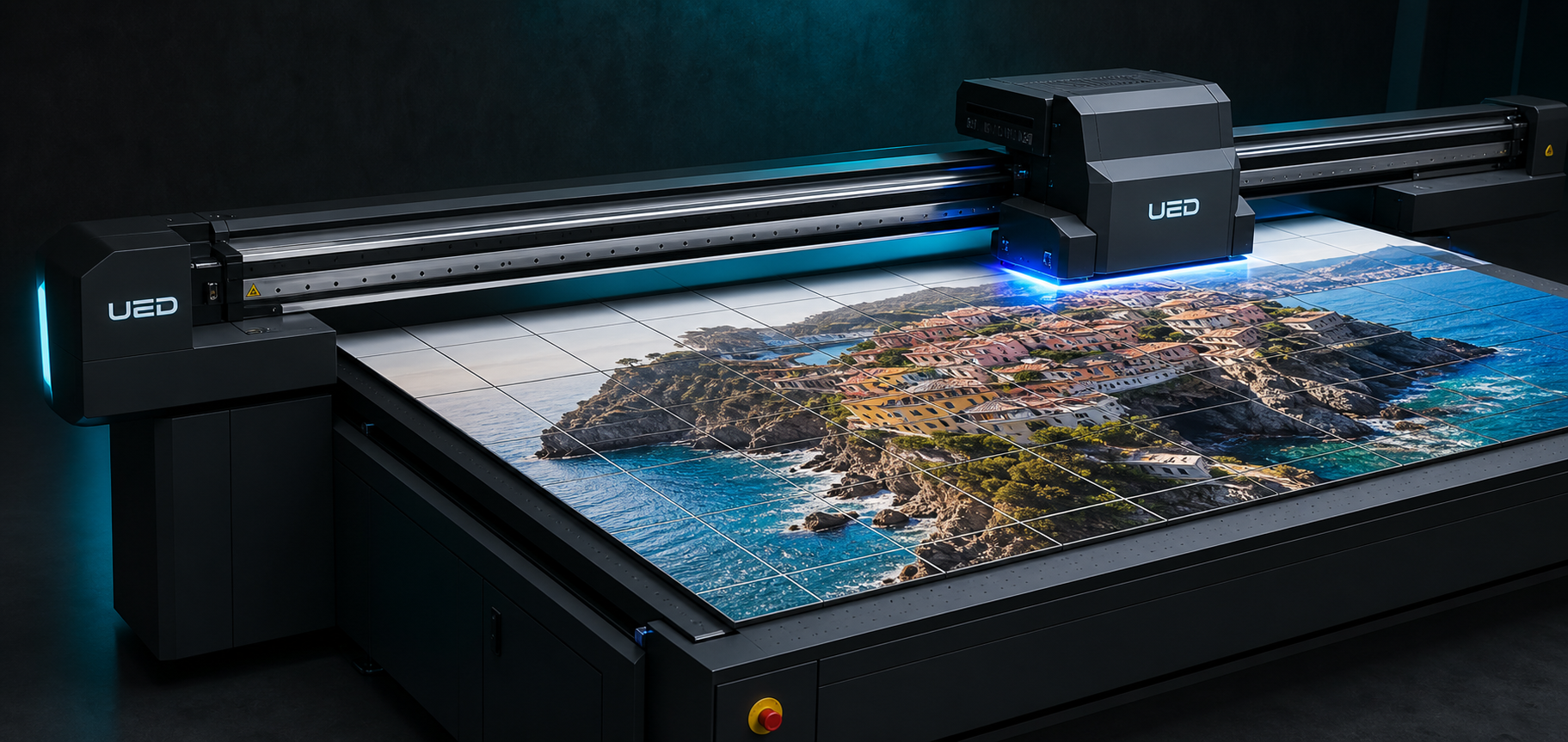
Printing directly on ceramic and porcelain tile with a UV flatbed is one of the most striking capabilities in modern digital printing: a plain tile becomes a photographic mural, a branded feature, a custom kitchen splashback or a one-off gift in minutes, with no kiln and no minimum order. It is not, however, a substrate to treat casually — a glazed tile is essentially a sheet of glass, and everything that is true about adhesion on glass is true on tile. This guide covers tile types, preparation, durability, applications and the business opportunity.
Tile is a family of surfaces, not one surface
Ceramic wall tiles carry a glazed, glassy face; porcelain and vitrified tiles are denser with a harder, often polished or glazed surface; some tiles are matt or unglazed and more porous. The glazed and polished faces are smooth, inert and low-key for adhesion — exactly like glass — so they need the same disciplined prep and usually an adhesion promoter. Matt and unglazed tiles give a little more mechanical tooth but vary widely. As with glass, treat the glaze as the substrate and test each tile body and finish before production.
Preparation: clean, prime and handle like glass
- Wipe the glaze with isopropyl alcohol to remove factory film, dust and handling grease.
- Apply a compatible glass/tile adhesion promoter and let it flash as directed.
- Handle by the edges after priming; skin oils re-contaminate the face.
- Lay tiles flat on the vacuum bed; use spacers or a jig for multi-tile murals to keep gaps consistent.
- Print within the promoter’s open window and cure fully before any grout or sealant contact.
Where UV-printed tile works — and where it does not
UV-printed tile is superb for decorative, low-abuse applications: feature walls, kitchen splashbacks (behind the hob, protected), bathroom accent walls above splash zones, table-top décor tiles, coasters, house-number tiles, branded wall features and murals. It is not the right process for floor tiles in traffic, shower floors, or surfaces that will be scrubbed with abrasives, because the cured ink film sits on the glaze and will wear under constant abrasion. For floors and heavy-wear, the traditional route is kiln-fired printed tile; UV’s role is the decorative, personalised, short-run market that kiln printing cannot serve. Positioning it correctly is the key to satisfied customers.
White ink, murals and the décor market
Most tiles are light, so colour prints directly and vividly. On dark or coloured tiles, a white under-base restores opacity. The showpiece application is the multi-tile mural: a photograph or design spanned across a grid of tiles, printed with registration so the image flows across the grout lines. UV flatbeds handle this with a jig or vacuum-pin registration, and the result — a custom mural produced in an afternoon with no kiln — is exactly the product interior designers and homeowners pay premium prices for. Add a protective matte or gloss varnish for kitchen and bath zones to improve cleanability.
Durability and care advice
On a vertical decorative surface, a properly primed and cured UV print on tile lasts for years and cleans with a soft damp cloth and mild cleaner. Advise against abrasive pads and harsh solvents. In kitchens, printing on the tile then sealing grout normally is fine because the print sits behind a protected plane of use; for areas near direct water, a clear protective varnish adds reassurance. Giving the customer a one-line care card with every job prevents most complaints and frames the product as premium.
Machine and ink considerations
Tile work is rigid and ranges from small gift tiles to large-format mural grids, so a UV flatbed printer with fine registration, a vacuum bed and a white channel is ideal. Because the glaze behaves like glass, choose an ink set with proven glass/tile adhesion and keep adhesion promoter in the standard consumables list. A varnish channel is valuable for the protective top-coat on kitchen and bath pieces. For gift-scale tiles, a smaller flatbed or an DTF UV printer can serve the object-printing niche efficiently.
Applications and margins
The margin story is strong because tiles are cheap and the finished piece reads as bespoke: coasters and trivets, house-number and name plates, bathroom and kitchen accent tiles, feature-wall murals, branded tiles for cafés and hotels, and photographic art tiles. Multi-tile murals are the high-ticket item; single personalised tiles are the volume and gift line. Because UV needs no kiln and no minimum, one-off murals become economical — a market kiln-fired tile never addressed.
Common mistakes to avoid
- Treating glazed tile like a porous ceramic and skipping primer.
- Selling UV-printed tile for floors or shower pans and absorbing wear complaints.
- Letting grout or silicone contact an uncured print.
- Mis-registering multi-tile murals by not using a jig.
- Using gloss varnish where a matte, non-slip-look finish is wanted.
Frequently asked questions
Is UV-printed tile as durable as kiln-fired printed tile?
No — kiln-fired print is fused into the glaze and survives abrasion and decades of wear. UV print is a durable surface coating for decorative, low-abuse use. They serve different markets.
Can I print on existing installed tiles?
Not practically on site. The workflow is to print tiles in the shop and install them, or print loose tiles for the customer to fix. Installed-wall printing is not a reliable UV application.
Do I print before or after grouting?
Print first, install, then grout, keeping grout off the cured face where possible and cleaning any haze promptly with a soft cloth.
A deeper look: the custom mural and interior-design channel
The highest-value tile work comes through interior designers, kitchen studios and boutique hospitality projects that want a one-of-a-kind feature wall. Build a sample wall of murals — a photograph spanned on nine tiles, a geometric pattern, a branded café feature — and a swatch book of finishes (matte, gloss, textured varnish). Offer designers a simple service: send artwork, receive a proof and a per-tile price, with registration handled by you. Once specified into a project, tile murals recur across that designer’s portfolio. The channel is slow to open but sticky, and the margins reflect the bespoke nature of the work.
A deeper look: gift and counter tile production
Single tiles are a perfect counter and online product: photo coasters, house-name plates, festive and wedding tiles, and corporate logo tiles. The economics favour batching — gang many small tiles on one bed run with a jig, print in a single pass, then finish edges and add backing pads. A small flatbed or DTF UV machine keeps the per-piece cost tiny while the retail price stays healthy. Pair the tile line with your other personalised gifts (wood, acrylic, metal) into a single catalogue and you become the local one-stop for custom gifts, smoothing seasonal demand across product families.
UV versus sublimation-transfer tile: choosing the right route
There are two digital tile routes. Sublimation transfer prints onto a coated tile via a paper transfer and heat press, which is excellent for small photo-gift tiles but limited to specially coated, usually light-coloured tiles and to press-size pieces. UV prints direct onto almost any glazed tile, in any size the flatbed accepts, on multiple tiles at once, with white ink and varnish. For murals, large formats and non-coated tiles, UV is the only practical digital method; for a single small gift tile, a sublimation press is cheaper per piece. Many gift shops run both, using sublimation for tiny photo tiles and UV for murals and larger decorative work. Understanding the boundary lets you specify the right tool rather than force-fitting one.
Outdoor tile, steps and where to say no
UV-printed tile outdoors is a caution zone: sun is fine for UV ink, but freeze-thaw, standing water on horizontal faces and foot abrasion are not. Vertical outdoor murals under a canopy can work with primer and varnish, but floor tiles, steps and uncovered horizontal surfaces should be declined for UV and referred to kiln-fired or mosaic solutions. Saying no clearly to the wrong application protects your reputation and keeps the tile line free of failures. It also positions you as the expert who specifies correctly, which earns the decorative work you do accept.
Grout, sealant and installation interaction
When printed tiles are installed, the installer grouts the joints and may apply sealant. Keep both away from the cured print face where possible, and if grout haze settles, remove it promptly with a soft damp cloth before it cures on the image. Silicone in wet zones should bead only along edges, not across printed areas. Provide installers a short note with every order: print face first, grout carefully, clean haze while wet, avoid abrasive pads. Most tile complaints trace to installation handling rather than the print, and a written note transfers that responsibility clearly and courteously.
Colour management on a glossy glaze
Tile glaze is glossy and can shift perceived colour versus paper proofs. Build an ICC profile from your own tile stock, proof on the same tile the customer will receive, and manage expectations about gloss making colours appear slightly more saturated. For murals spanning tiles from the same box, print the whole batch together so colour stays consistent across the grid; printing tiles in separate sessions risks a visible mismatch across grout lines. Consistency across a mural is often more important than absolute accuracy, and batching is the simplest way to guarantee it.
Scaling tile production with batching and jigs
Tile murals and gift runs reward batching. Cut a laser-cut jig that seats a grid of tiles with consistent gaps so a nine-tile mural registers perfectly in one pass, and gang several small gift tiles around the edges of the same bed run to fill the machine. Print the whole mural in one session, then lift tiles in order and stack them interleaved for finishing. This approach turns a potentially fiddly multi-tile job into a single efficient machine run, and it is what makes kiln-free murals economically viable where traditional methods could not compete.
Sample walls and the sales of tile décor
Tile sells on sight, so a physical sample wall is the best marketing you can build: a nine-tile photographic mural, a geometric feature in matte varnish, a kitchen splashback corner, and a row of personalised gift tiles with price cards. Photograph each beautifully for the website and social channels. Offer interior designers a simple spec sheet — tile body, finish, varnish, per-tile pricing, lead time — so they can specify you into projects with confidence. The sample wall turns an abstract capability into a tangible product, and tile décor is visual enough that it markets itself once installed.
Troubleshooting tile print defects
- Pinholes and dust specks — glazed tile holds static; wipe and use an anti-static pass before large-area prints.
- Colour banding on gradients — profile on the tile stock, raise print quality and ensure nozzle health before long mural runs.
- Poor adhesion — usually insufficient primer flash time, contamination, or a glossy glaze needing more prep; retest with tape.
- Mismatch across mural tiles — print the whole mural in one session from one tile box; never split a mural across days.
- Grout haze on the image — installer issue; provide the care note and clean promptly with a soft damp cloth.
Tile proves how far digital printing has come: a substrate once reserved for industrial kilns now accepts a bespoke mural in an afternoon, with no minimum order and no waiting for a firing schedule. That is a genuine new market, not a substitute for the old one, and the shops that specify it honestly — decorative and vertical rather than floors and heavy wear — build a premium line that interior designers keep coming back to.
Conclusion
UV-printed tile is a decorative powerhouse when positioned honestly: primer and clean handling for adhesion, varnish for wet-zone reassurance, and a clear line between decorative use and heavy wear. Master multi-tile murals and the gift line, and tile becomes a premium, kiln-free product family. Review our digital UV printer range or contact us to match a flatbed and ink system to tile work.
