

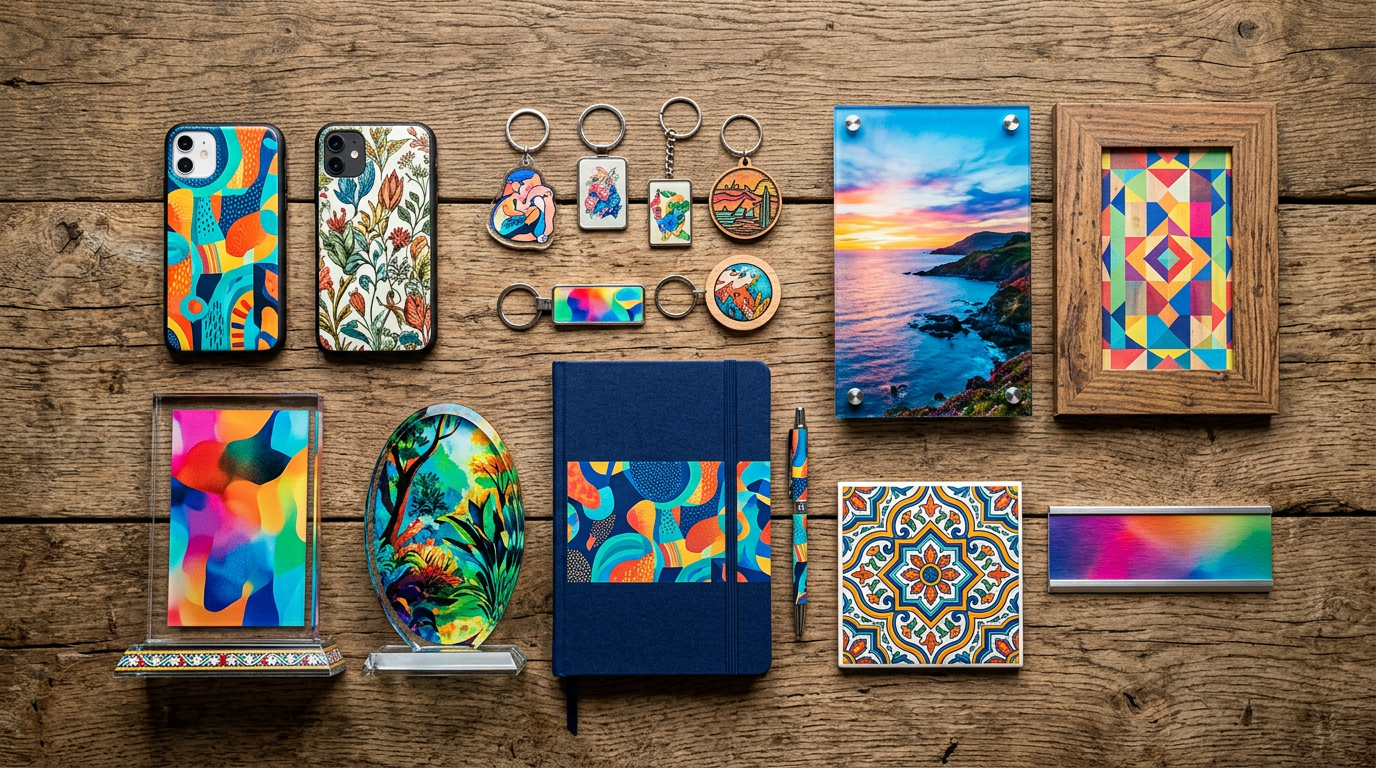
Own a UV printer and you legally own a product factory: the same machine that prints a ₹350 phone case at breakfast prints a ₹2,000 acrylic award by lunch and a ₹6,000 glass panel by evening. But “can print everything” is also the trap — scattered shops quote everything, master nothing, and net less than focused ones. The money in UV follows product focus: pick a lane of 3–5 hero products, price them right, and become locally famous for them.
This guide is the menu to choose from: the 15 most reliably profitable UV printing products in India today — each with real input costs, selling prices, margin %, demand pattern, and the buyer who actually purchases it. At the end: the tier ranking and launch sequence that turns a list into a business.
How to Read the Numbers
Costs = substrate/blanks + ink (₹2,800–4,300/litre band) + finishing. Prices = prevailing Indian 2026 retail/job-work market rates; your city’s tier shifts these ±20%, your brand shifts them +50%. Margins shown are gross; net margins after overheads in organized shops land at 30–45%.
The 15 Products
1. Custom Phone Cases
Cost ₹50–110 | Sells ₹250–700 | Margin 60–75%. The gateway drug of UV printing. Daily demand, zero customer education, self-marketing production process. Add embossed varnish “premium texture” variants at ₹450–700 — pure margin upgrade costing you only a second print pass. Buyer: everyone aged 15–45; corporate bulk for branding.
2. Acrylic Trophies & Awards
Cost ₹180–450 | Sells ₹700–2,500 | Margin 65–80%. Schools, corporates, event companies buy in dozens, before annual days and award seasons, with lead-time loyalty. Full-colour + embossed trophy faces look double their price. Retain 2–3 repeat institutional accounts and this product alone can carry a shop.
3. Acrylic Nameplates (Door, Desk, Wall)
Cost ₹120–350 | Sells ₹600–2,000 | Margin 65–80%. New homes, clinics, advocates, CA offices, flats — endless structural demand. Designer finishes (mirror-gold acrylic, glass-look, backlit-ready) segment pricing beautifully. Buyer: households + professionals; heavy referral chain.
4. Sunboard Signage & Retail Boards
Cost ₹25–45/sq ft | Sells ₹90–180/sq ft | Margin 60–72%. Direct-printed sunboard replaced the vinyl-paste era for premium retail. Shop openings, cafes, clinics, franchise fit-outs — orders arrive in 20–100 sq ft tickets. Partner with 2–3 local sign installers/interior contractors and volume flows weekly.
5. Glass & Mirror Printing
Cost ₹200–600 | Sells ₹1,200–6,000 | Margin 65–78%. Wall art, mandir back-panels, partition graphics, bar mirrors. Premium feel commands premium rates; white-ink layering mastery makes photos float on glass — content that sells itself on Instagram. Prime-time for interior designer tie-ups.
6. Wooden Panels, Frames & Furniture Prints
Cost ₹150–500 | Sells ₹800–3,500 | Margin 65–75%. Rustic photo-on-wood gifts, printed furniture shutters, cafe menu boards, wedding photo panels. Wood grain showing through print = premium aesthetic no paper product touches.
7. Ceramic & Tile Printing
Cost ₹60–140/tile | Sells ₹300–900/tile | Margin 65–78%. Kitchen backsplashes with deities/patterns, temple donor tiles, cafe wall installations, photo-tile memorial frames. In devotional and kitchen niches, this one product keeps some shops fed all year.
8. Metal Plates & Industrial Labels
Cost ₹40–150 | Sells ₹250–1,200 | Margin 65–80%. Machine plates, electrical panel labels, QR-coded asset tags, name boards. Unsexy, high-margin, insanely repeatable B2B work — factories reorder identical plates forever. The “boring gold” of UV printing.
9. Corporate Gift Kits & Merchandise
Cost ₹350–900/set | Sells ₹1,200–3,500 | Margin 60–72%. Diaries + pens + USB + bottles (UV DTF for the curved ones) in branded boxes. Diwali and onboarding cycles bring 100–2,000-unit orders. One HR-admin contact at a mid-size company = an annual annuity.
10. UV DTF Bottle & Helmet Branding
Cost ₹40–120 | Sells ₹250–800 | Margin 65–80%. Gym bottles, cafe glassware, rider helmets, workshop toolboxes — every curved surface flatbeds can’t print. One machine (or your flatbed partner’s) opens a product lane with zero direct local competition in most cities.
11. Photo Frames & LED-Backlit Photo Panels
Cost ₹120–350 | Sells ₹700–2,500 | Margin 65–75%. Wedding, newborn, memorial, house-warming gifting. LED-backlit acrylic photo panels retail ₹1,500–4,000 at ~₹300–500 cost — possibly the highest perceived-value-per-rupee product on this list. Partner with local photographers for referral flow.
12. Keychains, Fridge Magnets & Pocket Tokens
Cost ₹8–30 | Sells ₹80–250 | Margin 70–85%. Tiny tickets, fat percentages, festival/holiday impulse buys and bulk college-fest/event orders by the hundreds. The classic “payment while waiting” counter product.
13. Pens, Diaries & Deskware Branding
Cost ₹15–60/pc | Sells ₹80–300 | Margin 60–75%. The B2B volume lane: real-estate launches, car dealerships, clinics, coaching institutes. Margin per piece modest; orders of 200–1,000 pieces arrive on email. Win one dealer/distributor account and repackaging work is perpetual.
14. Wall Decor Panels & Modular Art
Cost ₹250–700 | Sells ₹1,500–6,000 | Margin 65–75%. 5-piece canvas-look acrylic sets, mandala/spiritual panels, kids’ room sets. Instagram/Pinterest-led demand; interior designers resell your work at 2× happily. Marketplace-ready (Amazon/Flipkart home decor) once packaging is solved.
15. Lighters, Card Holders & Niche Metal Goods
Cost ₹30–90 | Sells ₹250–700 | Margin 65–78%. Gifting niches (engraved-look lighters, visiting-card holders, hip flasks via UV DTF) — small surface, high sentiment pricing. The “add-on product” that quietly lifts every order’s ticket size.
The Tier Ranking: Where to Point Your Energy
| Tier | Products | Why |
|---|---|---|
| S (anchor revenue) | Acrylic trophies, nameplates, sunboard signage, metal plates | B2B repeat orders, structural demand, premium pricing power |
| A (daily cash flow) | Phone cases, photo frames/LED panels, gift kits, UV DTF branding | High velocity, emotional purchases, Instagram-viral |
| B (margin candy) | Keychains/magnets, niche metal goods, tiles, glass art | High %, add-on or niche-specialist roles |
The Launch Sequence That Works
- Month 1: pick ONE S-tier + ONE A-tier lane (e.g., nameplates + phone cases). Build 20-sample portfolio; publish rate card.
- Month 2–3: add complementary add-ons (keychains with cases; desk plates with nameplates). Visit 15 B2B prospects with physical samples.
- Month 4–6: double down on whichever lane produced repeat orders — that lane is your local market answering. Cut what didn’t.
- Quarter 3 onward: add the third lane OR deepen B2B contracts. Products beyond 5–6 active SKUs offer nothing but management confusion at small scale.
Packaging & Presentation: The Multiplier Most UV Shops Ignore
A printed acrylic plaque wrapped in newspaper is a ₹700 product. The same plaque in a matte rigid box with a care card is a ₹1,200 product — and I mean that literally, not poetically. Presentation rules that raise your price ceiling across every product in this guide:
- House packaging standards: kraft-rigid boxes with your sticker (your own UV DTF machine prints them — eat your own cooking), tissue, care card, thank-you + discount-for-next-order card. Total cost ₹15–45/order; perceived-value jump 30–80%.
- The care card as silent salesman: “hand wash gently / keep away from solvents” — simultaneously protects the product AND signals professional manufacture. Customers keep these cards; cards carry your number.
- Corporate packaging tier: for B2B gift kits, presentation IS the product — branded sleeve, insert tray, printed message cards. Quote packaging as a visible line item; corporate buyers approve it without blinking because their own recipient-judgment rides on it.
- Documentation photos before dispatch: every premium order photographed in packaging before sealing — dispute insurance and content marketing simultaneously.
Marketplaces vs Own Channels: Where to Sell What
| Channel | Right Products | Margin Reality | Role in Portfolio |
|---|---|---|---|
| Walk-in + WhatsApp | High-touch: awards, nameplates, signage, premium gifts | Fullest margin | The profit core — protect it |
| Phone cases, decor panels, LED frames, wedding pieces | Strong margin + content engine | The discovery engine | |
| Amazon/Flipkart | Standardized decor panels, sticker packs, generic cases | Fees shave 25–40%; volume compensates | Utilization filler for idle hours |
| IndiaMART | Industrial plates, corporate gifting, trophy bulk | Volume-disciplined margin | The B2B pipeline |
| Meesho/reseller networks | Own-catalogue sticker lines, small decor | Thin per-piece, zero marketing cost | Wholesale velocity lane |
Channel discipline: never list your premium custom work on marketplaces at commodity stress — marketplace SKUs are designed FOR marketplaces (standardized, pack-safe, price-point-engineered), while custom premium work stays in trust-channels where pricing power lives.
The Festive Products Calendar (Inventory Planning Map)
| Window | Products That Spike | Prepare By |
|---|---|---|
| Rakhi (Aug) | Personalized rakhi gifts, sibling photo frames, name keychains | Sample shoots by early July |
| Ganpati/Navratri (Aug–Oct) | Decor panels, devotional acrylic art, pandal signage | Devotional art library licensed/created; pandal contractor connects in July |
| Diwali (Oct–Nov) | Corporate gift kits (the Everest), decor panels, sweet-box custom lids | Kit blanks by early September; corporate proposals out in August |
| Wedding season (Nov–Feb) | LED photo panels, acrylic invites, favors, monogram decor | Decorator partnerships locked by October |
| Valentine’s + results/work annual days (Feb–Mar) | Couple cases/frames; trophies and plaques everywhere | Trophy blanks + couple-case templates ready mid-January |
B2B Proposal Scripts That Close
The three-sentence structure that wins corporate/gifting accounts, adapted from what consistently works:
- Proof first: “We’ve done [similar work — show 3 photos] for [recognizable local client type], delivered on [specific deadline evidence].”
- Risk removal: “GST billing, written delivery date, and one free pilot piece before any commitment from you.”
- The exact next step: “If I can collect your logo today, your sample reaches your desk by Friday — 10 minutes of your time, zero cost.”
Combine with the 48-hour quote discipline (every inquiry quoted within 2 days, professionally formatted, on letterhead PDF) — responsiveness itself separates you from 80% of competitors before quality even enters the conversation.
Photography That Multiplies Product Value
UV products are inherently photogenic — gloss layers, raised texture, rich colour. Capture it: shoot near a window with a ₹1,500 backdrop board; same 3 angles for every product (consistency = brand); 5-second texture-tilt videos for embossed pieces (the light-play across varnish does the selling); and maintain a customer-use photo stream (plaques on office desks, nameplates on doors) harvested via the discount-for-photo offer. Your catalogue images are 50% of your pricing power — treat the shoot as production, not documentation.
The Sourcing Map: Where Blanks Actually Come From
| Product Family | Best Sourcing | What to Negotiate |
|---|---|---|
| Phone case blanks | Metro wholesale markets + IndiaMART wholesalers + Alibaba bulk (500+/model) | Colour/model mix freedom; replacement for defective blanks |
| Acrylic sheets | Local plastics dealers (cast/extruded, all thicknesses) | Dealer-rate card; cutting-account terms; offcut recycling value |
| Trophy/award components | Sadar Bazar (Delhi) + local trophy-goods wholesalers + import agents | Weekly call-stock accounts; catalog-price protection |
| Sunboard/PVC | Regional building-material plastics supply chains | Sheet-size accounts; delivery vs pickup math |
| Glass/mirror blanks | Local glass processors (bevelled/polished to size) | Standing cutting specifications; breakage responsibility clarity |
| Bottles/tumblers (for UV DTF) | Corporate gifting wholesalers + steel-ware markets | Food-grade certification availability; case-lot pricing |
| Wood/MDF panels | Plywood dealers + pre-cut craft MDF suppliers | CNC pre-cut sizes; moisture-content standards |
Two suppliers per critical input, rated monthly on delivery, quality and credit terms. Single-source blank dependencies break exactly during festival weeks — plan for that with the second relationship alive and warm.
Product Launch Playbooks: Three S-Tier Detailed Walkthroughs
Playbook 1: Acrylic Nameplates (The Referral Machine)
Week 1: design 6 signature templates (classic gold, modern black, glass-look, rustic wood-base, kids’ door, professional office). Week 2: install free/specimen plates at 3 high-visibility local addresses (doctor, boutique, cafe — owners love freebies that look ₹1,500). Week 3: before/after photography package live on GMB + WhatsApp catalogue. Week 4+: every delivered plate asks the neighbour question (“aapke pados mein koi naya ghar/office?”). The door-to-door visibility of nameplates runs this engine itself; you just light it.
Playbook 2: Institutional Awards (The Contract Lane)
Pre-season (60 days early): visit/meet administrators with physical samples + rate card PDF. Anchor product: the “signature annual award” — distinctive embossed design they renew annually (creating its own repeat demand). Operational lock: written event-date SLA + early-production discount window (shifts their order earlier, flattens your peak). Two anchor institutions = February covered, every year, before a single cold call.
Playbook 3: Industrial Plates (The Boring Goldmine)
Prospecting: industrial-area walkabouts — every machine panel, every electrical contractor’s label need, every OEM’s serial plate. The pitch: same-day/durable/professionally-formatted alternative to their sticker-label chaos. The lock: spec-sheet-on-file service (their formats archived; reorder = WhatsApp message + invoice; no discussion needed). Industrial clients reward boring reliability with decade-long accounts — this lane lacks glamour the way banks lack glamour.
The Retirement Decision: When a Product Leaves the Menu
Menus grow; disciplined shops prune. Retirement triggers: a product line producing under 5% of revenue for two consecutive quarters with no strategic showroom role; margins compressed below 45% by local copycat competition; products demanding service-outs (heat-press rarities distracting the core UV operation); and — critically — products whose marketing slot displaces a hero product’s visibility. Retire loudly (“last month at this pricing”) rather than quietly; scarcity-closes loops remarkably often unstick slow lines before they disappear entirely.
Combo Plays: Two-Lane Synergies
| Combo | Why It Works |
|---|---|
| Nameplates + LED frames | Same design skills, same households, house-warming moments sell both |
| Trophies + corporate gifting | Same buyer (HR/admin), same seasons — one relationship, two catalogues |
| Phone cases + UV DTF bottles | Same personalization customer, bundled tickets, content engine shared |
| Sunboard signage + industrial plates | Same B2B professionalism; one delivery route serves both |
| Glass art + decor panels | Interior-designer relationships cross-sell the whole lane naturally |
Design combos deliberately: each addition should either deepen an existing customer relationship or reuse an existing skill/blank inventory. Random product additions without either logic build storage shelves, not businesses.
Full Cost Stack Worked Examples (Print Your Own Pricing Sheets From These)
| Product | Blank/Substrate | Ink+Varnish | Packaging | Total Cost | Sells At | Gross ₹ |
|---|---|---|---|---|---|---|
| Premium embossed phone case | ₹70 | ₹7 | ₹25 | ₹102 | ₹549 | ₹447 (81%) |
| 8×10″ acrylic photo panel | ₹140 | ₹30 | ₹35 | ₹205 | ₹899 | ₹694 (77%) |
| Medium award trophy (printed plate + base) | ₹280 | ₹18 | ₹30 | ₹328 | ₹1,200 | ₹872 (73%) |
| Door nameplate (12×8″ designer) | ₹220 | ₹22 | ₹30 | ₹272 | ₹1,100 | ₹828 (75%) |
| Steel bottle — UV DTF branded | ₹180 | ₹15 (transfer incl. film) | ₹15 | ₹210 | ₹649 | ₹439 (68%) |
| Industrial machine plate (A6) | ₹35 | ₹6 | ₹5 | ₹46 | ₹180 | ₹134 (74%) |
| 4×4″ ceramic photo tile | ₹55 | ₹5 | ₹20 | ₹80 | ₹349 | ₹269 (77%) |
The consistent 68–81% gross margins explain the whole segment’s reputation. The discipline that KEEPS them: don’t erode with silent discounts; protect with tiered finishes; police with the per-product costing card that your team sees weekly.
Defending Against Copycats (Because They Will Copy)
Every profitable UV lane attracts imitators — a second shop with a desktop machine opens nearby pricing 20% under. The defenses that actually work, in durability order:
- B2B contract depth: annual-rate agreements with schools/corporates make price-shopping structurally irrelevant.
- Finish craftsmanship: emboss/varnish/premium-finish quality takes a year of machine intimacy — copycats print flat; you print texture.
- Speed promises kept in writing: “48-hr nameplate guarantee” defended by process (jig libraries, blank stocks, SOPs) — a moat of operations, not ads.
- Original design IP: licensed and self-created design libraries can’t be price-shopped identically.
- The review wall: 200+ Google reviews create local trust momentum that a price cut doesn’t.
- Service rituals copycats never see: approval proofs, dispatch photos, care cards — invisible systems visible in customer experience.
Catalogue & SKU Design (The Silent Salesperson)
Professional UV shops run NAMED SKUs, not conversations: “Heritage Gold Nameplate 12×8 — ₹1,100” closes faster than “aisa wala… kitna bolo?” Build the catalogue discipline: 25–40 named, priced, photographed SKUs max; each SKU = fixed specs + fixed delivery days; variants priced as named upgrades; the whole thing living in a WhatsApp catalog + one PDF that every B2B prospect receives. New products enter via “launch pricing” windows (which test demand honestly); exits happen silently at SKU-review Saturdays. The catalogue is the business’s real operating system — the printer only manufactures what the catalogue sells.
Featured-Product Rotation Strategy
Strategic rotation keeps walk-in discovery fresh and social content cyclical. The quarterly rotation pattern: Mar–Apr (wedding + results: frames + trophies), Jun–Jul (institutional awards + admissions signage), Sep–Oct (Diwali gifting universe), Nov–Feb (wedding decor + corporate annual + Valentine’s). Each rotation brings: fresh hero samples at the display, the week’s reels pre-planned around the season, B2B outreach pitched season-first (“schools ordering plaques BEFORE result-date crunch”), and inventory reviews aligned so blanks/units never strangle working capital slump — everything aligned so the right products meet the right month at full readiness, with cash protected in between.
The pattern underneath every recommendation in this guide stays constant: a UV printer’s product menu is a strategy document, not a possibility list. Shops that curate it quarterly compound; shops that let it sprawl react forever. Choose the few your market will celebrate — then make them famous.
The Local Monopoly Playbook (12 Months to Category Ownership)
Small-city UV economics reward decisive first movers with something rare in business: default-name status (“UV printing? Go to X”). The 12-month sequence:
- Months 1–2: own ONE visible category completely (nameplates is classic) — every new business opening, every new home in your area code sees your samples where they’d already be looking.
- Months 3–4: review-engine maximum velocity — target the #1 local rating position in your category on Google Maps; 50+ reviews is where consumer default begins.
- Months 5–6: sign the institutional cycles (two schools OR one corporate gifting program) — recurring revenue with no sales cost after signature.
- Months 7–9: expand adjacency (the second lane from the combos table); second-year B2B accounts hear “they also do X now” and re-rate you.
- Months 10–12: wholesale layer: two-three gift-shop/photo-studio partners reselling your production — your machine starts getting fed by businesses you don’t market to at all.
Month 12’s position in a tier-2/3 market: top-rated, institutionally contracted, wholesale-fed, and priced without local reference competition. That’s the entire playbook; the hard part is only the discipline of running it while eighteen distraction-products tempt you weekly.
Diwali Gifting: The Season That Funds the Year
Corporate Diwali gifting is the UV sector’s Everest — well-run shops book 30–45% of annual B2B revenue in this window alone. The operational year around it:
| When | Move |
|---|---|
| June–July | This year’s kit catalogue designed (2–3 tiers: ₹800 / ₹1,500 / ₹3,000 per set); manufacturability costed honestly |
| August | Proposals out to every reachable HR/admin/procurement contact; sampling meetings; last-year’s clients first-committed |
| September | Blanks/components stocked against confirmed + forecast orders; machine fully serviced; capacity slots mapped weekly |
| October | Production; dispatch logs; delivery-documentation rituals; rush window premium lanes operating |
| November | Deliveries complete + payment follow-through; next year’s early-booking incentive ALREADY in the thank-you package |
The discipline detail that separates outcomes: early-commitment pricing that closes orders in August protects capacity; late-rush premium pricing (+20–30%) prices the risk of squeezed production honestly — both are professional, neither is negotiable at contract.
Award Season Operations (The Jelly January-March Machine)
| Operational Lever | Standard |
|---|---|
| Blank trophy stock depth | 6–8 weeks of peak burn-rate, sourced by December |
| Template library | Top-25 award layouts pre-built with variable fields |
| Approval speed | Same-day proof return SLA; schools run on late information — your process absorbs their chaos |
| Sort + label packing | Per-event/per-category cartons documented; the 400-trophy distribution morning teaches this lesson the hard way exactly once |
| Rate cards | Published per-quantity slabs; annual-function pricing locked ON FILE with institutions by November |
Per-Product Photography Notes (Shoot More, Sell More)
| Product | The Shot That Sells |
|---|---|
| Embossed awards/plaques | 45° light-rake macro of texture; fingers-in-frame for scale |
| LED/photo panels | Warm-room lamp-lit ambience shot, person-blurred background |
| Nameplates | Installed on real doors/gates (neighbourhood variety signals trust) |
| Phone cases | Hand-held tilt video catching varnish shine + flat-grid of designs |
| Glass art | Backlit sun through the piece — the floating-ink effect no catalog language beats |
| Bottles/branding | Lifestyle-in-use (gym bench, desk, car cupholder) — the product in its life |
Cross-Selling Scripts That Print Money
- The trophy close: “Certificates frame bhi karenge? School ke liye matching set ban jayega.” (+30% ticket on institutional orders routinely.)
- The nameplate close: “Side mein chhota desk plate bhi add kar dijiye — office ke liye. Combo mein ₹X kam lagega.”
- The case close: “Emboss finish mein texture dikhaun? Sirf ₹150 zyada, par feel alag hi level.” (Physically hand them the sample — the upsell becomes tactile.)
- The corporate close: “Kit mein bottle add karne se per-person impression double hota hai, cost barely ₹90 extra.” (You’re selling THEIR impression, not your transfer.)
The Numbers Wall: What Healthy Product-Mix Math Looks Like
| Indicator (Monthly) | Healthy | Warning Sign |
|---|---|---|
| Top-3 SKUs’ share of revenue | 45 – 60% | Below 35% = sprawl; above 75% = fragile concentration |
| Products active (sold ≥3 times) | 8 – 14 SKUs | 30+ active = quoting overhead eating margin |
| B2B repeat orders share | 35 – 50% | 0% repeat month = acquisition machine running with zero retention |
| Average ticket trend (90 days) | Rising via bundles/finishes | Flat tickets = finishes not being named/offered |
| Custom design hours per order | Falling (template library working) | Rising design:print ratio = every order bespoke — the treadmill |
The Joy Metric: Choose Lanes You Can Sustain
One underrated product-strategy variable: your own tolerance. Signage shops run on B2B sobriety; gifting lanes run on customer-facing warmth; industrial work runs on paperwork reliability. Owners suffer when lane and temperament mismatch — extroverts drowning in industrial silence; systems-minds stressed by daily personalization chaos. The product tier tables in this guide all pay; pick the lane you’ll happily operate at month 30, because consistent operation itself is the advantage that out-earns intermittent brilliance. The market has room for your personality’s version of profitable — pick it on purpose.
Profit-Protection Rules (The Guardrails Around Every Margin in This Guide)
- Advance payments for custom work above ₹2,000 — personalization is un-resellable inventory; risk follows the person holding it.
- Never quote per-piece on design-heavy work without the design line item — unpriced design hours are the segment’s silent charity.
- Revision caps printed on every quote — abundant courtesy, bounded scope.
- Blank-quality tiers never crossed — economy blanks carry only economy designs; premium products ship only on premium blanks.
- Seasonal stock discipline across festival peaks — margin lives in preparedness; stockouts donate customers.
- The B2B receivables sweep every Friday — politely systematic follow-ups treat invoices as perishable goods, because they are.
- Maintenance rituals non-negotiable during profit-peak weeks — the October machine-down story is October-priced.
- Product pruning quarterly — ten vibrant SKUs protect forty sprawled ones from existing.
Margins in this industry aren’t made at the quote; they’re kept in the operations that follow. These eight rules are how the tables in this guide stay real on the ledger and not just on the blog.
The Products You Don’t See in Lists (Because Locals Invent Them)
Every city spawns UV products that never make national guides — the sweet-box lids of one wedding belt, the clinic door-signs of another, the tractor-panel decals of a third. Your product menu’s final section should be permanently titled “local inventions”: blanks kept flexible, a culture that says “haan, try karte hain” to strange requests with paid sampling, and the practice of immediately photographing/adding every successful one-off into a repeatable SKU. The industry-best products of the next three years are requests your first customer hasn’t made yet. Stay curiously available for them — the menu is a living document, and your market holds the pen.
Frequently Asked Questions (FAQs)
Which UV printing product is most profitable?
By margin %: keychains/magnets (70–85%). By revenue reliability: acrylic trophies, nameplates, sunboard signage, and metal industrial plates. Sustainable businesses combine both.
What can be printed with a UV printer?
Practically any rigid/flat item: acrylic, glass, wood, metal, ceramic, sunboard, leather, plastic; plus curved items via UV DTF transfers or rotary jigs — phone cases, awards, signs, tiles, gifts, panels.
How do I price UV printed products?
Anchor: (blank+consumables) × 3–5 depending on finish tier and local competition. Never price against ₹2-per-sticker logic — you’re selling finished emotional/functional products, not print area.
Where can I buy blanks and substrates?
Acrylic/sunboard: local plastics dealers at 30–50% below MRP. Phone cases & gifting blanks: Karol Bagh/Lamington markets, IndiaMART wholesalers, or Alibaba bulk. Always keep 2 suppliers per critical item.
Which product should a beginner start with?
Phone cases for speed-to-cash and content marketing; acrylic nameplates for stable local demand. One of each is the classic strong pairing.
Final Verdict
The wealth in UV printing concentrates where focus lives: 3–5 hero products, priced as products (not print jobs), sold through 2–3 proven channels, refreshed by seasonal calendars. The machine prints everything; the business sells a few things brilliantly — and brilliant beats everything, every single year.
Want to build your product lanes on the right machine? Our UV printer range covers case-ready desktops to production 6090 flatbeds — with jigs, inks, and training. Tell us which 2–3 products you’re targeting; we’ll respond with machine + jig + costing specifics for them.