



Updated: October 2026
Direct answer: printing on ceramic splits by product class. Photo display tiles and plates = sublimation on coated blanks – cheap, vibrant, display-perfect. Decor wall tiles and murals = UV flatbed direct print on glossy tiles – weather-friendly colour at wall scale. Dinnerware that must eat with you = traditional kiln-fired decal – the only truly dishwasher-and-food-permanent ceramic print, sourced from industrial decal houses. Trying to stretch one method across all three is how tiles crack, plates fade and customers never come back.
Ceramic Method Matrix (est.)
| Factor | Sublimation coated blank | UV flatbed direct | Kiln decal (industrial) |
|---|---|---|---|
| Product fit | photo frame tiles, display plates, awards | wall murals, bath/kitchen decor tiles | dinnerware, mugs at industrial volumes |
| Blank type | coated sublimation tile/plate | any glossy glazed tile | plain ware supplied to decal house |
| Durability (est.) | display-grade coating | strong cured ink, glaze-like feel | fused-in glass – effectively forever |
| Dishwasher / daily crockery use | not advised | not advised | the correct answer |
| Unit cost (est.) | Rs 40-120 by size | Rs 15-60 ink per tile | volume-dependent, batch economics |
| Setup cost (est.) | Rs 25-90k press line territory | Rs 4-25L flatbed | outsourced MOQs – zero machine |
Sublimation Photo Tiles: the Gift-Counter Staple
Coated square and hexagonal tile blanks sublimate at press window like any coated blank and mount into wooden or plastic frames. Photo-sharp, glossy, wedding-season favourite. Rules that matter: upper-window dwell (ceramic mass eats heat), foam pad under the tile so platen pressure centres, coaster-felt backing on finished gifts. Production economics run parallel to our photo rock and metal tile guide – same coating physics, same window discipline.
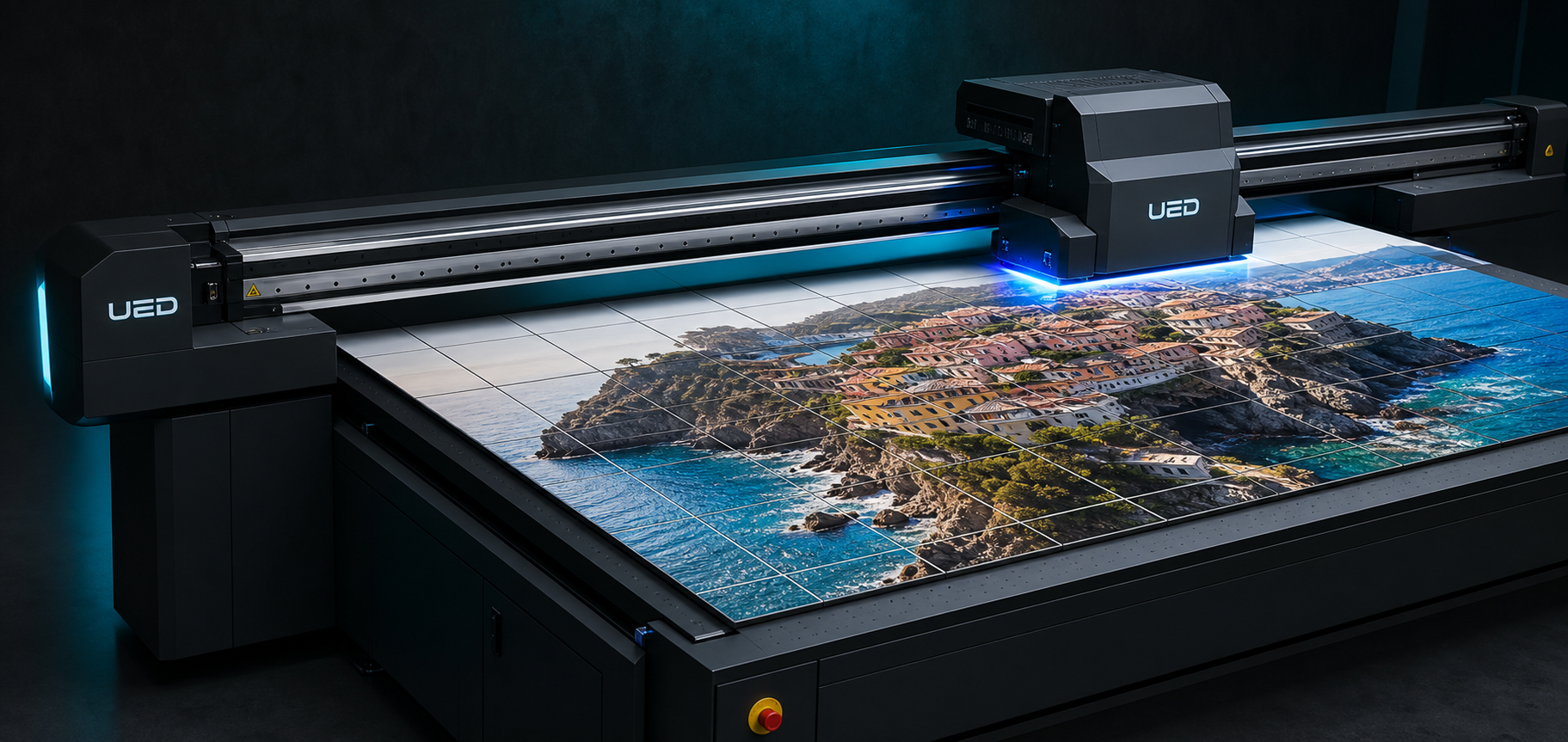
Direct UV on Ceramic: the Decor Wall Revolution (est.)
- Murals and pattern tiles: any glossy glazed ceramic tile prints direct – deep colour, emboss-raised varnish options.
- Adhesion + gloss: wipe-clean surface first; glossy glaze accepts UV well after primer attempts on stubborn batches (est.).
- Placement discipline: leave grout-line margins on multi-tile murals; white-level clean borders elevate perceived quality instantly.
- Kitchen-splashback realities: keep print zones off direct flame-splash ranges; standard curing handles kitchen humidity fine.
Machine scale and classes sit inside the UV flatbed price guide and the UV printer price guide.
Dinnerware: the Decal Firing Rule Nobody Breaks
Ceramic decal printing is a screen-printed transfer of mineral pigments onto special paper, water-applied to the ware, then kiln-fired at 700-800+ C so the pigment fuses INTO the glaze. This is the only ceramic print that shrugs off daily dishwashers, cutlery and curry life. Small shops do not kiln – they sell the artwork and commission decal houses at MOQ. Any shop claiming direct home-printer permanence on eating surfaces is selling coating-bound wishes.
Safety Line Worth a Heading
Food-touch surfaces deserve wall-space restraint: keep customer prints OFF food-contact zones on plates and inside mug rims. Display plates hang; eating plates typically carry rim-ring or reverse-side art. Statements on invoices reading “for display use” protect honest shops permanently.
Our Verdict
Ceramic sells three shelves – the gift shelf (sublimation photo tiles), the wall shelf (direct UV murals), and the kitchen shelf (fired decals at MOQ). Four hundred square feet and one of these three columns is usually how India’s most stable tile businesses begin. Price the press route against sublimation machine price guide, the flatbed route against the UV flatbed price guide, and consult production economics off sublimation cost per print; then bring your tile or plate inventory plan to the contact page and we will point at the smallest machine that opens your exact shelf.
FAQs – Ceramic Tile and Plate Printing Guide
Can I sublimate directly on wall tiles from a tile shop?
No – commercial glazed ceramic tiles carry no sublimation polymer coating, so dye cannot bond. Wall tiles print DIRECT with UV flatbed ink on their glaze. Sublimation-coated tile blanks are a separate manufactured product made specifically for the photo-gift market.
Are sublimation tile prints waterproof and washable?
The print lives inside a polyester coating that handles damp-cloth cleaning and humid indoor walls comfortably – bathrooms included. It is not glaze-fused, so abrasive scrubbing and dishwasher cycles accelerate wear. Kitchen splashes are fine; kitchen scourers are not (est. years of display life either way).
What resolution/artwork works for large ceramic murals?
Work at 150+ DPI at final size for wall-distance viewing; 300 DPI where tiles face arm-length inspection like bath surrounds. Cut murals at grout intersections, border minimal art with clean margins, and soft-proof against the tile’s glaze warmth – off-white glaze warms cool photo whites by one tone.
Can dinner plates be printed permanently at home?
No small-format shop print is genuinely dinnerware-permanent; sublimation and UV both sit in coatings or ink layers that daily eating cycles age. Truly food-safe, dishwasher-proof ceramic printing is kiln-fired mineral decal work, an industrial process outsourced at minimum quantities – partner a decal house for dinnerware orders.
What does a tile mural project typically price at? (est.)
Direct-UV printed decor murals commonly retail Rs 180-450 per sqft of printed tile depending on art complexity and site class (est.), against raw tile plus ink costs around Rs 40-90 – premium interior jobs run multiples higher. Sublimation photo tiles retail Rs 299-999 per framed piece on gift counters (est.).
Which machine class prints on ceramic at business level?
Direct ceramic and decor-tile printing is UV flatbed territory – A2/A3 flatbeds for art tiles and gifts scale to full-bed murals machines by project volume (est. Rs 4-25L). Press-line shops enter through sublimation photo tile blanks at a fraction of that investment and graduate when mural contracts actually exist.
The Printing Method Clarity Series – more guides: What Is DTF Printing?, What Is Sublimation Printing?, What Is UV DTF Printing?, What Is DTG Printing?, What Is HTV Printing?, Screen Printing for Beginners, Cotton vs Polyester Method Guide, Dark vs Light T-Shirt Rules, DTF vs DTG vs Screen vs Vinyl, The 50-Wash Durability Test, Hoodies, Caps and Jerseys Guide, The 7-Question Method Test, The Coated-Blank Rule, Can You Print on Any Mug?, Steel Bottle Methods Ranked, Metal Printing Methods Compared, The Glass Printing Truth, Phone Case Methods Compared, Wooden Item Printing Guide, Keychains, Pens and Frames Guide, White Ink Explained, The Master Compatibility Chart, DTF vs Sublimation vs UV vs UV DTF.
Buying and business reads: DTF printer price guide, sublimation machine price guide, cost per t-shirt math, DTF earning analysis.
Confused about which method your product needs? Send the item list on the contact page – we reply with the correct machine path, not the expensive one.
