



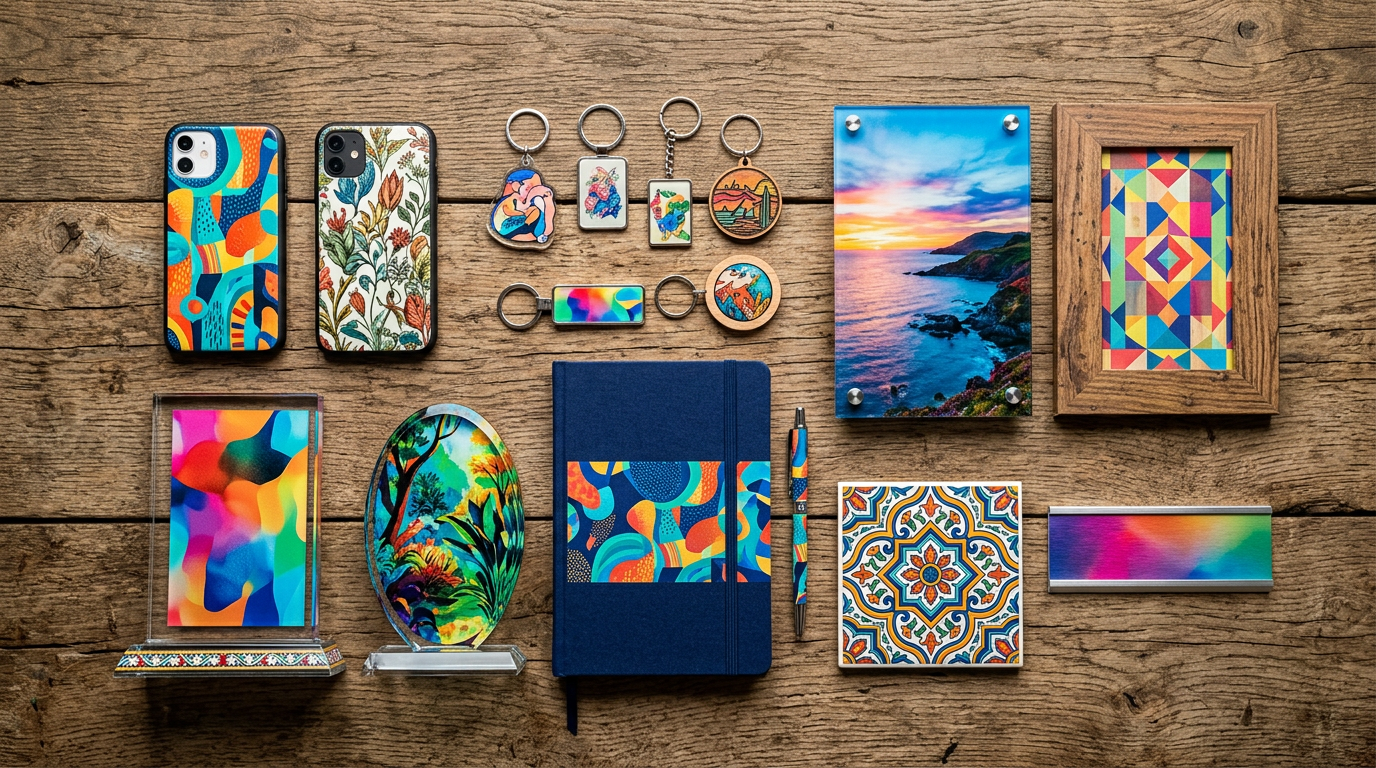
Updated: November 2026 | Figures are estimates (est.)
Overview: a UV decor studio in a metro, focused on acrylic awards, decor panels, personalised gifting and premium signage for corporate and wedding clients. Setup cost Rs 11 lakh, monthly billing Rs 3.5-6 lakh at steady state, and net profit of Rs 90,000-1.6 lakh after high metro rent and three salaries (est.). Premium positioning is what makes the maths work – the same machine in a low-ticket market would struggle.
Setup Breakdown (est.)
| Item | Cost |
|---|---|
| A2/6090 UV flatbed | Rs 5.5-8.5 lakh |
| Small CO2 laser for cutting shapes | Rs 1.2-2.5 lakh |
| Finishing: laminator, polishing, tools | Rs 60,000-1.2 lakh |
| Acrylic and substrate stock | Rs 60,000-1.1 lakh |
| Studio fit-out and display | Rs 80,000-1.6 lakh |
| Rent deposit (metro) | Rs 90,000-1.8 lakh |
| Working capital | Rs 1-1.8 lakh |
| Total | Rs 10.6-18.5 lakh |
Product Mix (est.)
| Category | Share | Margin |
|---|---|---|
| Corporate awards and recognition | 30% | 68-78% |
| Acrylic decor and wall panels | 25% | 60-72% |
| Personalised gifting | 20% | 65-75% |
| Premium signage and display | 15% | 50-62% |
| Wedding and event pieces | 10% | 60-70% |
Monthly Economics (est.)
| Line | Amount |
|---|---|
| Billing | Rs 3.5-6 lakh |
| Consumables and stock | Rs 90,000-1.6 lakh |
| Metro rent | Rs 45,000-85,000 |
| Salaries (3 staff) | Rs 75,000-1.2 lakh |
| Utilities, marketing, misc | Rs 25,000-50,000 |
| EMI where applicable | Rs 25,000-45,000 |
| Net profit | Rs 90,000-1.6 lakh |
What Made Premium Positioning Work (est.)
- Corporate award contracts – three companies placed quarterly batches of 50-300 pieces.
- Design service sold separately – Rs 1,500-6,000 per concept, not bundled.
- Finishing quality – flame-polished acrylic edges justified 40-80% price premiums.
- Packaging – branded boxes turned Rs 599 pieces into Rs 999 gifts.
Risks the Studio Manages (est.)
| Risk | Control |
|---|---|
| Metro rent escalation | 3-year lease with capped increases |
| Corporate payment cycles | 50% advance, 30-day balance |
| Machine downtime | quarterly service contract, spares shelf |
| Design dependency on one person | template library plus second designer trained |
| Seasonality | corporate quarterlies plus wedding season offset |
Lessons (est.)
Two things separate this studio from struggling UV shops: it sells finished premium products, not square feet, and it charges for design and finishing. A UV machine in a market that only wants cheap print will not produce these numbers – positioning precedes equipment. Machine context is in the UV flatbed price and UV ROI guide.
Our Verdict
Metro UV studios earn well when they sell finished premium products and separate design and finishing as paid lines. High rent demands high ticket sizes, which is why awards, decor and gifting beat commodity signage in this model.
FAQs – Case Study: UV Decor Studio in a Metro
How much does a UV decor studio cost to set up in a metro? (est.)
Rs 10.6-18.5 lakh for an A2/6090 UV flatbed, a small CO2 laser, finishing equipment, substrate stock, studio fit-out, metro rent deposit and working capital (est.). Machine cost is roughly half of that total.
How much can a metro UV studio earn monthly? (est.)
Rs 3.5-6 lakh billing with net profit of Rs 90,000-1.6 lakh after consumables, metro rent, three salaries and EMI (est.). The margin depends on premium positioning – shops competing on commodity print earn far less on the same equipment.
Which UV products give the best margins? (est.)
Corporate awards at 68-78%, personalised gifting at 65-75% and acrylic decor at 60-72% (est.). Premium signage contributes volume at 50-62%, while wedding and event pieces sit in between. Awards and gifting carry the fixed-cost load.
How do I justify premium pricing for UV decor work?
Through finishing and packaging: flame-polished edges, branded boxes and a separate design fee raise perceived value by 40-80% at modest cost (est.). Customers who see the difference in hand rarely negotiate back to commodity rates.
What are the main risks for a metro UV studio? (est.)
Rent escalation, slow corporate payment cycles, machine downtime and design dependency on one person (est.). Long leases with capped increases, 50% advances, a service contract and cross-trained designers address all four.
Can this model work outside a metro?
At lower rent, yes – but the premium customer base is thinner, so shops usually blend corporate work with wedding and gifting seasons (est.). The key is the same: sell finished products and design services, not square footage.
More case studies: Rs 50 Lakh DTF Unit, Tier-3 Sublimation Gifting Unit, Flex Unit in a Wedding Town, Eco-Solvent Sticker Unit, Laser Jali Workshop, Election Season Printing Unit, Small-Town Mixed Plant. Full index: all digital printing case studies.
Planning something similar? Share your city and budget on the contact page – we reply with a configuration and honest numbers.
