



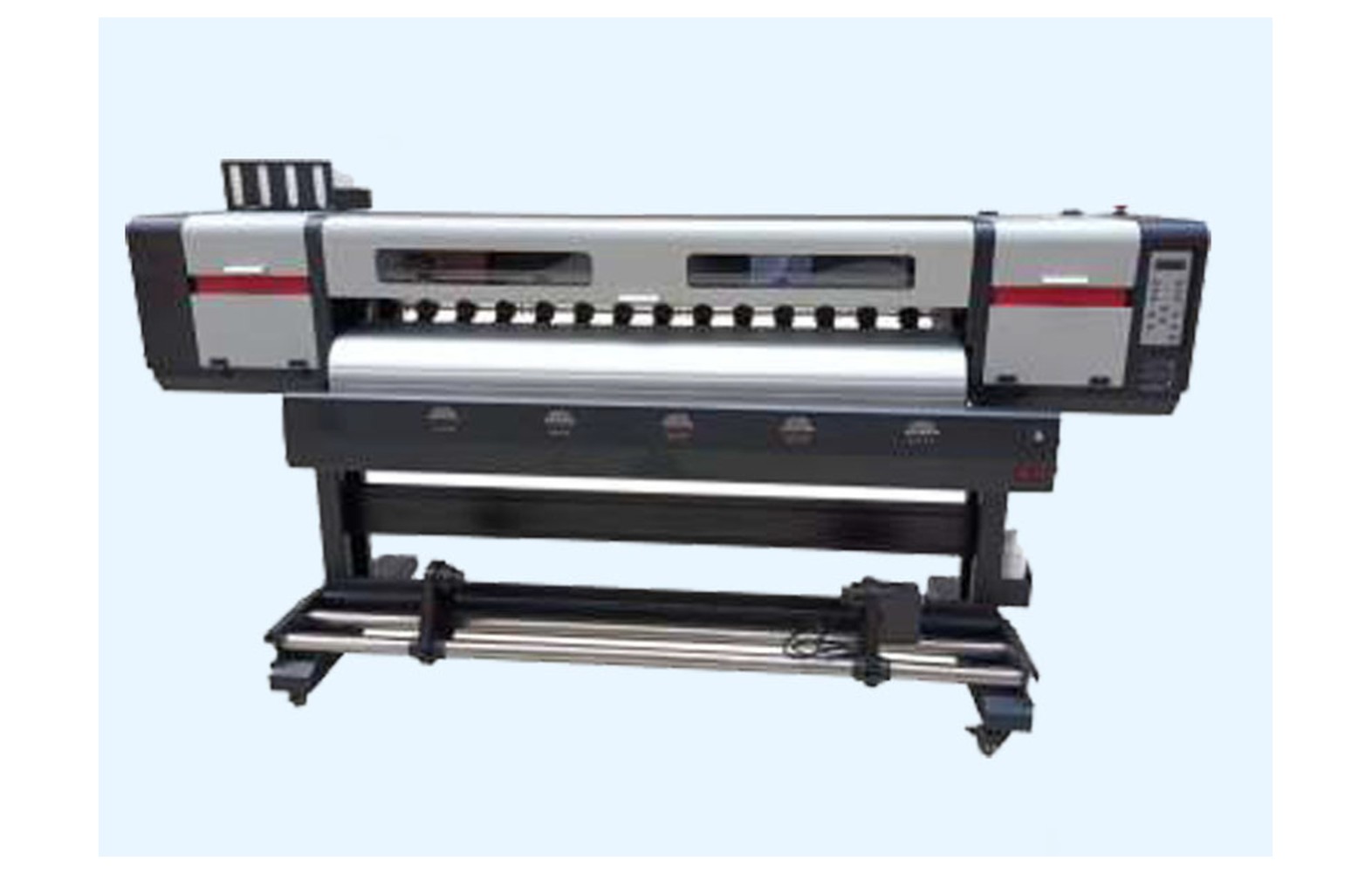
Direct answer: Compare eco-solvent spare-parts suppliers by their ability to identify the exact printer, head, ink and manufacturer part number, provide compatibility evidence and support authorised service. Compare complete written scopes, lead times, warranty and returns—not just a headline price. Verify claims with the machine manufacturer where appropriate.
Define the machine before requesting quotes
Record the printer manufacturer, model, serial number, revision, installed head, approved ink, maintenance station, board and any authorised modification. A used or converted machine may not match its original catalogue. Retain the manual, commissioning and service records.
Identify the component’s function and manufacturer part number through documentation or an authorised technician. A printer can contain different pumps, sensors, motors and boards. A seller’s generic name or photograph does not establish the correct application.
Do not remove guards, open an electrical panel or disconnect an ink line merely to send a photograph. The manufacturer may identify the part from the machine record. Physical inspection must follow the exact safe procedure and personnel authorisation.
Separate the symptom from the part
Banding, weak colour, an alarm or a print-and-cut mismatch can have multiple causes. Preserve the file, media, ink, settings, error and last accepted output. Ask a qualified technician to use the manufacturer’s diagnostics before requesting several quotes for an assumed replacement.
A supplier should explain what evidence supports its proposed component and what remains uncertain. If a complete diagnosis is not yet possible, agree a defined diagnostic stage and cost. Do not treat a quote for a part as proof that the part caused the fault.
If there is a leak, smoke, burning smell, damaged cable or unsafe motion, stop under the site procedure. Do not reproduce a hazardous condition to obtain a video or continue production to meet a deadline.
Verify the provider
Confirm the business identity, invoicing entity, contact details and who will provide technical service. Ask whether installation or support is subcontracted and who handles a warranty claim. Use independent verification appropriate to the transaction.
If a provider claims manufacturer authorisation, verify that status through the manufacturer where it matters. A logo or general claim of experience does not establish support for the exact printer revision, ink or part.
Ask for the service escalation route and how additional work is approved. A nearby address can be useful, but it does not guarantee that a part is stocked or that a repair will be completed within a particular time.
Part identity and compatibility
Request the exact manufacturer part number, revision, component position and any approved supersession for the printer serial. Clarify whether the offer covers a complete assembly or only a subcomponent. Similar-looking connectors, seals or boards can have different requirements.
For printheads and ink-path components, confirm the approved head, ink and maintenance fluids. Eco-solvent formulations are not automatically interchangeable. For electronics and motion parts, confirm the supported board, firmware, mounting or control configuration.
Ask the printer manufacturer or authorised service provider to confirm uncertain cross-references. A seller’s universal claim, a familiar head family or an attractive price is not complete compatibility evidence.
Part condition and source
Have the supplier state whether the part is genuine, compatible, refurbished or used. For a genuine part, verify the exact application and source using the manufacturer’s recommended process where available. A genuine component can still be wrong for another revision.
For a compatible item, request the specific supported printer, head, ink or electronic configuration and check the manufacturer’s warranty and support position. For a refurbished or used part, ask what was inspected or tested, any prior ink history and who accepts the remaining risk.
Record the condition on the invoice and purchase order. Do not infer authenticity from packaging or price alone. If identification is uncertain, pause and request clarification before installation.
Compare complete quotations
Use the same categories for each offer: diagnosis, exact component, related seals or cables, freight, tax, authorised labour, configuration, acceptance test, warranty and returns. Mark missing terms as unknown rather than zero. A component-only quote is not directly comparable with a complete service visit.
For a hypothetical example, supplier A quotes Rs 5,000 for a part and Rs 2,000 for service, while supplier B quotes Rs 4,000 and Rs 2,500 respectively. The illustrative subtotals are Rs 7,000 and Rs 6,500 before freight, taxes and other costs. These invented figures are not market prices or evidence that either part is compatible.
Ask what happens if the proposed part is wrong, arrives damaged or does not resolve the original symptom. Agree who approves additional work and how the customer deadline will be communicated.
Lead time and backup capacity
Ask whether the exact part is physically available, where it is held and whether the delivery date is firm or estimated. A service response time can mean an initial call rather than completed repair. Include related parts, transport and acceptance testing in the schedule.
For urgent decals, labels, signs or wraps, a pre-qualified backup printer or subcontractor may be useful. Compare media, colour, cutting and finishing with the customer-approved proof. A backup reduces deadline pressure but does not replace a safe repair.
Do not order a visually similar component merely because it is available sooner. If compatibility is uncertain, ask the manufacturer or authorised technician. Keep the original machine stopped when safety is unresolved.
Warranty and return terms
Request the warranty start date, coverage, exclusions and evidence needed for a claim. Ask whether authorised installation, approved ink or documented site conditions are required. Clarify who pays freight and labour if the item is incorrect or fails acceptance.
A component warranty does not automatically cover machine downtime, connected parts or customer reprints. Review the written terms and retain invoice, part number, service report and accepted sample. Do not rely on a verbal promise of guaranteed head life.
For ink-contaminated or electrical returns, follow the supplier’s packaging and transport instructions and the site’s safety procedure. Do not ship a leaking or unsafe item without confirming the applicable requirements.
Safe service and ink controls
Electrical, guarded mechanical and ink-system work requires trained authorised personnel following the exact manufacturer’s procedure. Ask who handles diagnosis, isolation, installation and testing. Never accept a proposal to bypass a guard, sensor or protective device to finish a job.
Eco-solvent inks and cleaning products are not automatically interchangeable or harmless. Obtain the actual safety data sheets and have qualified professionals assess ventilation, fire precautions, storage, spills and waste under applicable local rules. Do not use an unapproved fluid or improvised flushing process.
For an ink conversion, ask the manufacturer or authorised service provider to assess the complete system, warranty and site controls. A component supplier’s general solvent-resistant claim is not enough to approve the change.
Agree an acceptance plan
- Record the baseline: machine, symptom, file, ink, media and last accepted output.
- Verify the part: exact number, condition and written compatibility.
- Agree the scope: diagnosis, related parts, authorised labour, safety and cost.
- Perform authorised service: follow model-specific isolation and installation instructions.
- Restore protection: confirm guards and protective systems under the service process.
- Run approved checks: use the manufacturer’s functional tests and representative print.
- Verify the customer workflow: include contour cutting where relevant.
- Document release: retain the report, sample and any remaining limitation.
A short successful print is evidence under those conditions, not a guarantee of future head or part life. For intermittent issues, agree a safe follow-up with the technician. Customer approval of the final job is separate from technical service acceptance.
Supplier comparison scorecard
Record each supplier’s status for business identity, exact part identification, machine and ink compatibility, diagnosis, service qualifications, lead time, complete cost, warranty and acceptance testing. Mark unresolved questions instead of assuming the most favourable answer.
Technical approval should come before commercial comparison. A cheaper part that cannot be verified for the printer is not a safe equivalent. Equally, a higher price does not automatically prove authenticity or service quality.
After service, review whether the delivered part matched the quote, documentation was supplied and the provider addressed the original symptom. Use recorded outcomes to update the approved supplier list for that specific machine and scope.
Warning signs
Universal compatibility without evidence: request confirmation for the exact serial, revision and ink.
Pressure to bypass safety: stop and use qualified authorised service.
Part replacement without diagnosis: ask what evidence supports the proposed fault.
No written warranty or return terms: clarify condition, exclusions and claim process before payment.
Only a headline price: request related parts, freight, labour and testing.
Guaranteed head life or profit: request evidence and recognise that operating conditions and business demand vary.
Questions for each provider
- What exact printer, serial, head, ink and part number does the offer cover?
- Is the item genuine, compatible, refurbished or used?
- What evidence supports diagnosis and compatibility?
- Who performs safe installation, configuration and testing?
- What are the stock, delivery, warranty and return terms?
- What happens if the original symptom remains?
For part identification see eco-solvent model and part-number checks. For condition compare genuine and compatible parts and for the decision see repair versus replace.
Conclusion
Choose suppliers using verified part identity, model-specific compatibility, qualified service and clear written terms. Compare total cost and timing only after the proposed component and service process are confirmed appropriate for the actual printer.
Review the diagnostic conversation
A useful provider should ask for the exact printer, head, ink and symptom before recommending a part. Record whether the proposed work is a diagnosis or a confirmed replacement. Ask which checks are authorised and what evidence would change the recommendation.
Provide the error message, operating stage, recent service and physical sample where relevant. Do not share unnecessary customer data or account credentials. If the machine has been converted, include the authorised configuration record so the provider does not quote against an outdated catalogue.
A fault that appears after a long print or idle period may not be reproduced during a short visit. Ask how a safe representative test and follow-up would be planned. A provider should not require staff to reproduce a leak, unsafe motion or electrical hazard.
Check the written compatibility claim
Ask the supplier to identify the machine serial or revision, installed head and ink, exact part number and any approved supersession. A list of popular head families may not cover the printer’s board, maintenance station or ink path. Ask the manufacturer or authorised service provider to confirm the actual application.
If a compatible part is offered, request the specifications, condition and support terms. Clarify whether the machine manufacturer approves it and whether warranty or service changes. A fitting that looks correct is not enough to establish chemical, electrical or mechanical suitability.
For used or refurbished components, ask what was tested, repaired or replaced and how prior ink exposure or damage is handled. The qualified installer must determine whether the option is supported. Compare the uncertainty and return terms with the new-part offer.
Assess the complete service scope
Request separate lines for diagnosis, part, related seals or cables, freight, taxes, travel, authorised labour, configuration and acceptance testing. Confirm whether each amount is a firm quote or an estimate. Ask how additional work is approved if a second fault is found.
For electrical or heating work, clarify whether a qualified site electrician is also needed. For ink-system service, confirm the approved fluids, safety data sheets, waste handling and the person responsible. The part seller and the installer may be different parties.
Record what is excluded, including any backup printing, customer reprints or consequential downtime. A warranty on a component does not automatically cover those costs. Review the written terms before authorising work.
Use the right customer acceptance test
For close-viewed decals, labels or vehicle graphics, agree the file, media, profile, dimensions and quality mode that represent the actual job. If contour cutting is involved, identify the printer and cutter responsibilities and test the approved combined workflow where the original issue affected it.
Compare reprinted panels or stickers with the customer-approved proof under agreed lighting. A technician’s successful startup or a small test print may not establish that final colour, cut and finishing meet the order. Keep technical service and customer approval as separate records.
If a backup provider produces part of the order, document the material, profile, cut and any accepted variation. Communicate a revised delivery before dispatch. Do not bypass a protective device or fit an unverified spare to avoid that discussion.
Review supplier performance after delivery
Compare the delivered part number, revision and condition with the approved quotation. If packaging is damaged or identification conflicts, hold the item for clarification. Follow the supplier’s storage and handling instructions; do not open or fit a sensitive component just to test whether it looks right.
Retain the technician’s diagnosis, actual parts, approved configuration, test sample and any unresolved limitation. Check the final invoice against the written scope and authorised changes. If the original symptom returns, give the provider the record before agreeing to another part swap.
Update the approved supplier list for the specific machine and service scope. Track communication, actual lead time and warranty response, not only price. One successful order does not establish that every product from that supplier fits every printer.
Decide who approves each stage
Separate technical compatibility approval from commercial approval. The manufacturer or authorised technician should confirm the part and safe service requirements; the business owner or purchasing team can then compare the complete quotation, payment terms and schedule. Record both decisions.
If a supplier proposes a substitution after the order, request written confirmation for the exact printer and ink and a revised scope. Identify any effect on warranty, related components, waste handling, customer quality and acceptance testing. Do not treat a verbal substitution as equivalent to the approved part.
Where diagnosis remains uncertain, agree a staged investigation and an approval limit. Retain the original sample and service report if the symptom persists. Repeated unverified replacements can create cost and make the cause harder to identify.
After service, share the approved operating instructions and remaining limitations with each shift. Keep the service contact and customer-quality reference accessible for follow-up.
Frequently Asked Questions
Is the cheapest eco-solvent spare supplier always best?
No. First verify exact compatibility and safe service, then compare complete cost, lead time, warranty and support.
Does a supplier logo prove manufacturer authorisation?
No. Verify the claimed status with the manufacturer where it matters and obtain the terms in writing.
What information is needed for a quote?
Provide the exact printer model, serial, revision, head, approved ink, component function and part number if known.
Does compatible mean approved by the printer manufacturer?
Not automatically. Ask for precise evidence and check the manufacturer’s support and warranty position.
Is service response time the same as repair time?
No. Response may be an initial contact; diagnosis, part availability, installation and acceptance can take longer.
Can a supplier bypass a guard for urgent work?
No. Stop and use qualified authorised service; a deadline does not justify defeating a protective device.
What should be retained after service?
Keep the quotation, part identification, invoice, technician’s report, acceptance sample, warranty and remaining limitations.
