



Updated: October 2026
Every year someone says the printing business is saturated – and every year Indian printing demand sets a new record. Shop boards, hoardings, election seasons, wedding flex, packaging trials, custom T-shirts, corporate gifting: the list keeps getting longer, not shorter. This report answers the only question that matters if you are thinking of entering: WHERE is the growth coming from, how durable is it, and which machine segment rides which wave. All figures are estimates (est.). For hard market-size numbers, start with our Indian digital printing market size report; this page is about the engines underneath those numbers.
The 8 Economic Engines Behind Indian Printing Demand
| Engine | What it prints | Why it keeps growing |
|---|---|---|
| Retail and franchise explosion | shop boards, glow signs, POS banners, launch flex | every new store in every tier-2 and tier-3 town is a permanent print customer |
| Outdoor advertising (OOH) expansion | hoardings, unipoles, bus shelters, metro media | ad budgets keep shifting to physical media in high-traffic corridors (est. steady double-digit corridor growth) |
| The election economy | flex, flags, posters, vehicle branding | state and national cycles guarantee a mega-season every couple of years somewhere |
| Weddings and events | stage backdrops, welcome flex, invitation prints, photo gifts | India’s wedding industry runs lakhs of events monthly – each one is a print order (est.) |
| MSME formalization | packaging, labels, catalogues, shop branding | GST and UPI era turned informal sellers into brands that print – crores of small businesses now buy print (est.) |
| Packaging and personalization shift | short-run boxes, custom labels, prototypes | short runs are impossible for offset economics – digital owns them by default |
| Infrastructure and construction boom | site hoardings, safety boards, project branding | highways, metros and housing projects put mandatory printed signage on every site |
| D2C and creator economy | custom tees, mugs, phone cases, merch drops | thousands of Instagram and marketplace sellers need on-demand print – DTF, UV and sublimation territory |
Read the pattern: none of these eight depends on a single trend. That is why printing demand shrugs off slowdowns that hit other trades – the engines alternate. When retail slows, election season fires. When weddings pause, infra hoardings keep moving.
Why Digital Keeps Eating Traditional Printing
| Factor | Offset and screen printing | Digital printing |
|---|---|---|
| Break-even run length | plates and setup need 500-5,000+ pieces (est.) | profitable from 1 piece upward |
| Turnaround | days with plate-making | same day, even same hour |
| Personalization | near-impossible economically | every piece can differ (names, photos, QR) |
| Small-city viability | needs volume concentration of a metro | a single district town sustains a full unit |
| Skill barrier | years of press experience | one operator trained in days |
The shift is not coming – it has already happened in signage and is now working through packaging, gifting and apparel. Digital’s share of new print investment in India keeps rising every year (est.), which is precisely why machine buyers today behave differently from buyers even five years ago.
Segment Map: Where the Growth Actually Sits (2026)
| Segment | Starter budget (est.) | Realistic monthly net, settled unit (est.) | Its growth engine |
|---|---|---|---|
| Flex and solvent signage | Rs 2.5-4 lakh | Rs 1.4-4 lakh | OOH, elections, retail boards – see the flex business monthly income math |
| Eco-solvent indoor and vinyl | Rs 1.2-3 lakh | Rs 0.8-2.5 lakh | premium retail, wraps, photo media – eco-solvent and vinyl machine guide |
| UV flatbed and roll-to-roll | Rs 4-12 lakh | Rs 1.5-5 lakh | premium signage, decor, awards – UV printer buying guide |
| DTF apparel printing | Rs 1.5-3.5 lakh | Rs 0.8-3 lakh | custom merch, D2C brands – DTF business earning analysis |
| Sublimation gifting | Rs 25,000-1.2 lakh | Rs 30,000-1.5 lakh | personalized gifting boom – sublimation printer price guide |
| Laser and CNC cutting | Rs 1.5-6 lakh | Rs 0.8-3.5 lakh | jali work, manufacturing, sign fabrication – CNC and laser cutting business guide |
The Newest Demand Pockets (2026-2030)
- Quick-commerce and dark-store branding: hundreds of new dark stores and rider fleets each quarter need boards, decals and window branding.
- Regional-language advertising: brands are writing in Tamil, Telugu, Bengali and Bhojpuri on local hoardings – volume moves closer to the customer, closer to YOUR press.
- Tier-3 retail chains: pharmacy, eyewear and grocery chains opening in district towns buy standardized signage kits every quarter.
- EV and showroom fit-outs: every new showroom is a one-time bonanza of facade, glass and in-store media.
- Government and infra signage: smart-city projects, highway networks and public buildings keep a permanent baseline of tender work.
- Personalized gifting going mainstream: what was a metro hobby is now a district-town birthday standard – mugs, frames, cushions, photo rocks.
Entry Routes by Budget – Matching Money to the Right Wave
| Budget | Right first machine | Why |
|---|---|---|
| Under Rs 50,000 | sublimation combo setup | gifting demand with near-zero space needs – sublimation printer price guide |
| Rs 1-2 lakh | XP600 eco-solvent or entry DTF | premium indoor media and custom apparel from a small shop |
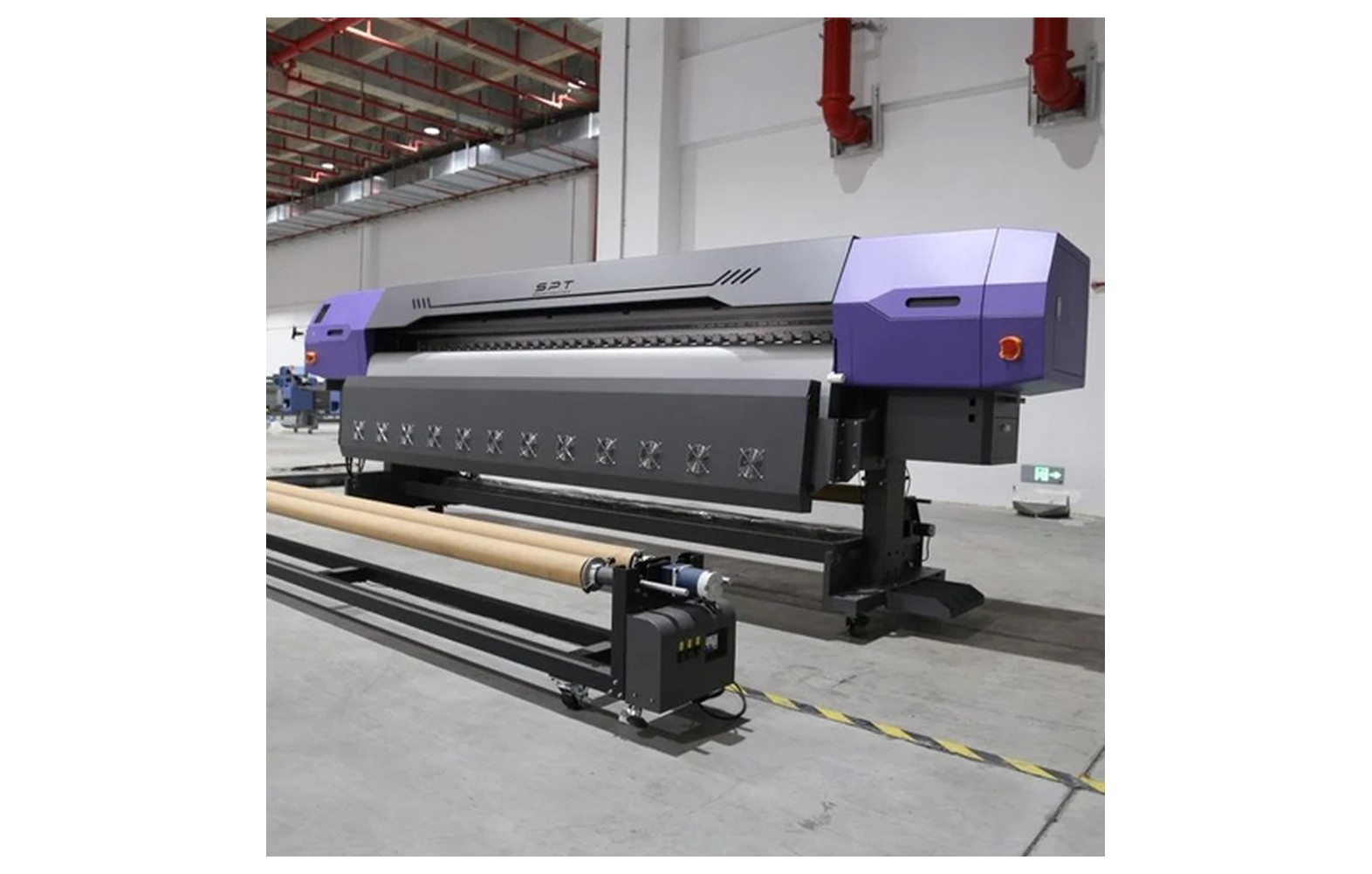
| Rs 3-4 lakh | 3.2 m 4-head Konica flex machine | the proven Indian workhorse – flex machine price guide |
| Rs 8-15 lakh | 8-head flex production or UV flatbed | volume signage or premium surfaces, chosen by your city’s client mix |
| Rs 25 lakh plus | 16 ft plant or full UV production house | regional-scale supply – live economics in the Rs 2 crore flex hoarding plant case study and Rs 1.2 crore UV wallpaper plant case study |
Budget tight? Finance routes matter less than choosing the right segment – but when you need them, the machine EMI and finance guide and the due-diligence method in the machine supplier verification guide apply to every machine type, not just flex.
The Honest Risks – Read Before the Excitement
- Metro competition is real: city markets run 20-plus units per zone; the growth math favors tier-2 and tier-3 entrants with fewer rivals and lower rent.
- Growth is not profit: the engines above deliver DEMAND; your discipline on cost, quality and credit turns demand into money. Units fail from sloppy working capital, never from lack of print orders.
- Segment mismatch kills: a UV flatbed in a banner-rate market starves; a flex giant in a gifting town starves. Match machine to local client reality first – the digital printing startup guide walks through that sizing.
- Technology moves, slowly: machines bought in 2019 still earn in 2026; this industry rewards care, not constant upgrades. Obsolescence panic is seller marketing.
Our Verdict
The verdict is simple: India’s printing demand is not one market rising – it is eight engines alternating, and digital printing is the technology all eight are migrating toward. The winners of the next five years will be district-level units that pick the right segment for their city’s client mix, buy verified machines with real service behind them, and run disciplined cost math from day one. That is precisely what UED equips: from the flex printing machine range and the flagship Gethray C-series machine to UV, DTF, sublimation and laser setups – with installation, training and spares across India. Read the Indian digital printing market size report and the digital printing startup guide, run your city’s numbers, and share your budget plus district on the contact page – we will tell you plainly which machine wave to ride and which to skip.
FAQs – Printing Business Growth in India 2026: Demand Report
Is the printing business profitable in India in 2026?
Yes, with segment discipline: settled flex signage units net Rs 1.4-4 lakh monthly, DTF and eco-solvent units Rs 0.8-3 lakh, and sublimation gifting setups Rs 30,000-1.5 lakh (est.). Demand is structural – retail expansion, elections, weddings and infra signage recur regardless of economic cycles – but profit depends on matching the machine to your local client mix and controlling working capital.
Which printing segment is growing fastest in India?
Personalized and short-run segments are compounding fastest – DTF custom apparel, UV premium surfaces and sublimation gifting ride the D2C and gifting boom (est.). By absolute volume, flex signage still dominates India’s printed square footage thanks to outdoor advertising, elections and retail boards.
What is the future of the printing industry in India?
Expansion with a digital tilt: total print demand keeps growing on retail, events, packaging and infrastructure engines, while digital technology absorbs share from offset and screen because short runs, same-day turnarounds and personalization are only possible digitally. Offset stays relevant for very long runs; nearly all new small-unit investment in 2026-2030 will be digital (est.).
How much investment is needed to start a digital printing business in India?
From Rs 25,000-50,000 for a sublimation gifting setup, Rs 1-2 lakh for eco-solvent or entry DTF, Rs 3-4 lakh for the standard 3.2 m flex machine, Rs 8-15 lakh for UV or production-class setups, and Rs 25 lakh plus for regional-scale plants (est.). Budget guides with full math exist on this site for every one of these segments.
Is digital printing replacing offset printing in India?
In signage, gifting, apparel and short-run packaging – yes, almost fully already. Offset retains long-run newspaper, book and bulk packaging work where its per-piece cost at thousands of copies wins. The practical result: new entrants should buy digital; the businesses growing fastest in tier-2 and tier-3 India are all digital-native units.
What is the best printing business for a small town in 2026?
A 3.2 m Konica flex machine remains the highest-probability small-town business – Rs 2.5-4 lakh entry, every local shop and politician is a customer, and net profit of Rs 1.4-2.6 lakh monthly is realistic at district volumes (est.). Add sublimation gifting as a counter-cyclical side line and the unit earns in every season.
More on this site: Indian digital printing market size report, digital printing startup guide, flex machine price guide, flex business monthly income math, DTF business earning analysis, sublimation printer price guide, UV printer buying guide.
Share your budget and district on the contact page – we reply with the exact machine recommendation, price and installation plan for your city, with training across India.
